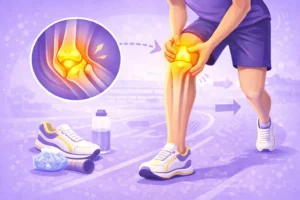







Many people wonder whether wearing a knee cap all day is safe, especially when dealing with long hours of standing, walking, or joint discomfort. While knee caps can provide stability and pain relief, continuous use without breaks may not always be ideal.
Understanding how long to wear a knee cap brace depends on your condition, activity level, and the type of support used. For short-term activities such as workouts, walking, or recovery phases, knee caps can be highly beneficial. However, wearing knee support all day without medical guidance may lead to side effects of knee cap overuse, including reduced muscle engagement, skin irritation, or restricted circulation if the fit is too tight.\

A practical knee cap daily wear guide includes:
- Wearing it during activities that strain the knee
- Removing it during rest periods to allow natural muscle activation
- Ensuring proper sizing to avoid compression-related issues
Used correctly, a knee cap can support recovery and confidence in movement but it should complement strengthening and mobility, not replace them.
What a Kneecap Does
Knee caps, also known as knee braces or knee sleeves are external support devices that are designed to protect, stabilize and support the knee joint. They are widely used by athletes, individuals with knee injuries, people with chronic conditions like arthritis and post-surgical patients. Kneecaps come in various designs, materials and levels of support to address different needs and conditions.
Definition: What Is a Knee Cap or Knee Support Brace?
- A kneecap is a supportive device worn around the knee that provides both stability and protection.
- It helps reduce strain on ligaments, tendons, and surrounding muscles, making movement safer and more comfortable.
- Knee caps are designed for everyday use, athletic activity, or post-injury recovery, depending on the type and level of support.
- They can also improve proprioception, which is the body’s awareness of joint position, reducing the likelihood of accidental injuries.
Types of Kneecaps
1. Elastic or Compression Sleeves
- Made from stretchable materials like neoprene, spandex, or elastic fabric.
- Provide mild compression, which helps reduce swelling, inflammation, and discomfort during movement [2].
- Ideal for mild pain, arthritis, or light support during everyday activities.
- Lightweight and flexible, allowing for comfortable, continuous wear during daily routines.
2. Hinged Braces
- Incorporate metal or plastic supports on either side of the knee to provide additional stability.
- Designed for individuals recovering from ligament injuries or post-surgical rehabilitation.
- Prevents side-to-side movement that could aggravate injuries.
- Adjustable hinges allow controlled flexion and extension, enabling safer recovery during physiotherapy exercises.
3. Patellar Stabilizers
- Specifically designed to keep the kneecap(patella) aligned during movement.
- Beneficial for people with patellar tracking disorders, recurrent kneecap dislocations, or chronic instability.
- The stabilizer reduces stress on surrounding ligaments and minimizes pain associated with patellar misalignment.
4. Post-Surgery Immobilizers
- Used after surgeries such as ACL reconstruction, meniscus repair, or ligament reconstruction.
- Restrict knee movement to allow tissues to heal properly.
- Adjustable straps or hinges enable a gradual increase in mobility as recovery progresses.
- Prevents unintentional movements that could compromise surgical outcomes.
Functions of a Kneecap
1. Compression
- Helps reduce swelling, fluid accumulation, and inflammation around the knee.
- Improves blood circulation in the surrounding tissues, accelerating healing and easing discomfort.
2. Joint Stabilization
- Provides support to ligaments, tendons, and muscles, enhancing knee stability.
- Reduces the risk of injuries during sports, exercise, or daily activities.
3. Enhanced Comfort
- Alleviates pain during movement by distributing pressure evenly across the joint.
- Supports proper alignment, which reduces strain on weakened or injured areas.
4. Injury Prevention
- Minimizes the risk of accidental twists, overextension, or ligament strain.
- Supports the knee during high-impact activities or repetitive movements.
Important Note
- The effectiveness and safe duration of knee cap use depend on individual factors such as:
- Type and severity of injury
- Presence of chronic conditions like arthritis
- Post-surgical recovery requirements
- Activity level and daily mobility needs
Following professional guidance ensures maximum benefit while minimizing potential risks [3].
Benefits of Wearing a Knee Cap
Kneecaps, or knee braces, are widely used for pain relief, injury prevention, and post-surgical recovery. Their benefits extend beyond simple support, offering functional and therapeutic advantages for various knee conditions.
1. Pain Relief and Support
- Kneecaps provide immediate stabilization to the knee joint, distributing pressure evenly across the surrounding structures.
- They reduce strain on ligaments, tendons, and muscles, helping to alleviate discomfort associated with conditions like arthritis, tendonitis, or mild knee injuries.
- Compression from the brace can minimize swelling and inflammation, further reducing pain and stiffness.
- For daily activities—such as walking, climbing stairs, or standing for long periods kneecaps allow individuals to maintain mobility with less discomfort.
- Some braces also offer patellar tracking support, which aligns the kneecap correctly, reducing pain caused by misalignment.
2. Prevents Injury During Activity
- Kneecaps are highly effective in reducing the risk of acute injuries during physical activities and sports.
- They protect the knee from twisting, overextension, or lateral movements that may stress ligaments like the ACL, MCL, or meniscus.
- Athletes, runners, and fitness enthusiasts can benefit from added stability during high-impact or rapid movements.
- Wearing a kneecap can also enhance proprioception, or the body’s awareness of joint position, which helps prevent accidental missteps or awkward landings [4].
- Some braces include reinforced hinges or straps for extra lateral support, particularly beneficial for those engaging in heavy weightlifting, jumping sports, or agility exercises.
3. Helps in Post-Surgical or Injury Recovery
- Kneecaps are commonly prescribed following knee surgeries such as ACL reconstruction, meniscus repair, or ligament repairs.
- They provide controlled support, limiting movements that could disrupt healing tissues or surgical repairs.
- By preventing sudden or harmful motions, knee braces promote safer rehabilitation, allowing the joint to regain function gradually.
- Some post-surgical braces are adjustable, enabling patients and physiotherapists to modify the level of flexion or extension as recovery progresses.
- In addition to structural support, knee caps can reduce pain and swelling during rehabilitation exercises, helping patients perform physiotherapy routines more comfortably and consistently.
Risks of Wearing a Knee Cap All Day
While knee caps offer significant support and relief, wearing them continuously for long periods can lead to several potential risks. Understanding these risks can help users balance support with safety.
1. Skin Irritation and Discomfort
- Prolonged wear can cause sweating and moisture buildup, leading to itching and rashes around the knee.
- Some individuals may experience allergic reactions to materials such as latex, neoprene, or synthetic fabrics commonly used in kneecaps.
- Continuous friction between the brace and skin can cause redness or abrasions, especially if the kneecap is worn during rigorous activity.
- Moist environments under the kneecap may promote fungal or bacterial infections, particularly if the brace is not cleaned regularly.
- Regular breaks, breathable materials, and proper hygiene are essential to reduce the risk of skin problems.
2. Muscle Weakness and Dependency
- Wearing a knee cap all day reduces the natural engagement of knee-supporting muscles, including quadriceps, hamstrings, and surrounding stabilizers.
- Over time, this can lead to muscle atrophy, where muscles become weaker due to underuse.
- Weak muscles compromise the knee’s natural stability, increasing the risk of injuries when the brace is removed.
- Over-reliance on external support may also hinder rehabilitation after injury because the knee is not actively supported by its own musculature.
- Combining knee cap use with targeted strengthening exercises can prevent dependency and maintain muscular health.
3. Restricted Blood Circulation
- Kneecaps that are too tight or overly compressive can impair blood flow to the lower leg.
- Symptoms of restricted circulation include tingling, numbness, swelling, cold sensations, or even discoloration in the leg or foot.
- Poor circulation can lead to fluid retention, stiffness, and slower tissue recovery, worsening knee joint health.
- Long-term circulation issues may increase the risk of blood clots or deep vein thrombosis (DVT) in rare cases.
- Ensuring proper fit, avoiding overtightening, and taking periodic breaks helps maintain healthy blood flow [5][6].
Expert Opinions on Duration and Safe Use
Physiotherapist Recommendations
- Use knee caps only during activities that cause pain or risk of strain.
- Avoid continuous, all-day use unless specifically prescribed.
- Strengthening exercises should accompany kneecaps to maintain muscle health.
Doctors’ Advice
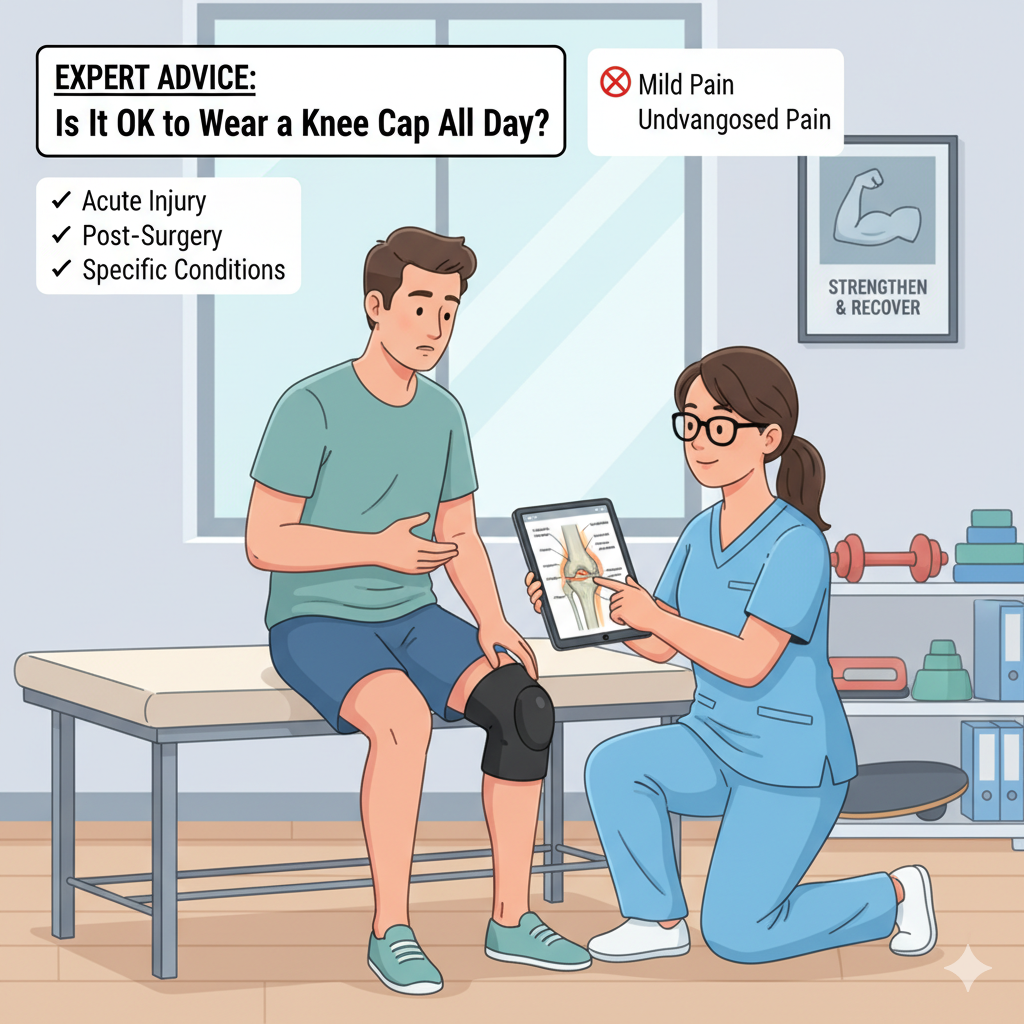
- Post-surgery or injury: Extended wear may be necessary temporarily for support and recovery.
- Healthy individuals: Limit use to active hours and remove during rest or sleep.
- Continuous monitoring of pain, swelling, or discomfort is essential.
When You Should Avoid All-Day Wear
- Without a medical condition: Wearing a kneecap unnecessarily may lead to muscle imbalance.
- While sleeping: Knee caps may restrict movement and reduce circulation.
- If the brace is too tight or loose:
- Tight braces can cause numbness or swelling.
- Loose braces may fail to provide adequate support.
- Ignoring discomfort: Pain, redness, or numbness is a warning to discontinue use.
Proper Usage Tips
- Ensure a Snug Fit:
- The kneecap should be tight enough to provide support but not so tight that it restricts circulation.
- Check for any tingling, numbness, or swelling, which indicates the brace is too tight [7].
- Start with Short Durations:
- Begin wearing the kneecap for 1–2 hours at a time.
- Gradually increase usage as your knee adjusts to the support.
- Avoid wearing it continuously without breaks during the first few days.
- Remove Every Few Hours:
- Allow your skin to breathe and prevent sweat accumulation.
- This helps reduce the risk of rashes, irritation, or fungal infections.
- Maintain Hygiene:
- Clean the kneecap regularly following the manufacturer’s instructions.
- Washing prevents odor, bacteria buildup, and skin infections.
- Combine with Strengthening Exercises:
- Incorporate quadriceps, hamstring, and glute exercises to support knee stability.
- Strengthening surrounding muscles reduces dependency on the kneecap.
- Consult a Professional:
- Seek advice from a physiotherapist or doctor to ensure proper fit and usage.
- Personalized recommendations help prevent injury and optimize recovery.
Conclusion
Wearing a kneecap can offer important benefits for pain relief, injury prevention and postsurgical recovery. However, prolonged all day use without guidance may lead to muscle weakness, circulation problems and skin problems. Safe use involves proper fitting following expert advice, limiting wear to necessary periods and performing strengthening exercises to support the knee naturally. Understanding these factors make sure that kneecaps remain a valuable tool for knee health without unintended side effects.
Looking for more health and wellness solutions ? Don’t miss these related guides:-
Frequently Asked Questions:
1. Is it safe to wear a knee cap all day?
It depends on your condition. For healthy knees, wearing them all day is unnecessary. For injury or post-surgery, temporary extended use may be prescribed.
2. Can wearing a knee brace all day cause problems?
Yes, prolonged use can lead to muscle weakness, reduced flexibility, skin irritation, and circulation issues.
3. How many hours a day should I wear a knee support?
Typically during activities that cause pain or strain. Most healthy individuals should limit themselves to active periods only.
4. Can I sleep with a kneecap on?
Generally not recommended unless prescribed post-surgery. Sleeping with a knee brace can restrict movement and circulation.
5. Does prolonged use weaken knee muscles?
Continuous reliance on external support may reduce natural muscle strength. Combining brace use with strengthening exercises is essential.
References:
- American Academy of Orthopaedic Surgeons. (2024). Knee Braces for Injury Prevention and Rehabilitation. https://orthoinfo.aaos.org
- Cleveland Clinic. (2023). Walking With Knee Braces: What You Should Know. https://health.clevelandclinic.org
- Harvard Health Publishing. (2023). Knee Braces: How to Use Them Safely. https://www.health.harvard.edu
- Mayo Clinic. (2024). Knee Pain and Recovery: Walking After Injury. https://www.mayoclinic.org
- Physiopedia. (2024). Knee Bracing and Mobility Exercises. https://www.physio-pedia.com
- WebMD. (2024). Knee Braces and Walking Tips Post-Injury. https://www.webmd.com
- National Institute of Arthritis and Musculoskeletal and Skin Diseases (NIAMS). (2023). Arthritis and Knee Support Devices.https://www.niams.nih.gov