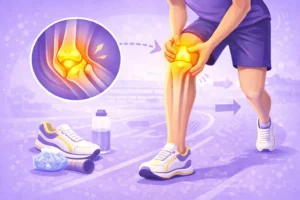






The ease of running, its impact on the heart, and its efficacy in enhancing the mental well-being of a person have made running one of the most popular forms of body exercise in the world. Running puts considerable pressure on the legs, especially on the knees, be it joggers, marathon runners, or professional sprint racers.
The knee joint is vital in running since the pressure is absorbed in this part of the body, stabilizing the body and allowing forward motion. This is also one of the most vulnerable joints that can suffer from overuse injuries. Most runners complain of aches in the kneecap, sore ligaments or stiffness following prolonged training.
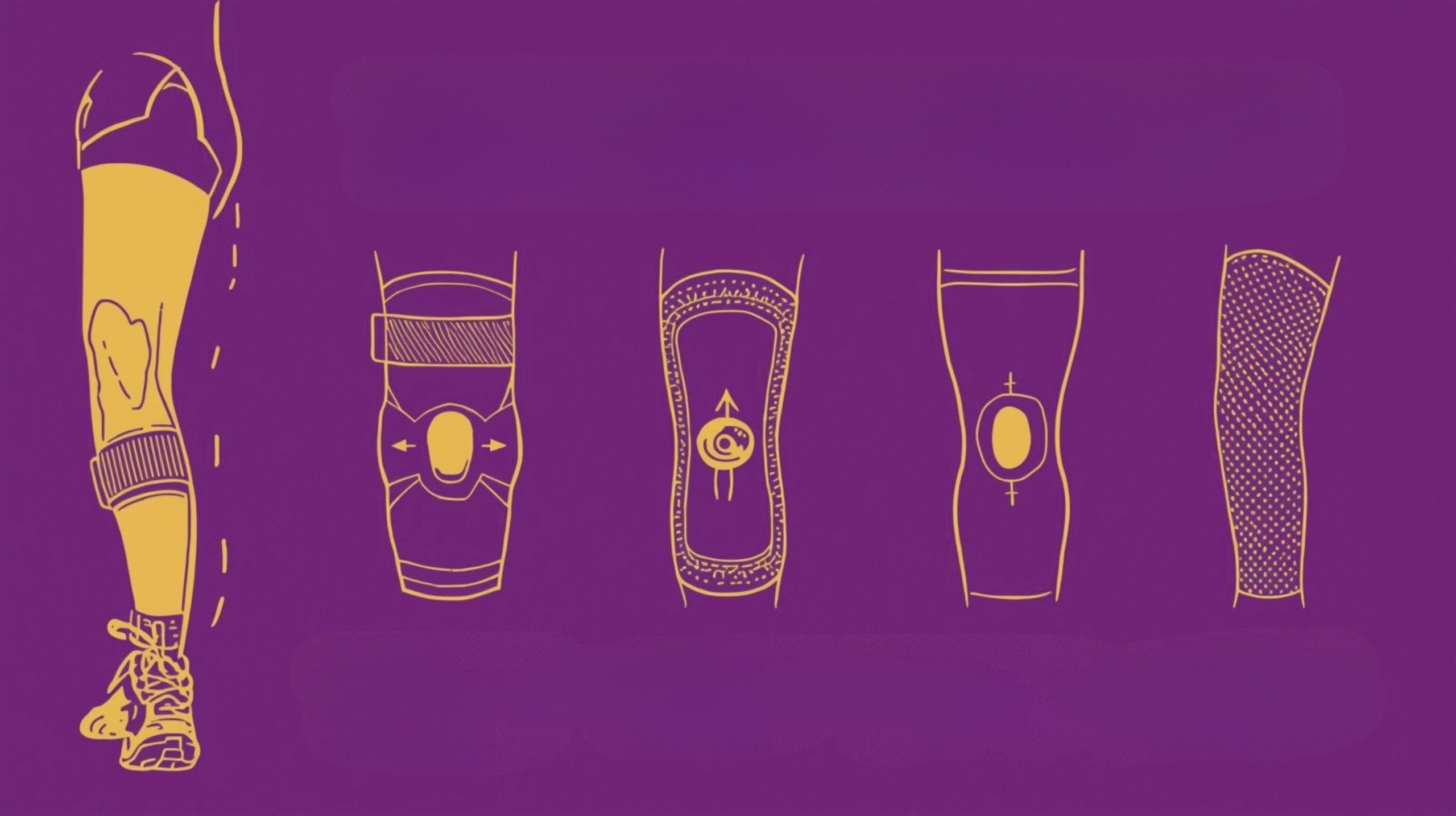
Knee supports, varying in sizes (from simple compression sleeves to complicated hinged braces), are designed to reduce the stress on the joint, enhance stability, and facilitate the healing process. These supports not only assist athletes and fitness enthusiasts to avoid injuries but also make them feel confident about themselves whenever they run long distances or engage in vigorous physical exercises.
The aim of this article is to provide you with all the information that you should have in order to support your knees during running. We will discuss the mechanics of the knee when you run, the most prevalent injuries that runners experience, the advantages of knee bands, the various types that exist in the market, and how to choose the best one based on the needs and running style.
Understanding Knee Strain in Runners
Anatomy of the Knee Joint and Role in Running
The knee joint is a complex hinge joint formed by the femur (thigh bone), tibia (shin bone), and patella (kneecap) [1]. Supporting structures such as ligaments (ACL, PCL, MCL, LCL), meniscus cartilage, and surrounding tendons provide both flexibility and stability.
During running, the knees:
- Absorb impact forces equivalent to 2-3 times body weight per stride.
- Provide stability during stance and push-off.
- Maintain alignment between the hips, legs, and ankles.
Because of this repetitive loading, even small biomechanical imbalances can lead to pain or injury.
Common Causes of Knee Pain in Runners
Knee pain in runners often arises from overuse, poor form, or inadequate support. Some frequent conditions include:
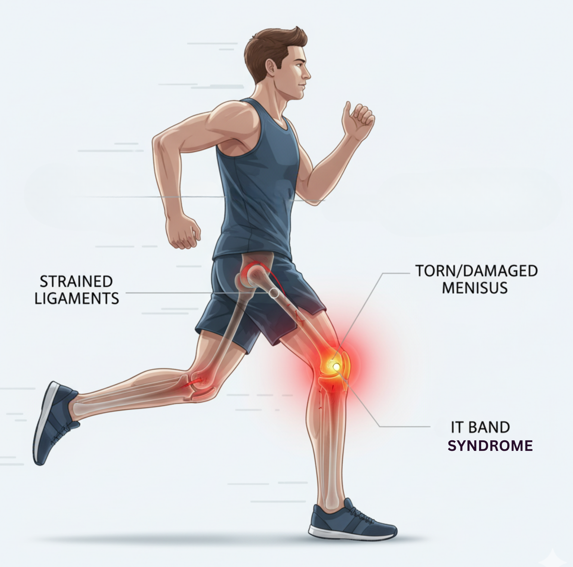
- Runner’s Knee (Patellofemoral Pain Syndrome): Pain around the kneecap due to misalignment, weak quadriceps, or excessive mileage.
- Meniscus Injuries: Tears or degeneration of the cartilage that cushions the knee joint, often caused by sudden twisting or repetitive stress [2].
- Ligament Strains: Micro-tears in stabilizing ligaments from sudden direction changes or high-intensity training.
- Tendonitis and IT Band Syndrome: Inflammation of tendons around the knee or irritation of the iliotibial (IT) band from overuse.
When Should Runners Consider Knee Support?
Runners should consider using knee supports if they:
- Experience recurring knee pain during or after runs.
- Are recovering from an injury but want to stay active.
- Engage in long-distance running that increases strain on the joints.
- Have biomechanical issues such as overpronation or misaligned kneecaps.
Using knee support proactively can prevent mild discomfort from escalating into a chronic injury.
Benefits of Knee Support for Running
Knee supports are more than just protective gear; they actively enhance a runner’s performance, safety, and recovery. Below are the key benefits:
1. Provides Stability and Reduces Joint Stress
Knee braces help distribute load evenly across the joint, preventing excessive strain on the patella, ligaments, or cartilage [3]. This stabilizing effect is particularly useful for runners on uneven terrain or during long-distance runs.
2. Enhances Blood Circulation and Reduces Swelling
Compression-based knee sleeves improve blood flow to the joint, which:
- Reduces post-run swelling and stiffness.
- Speeds up muscle recovery by improving oxygen delivery.
- Minimizes lactic acid buildup.
3. Pain Relief and Recovery Aid
For runners with minor injuries or soreness, knee supports provide gentle compression that helps manage pain. By reducing inflammation, they allow athletes to continue training without worsening the condition.
4. Supports Long-Distance Endurance
Endurance runners benefit from knee supports that delay fatigue by reducing micro-movements and improving efficiency. They also help maintain consistent stride mechanics over long races like marathons.
5. Boosts Runner’s Confidence and Prevents Reinjury
Psychological assurance plays a significant role in athletic performance. Wearing a knee brace reassures runners that their joints are protected, allowing them to focus on form and pace without fear of reinjury [4].
Types of Knee Support for Runners
Not all knee supports are the same. Depending on the type of injury, running style, and training intensity, different braces provide varying levels of compression, stability, and flexibility. Below are the most common types:
1. Compression Sleeves
- Features: Lightweight, slip-on design, usually made from neoprene or elastic fabric.
- Benefits: Provides warmth, enhances blood circulation, reduces swelling, and offers mild support without restricting mobility [5].
- Best Use Cases: Long-distance running, recovery runs, general knee soreness.
- Who Should Use: Runners seeking prevention and mild pain relief without limiting natural movement.
2. Knee Straps (Patellar Tendon Straps)
- Features: Small, adjustable bands worn just below the kneecap.
- Benefits: Helps reduce pressure on the patellar tendon, alleviating pain from runner’s knee and patellar tendonitis.
- Best Use Cases: Short-distance runs, speed training, or athletes with tendon-specific pain.
- Who Should Use: Runners experiencing patellar tendonitis or runner’s knee.
3. Hinged Knee Braces
- Features: Braces with side hinges for added stability; usually bulkier than sleeves.
- Benefits: Protects against lateral (side-to-side) movements, ideal for ligament injuries.
- Best Use Cases: Post-injury rehabilitation, trail running with uneven terrain.
- Who Should Use: Runners recovering from ACL, MCL, or ligament strain [6].
4. Wraparound Adjustable Braces
- Features: Open or closed patella design with Velcro straps.
- Benefits: Offers moderate compression with customizable tightness.
- Best Use Cases: Runners needing flexible support with occasional adjustments.
- Who Should Use: Those who require variable support depending on training intensity.
5. Patella Stabilizing Braces
- Features: Braces with a hole or padding around the kneecap.
- Benefits: Keeps kneecap aligned, prevents lateral shifting.
- Best Use Cases: Runners with kneecap tracking issues.
- Who Should Use: Runners suffering from patellofemoral pain syndrome.
6. Lightweight Performance Braces
- Features: Slim-fit designs made from breathable materials.
- Benefits: Provides balance between support and mobility.
- Best Use Cases: Marathon runners, sprinters, or those running in hot climates.
- Who Should Use: Athletes needing comfort and performance enhancement rather than medical-grade support.
Choosing the Right Knee Support for Running
With so many options available, selecting the best knee support requires consideration of personal needs and running style.
Consider Your Condition (Injury Prevention vs. Recovery)
- Prevention: Compression sleeves or lightweight braces.
- Recovery: Hinged braces or patella stabilizers for targeted injuries.
Match Brace Type to Running Style and Distance
- Marathon Runners: Lightweight sleeves for endurance.
- Sprinters: Straps or wraparound braces for tendon stress.
- Trail Runners: Hinged or stabilizing braces for uneven terrain.
Material and Breathability (Neoprene vs. Lightweight Fabrics)
- Neoprene: Durable, provides warmth and compression, but less breathable.
- Lightweight Fabrics: Breathable, cooler, and ideal for long-distance running.
Fit, Adjustability, and Comfort
The brace should be snug but not overly tight. Poor fit can cause restricted circulation or skin irritation. Always check size charts before purchase.
Budget vs. Premium Options
- Budget Braces: Basic compression, affordable.
- Premium Braces: Advanced designs, moisture-wicking, and longer durability.
Consulting a Physiotherapist Before Purchase
If you have a history of knee injuries or persistent pain, seek medical advice before relying on knee supports. Professionals can recommend the best brace for your condition.
Knee Support for Different Running Needs
Different runners require different types of support depending on their goals and challenges.
1. Long-Distance Runners (Marathon, Half-Marathon)
Endurance athletes often face repetitive strain. Compression sleeves or lightweight braces can delay fatigue and reduce swelling during long runs.
2. Sprinters and Track Runners
Short-distance runners require explosive power. Patellar straps help minimize tendon stress during high-intensity sprints [7].
3. Trail Runners (Uneven Terrain Support)
Trail running involves unpredictable surfaces. Hinged braces or stabilizers provide lateral support and protect against sudden twists.
4. Beginners Dealing with Mild Discomfort
New runners often experience soreness due to poor form or lack of conditioning. Basic compression sleeves are ideal for general support.
5. Post-Injury Recovery Runners
Athletes returning from ligament or meniscus injuries should use hinged or patella-stabilizing braces to prevent reinjury and allow safe training resumption.
Proper Use of Knee Braces During Running
Even the best knee support won’t be effective if worn incorrectly. Proper usage ensures maximum comfort, stability, and safety.
How to Wear Knee Support Correctly
- Compression Sleeves: Slide evenly up the leg, ensuring no folds or wrinkles that can cut circulation.
- Straps: Position just below the kneecap for patellar tendon support.
- Hinged/Wraparound Braces: Secure straps evenly, avoiding excessive tightness.
How Tight Should a Knee Brace Be?
- It should feel snug but comfortable.
- Too tight: may cause numbness, tingling, or swelling.
- Too loose: won’t provide adequate support.
Duration of Use (Training vs. Daily Running)
- For Injury Prevention: Wear during runs or intense training sessions only.
- For Recovery: Use for both workouts and daily activities, as recommended by a doctor.
Mistakes to Avoid When Using Knee Supports
- Wearing the wrong type of brace for your condition.
- Over-relying on braces instead of strengthening muscles.
- Ignoring signs of poor circulation (coldness, tingling).
- Using an old, worn-out brace that no longer offers support.
Complementary Strategies Alongside Knee Support
Knee supports are most effective when combined with other healthy running practices.
Strength Training for Knee and Leg Muscles
- Exercises: Squats, lunges, step-ups, and hamstring curls.
- Strong quadriceps, hamstrings, and calves reduce strain on the knee joint.
Importance of Stretching and Warming Up Before Running
- Stretch hip flexors, calves, and hamstrings.
- Dynamic warm-ups (high knees, leg swings) prepare joints for impact.
Running Form Correction and Posture
- Maintain a slight forward lean.
- Avoid over-striding to reduce knee shock.
- Land midfoot rather than heel-striking.
Suitable Footwear for Joint Protection
- Invest in cushioned running shoes that match your gait.
- Replace worn-out shoes every 500-800 km.
Nutrition and Hydration for Joint Health
- Anti-inflammatory foods: Omega-3 fatty acids (salmon, chia seeds), turmeric, leafy greens [8].
- Supplements: Glucosamine, chondroitin, and collagen may support cartilage health.
- Staying hydrated maintains joint lubrication.
When to See a Doctor or Physiotherapist?
Sometimes, knee support alone isn’t enough. Professional evaluation ensures proper treatment.
Signs That Knee Pain Is More Than Overuse
- Persistent swelling that doesn’t go away.
- Sharp or locking pain during movement.
- Instability or buckling of the knee.
When Knee Braces Are Not Enough
- If pain worsens despite using support.
- If braces cause discomfort or restrict blood flow.
Professional Rehabilitation Guidance
- Physiotherapists can design strengthening and recovery programs.
- Doctors may recommend imaging tests (X-ray, MRI) to detect underlying issues.
Care and Maintenance of Knee Supports
To maximize durability and hygiene, knee supports require proper care.
Cleaning and Washing Tips
- Wash neoprene sleeves with mild soap in cold water.
- Air dry; avoid direct sunlight or dryers.
Checking Wear and Tear
- Inspect seams, Velcro, and elasticity.
- Replace if compression weakens or straps lose grip.
When to Replace Your Knee Support
- Typically every 6-12 months, depending on use.
- Replace sooner if heavily used in sweaty conditions.
Conclusion
Running requires knee support due to the fact that it enhances performance, decreases pain, and prevents injuries. Each category has its respective purpose, with lightweight compression sleeves required by the long-distance runners and the hinged braces, which are used to ensure that the person is recuperating. Never should knee braces be substituted with strength training, proper running technique, or medical advice of a physician, though. The runners who wear knee braces to supplement stretches, a balanced diet, and physical therapy can achieve long-term athletic performance and maintain knee health.
Exercises are key to a healthy life. Know how to live pain-free with these articles:
Frequently Asked Questions:
1. What is the best type of knee support for running?
The best option depends on your needs. Compression sleeves work well for general support and endurance, while patellar straps help with runner’s knee, and hinged braces are best for ligament recovery.
2. Do knee braces help prevent running injuries?
Yes, they reduce stress and provide stability, but they should be combined with strength training and proper footwear for full protection.
3. Can I wear knee support for long-distance running?
Yes, especially lightweight compression sleeves that prevent swelling and fatigue without restricting movement.
4. Should beginners use knee braces while running?
Not always. Beginners should first focus on form, strength, and proper shoes. Braces are recommended if discomfort or early signs of injury appear.
5. How tight should a knee brace be when running?
It should feel snug and supportive but not restrict blood flow. If you feel numbness or tingling, loosen or adjust the fit.
References
- American Academy of Orthopaedic Surgeons. (2024). Knee braces for injury management and prevention. https://orthoinfo.aaos.org
- Cleveland Clinic. (2024). Knee braces: Types, benefits, and usage guidelines. https://my.clevelandclinic.org
- Mayo Clinic. (2024). Runner’s knee (patellofemoral pain syndrome). https://www.mayoclinic.org
- National Institutes of Health. (2023). Effectiveness of knee braces for patellofemoral pain: A systematic review. National Library of Medicine. https://pubmed.ncbi.nlm.nih.gov
- Journal of Athletic Training. (2023). Impact of knee bracing on running biomechanics and performance. National Athletic Trainers’ Association. https://natajournals.org
- WebMD. (2024). Choosing the best knee brace for sports and injury prevention. https://www.webmd.com
- Sports Medicine Australia. (2023). Bracing and taping for knee injury prevention in runners. https://sma.org.au