






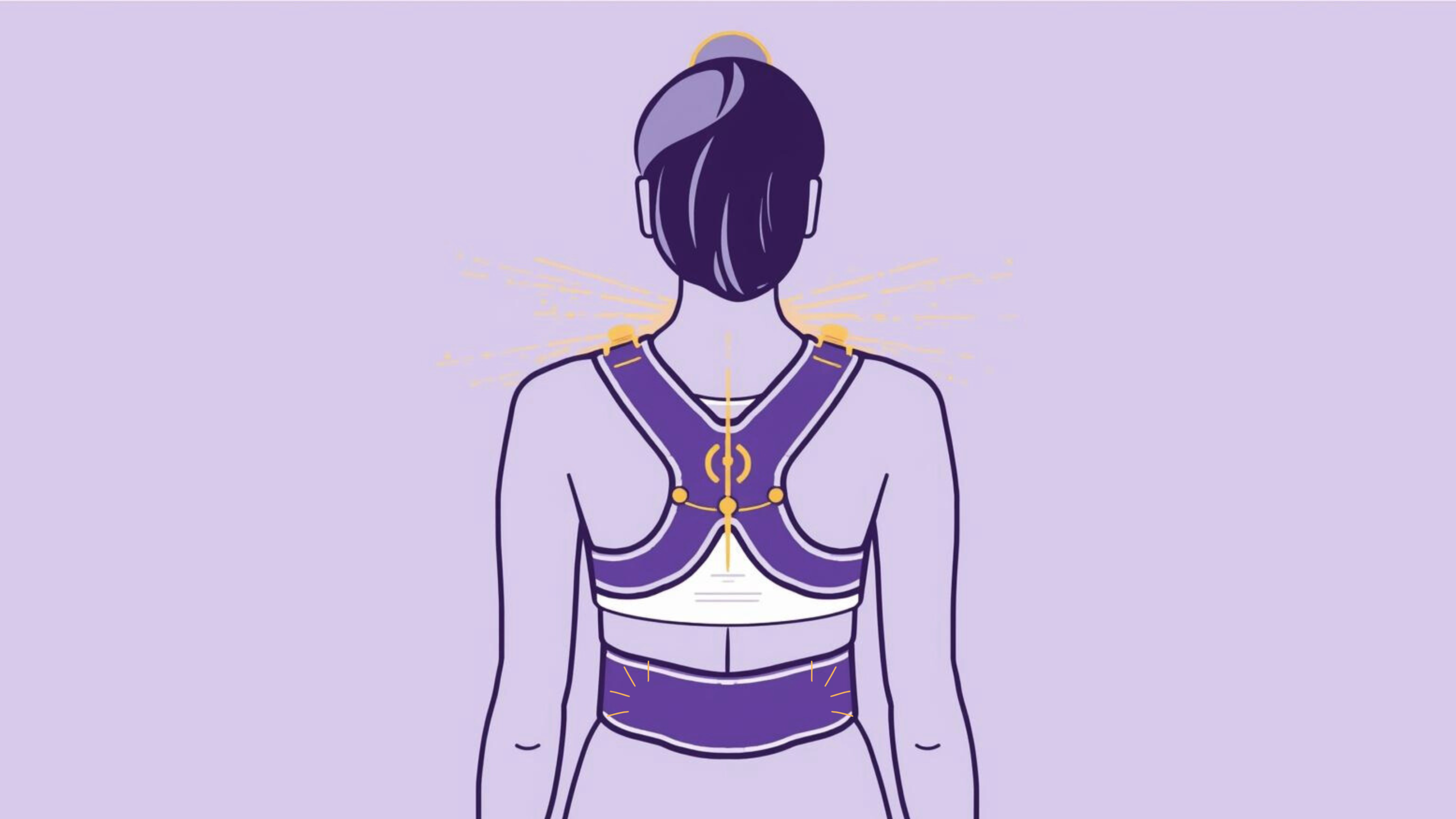
Thinking of trying a posture correction belt? Here’s everything you need to know: its real benefits, drawbacks, possible side effects, and expert-approved tips to use it safely and effectively for better posture.
Why Are People Turning to Posture Belts (and When Do They Help Most)?
Let’s be honest, our backs are paying the price for today’s sit-all-day lifestyle. Hours of typing, scrolling, and commuting leave our posture in real trouble. No wonder posture correction belts are getting so popular. Whether you’re glued to a desk, buried in textbooks, or behind the wheel all day, these belts can ease that nagging back, neck, and shoulder tension. They’re especially helpful if you’ve started to notice uneven shoulders or that “tech neck” look sneaking in. People often turn to these belts when they:
- Spend 8+ hours sitting at a desk or computer.
- Experience chronic back, neck, or shoulder tension.
- Have noticed slouching or uneven shoulders in photos.
- Need posture support during physical therapy or recovery.
A posture belt for neck and shoulder pain can ease the strain from slouching or “tech neck,” but lasting results only come when you combine it with daily stretches and posture exercises.
So yes, the belt can guide your posture, just don’t let it do all the work.
The Bright Side: Pros of Using a Posture Correction Belt
Let’s start with the good stuff: the reasons why posture correction belts have become a hot trend among fitness enthusiasts, office professionals, and wellness-conscious individuals.
1. Instantly Improves Posture
Let’s face it, few things give you that “I’ve got my life together” look faster than standing straight.
The posture correction belt helps realign your shoulders and spine instantly, making you look taller, more confident, and more alert.
Even studies have shown that improved posture can boost self-esteem and reduce fatigue because of better breathing and circulation [1].
Real-life moment: You put on the belt before a video call, and suddenly, your boss compliments how “attentive” you look. That’s posture psychology at work.
2. Provides Relief from Back and Shoulder Pain
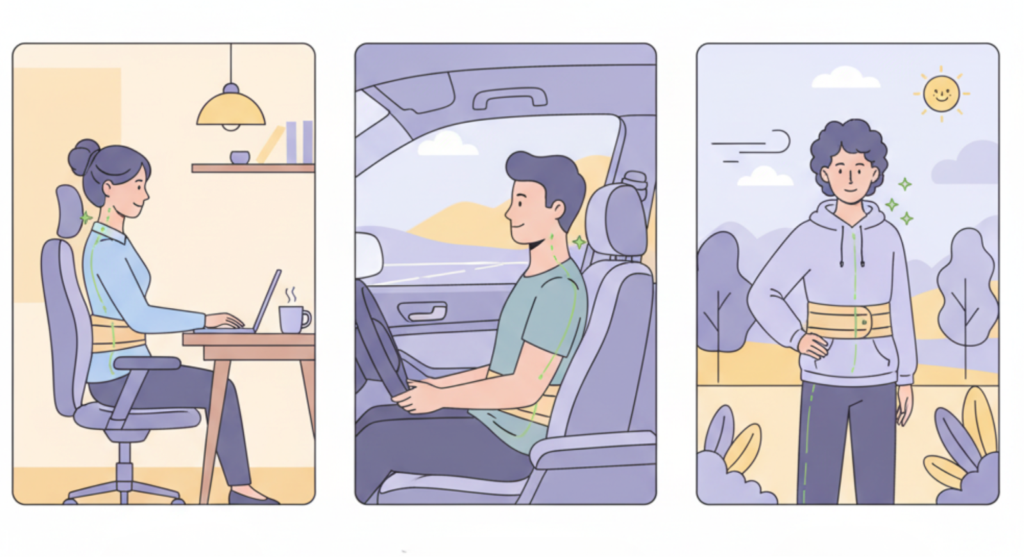
By encouraging your body into the right alignment, it reduces pressure on your spinal discs and muscles, minimizing chronic pain caused by prolonged sitting or slouching [3].
It’s especially helpful for:
- Desk job professionals
- Long-distance Drivers
- People with mild spine misalignment
However, remember, it’s a support tool, not a substitute for exercise or therapy.
3. Boosts Muscle Memory and Awareness
When used correctly, a posture corrector re-educates your body.
Over time, your back and core muscles learn to maintain proper posture even when you’re not wearing the belt.
This is called neuromuscular re-education; your brain and muscles start remembering what “good posture” feels like. [4]
So even if you wear it for just 1-2 hours a day, the awareness it creates can carry over throughout the rest of your day.
4. Helps Prevent Future Postural Issues
Posture problems tend to snowball. Poor alignment doesn’t just make you slouch; it can lead to neck stiffness, shoulder imbalance, and even chronic back pain [5].
Using a posture correction belt early can prevent these issues from becoming long-term structural imbalances.
It’s like wearing sunscreen for your spine; prevention is easier (and less painful) than treatment.
5. Easy to Use and Portable
Unlike bulky back braces, most modern posture correction belts are lightweight, breathable, and discreet. [6]
You can wear them under your clothes during work, workouts, or even travel. Some belts are adjustable and made from stretchable materials that fit snugly without restricting movement.
Pro tip: Go for one with adjustable straps and washable fabric; your spine (and your laundry routine) will thank you.
6. Boosts Confidence and Body Language
Good posture instantly changes how you appear to others more composed, open, and confident.
According to research, upright posture is linked to better mood, confidence, and reduced anxiety levels [7]
It’s not just physical correction; it’s mental alignment, too. So yes, your posture correction belt might just double as a tiny confidence booster.
The Other Side: Cons of Using a Posture Correction Belt
Like all wellness tools, posture correction belts come with some fine print.
While they offer clear benefits, there are also limitations and potential side effects, especially when used incorrectly or excessively.
1. Can Cause Muscle Dependency
Here’s the catch: if you rely too much on the belt, your muscles might “get lazy.”
When the belt constantly holds you upright, your postural muscles stop engaging as actively, leading to weakened core and back muscles over time. It’s like using training wheels forever; helpful at first, but eventually, you’ve got to ride on your own. [8]
To avoid dependency, limit use to 1–3 hours a day and combine it with posture-strengthening exercises like planks or bridges.
2. May Feel Uncomfortable or Restrictive
Some users describe it as feeling like “a polite hug that becomes too clingy after an hour.”
If the belt is too tight, it can restrict movement, cause skin chafing, or even affect circulation. If it’s too loose, it doesn’t help much.
The solution? Choose the right size and material ; breathable, padded, and adjustable belts are always better.
3. Not a One-Size-Fits-All Solution
Not everyone needs or benefits equally from posture correction belts.
For example:
- If you are suffering from spinal deformities or chronic conditions, then you should always consult a physiotherapist first.
- If your posture issue comes from muscle imbalance or nerve issues, a belt alone won’t fix the root cause.
So, while posture correction belts are great for mild slouching, they’re not magic wands for medical-grade back problems [9].
4. Can Cause Skin Irritation or Sweating
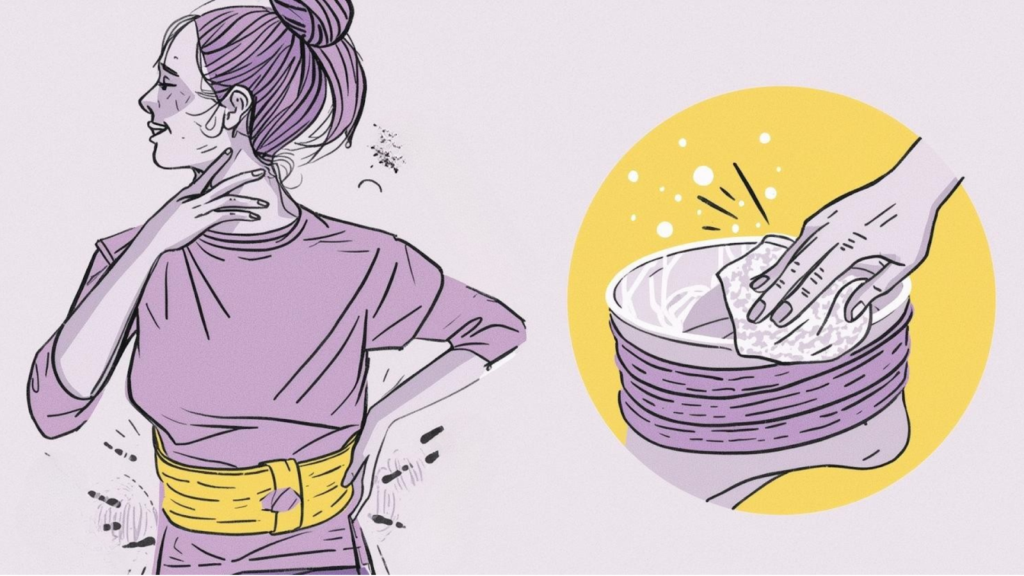
Wearing it under tight clothes or in hot weather can lead to skin irritation, rashes, or sweating, especially with synthetic materials.
Go for moisture-wicking fabrics and take breaks during long use.
Also, always clean it regularly; no one wants a posture belt that doubles as a bacteria trap.
5. Temporary Fix Without Lifestyle Change
Let’s be honest, a belt can remind you to sit straight, but it can’t stop you from binge-watching Netflix in a slouch or sleeping with five pillows under your head.
Unless you combine it with stretching, ergonomics, and exercise, the results will likely fade once you stop wearing it.
Real progress happens when you strengthen your body and stay mindful beyond the belt.
6. Can Interfere with Natural Movement (If Misused)
If worn during high-intensity activity or for long hours, the belt might restrict your natural spinal mobility, causing stiffness or discomfort.
Think of it this way: posture correction belts are like training reminders, not permanent armor. They should guide, not control, your movement.
Pros and Cons of Wearing a Posture Correction Belt!
| Pros | Cons |
| Instantly straightens your posture | Can lead to muscle dependency if overused |
| Reduces back, neck, and shoulder pain | May cause discomfort if worn too tight |
| Trains your muscles and spine alignment | Not a substitute for exercise or therapy |
| Prevents posture-related fatigue | Some find it restrictive during activity |
| Portable, adjustable, and discreet | Skin irritation or sweating in warm weather |
Who Should (and Shouldn’t) Use a Posture Correction Belt?
Best for:
- Office workers, students, and drivers
- People with mild postural fatigue or slouching habits
- Beginners starting posture correction routines
Avoid or consult a professional if:
- You have scoliosis, herniated discs, or severe back pain
- You’re recovering from surgery or spinal injury
- You’re pregnant or have skin sensitivities
How to Use a Posture Belt Smartly (Without Becoming Dependent)?
Here’s the golden rule: Use it to train your posture, not replace it.
Tips for balanced use:
- Wear it for 1–3 hours per day, not continuously.
- Combine it with core and back strengthening exercises like supermans, bridges, and shoulder blade squeezes.
- Take breaks to allow your muscles to activate naturally.
- Adjust it so it’s snug but not tight.
- Keep an eye on your posture when you’re not wearing it, awareness is key.
Real Results: Do Posture Belts Actually Work?
Meet Ananya, a 28-year-old graphic designer. After months of slouching over her laptop, she started having upper back pain. She bought a posture correction belt, wore it for two hours daily, and practiced shoulder stretches in between meetings.
Result?
Within a few weeks, her posture improved, her pain reduced, and she found herself sitting upright even without the belt.
The takeaway: the belt wasn’t the hero; consistency was.
Expert Insight: What Science Says?
Research supports moderate use of posture correction belts as short-term tools for alignment and proprioceptive awareness.
A study in the Journal of Physical Therapy Science found that posture correctors significantly improved shoulder alignment and reduced fatigue during prolonged sitting [10].
Another study from Clinical Biomechanics highlighted that muscle activation increased when posture correctors were combined with exercise [11].
So the verdict?
Science agrees posture correction belts help, but only when used wisely and not as a standalone fix.
Final Verdict: Should You Try a Posture Correction Belt?
If you struggle with daily slouching, back tension, or just want a confidence boost, a posture correction belt can be a game changer.
But remember: it’s not magic.
It’s a tool, not a cure.
Use it as a gentle guide while strengthening your posture muscles through stretching, ergonomic habits, and mindful sitting.
So yes, put that belt on, stand tall, breathe deeply, and maybe smile a little too.
Because good posture isn’t just about your spine; it’s about how you show up in the world.
Explore More Health & Wellness Solutions
Want to stay informed about wellness and everyday health issues? Here are some insightful reads to guide you. Explore the links below for practical tips and solutions:
- Chronic Shoulder Pain due to Rotator Cuff Tendinopathy
- Can a Posture Corrector Belt Help Athletes to Recover?
- Mobility Exercises: Benefits, Techniques & Routines for Better Movement
- Posture Corrector Belt vs. Posture Brace: Which One Is the Real Fix or Just Hype?
Frequently Asked Questions:
1. How long should I wear a posture correction belt each day?
It’s best to wear a posture correction belt for 1 to 3 hours a day. The goal is to train your muscles, not depend on the belt full-time. Gradually reduce usage as your posture awareness improves and your back muscles strengthen.
2. Can a posture correction belt fix bad posture permanently?
Not by itself. The belt helps you stay aware of your posture and encourages proper alignment, but lasting results come from exercise and habit change. Combine it with core-strengthening and back mobility exercises for real improvement.
3. Is it safe to wear a posture correction belt while sleeping?
No, it’s not recommended. Your body needs to relax naturally during sleep, and a belt may restrict breathing or circulation. Instead, focus on maintaining good sleep posture with a supportive mattress and pillow.
4. Can a posture correction belt reduce back pain?
Yes, many users find temporary relief from mild back and shoulder pain, especially caused by slouching or sitting too long. However, it won’t help with structural spinal problems or chronic pain that needs professional care.
5. Are posture correction belts suitable for everyone?
They’re safe for most people with mild posture issues, but not for those with serious spinal deformities, recent surgeries, or herniated discs. Always consult a doctor or physiotherapist before use if you have a medical condition.
6. Which is better– posture correction belt or posture exercises?
Both work best together. The belt provides instant support and awareness, while exercises strengthen your muscles for long-term correction. Relying on one without the other can limit your results.
References
- Peper, E., Lin, I.-M., Harvey, R., & Perez, J. (2017). How posture affects memory recall and mood. Biofeedback, 45(2), 36–41. https://doi.org/10.5298/1081-5937-45.2.01
- Hwang, S., Lee, C., & Kim, Y. (2020). Effect of an upper back brace with auditory feedback for office workers with forward head and rounded shoulder posture: A pilot study. I Orthotics & Prosthetics, (52030), 1–8. https://doi.org/10.1097/JPO.0000000000000302
- Cho, M., Han, J.-S., Kang, S., Ahn, C.-H., Kim, D.-H., Kim, C.-H., Kim, K.-T., Kim, A.-R., & Hwang, J.-M. (2023). Biomechanical effects of different sitting postures and physiologic movements on the lumbar spine: A finite element study. Bioengineering, 10(9), 1051. https://doi.org/10.3390/bioengineering10091051
- Zemková, E. (2022). The role of neuromuscular control of postural and core stability in functional movement and athlete performance. Frontiers in Physiology, 13, 796097. https://doi.org/10.3389/fphys.2022.796097
- Morrison, G. (2023). How poor posture causes neck pain. Spine-Health. Retrieved from https://www.spine-health.com/conditions/neck-pain/how-poor-posture-causes-neck-pain
- HealthShots. (2025, September 8). 6 best posture corrector belts to enhance your alignment. Retrieved from https://www.healthshots.com/preventive-care/self-care/best-posture-corrector-belts-2/
- Peper, E., Harvey, R., & Lin, I.-M. (2017). How posture affects memory recall and mood. Biofeedback, 45(2), 36–41. https://doi.org/10.5298/1081-5937-45.2.01
- Leung, M., Wang, H., Cheung, R., & Chan, K. (2023). Effects of using a shoulder/scapular brace on posture, pain, fatigue, and muscle activity in healthy college students. Healthcare, 11(11), 1555. https://www.mdpi.com/2227-9032/11/11/1555
- Health.com. (2024, January 21). Do Posture Correctors Work? Physical Therapists Weigh In. https://www.health.com/do-posture-correctors-work-8425938
- Balthillaya, G. M., et al. (2022). Effectiveness of posture-correction interventions for forward head posture and related symptoms: a systematic review. PLoS / BMC (open access). https://pmc.ncbi.nlm.nih.gov/articles/PMC8915312/
- Kim, D. J., & Kim, S. Y. (2015). Effect of an exercise program for posture correction on musculoskeletal pain. Journal of Physical Therapy Science, 27(6), 1781–1784. https://www.jstage.jst.go.jp/article/jpts/27/6/27_jpts-2015-023/_article