





It’s a familiar scene: you bend down to pick up a pen, your knee gives an unexpected grunt, and you pause mid-motion wondering if you’ve accidentally summoned a percussion section in your joint. Knee pain isn’t a life sentence; you just need the right combination of moves, support and recovery tools. Most of us try one thing (maybe a brace or a weird new stretch) and hope for magic. But the truth is knee-pain exercise alone isn’t enough. The magic lies in the combo.
In this article we’ll explore different parts that play an important role in knee healing and how to blend purposeful movement, smart braces, and recovery tools into a simple, effective strategy for healthier knees. Let’s get your knees back on their best behavior.
The “One Thing” Trap: Why Most People Fail at Knee Pain Recovery
You’ve tried rest. You’ve tried one exercise. You bought the fancy sleeve. But your knee still groans when you climb stairs (and maybe emits a small protest sound). Why? Because recovery isn’t about a single fix, it’s about layering three pillars: movement, support and recovery. The knee is often the middle-child of the leg-mechanics family: it gets all the blame when the hip above and ankle below aren’t pulling their weight. Strengthening what’s around the joint, stabilizing it when needed, and giving it smart recovery tools turns the knee from “weak link” into a team player. That’s the combo we’re after.
Decoding Knee Pain: What’s Actually Going Wrong Inside?
Before diving into the “what to do,” let’s understand the “what’s going wrong.” Common issues behind knee pain include cartilage degeneration (often in the case of osteoarthritis), muscle weakness (especially quadriceps and glutes), joint instability, and poor biomechanics (hips and ankles that aren’t helping). According to Elson and colleagues, the knee is “often an innocent bystander between the hip and the foot”; problems above or below often manifest as knee pain. [1]
Exercise-based therapies for knee osteoarthritis have shown that pain, stiffness, reduced mobility and muscle weakness are interrelated, not independent. [2]
When muscles around the knee are weak or passive, the joint takes on more load than it should. When hip or ankle control is poor, the knee is forced into compensatory movement, often sideways stress or rotation not designed for it. These mechanics underline why a single exercise or brace may help, but alone they rarely rebuild lasting knee health.
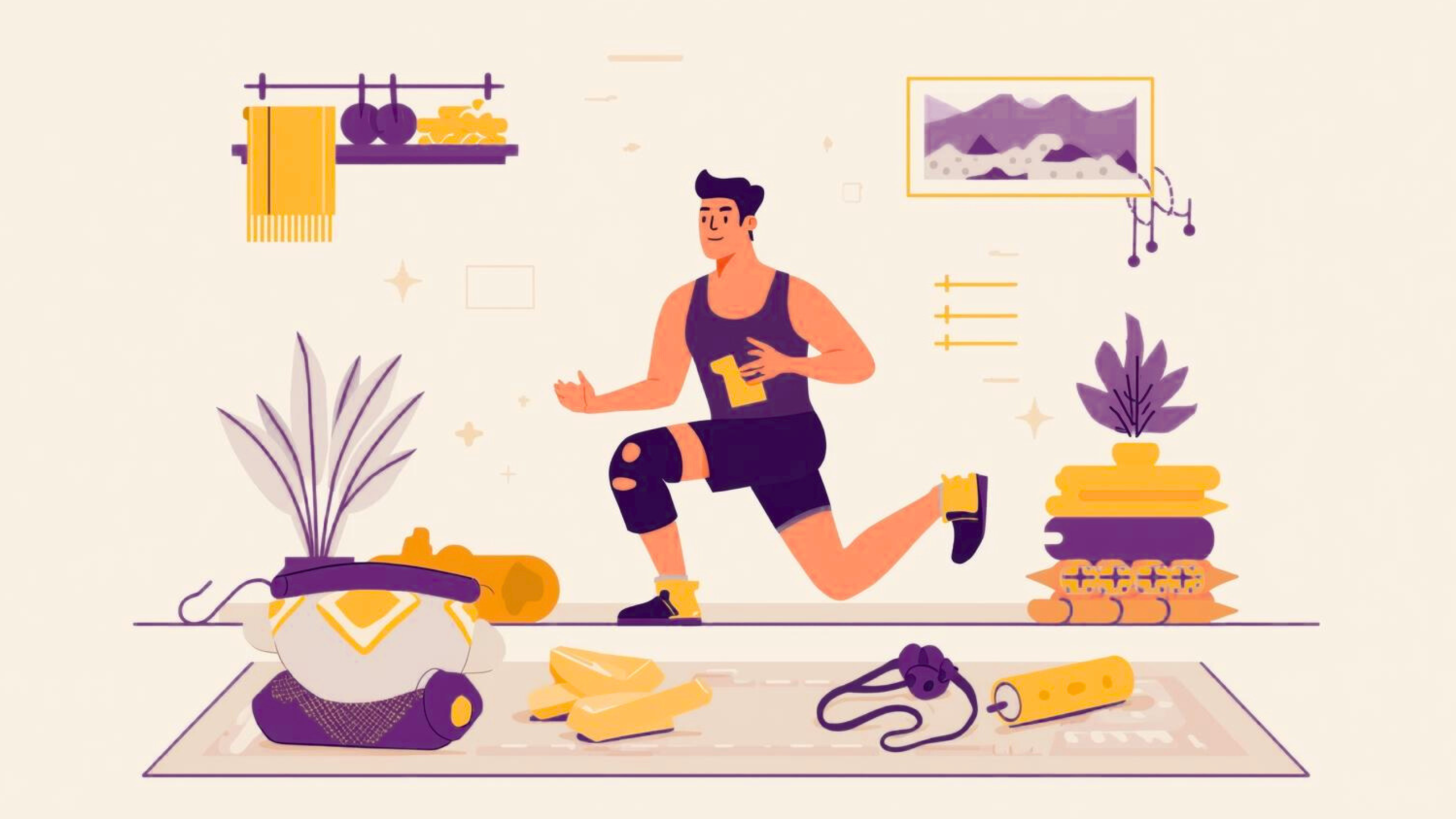
Let’s break it down: your knee’s healing journey isn’t a one-step fix but a three-part mission: move smart, support right, and recover well. Each pillar plays a unique role in rebuilding strength, stability, and long-term comfort.
Part 1 – The Move Pillar: Exercises That Strengthen and Heal
When we say knee strengthening exercises for pain relief, we mean purposeful movement that re-activates and retrains the supportive neighborhood around the knee glutes, hamstrings, quads, calves, and stabilizer muscles. Evidence strongly supports exercise as an effective pain-relieving intervention in knee osteoarthritis and other chronic knee conditions.[3]
A. Activation Moves
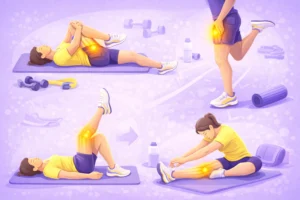
- Glute bridges: Lie on your back, feet flat, hips up. Engage glutes and hamstrings before the knee does the heavy load.
- Heel slides: On your back, slide your heel toward your butt, then back out, keeping the movement controlled. Great early-stage move.
- Side leg raises: Lying on your side, lift the top leg with control, strengthening hip abductors, which help knee alignment.
B. Strength Builders
- Mini squats (confidence builder): Feet shoulder-width, shallow squat (about 30° to 45°), keep knees tracking over toes, like your knees are on a polite little walk.
- Wall sits (patience test): Back against wall, knees at ~90°, hold for 15-30 seconds, repeat. Stability and endurance builder.
- Step-ups (everyday hero move): Using a step or low platform, step up and down slowly. Emulates real-life moves (stairs, curbs).
C. Mobility/Movement Quality
- Leg swings: Hold a stable support and swing your leg forward-back and side-side. Loosens hip, ankle, and knee chain.
- Hamstring stretches: Sitting or standing, reach toward toes (or use a band) to loosen tension pulling on the knee.
- Knee circles / controlled flex-extend: Gentle joint mobility to keep synovial fluid circulating.
In research, exercise programs (aerobic, strengthening, and neuromuscular) show improvement in pain and function for knee osteoarthritis patients. [4]
Pro Tip: Think “activate → strengthen → mobilize.” Movement isn’t punishment; it’s medicine.
Part 2 – The Support Pillar: Braces That Do More Than Just ‘Hold It Together’
Now let’s talk about the best knee support for exercise and rehab. Braces and sleeves aren’t just accessories; when used well, they can boost proprioception (your joint’s sense of itself), reduce instability and provide confidence during movement. A key study found that wearing a soft brace in people with knee osteoarthritis reduced pain and improved self-reported knee stability and joint confidence. [5]
Another investigation showed that wearing a soft brace reduced objectively measured dynamic knee instability in people with knee osteoarthritis. [6]
What does this mean in simple terms? The brace doesn’t magically “fix” the knee, but it helps your nervous-muscular system trust the joint again: less wobble, less fear, more movement.
Types and Use-Cases
- Compression sleeves: Light support, warmth, and circulation boost. Good for mild discomfort and general activity.
- Hinged or functional braces: For higher-risk loads (post-injury, instability). These guide movement and restrict unwanted motion. Research shows rigid or functional braces help stabilise the joint, especially after ACL injury. [7]
- Patella straps/bands: For conditions like patellar tendonitis or jumper’s knee (reduces tendon strain). [8]
Smart Usage
- Use the brace during activity when load or instability is higher (e.g., gym, stairs, sports).
- Don’t fully rely on the brace instead of building strength; the goal is support and empowerment, not dependency.
- Fit matters. A brace too tight may reduce circulation; too loose offers no benefit. Also, comfort = compliance.
In a large-scale PROM (patient-reported outcome measure) study of 381 patients with knee osteoarthritis given semi-rigid braces, results included reduced pain and increased mobility in daily life after three weeks. [9]
Hence, use support smartly; it’s a partner, not a crutch.
Part 3 – The Recovery Pillar: Tools That Accelerate Healing and Comfort
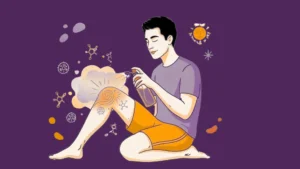
So you’ve moved. You’ve supported. Now let’s recover. This is where home remedies and tools for knee-pain recovery come into play. Recovery isn’t passive; it’s active in the sense of using the right tools to reduce load, boost circulation, relieve tension and allow tissue repair.
Recovery Tools & Habits
- Cold-compression wraps: Combine icing and gentle pressure to reduce inflammation and swelling after high-load sessions.
- Infrared/heat therapy pads: Use during lower-load periods to increase circulation, relax musculature and support healing.
- Foam rollers & massage guns: For fascial release, muscle tension, and improving tissue glide around the knee. Think of your tissues as snowbound: a little melt and movement helps.
- Kinesiology tape: Applied in specific ways, it may boost proprioception and reduce pain by unloading small forces across the knee.
- Active rest & gentle movement: Recovery does not mean zero movement. In fact, low-impact activity (walking, swimming, cycling) improves joint nutrition and cartilage health. [10]
Everyday Recovery Habits
- Elevate your leg after exercise if there’s swelling.
- Sleep posture: avoid the “knee fully locked” overnight; maybe a small pillow under the knee to relieve tension.
- Hydration and nutrition: tissues heal faster when well-nourished and hydrated.
- Micro-cooldowns: Even 5-minute gentle stretches and foam rolling after workouts reduce residual tension and promote healing.
Your knee doesn’t need a spa day; it needs a recovery plan.
Small Habits, Big Wins: Everyday Moves That Support Knee Healing
It’s the little things that often trip us up. This section is about safe workouts for weak or injured knees and daily movement tweaks that protect your knees while you recover.
Posture & Mechanics
- Proper foot placement: When standing or squatting, your knees should track over your toes, not buckling inward or popping outward.
- Avoid locking knees when standing long hours. Keeping knees slightly soft reduces joint load.
- Car seats, desk chair and daily ergonomics matter: If your hips are tilted or your seat is too low, your knee compensates.
- Stair climbing: Step up with support from glutes and hamstrings, not just knee quad isolation.
- Walking counts: According to research, walking more may reduce knee pain in osteoarthritis. [10]
Habit-Level Reminders With a Smile
Let’s be honest here, your knees don’t hate exercise, they just hate bad mechanics.
Yes, even your favorite “foot-over-foot” couch pose might be plotting against your knees. Sitting for prolonged periods can tighten hips and ankles, indirectly stressing knees. So stretch, move, align and let your knees breathe a little easier.
Supplements, Nutrition, and Recovery Foods for Stronger Knees

Here’s a less-talked-about angle: diet, supplements and nutrition can support knee recovery in synergy with movement and support. This isn’t anecdotal; tissue repair and inflammation are heavily influenced by what you eat.
Key Nutrients
- Collagen & gelatin: May support connective tissue repair (though research is still evolving).
- Vitamin C: Supports collagen synthesis and antioxidant defense.
- Omega-3 fatty acids: Anti-inflammatory properties, which can help lower joint-related inflammation.
- Magnesium: Good for muscle relaxation and nerve health.
- Hydration: Articular cartilage has no blood supply; fluid exchange happens during movement, so the more you hydrate, the better your joint lubrication.
While this isn’t a substitute for exercise, using nutrition smartly is like giving your knees the premium fuel they deserve. Good knees aren’t built in the gym alone; they’re repaired in the kitchen too.
The Power of Combination: How to Stack Exercises, Braces, and Tools to Heal Knees Faster?
Here’s where the magic happens. The three pillars (exercise, support, and recovery tools) don’t compete; they complement. Starting to strengthen without stabilizing or recovering properly can be like trying to build a house without foundations.
Why the combo works
- Movement reduces pain, improves function and delays joint degeneration. For example, a systematic review found that exercise programs probably result in improvements in pain and physical function in people with knee osteoarthritis. [11]
- Support (bracing) reduces instability, increases confidence, and allows safe movement under load. As shown, soft braces reduce pain and dynamic instability in knee OA patients. [12]
- Recovery tools and smart habits reduce residual load, aid tissue repair, promote circulation and accelerate the healing process.
Sample Combo Blueprint
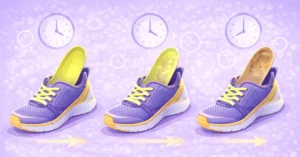
| Time of Day | Focus | What to Do |
| Morning | Mobility + Activation | 10-minute glute bridges & leg swings + compression sleeve during morning walk |
| Afternoon Workout | Strength & Support | Step-ups, mini squats, wall sits with hinged brace if instability present |
| Evening | Recovery | Foam rolling, infrared pad or cold wrap, gentle stretching, elevate leg slightly |
Post-Workout Knee Recovery Routine
After exercising, applying a recovery tool (foam roll/ice) while wearing a brace (if needed) and following up with light mobility sets ensures your knee doesn’t just “survive” the workout but benefits from it. It’s not about doing more, it’s about doing the right combo, consistently.
Fix Your Form: Posture and Daily Habits That Protect Your Knees
This might feel too simple to matter but posture and habitual movement patterns play a large role in knee health.
Key Habits
- When standing, shift weight evenly; avoid locking the knee or favoring one leg.
- When squatting or bending, push hips back and downward rather than letting knees shoot forward.
- Use supportive shoes if you’re on your feet a lot; ankle and foot alignment influence knee load.
- Regularly interrupt sitting. After long desk hours, stand and perform an ankle/hip mobility break that indirectly gives your knees a break too.
These micro-improvements protect weak or recovering knees and align with safe workouts for weak or injured knees.
Your knees are more resilient than you give them credit for; they just need you to move wisely.
Is Your Knee Healing Right? Spot the Early Signs of True Recovery
How do you know your combo strategy is working or if you need to make a pivot?
Good signs
- Gradually fewer days when the knee “warns” you before you even think about it.
- Climbing stairs or stepping off a curb without hesitation (or audible protests).
- Better balance and less wobble when doing single-leg or instability tasks.
- Reduced swelling and overall improved movement mechanics over time.
Warning signals
- Persistent or worsening pain after following the plan consistently for 2-3 weeks.
- New instability episodes (giving way, feeling like the knee might fold).
- Excessive swelling after workouts (beyond what you’d expect).
If you see warning signs, it’s time to revisit your plan. Maybe reduce the load, recheck the form, or get professional input. A good post-workout knee recovery routine should support improvement, not worsen things.
Common Knee Pain Mistakes That Slow Your Recovery
Here are rookie traps that undermine your knee comeback.
- Skipping warm-ups or cooldowns: Your knee doesn’t like being surprised.
- Pushing heavy loads too early: Some research shows high-intensity strength training may actually worsen symptoms in knee OA if not managed carefully. [13]
- Wearing a brace all day “just in case”: This can lead to muscle de-training rather than strengthening.
- Relying exclusively on one pillar (exercise alone, brace alone, tools alone): Real improvement comes via synergy.
- Ignoring form and alignment: Exercises done with poor mechanics often do more harm than good.
Your knees aren’t drama queens but if they’re shouting, listen. Proper respect and smart action go a long way.
Final Thoughts: Move Smart, Support Wisely, Recover Intentionally
Recovery is not about perfection; it’s about consistency. When movement, support and recovery tools team up, your knees don’t just heal, they thrive. Your knees have carried you through thousands of steps. It’s time to return the favor with a three-step mantra: Move smart. Support wisely. Recover intentionally.
So grab your mat, strap up your brace if you need it, and let’s give your knees the comeback they deserve.
Explore More Health & Wellness Solutions:
Want to stay informed about wellness and everyday health issues? Here are some insightful reads to guide you. Explore the links below for practical tips and solutions:
- Joint Discomfort: Causes, Symptoms, Treatments, and Prevention for Healthy Mobility
- Effective Lower Back Pain Self-Care: Tips for Relief and Prevention
- Muscle Pain Causes: Understanding Myalgia, Triggers, and Effective Relief
Frequently Asked Questions:
1. Should I wear my knee brace during sleep?
Not usually. Braces are designed for support during activity; full immobilization overnight may reduce muscle activation and isn’t necessary in most cases.
2. What’s the best post-exercise ice-to-heat timing?
A typical pattern: use ice if there’s swelling or acute load (10-15 min), and use heat (15-20 min) when you’re doing mobility or gentle recovery later in the day. Always check heat sensitivity and tissue response.
3. How long does it take to rebuild knee strength?
It varies. Many programs show meaningful improvement in pain and function within 8–12 weeks of consistent training [14]. Sustained results come with long-term consistency.
4. Can yoga or pilates help knee pain recovery?
Yes. A study comparing yoga vs. strengthening exercise found both gave clinically relevant pain reduction over 12 weeks in knee OA [15]. So if yoga appeals to you, it can be a valid part of the combo.
5. Is walking enough as a knee pain exercise?
Walking may not be sufficient when your knee needs strengthening and stability work, but it is a valuable part of the recovery toolbox. It improves circulation, joint nutrition and functional movement.
References
- Harvard Health Publishing. (2024, July 31). Take control of your knee pain. Harvard Health. https://www.health.harvard.edu/pain/take-control-of-your-knee-pain?
- Zeng, C.-Y., Zhang, Z.-R., Tang, Z.-M., & Hua, F.-Z. (2021). Benefits and mechanisms of exercise training for knee osteoarthritis. Frontiers in Physiology, https://pmc.ncbi.nlm.nih.gov/articles/PMC8716769/?
- Susko, A. M., & Fitzgerald, G. K. (2013). The pain-relieving qualities of exercise in knee osteoarthritis. Open Access Rheumatology: Research and Reviews, 5,
https://pmc.ncbi.nlm.nih.gov/articles/PMC5074793/?utm_source - Mo, L., Jiang, B., Mei, T., & Zhou, D. (2023). Exercise therapy for knee osteoarthritis: A systematic review and network meta-analysis. Orthopaedic Journal of Sports Medicine, 11(5), https://pmc.ncbi.nlm.nih.gov/articles/PMC10280533/?
- Cudejko, T., van der Esch, M., van der Leeden, M., Roorda, L. D., Pallari, J., Bennell,. (2017). The immediate effect of a soft knee brace on pain, activity limitations, self-reported knee instability, and self-reported knee confidence in patients with knee osteoarthritis. Arthritis Research & Therapy, https://pmc.ncbi.nlm.nih.gov/articles/PMC5709997/?
- Cudejko, T., van der Esch, M., Schrijvers, J., Richards, R., van den Noort, J. C., (2018). The immediate effect of a soft knee brace on dynamic knee instability in persons with knee osteoarthritis. Rheumatology, 57(10), 1735–1742. https://academic.oup.com/rheumatology/article/57/10/1735/5042121?
- Focke, A., Steingrebe, H., Möhler, F., Ringhof, S., Sell, S., Potthast, W., & Stein, T. (2020). Effect of different knee braces in ACL-deficient patients. Frontiers in Bioengineering and Biotechnology, 8, https://doi.org/10.3389/fbioe.2020.00964
- Cleveland Clinic. (2021, July 6). How a patellar tendon strap works. Cleveland Clinic Health Essentials. https://health.clevelandclinic.org/how-a-patellar-tendon-strap-works?
- Dries, T., van der Windt, J. W., Akkerman, W., Kluijtmans, M., & Janssen, R. P. A. (2022). Effects of a semi-rigid knee brace on mobility and pain in people with knee osteoarthritis. Journal of Rehabilitation Medicine – Clinical Communications
https://pmc.ncbi.nlm.nih.gov/articles/PMC9274778/? - Solan, M. (2022, August 31). Walking for exercise may prevent knee pain. Harvard Health Publishing. https://www.health.harvard.edu/pain/walking-for-exercise-may-prevent-knee-pain
- Lawford, B. J., Bennell, K. L., Hinman, R. S., & Holden, M. A. (2025). Exercise for osteoarthritis of the knee. Cochrane Database of Systematic Reviews. https://www.cochrane.org/CD004376/CENTRALED_exercise-effective-therapy-treat-knee-osteoarthritis?
- Cudejko, T., van der Esch, M., van der Leeden, M. (2019). Decreased pain and improved dynamic knee instability are pathways by which wearing a soft knee brace decreases activity limitations in knee osteoarthritis: A mediation analysis. Archives of Physical Medicine and Rehabilitation, https://pmc.ncbi.nlm.nih.gov/articles/PMC6771793/?
- Chen, H., Kaye, A. D., Scott, J. D., & Cornett, E. M. (2022). Exercise therapy for knee osteoarthritis: A review. JAMA, https://jamanetwork.com/journals/jama/fullarticle/2776330?
- Mo, L., Jiang, B., Mei, T., & Zhou, D. (2023). Exercise therapy for knee osteoarthritis: A systematic review and network meta-analysis. Orthopaedic Journal of Sports Medicine, 11(5), https://pmc.ncbi.nlm.nih.gov/articles/PMC10280533/?
- Lapa, M. E., Swabe, G. M., Rollman, B. L., Muldoon, M. F., Thurston, R. C., & Magnani, J. W. (2022). Assessment of depression and adherence to guideline-directed medical therapies https://jamanetwork.com/journals/jamanetworkopen/fullarticle/2832290?