





Every knee tells a story, whether you’re recovering from an injury, dealing with chronic discomfort, or just trying to stay pain-free. This comprehensive guide helps you discover the right knee exercise routine for your level: beginner, intermediate, or chronic pain, backed by science and Betterhood’s comfort-first wellness philosophy.
Understanding What Your Knees Are Telling You
Let’s be honest, your knees are often the first to protest when you push your body too far. Whether it’s that familiar stiffness after sitting too long or a sharp twinge while climbing stairs, knee pain is your body’s way of saying, “Hey, something needs attention.”
Understanding the difference between soreness and damage is step one. Soreness is usually a dull ache that improves with gentle movement. Damage, on the other hand, involves swelling, clicking, or sharp pain that worsens with motion. If your pain persists beyond a week, it’s smart to consult a physiotherapist before jumping into any new routine.
Biomechanically, the knee isn’t just one joint, it’s a complex hinge supported by muscles, tendons, and ligaments that rely on balance between strength and flexibility. When this harmony breaks (due to injury, poor posture, or inactivity), your knees start compensating, often painfully. [1]
Why One Routine Doesn’t Fit All Knees ?
A one-size-fits-all knee exercise plan? That’s like expecting the same pair of shoes to fit everyone possible, but wildly uncomfortable.
The key lies in progressive conditioning. A 2021 study from the Journal of Orthopaedic Research found that gradual, stage-based strengthening not only reduces pain but also improves long-term knee stability and proprioception (body awareness) [2].
That’s why we’ll break things down into three phases:
- Beginner: restoring basic mobility and circulation
- Intermediate: building strength and stability
- Chronic/advanced pain: maintaining long-term joint health and reducing inflammation
Stage 1: Beginner Knee Exercises: Restoring Mobility and Confidence
At this stage, the goal isn’t heavy lifting; it’s gentle consistency. You’re teaching your knee to move safely again.
1. Heel Slides
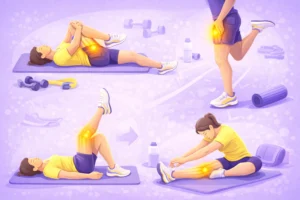
Lie on your back, bend one knee, and slowly slide your heel toward your hips, then back. It boosts joint lubrication and reduces stiffness.
2. Quad Sets
Sit upright, tighten your thigh muscles (quadriceps), hold for 5 seconds, then relax. Repeat 10 times. This strengthens muscles that stabilize your kneecap.
3. Glute Bridges
Lie on your back, knees bent. Lift your hips until shoulders, hips, and knees form a straight line. This move fires up your glutes, relieving knee pressure during walking or standing.
4. Calf Raises
Stand and lift your heels off the floor slowly. It enhances circulation and strengthens your calves, which play a surprisingly big role in knee alignment.
Form Tip: Focus on slow, controlled motion. Fast, jerky moves increase pressure on your ligaments.
A 2020 review in Clinical Rehabilitation found that early-stage mobility training combined with quadriceps activation improves pain management in people with mild to moderate knee osteoarthritis [2].
Stage 2: Intermediate Routine: Building Strength and Stability
Once your knee feels stronger and less swollen, it’s time to add resistance and balance work. The focus here is muscle coordination and endurance ,the secret sauce for pain-free knees.
1. Step-Ups
Use a low step or staircase. Step up with one foot, then the other, then step down. Keep your knee aligned with your second toe. This exercise mimics everyday movement and strengthens the quads and glutes.
2. Wall Sits
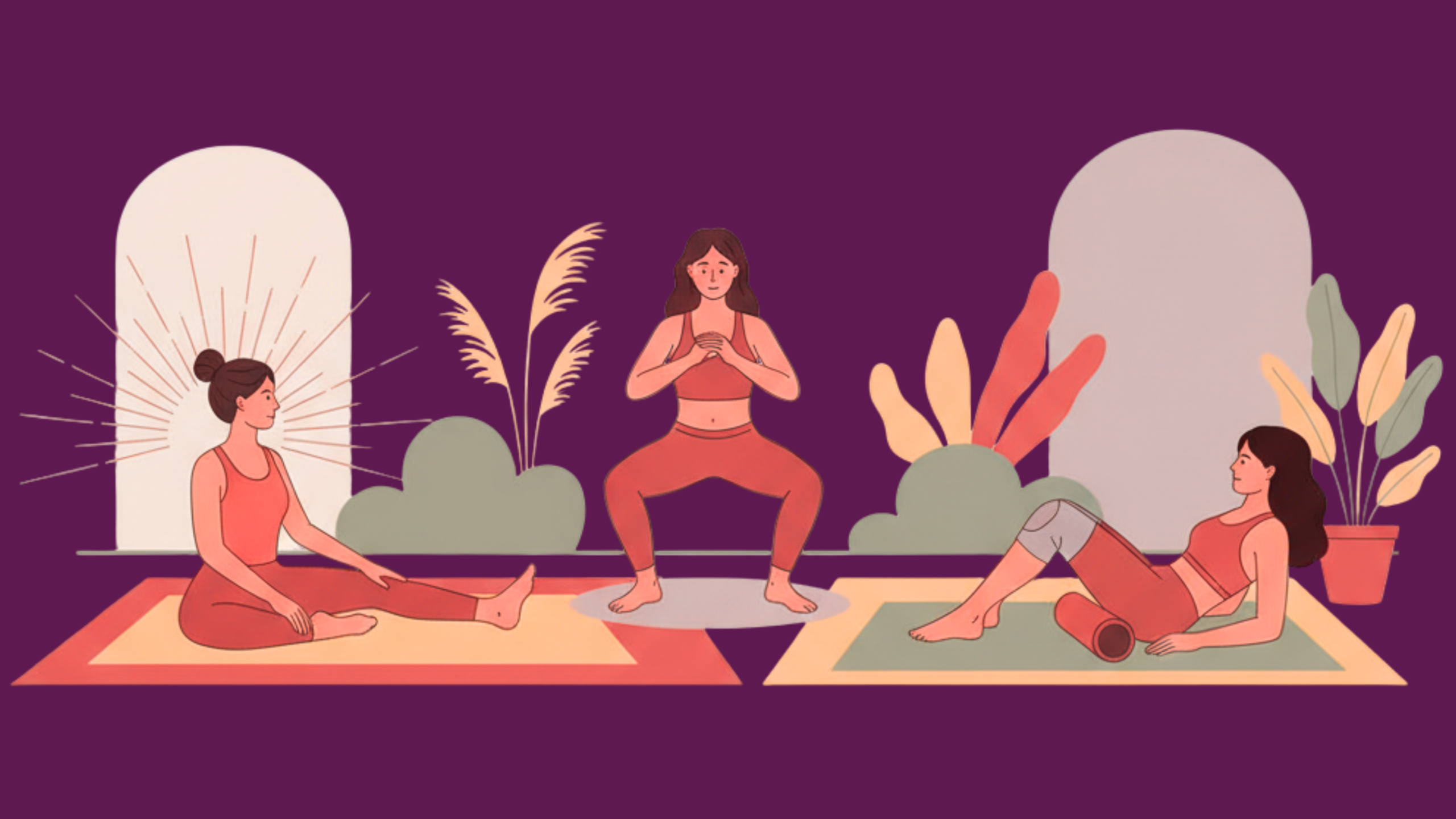
Lean against a wall, slide down until your knees form a 90° angle, and hold for 20–30 seconds. It’s like a squat without the joint strain.
3. Mini Squats
Stand tall, feet shoulder-width apart. Lower slightly (about 30° bend in knees), then rise. Don’t go too deep, small angles protect the joint.
4. Resistance Band Kicks
Attach a band to a sturdy object. Loop it around your ankle and extend your leg forward, sideways, or backward. It builds multidirectional knee control.
Progress Tracker Tip: If you can perform these moves without pain for two weeks straight, it’s a green light to progress further.
A 2019 study in The American Journal of Sports Medicine showed that progressive resistance training improves functional stability and cartilage health in adults with knee pain [3].
Stage 3: Chronic Pain and Long-Term Maintenance
Living with chronic knee pain doesn’t mean giving up movement, it means being strategic. Gentle, low-impact exercises can actually reduce inflammation by improving circulation and joint lubrication.
1. Hydrotherapy or Pool Exercises
Water supports your body weight, reducing impact while letting you move freely. Even walking in waist-deep water strengthens muscles safely.
2. Yoga and Mindful Mobility
Moves like Cat-Cow or supported Chair Pose build flexibility while easing tension. Mindful breathing lowers stress, which can reduce inflammatory responses [4].
3. Stationary Cycling
Keep your knees active with minimal load. Start with 5-10 minutes on low resistance, focusing on smooth motion.
Using an ergonomic coccyx seat cushion or lumbar support during long sitting hours helps maintain posture alignment, preventing added strain on your knees.
Recovery Tools That Complement Each Stage
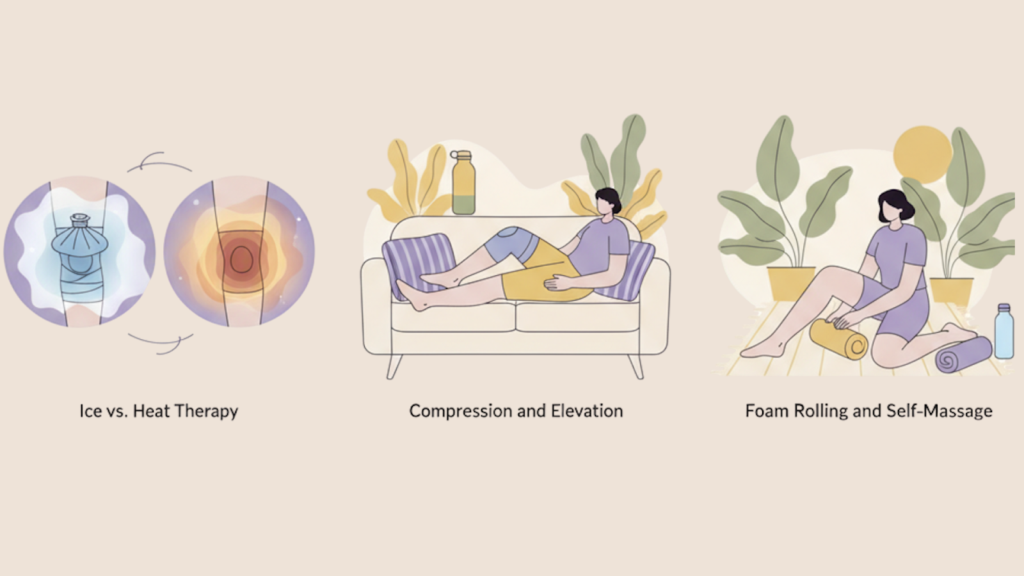
Even the best exercise plan can fall flat without recovery. Your muscles and connective tissues need time and tools to heal stronger.
1. Ice vs. Heat Therapy
Ice reduces inflammation right after activity, while heat loosens stiff muscles during recovery.
2. Compression and Elevation
Wearing knee sleeves helps control swelling and improves circulation. Elevating your leg above heart level speeds recovery.
3. Foam Rolling and Self-Massage
Focus on your thighs and calves. It eases tight fascia, the connective tissue that can tug on your knee joint.
A 2022 study in Frontiers in Physiology found that self-myofascial release (foam rolling) improved mobility and decreased delayed onset muscle soreness without harming performance [5].
Common Mistakes That Stall Progress
- Skipping Warm-ups: Cold muscles = tight joints. Always warm up with light stretches or a short walk.
- Overdoing Resistance: Pain is not progress. If you feel sharp pain, scale back immediately.
- Neglecting Posture: Slouching while exercising throws your knee alignment off. Keep your core engaged.
- Ignoring Rest Days: Your tissues repair during rest, not during reps.
Nutrition and Lifestyle Tips to Support Stronger Knees
Healthy knees aren’t built in the gym alone, they’re built in the kitchen too.
- Anti-inflammatory Foods: Think turmeric, ginger, berries, and fatty fish (rich in omega-3s).
- Hydration: Synovial fluid (your joint’s natural lubricant) depends on good hydration.
- Key Nutrients:
- Vitamin D: aids calcium absorption
- Collagen peptides: may improve cartilage resilience [6]
- Calcium + Magnesium: maintain bone strength
A 2021 meta-analysis in Nutrients showed that collagen supplementation improved knee joint comfort and function in physically active adults [7].
Lifestyle Boosters:
- Take standing breaks every 30 minutes if you sit for long hours.
- Choose ergonomic seating to maintain hip-knee alignment.
- Sleep 7–8 hours, growth hormone released during deep sleep aids tissue repair.
Signs You’re Ready to Level Up Your Knee Exercises (and When to Slow Down)
You’re ready to progress if:
- Pain subsides faster after workouts
- Range of motion increases
- You can climb stairs without limping
You need to slow down if:
- Swelling appears post-exercise
- Pain lingers beyond 48 hours
- Clicking or locking worsens
A 2023 report from Arthritis Care & Research confirmed that pacing and gradual load increments help prevent flare-ups while improving long-term mobility [8].
Finding the Right Balance Between Exercise and Comfort for Strong, Healthy Knees
Here’s a sample Betterhood Balance daily wellness routine you can adopt:
| Time | Routine | Purpose |
| Morning | 10 min heel slides + glute bridges | Activate muscles, improve circulation |
| Midday | Short walk + wall sit challenge | Maintain posture and strength |
| Evening | Gentle yoga or cycling | Flush out stiffness, improve recovery |
| Night | Ice or heat + ergonomic support | Relax muscles and aid repair |
Combining targeted movement with Betterhood’s comfort tools like lumbar cushions, posture supports, or ergonomic seat pads ensures your knees (and your spine) stay in sync.
Conclusion
Your knees carry you through every adventure, from dancing to deadlines. Finding the right exercise routine isn’t about pushing harder; it’s about listening smarter. Whether you’re just starting out, building strength, or managing chronic pain, consistency and mindful recovery are your true best friends.
At betterhood, we believe in a movement that feels good, supports recovery, and fits real life. So start slow, stay curious, and let your knees rediscover what pain-free movement feels like.
Explore More Posture & Wellness Solutions :
Ready to give your knees the love they deserve? Dive into our expert-backed guides designed to strengthen, stretch, and support your joints from the ground up.
Discover easy daily exercises, smart recovery tricks, and ergonomic tools that keep your knees pain-free and powerful, whether you’re walking, working, or working out. Because stronger knees mean stronger days ahead.
- Knee Joint Pain Causes: Common Reasons, Risk Factors, and Prevention Tips
- Mobility Exercises: Benefits, Techniques & Routines for Better Movement
- How Knee Support Helps Prevent Injury and Reduce Pain While Running
- A Complete Guide to Ankle Support Braces for Sprains
Frequently Asked Questions:
1. How do I know my knee pain stage?
If pain appears only after activity, you’re likely in the beginner phase. Persistent discomfort even at rest suggests chronic involvement.
2. Can I move from beginner to intermediate in a month?
Yes, if your pain and stiffness reduce consistently but don’t rush. Stability comes before intensity.
3. Are resistance bands safe for weak knees?
Absolutely! Just pick lighter tension and focus on control.
4. Should I exercise during flare-ups?
Do gentle mobility work, not strength training, until inflammation calms down.
5. What’s the best time to work out for knee health?
Morning routines warm up your joints for the day, while evenings help ease stiffness from sitting.
6. Do ergonomic cushions really help?
Yes! Proper posture support reduces hip-knee pressure alignment, easing pain during long sitting hours.
References
- Zhang, L. (2020). Knee Joint Biomechanics in Physiological Conditions and Common Patellofemoral Joint Disorders. Journal of Healthcare Engineering, 2020, https://www.ncbi.nlm.nih.gov/pmc/articles/PMC7160724/
- Cleveland Clinic. (2023, March 2). Knee joint: Function & anatomy. Cleveland Clinic. https://my.clevelandclinic.org/health/body/24777-knee-joint
- Turner, M. N., et al. (2019). The role of resistance training dosing on pain and physical function in knee osteoarthritis: A systematic review and meta-analysis. The American Journal of Sports Medicine.https://pmc.ncbi.nlm.nih.gov/articles/PMC7040944/
- Lu, J., et al. (2024). The impact of Yoga on patients with knee osteoarthritis. Frontiers in Medicine. https://pmc.ncbi.nlm.nih.gov/articles/PMC11098307/
- Zahiri, A., et al. (2022). Core muscle activation with foam rolling and static planks. Frontiers in Physiology. https://www.frontiersin.org/journals/physiology/articles/10.3389/fphys.2022.
- Honvo, G., Reginster, J.-Y., Rannou, F., & Gillain, S. (2020). Role of collagen derivatives in osteoarthritis and cartilage repair: A systematic review and meta-analysis. Therapeutic Advances in Musculoskeletal Disease,https://pmc.ncbi.nlm.nih.gov/articles/PMC7695755/
- Simental-Mendía, M., Ortega-Mata, D., Acosta-Olivo, C. A., Simental-Mendía, L. E., Peña-Martínez, F. (2025). Effect of collagen supplementation on knee osteoarthritis:https://pubmed.ncbi.nlm.nih.gov/39212129/
- Barakou, I., et al. (2023). A multidimensional activity pacing model for chronic pain management: A narrative review. Arthritis Care & Research. https://www.tandfonline.com/doi/full/10.1080/07853890.2023.2270688