






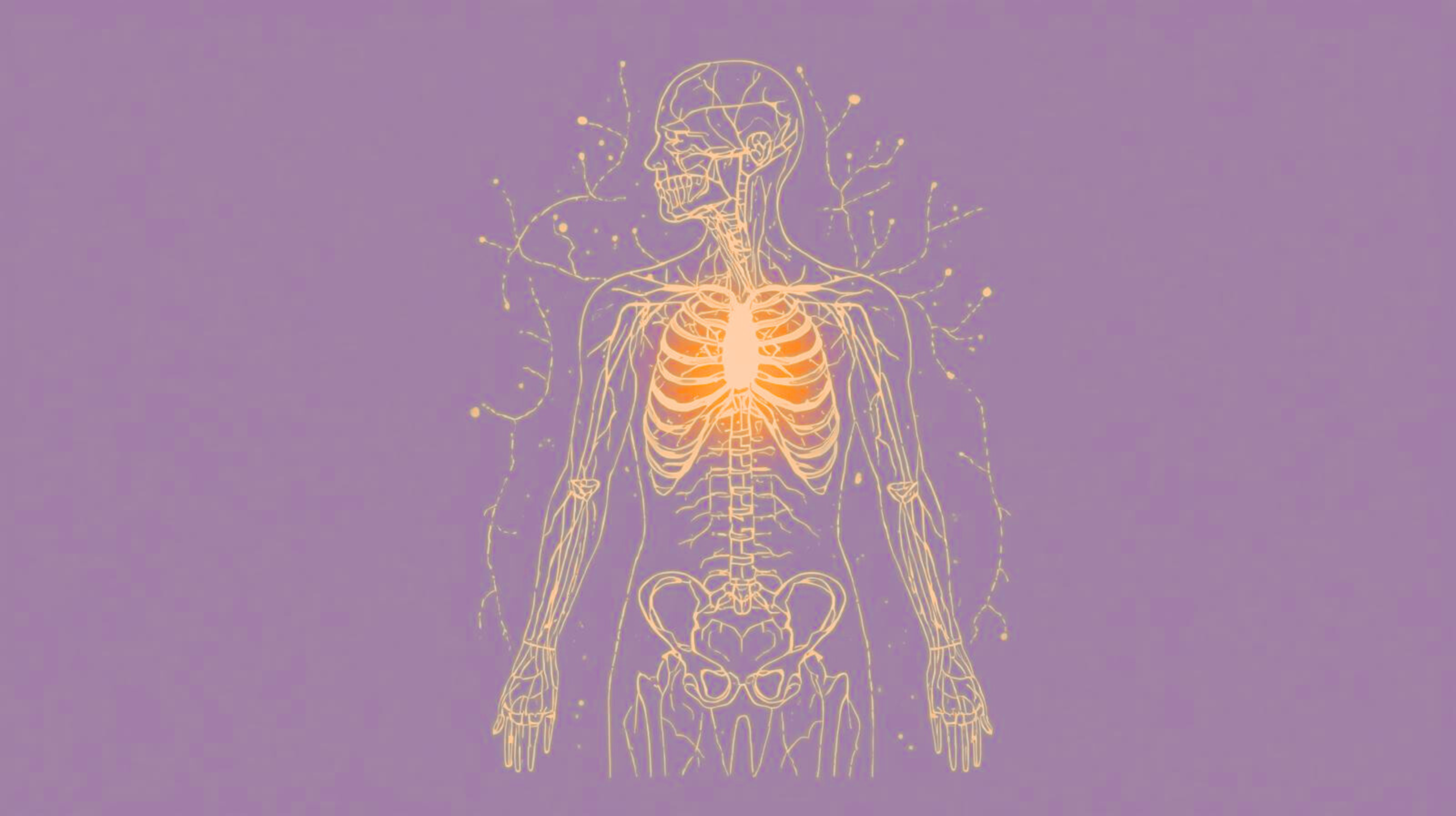
We often hear people say, “I carry a lot of tension in my body.”
But here’s a deeper truth for many of us: that tension isn’t random, and it isn’t just stress.
It’s a memory.
Not memory stored as thoughts or stories, but memory held in the nervous system. Your body remembers patterns. Tight shoulders when you’re criticized. A clenched jaw when you feel judged. Shallow breathing when you feel unsafe. This is not coincidence. It’s learned survival.
What feels like “just tension” may actually be your body remembering who hurt you.
This is the mind–body connection in action, where emotional stress in the body becomes physical reality.
Trauma Isn’t Just Psychological – It’s Physiological
Trauma does not live only in the mind. It imprints itself into the polyvagal nervous system, muscles, breathing patterns, and connective tissue. [1]
When you experience fear, shame, or emotional pain, especially repeatedly, your nervous system activates the fight flight freeze response. [2] Muscles tighten. Breath shortens. Posture collapses or braces. These reactions once helped you survive.
Over time, they become automatic.
Just as muscles can “forget” how to activate (muscular amnesia), they can also learn to stay guarded. [3] This is known as chronic muscle guarding. Your body remembers the threat even when your conscious mind has moved on.
What Is Muscle Memory in the Nervous System?
Muscle memory in this context is not about movement skill. It’s about patterned protection.
The nervous system learns through repetition. If tension once prevented harm, it keeps the pattern active. This creates a somatic stress response where muscles react before thought occurs. [4]
Unlike psychological memory, which can be recalled and processed consciously, nervous system memory is reflexive. It lives below awareness, shaping posture, breath, and pain signals.
Difference Between Stress and Stored Trauma
Not all tension is trauma.
- Stress is usually situational and resolves when the stressor ends.
- Stored trauma persists even in safe environments.
Stress fades. Stored trauma stays because the nervous system never received a clear “all safe” signal. That’s why some people feel anxious, tight, or exhausted even when life is objectively calm.
This is emotional stress in the body, not weakness or overreaction.
How the Body Learns to Hold Trauma
The nervous system asks one question during threat: How do I keep you safe next time?
The answers often look like this:
- Shoulders raised to protect the neck
- Chest collapsed to reduce visibility
- Jaw clenched to suppress expression
- Breath held to avoid detection
- Hips tightened to prepare for freeze or escape
These responses repeat until they feel normal. Eventually, you stop noticing them until pain, fatigue, or burnout appears.
How Fascia Contributes to Long-Term Tension
Fascia is the connective tissue web surrounding muscles and organs. It responds strongly to emotional and physical stress. [5]
When stress becomes chronic, stress stored in fascia reduces elasticity. Tissue becomes dense, dehydrated, and less responsive. This is why tension can feel “stuck” and resistant to stretching.
Fascia remembers what muscles try to forget.
Why Stretching Alone Doesn’t Release Deep Tension
Stretching targets muscles, but stored trauma lives in the nervous system.
Without addressing safety and regulation, stretching can:
- Trigger protective reflexes
- Increase guarding
- Create temporary relief without lasting change
True release requires body-based trauma healing, where the nervous system learns it no longer needs protection. [6]
Why “Holding It Together” Costs You
Chronic muscle guarding creates a cascade:
- Constant tension drains energy → persistent fatigue
- Restricted breathing → anxiety and reduced focus
- Poor posture → neck pain, headaches, back pain
- Overactive stress response → inability to relax
This often shows up as mind-body connection pain, where medical scans look “normal” but symptoms persist.
Your body isn’t broken. It’s exhausted.
Everyday Triggers That Reactivate Old Patterns
You don’t need major trauma to activate these responses:
- Being interrupted or dismissed
- Receiving feedback or criticism
- Entering unfamiliar environments
- Feeling rushed or ignored
- Mild conflict
Your body reacts before your mind processes. That’s conditioning, not overreaction.
Signs Your Body Is Holding Old Memories
Common signals include:
- Tight neck or shoulders that won’t relax
- Holding breath unconsciously
- Jaw clenching during focus
- Feeling on edge without clear reason
- Sudden fatigue after emotional conversations
These are communication signals, not flaws.
The Role of Safety in Physical Healing
Healing does not begin with force. It begins with safety.
The nervous system releases protection only when it perceives stability. Safety is communicated through:
- Slow, extended exhalation
- Gentle posture support
- Predictable movement
- Non-threatening awareness
This is why trauma release exercises emphasize regulation over intensity.
A Simple 3-Minute Nervous System Reset
These are not workouts. They are signals.
1. Grounded Breathing (1 minute)
Inhale through the nose for 4 seconds, exhale for 6. Let the shoulders soften.
2. Shoulder Rolls with Awareness (1 minute)
Roll back and down slowly. Release effort, not just tension.
3. Gentle Chest Opening (1 minute)
Clasp hands behind the back and open slightly. No forcing.
These practices teach the nervous system that now is different from then.
How Long Does It Take for the Body to Relearn Safety?
There is no fixed timeline.
Some people feel shifts within weeks. Long-held patterns may take months. Healing is nonlinear. What matters is consistency, gentleness, and repetition.
The nervous system learns through experience, not logic.
When to Seek Professional Support for Body-Based Healing
Consider support if you experience:
- Persistent pain without injury
- Panic, dissociation, or numbness
- Sleep disruption
- Emotional overwhelm during body awareness
Professionals trained in somatic therapy, trauma-informed physiotherapy, or nervous system regulation can guide safe release.
Final Thought
What you call tension may be wisdom that hasn’t been updated yet.
Your body remembered because it cared enough to protect you. Now it needs reassurance, not judgment.
Healing begins when you stop asking, “What’s wrong with my body?”
and start asking, “What did my body learn, and how can I help it feel safe now?”
Because sometimes, the deepest memories aren’t in your mind.
They’re in your muscles, and they’re ready to let go.
Where Betterhood Fits In
At Betterhood, the connection between posture, movement, and nervous system health is central to everyday well-being. Prolonged tension is often reinforced by the environments we spend time in—especially during long hours of sitting or working.
Insights from the Betterhood Learn section highlight that poor posture and static positions can amplify physical stress, while proper ergonomic support helps the body relax and reduces unnecessary muscular guarding.[7]
By designing solutions that support natural alignment and reduce strain, Betterhood creates conditions where the body feels safer. This sense of physical support can play a subtle but important role in helping the nervous system shift out of protection mode.
Because healing is not only about what you do actively, but also about the environment you place your body in every day.
Co- authored by: Shayamal Vallabhjee
Chief Science Officer: betterhood
Shayamal is a Human Performance Designer who works at the intersection of psychology, physiology, and human systems design, for the last 25 years he is helping high-performing leaders, teams, and athletes thrive in environments of stress, complexity, and change. His work spans across elite sports, corporate leadership, and chronic health—and is grounded in the belief that true performance isn’t about pushing harder, but designing better.
FAQs
1. Can stored trauma cause chronic pain without injury?
Yes. Nervous system sensitization and muscle guarding can create real pain without structural damage.
2. Is muscle tension always linked to emotional experiences?
Not always, but emotional factors commonly contribute, especially when tension is chronic and unexplained.
3. Can nervous system healing improve sleep quality?
Yes. Regulation supports parasympathetic activation, improving sleep depth and recovery.
4. How is muscle memory different from psychological memory?
Muscle memory is reflexive and unconscious, while psychological memory is narrative-based and conscious.
5. Can physical symptoms appear years after emotional stress?
Yes. Stored patterns can remain dormant until reactivated by life events or cumulative stress.
6. Are body-based healing methods safe for everyone?
Most are gentle, but trauma-informed guidance is important for individuals with severe trauma histories.
7. What professionals work with trauma stored in the body?
Somatic therapists, trauma-informed physiotherapists, osteopaths, and certain psychologists.
8. Can improving posture help calm the nervous system?
Yes. Posture influences breathing and vagal tone, directly affecting nervous system regulation.
References
[1] van der Kolk, B., 2014. The Body Keeps the Score. Available at: https://www.penguinrandomhouse.com/books/313896/the-body-keeps-the-score-by-bessel-van-der-kolk-md/
[2] McEwen, B.S., 2007. Physiology and neurobiology of stress. Available at: https://www.ncbi.nlm.nih.gov/pmc/articles/PMC2924122/
[3] Travell, J.G. & Simons, D.G., 1999. Myofascial Pain and Dysfunction. Available at: https://www.goodreads.com/book/show/363828.Myofascial_Pain_and_Dysfunction
[4] Levine, P.A., 2010. In an Unspoken Voice. Available at: https://www.northatlanticbooks.com/shop/in-an-unspoken-voice/
[5] Schleip, R. et al., 2012. Fascia as a sensory organ. Available at: https://www.ncbi.nlm.nih.gov/pmc/articles/PMC3512278/
[6] Porges, S.W., 2011. The Polyvagal Theory. Available at: https://wwnorton.com/books/9780393707007
[7] betterhood, 2026. Correct Ergonomic Sitting Position at Work for Pain Relief. Available at: https://betterhood.in/learn/ergonomic-sitting-position/


