







Your knees take you through life, quite literally. They allow you to climb stairs, chase your kids, hit the gym and take weekend hikes. So when knee pain strikes, it can feel as if your whole world is slowing down. That’s where a knee brace comes in, providing support, stability, and optimism for returning to the activities that you love.
But what can a knee brace actually do? And, more importantly, would it provide the right solution for your knee woes? Here’s a look at everything you need to know about these strong support systems.
Knee Braces 101: Your Knee’s Support System Explained
A knee brace is a support garment worn around the knee to provide stability, lessen pain and prevent re-injury. Think of it as a trusted sidekick to your knee helping mitigate the force of impact evenly, avoiding all those damaging sudden movements and providing your joint with extra support for when you need it most or want to perform at optimal level.
There are many reasons people wear knee braces. Maybe you are in recovery from surgery, have chronic arthritis induced pain, a sports-related injury or maybe trying to avoid knee issues as you progress through high-impact sports. Common problems that knee bracing can help with are osteoarthritis, anterior cruciate ligament (ACL) tears, meniscus injuries, patellofemoral pain syndrome (runner’s knee), and post-surgical recovery (1).
Recent studies have demonstrated how well the devices can work. An influential 2026 study discovered that people who used knee braces reported less pain, greater physical functioning and quality of life than those who did not (2). That’s no small enhancement, that’s life-changing support!
How a Knee Brace Works?
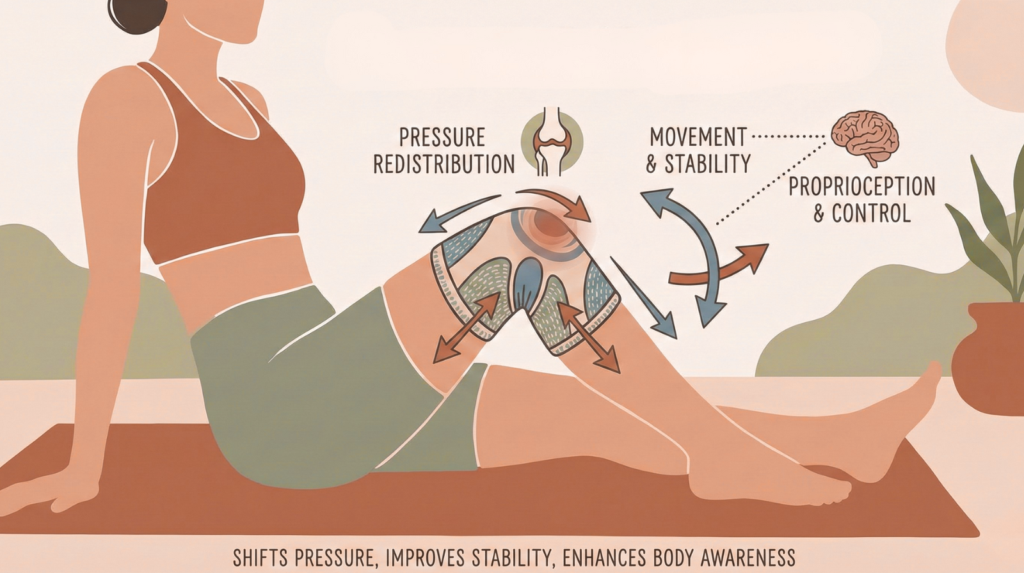
Knowing how knee braces work largely contributes to their value. They work using a few basic concepts:
Pressure Distribution and Joint Support
A key way knee braces can help is by shifting pressure around your knee joint. When you have conditions like osteoarthritis, specific parts of your knee carry too much load, resulting in pain and causing the joint to wear more quickly. Unloader braces, for example, can redistribute the weight from injured areas, giving those overworked compartments a long overdue rest (3).
Valgus knee braces (which force the knee outward a bit) can take pressure off your medial tibiofemoral compartment, that is, the inside of your knee where arthritis typically does its worst damage (4). This mechanical intervention can reduce knee force during activities by up to 18% (5).
Limiting Excessive Movement
Knee braces also operate by politely limiting some movements that might aggravate your injury or result in pain. This doesn’t mean your immobilized, as modern braces actually facilitate healthy, natural motion and prevent the sort of movements that would stress an already-injured structure.
Knee sleeve compression activates mechanoreceptors in and around your joints, enhancing your proprioception (your body’s sense of where your knee is in space) (6). The better your proprioception, the more control you have, and we communicate a heightened sense of stability lessening the chances of re-injury and improving confidence in movement.
Types of Knee Braces and Their Functions
Knee braces are not a case of one size fits all. The right type for you depends on your condition and goals:
Prophylactic Braces:
These are made to prevent injuries before they occur. Athletes sustain valgus forces that can injure the medial collateral ligament (7) and frequently wear prophylactic bracing to prevent significant MCL damage when involved in contact sports such as football.
Functional Braces:
If you have a current ligament injury, particularly to the ACL, functional braces can help keep your knee stable.They are frequently worn following ACL reconstruction to help stabilize your knee as it heals (8).
Rehabilitative Braces:
These are the braces you wear after having surgery or an injury. They restrict motion in the early stages of healing to protect repaired tissues, and permit controlled, safe movements as you advance through rehabilitation.
Patellofemoral Braces:
Made for runner’s knee and patellar tracking problems, the braces exert a force on your kneecap in a medial direction, so it would slide better in its track and to decrease joint stress (9).
Unloader/Offloader Braces: Designed for osteoarthritis, unloader braces unload pressure from the degenerated compartment of your knee, which can lessen pain and improve function (10).
What Are The Benefits of Wearing a Knee Brace?
Wearing a knee brace has many benefits beyond support:
Pain Relief:
Pain is one of the things you will notice from your first session. Research has repeatedly demonstrated that knee braces, especially for osteoarthritis, are one of the best forms of intervention to help lower pain even working as well or better than certain medications (11).
Better Stability and Confidence:
If your knee is unstable, every step is tentatively taken. A soft knee support brace has been found to decrease self-reported knee instability among individuals with symptomatic medial compartment knee arthritis, so you can take your strides with more confidence (12).
Improves Healing & Recovery
By reducing pressure and harmful movements, knee braces help stabilize damaged structures and promote healing. These contraptions can help offload injured tissues, such as meniscus in the case of medial compartment OA during movement (13).
Better Flexibility and Function:
The formula for pain reduction plus stability plus confidence results in better function. So you can get back to normal daily activities, exercise and the things in life you like to do sooner and more safely.
When to Wear Knee Braces?
The key to getting the most out of your knee brace is knowing when to wear it:
When working out and playing sports: If you are getting back into exercise and sport after an injury, a brace could give you extra protection and security.
Post-surgical rehabilitation: Following knee surgery, to protect healing tissues most surgeons will recommend a brace.
Managing chronic conditions: For a joint condition like arthritis, using a brace during activities that strain your knee can help manage symptoms.
Injury prevention: If you’re high-risk for knee injury, based on your sport or activity level, prophylactic bracing can provide helpful protection.
Who Should Avoid Wearing Knee Braces?
Knee braces are generally safe, but there are some cases in which you should be cautious:
Anyone with serious circulation problems or skin conditions should talk to their doctor before using a knee brace, as pressure could exacerbate these issues. If you notice increased pain, numbness or tingling while wearing a support, remove and consult your doctor. It’s also important for a brace to fit correctly, if it doesn’t, it can do more harm than good.
How To Choose The Right Knee Brace For Yourself?
There are many things to factor in when choosing the right knee brace:
Consult a Healthcare Professional: Begin with your physician or physical therapist. They will be able to diagnose what is specifically wrong and tell you the type of brace that would be best for your situation.
Consider Your Activity Level: What you need is not the same as what a marathon runner needs, or someone using arthritis pain relief throughout the day.
Prioritize Proper Fit: A brace that is too tight will restrict circulation, and one that is too loose won’t provide enough support. A lot of companies provide sizing charts, but nothing can replace professional fitting.
Consider Comfort and Quality: You will be more likely to wear a brace that is both comfortable and of high quality. Seek out breathable fabrics and quality construction that can stand up to daily wear.
How to Wear and Maintain a Knee Brace
Getting the most from your knee brace requires proper care:
Putting Your Brace On: Always wear your brace properly as directed by your healthcare provider. Begin with the strap below the back of knee to stabilize brace (generally), then apply upper and lower hook & loop fasteners from bottom to top (14). It should be a tight fit, but not so tight it cuts off circulation.
Daily Wear Duration: The length of time you will need to wear your brace each day will depend on your condition. For injury recovery, you could wear it throughout the day while engaging in activities. For workout support, you might only need it during workouts. Studies have shown that muscle atrophy does not occur with prolonged use, if the brace fits the patient appropriately (15).
Maintenance: Clean your brace as often as the manufacturer recommends; many can be hand-washed using mild soap. Allow to air dry fully before wearing again. Check as much to ensure there is no wear and tear.
Conclusion
Contrary to popular belief, knee braces do much more than simply wrap around the joint, they provide targeted support, decrease pain and inflammation, increase stability and even help you maintain your active lifestyle! If you’re recovering from surgery, managing arthritis, or preventing injury, the perfect knee brace can make all the difference in your preventative wellness efforts.
And it’s important to keep in mind that a knee brace is most effective when used as one aspect of an overall treatment plan, which could involve physical therapy, exercise and other interventions. Think of it as one crucial tool in your toolkit for knee health; not a standalone solution, but an important companion on your journey to better movement and less pain.
Explore More Health & Wellness Solutions:
Want to stay informed about wellness and everyday health issues? Here are some insightful reads to guide you. Explore the links below for practical tips and solutions.
- How to Prevent Knee Injuries: Proven Tips, and Lifestyle Strategies for Stronger Joints
- How Can Knee Cap Support Help Prevent Injury and Reduce Pain While Running
- 10 Effective Home Remedies for Body Pain Relief Naturally
Frequently Asked Questions
No, knee braces won’t cure whatever it is you’re actually hurting. “But are they a good tool to help manage symptoms, support healing and improve function? For long-lasting relief, pair brace use with physical therapy, strength training and treatment for whatever is causing your knee problems.
This depends on the condition and individual needs. Or you may wear it throughout the day, while doing activities, for recovery from injury. For workout support, only during workouts. Recent studies demonstrate that extended wear time does not lead to muscle weakness, so stick to your doctor’s orders without fear (15).
In general, doctors don’t advise sleeping in a knee brace other than under certain circumstances such as early post-surgical recovery or if your doctor is preventing movement while resting with the brace (16). Your knee will generally thank you for being free to move around when sleeping as well, whatever your condition.
Absolutely. Many athletes are known to wear a knee brace when training or competing, which helps with injury prevention and stability. Prophylactic braces may reduce the risk of injury in contact sports, and functional supports protect previously injured knees for vigorous activity (18).
Yes! Stabilizing and support braces for their knees Knee braces are of great benefit to senior citizens with osteoarthritis. There is emerging evidence that proper bracing in the older patient results in substantial reductions of pain and improvement in both function and quality of life (17). The trick is getting the right fit and selecting a brace that suits your level of activity.
References
- Cleveland Clinic. (2024). Knee Braces, Sleeves & Support. Retrieved from https://my.clevelandclinic.org/health/treatments/21034-knee-brace
- Medical Xpress. (2026). Knee braces offer low-risk and effective option for managing painful arthritis. Retrieved from https://medicalxpress.com/news/2026-01-knee-braces-effective-option-painful.html
- National Institutes of Health. (2011). A Mechanical Hypothesis for the Effectiveness of Knee Braces. Retrieved from https://pmc.ncbi.nlm.nih.gov/articles/PMC3217466/
- National Institutes of Health. (2024). Functions and Effectiveness of Unloader, Patellofemoral, and Knee Sleeve Braces. Retrieved from https://pmc.ncbi.nlm.nih.gov/articles/PMC11233114/
- Frontiers in Bioengineering and Biotechnology. (2016). Biomechanical Analysis of the Effects of Bilateral Hinged Knee Bracing. Retrieved from https://www.frontiersin.org/journals/bioengineering-and-biotechnology/articles/10.3389/fbioe.2016.00050/full
- ScienceDirect. (2018). Biomechanical and functional efficacy of knee sleeves: A literature review. Retrieved from https://www.sciencedirect.com/science/article/abs/pii/S1466853X1730202X
- American Academy of Family Physicians. (2000). Knee Braces: Current Evidence and Clinical Recommendations. Retrieved from https://www.aafp.org/pubs/afp/issues/2000/0115/p411.html
- National Institutes of Health. (2024). Effect of knee bracing on clinical outcomes following anterior cruciate ligament reconstruction. Retrieved from https://pmc.ncbi.nlm.nih.gov/articles/PMC10891282/
- National Institutes of Health. (2024). Functions and Effectiveness of Patellofemoral Knee Braces. Retrieved from https://pmc.ncbi.nlm.nih.gov/articles/PMC11233114/
- Osteoarthritis and Cartilage. (2015). Biomechanical effects of valgus knee bracing: a systematic review. Retrieved from https://www.oarsijournal.com/article/S1063-4584(14)01341-7/fulltext