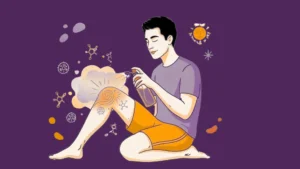






If you’ve ever hobbled home after a long day or night of wearing high heels work, walking through the city in flip flops running to catch that subway, or danced the night away till dawn in sky-high stiletto’s, chances are your fascia (the thick connective tissue that supports and protects your muscles) has been face down resting, crying out help me! Your feet are the foundation of your entire skeletal system. When that base is being swept away or whooshed out from under you, the impacts reverberate up your body, doing weird things to your knees and hips, even your spine.
While specialized shoes and orthotic inserts offer temporary relief, they often act like a crutch, supporting the foot without actually making it stronger. To truly fix the problem and reclaim your alignment, you need to wake up the dormant muscles in your soles. Integrating a targeted flat feet exercise routine into your week is one of the most effective, natural ways to rebuild your arches and prevent the cascade of posture problems that come with them.
In this guide, we will explore why your arches collapse, the “kinetic chain” connection to your back pain, and the specific movements you can do right now to build a stronger, more stable foundation.
What Are Flat Feet?
Before fixing the issue, it is helpful to define it. Flat feet, medically known as pes planus, occur when the natural arch on the inside of your foot collapses, allowing the entire sole to touch the floor when you stand.
In a structurally sound foot, the arch acts as a spring, absorbing shock and distributing body weight evenly across your legs. When that arch falls, your foot loses its natural suspension system. While some people are born with flat feet due to genetics, many develop “adult-acquired flatfoot.” This often happens due to aging, injury, or simply years of wearing unsupportive footwear that weakens the muscles responsible for holding the arch up.
The Hidden Connection: How Flat Feet Ruin Your Posture?
It’s simple to section off pain. If your back hurts, you naturally think it is a back problem. If your knees are in pain, it must be a problem with the knee. But here at Betterhood, we see the body as a system. This idea is called the kinetic chain.
In flat foot (pes planus), your foot doesn’t just flatten; it also rolls inwards. This motion is called overpronation.
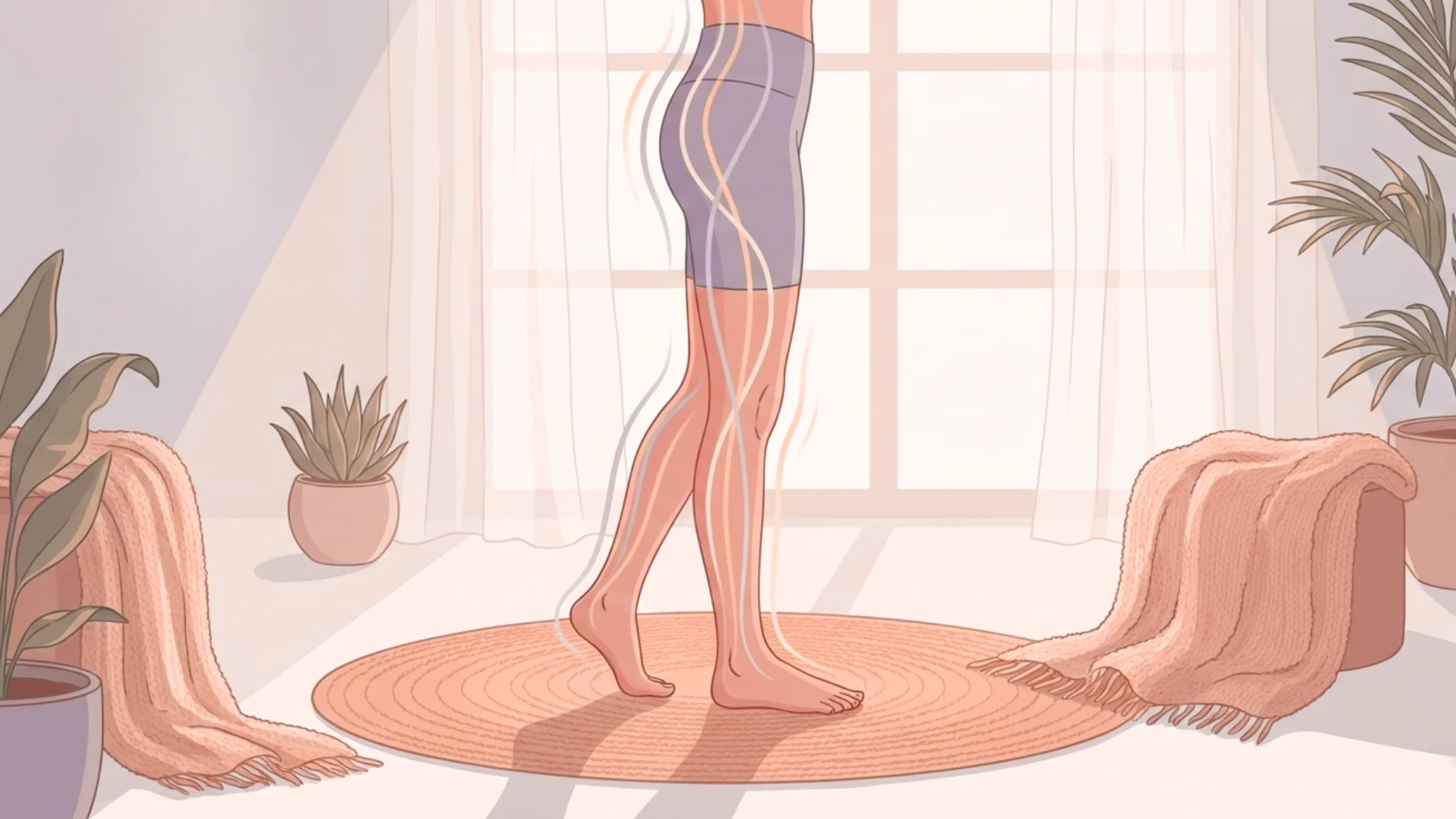
- The Chain Reaction: As the foot moves in, it pulls the shin bone (Tibia) into an internal rotation. This results in the thigh bone (femur) also rotating inward, pushing the knees to collapse inward too (valgus stress).
- The Pelvic Tilt: This medial rotation of the lower legs often pulls the pelvis into an anterior tilt (tipping forward), which causes an excessive arched back.
All of the sudden, your foot issue is actually the cause of your lower back pain. That’s why we so often advise that before you purchase that new mattress or pricey chair, take a good long look at your feet. Correcting this foundation with a focused flat feet exercise routine, is often the first step to real posture alignment.
Can You Improve Flat Feet? Why Your Foot Type Matters
It’s the million dollar question, isn’t it? That depends on what type of flat feet you have.
Structural or Bony Flat Feet:
If your foot is a flat when you’re sitting down and lifting it off the ground, that’s most likely structural (bone-related). Exercises may allow better pain management, but they won’t change the bony structure.
Flexible Flat Feet:
If an arch is present when sitting or standing on tip-toes, but disappear while standing normally you have flexible flat feet. This is a muscle and mechanical problem.
The answer, with flexible flat feet, is a hearty yes. The collapse occurs when the muscles of the foot that support your arch lose strength and it can’t hold up your body, so it slowly falls. Just as you can strengthen big weak glutes, you can also strengthen weak feet.
5 Must-Try Flat Feet Exercises for Building Arch Strength
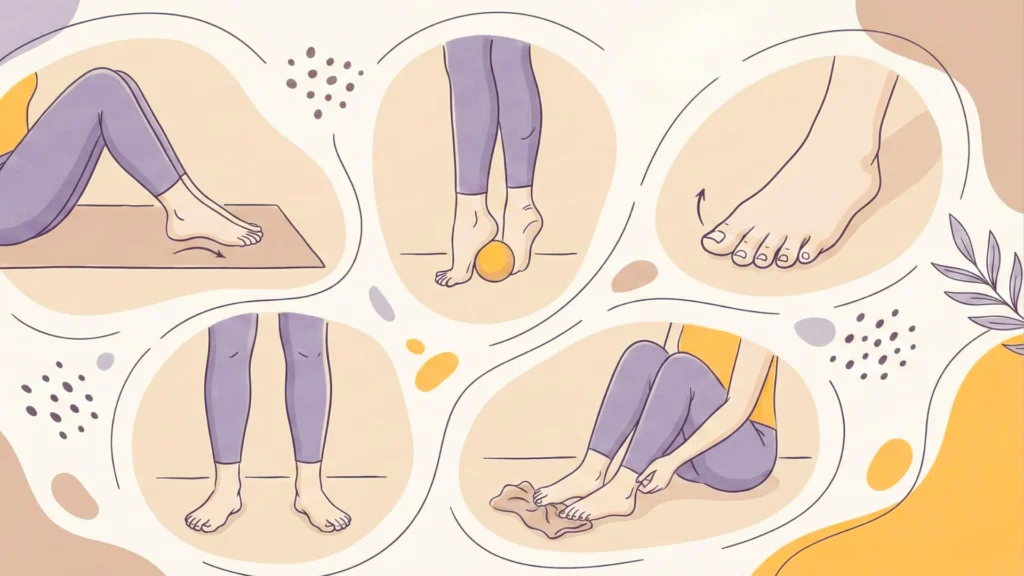
Anatomy Fact: You don’t need a gym membership to restructure your feet. You just need consistency. Do these exercises without shoes (barefoot) to the frivolous of your brain!
1. Short Foot (Janda’s method)
It is known as the gold standard flat feet exercise among physical therapists. Different from more basic foot curling, which does little more than make a sickle under the toes and engage the muscles on top of foot (known as extrinsic), this exercise works the small supporting system underneath what pedorthists call “the foot core” or deep intrinsic muscles that stabilize the arch [1].
How to do it:
- Sit in a chair, with your feet touching the ground.
- Without crimping your toes, attempt to slide the ball of your big toe backward toward your heel. Imagine you are attempting to make your foot “shorter” by arching like a dome.
The sensation: You should feel a powerful contraction in the arch of your foot, but the toes should remain pretty relaxed and flat.
Reps: Hold for 5-10 seconds, then release. Do 10-15 reps per foot.
2. Heel Raises with a Tennis Ball
Faulty or weak calf muscles are also responsible for flat feet. The posterior tibial muscle drops down the back of the calf and attaches to bones on the underside of your foot.
How to do it:
- Stand while holding a tennis ball or lacrosse ball between your heels.
- Lift up onto your toes as high as you can without releasing the pressed ball.
Why it works: When you squeeze the ball, keeping your ankles neutral becomes very challenging. JCP Without the ball: With nothing to grip their feet, flat-footed individuals will allow their ankles to roll out (toward pronation) at the top of the movement. This change makes the right muscles work.
Reps: 3 sets of15 repetitions.
3. Toe Yoga
It’s because most people with flat feet have lost motor control of their toes. This routine is a way of rebuilding the connection between the brain and the foot.
How to do it:
- Keep your foot flat on the floor.
- Lift just your big toe, keeping the other four toes pressed to the ground.
- Switch: Ground your big toe and raise the four others.
The Challenge: You will be annoyed at first! Your foot could cramp, or your toes may not take direction. That is normal. Just do it over and over until the action is no longer awkward.
Reps: 10 controlled switches on both feet.
4. Standing Arch Lifts
It takes your training from seated position to a standing, functional position and trains your feet how to control body weight.
How to do it:
- Stand with feet hip-width apart.
- Roll your weight toward the outer edges of your feet, picking up the arches from the floor.
The Key: Press your big toe against the floor. Do not let it lift up. It’s the arch you want to make, while maintaining the tripod of your foot (your heel, big toe and little toe).
Reps: 20 reps, throughout the day (this is a great one to foster while brushing your teeth).
5. Towel Scrunches
Again the standard and good strengthening exercise for general conditioning of plantar fascia & toe flexors.
How to do it:
- Sit on a chair and put a small hand towel on a smooth floor.
- Grip the towel with your toes and scrunch it toward you.
Progression: When the exercise becomes too easy, place a heavy book or water bottle on the end of the towel to create resistance.
Beyond the Workout: Lifestyle Habits for Healthy Feet
It’s great to do a specific flat feet exercise for 10 minutes a day, but what you are doing during the other 16 hours in your day is just as important.
Embrace Barefoot Walking (Sensibly)
Shoes act like casts. They prop up your foot so much that it goes to sleep. The fact is that when walking on natural, uneven surfaces such as grass or sand while barefoot, the muscles in your feet must micro-adjust and stabilize to keep you upright; this tensing being a small scale workout. Note: If walking barefoot on a hard concrete floor is uncomfortable for you at the moment, then avoid it!
Active Recovery is Non-Negotiable
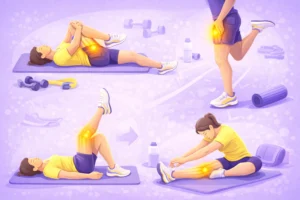
All that is going to cause soreness, as you strengthen muscles that are weak to begin with. The fascia on the bottom of your foot might feel tight and sore as you start. Incorporating recovery tools is essential. Massaging the plantar fascia with a massage ball helps increase blood flow pattern and separates adhesion.
betterhood recommendation: explore our recovery assortment, we have ergonomic wellness for the feet and calves to release deep tension.
The Importance of Daily Foot Support
You might wonder if exercise alone is enough to correct years of misalignment. The answer is: usually, you need a bridge. While exercises build long-term strength, your feet still bear the weight of your body for thousands of steps a day. If your arches collapse with every step, you are constantly straining the tissues you are trying to heal.
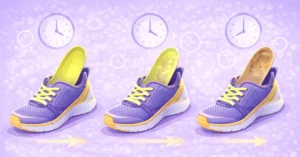
At betterhood, we believe that pain relief is a comprehensive cycle. While you rest at night, you must protect your foundation while you work on your feet during the day. Using supportive orthotic insoles helps maintain the natural alignment of your arches, reducing the mechanical stress that contributes to knee and back pain.
- Explore Solutions: Supportive orthotic insoles ensure that your daily movement supports your recovery, allowing your foot muscles to engage correctly without being overworked.
Sleep and Posture Alignment
You may be wondering what sleep has to do with your feet. The answer is: everything. Recovery happens when you sleep. If your body is out of “whack” 8 hours a night, muscle tension in the calves and hamstrings doesn’t take a vacation; that will pull on & distort foot structure the second you get up from bed.
At betterhood, we emphasize pain relief at a round clock. As you stand on your feet all-day, so too must support and protect your vertebrae all night. It provides proper neck and spine alignment, so you can avoid the neural tension that brings on tightness in your lower half.
Explore Solutions: A supportive orthopaedic pillow ensures your recovery time is effective in real terms; it gives the nervous system a chance to fully de-stress.
Conclusion
Flat feet aren’t a life punishment of pain or bad posture. They’re really just a signal to point out that your body is in need of some support. By learning how to control overpronation and incorporating flat feet exercises into your daily routine, you can ultimately correct the collapse of your arches, raise them back up again, and restore optimal alignment within your entire kinetic chain.
Remember, structural changes take time. It may not make your arch higher like magic the first day you glance in the mirror, but feel it when it comes to how stable you are, how comfortable your knee is or how healthy and good for your back. Get cracking on the “Short Foot” exercise today and promote your recovery to a better “hood” for your body from the ground up!
Explore More Health & Wellness Solutions:
Want to stay informed about wellness and everyday health issues? Here are some insightful reads to guide you. Explore the links below for practical tips and solutions.
- How to Prevent Knee Injuries: Proven Tips, and Lifestyle Strategies for Stronger Joints
- How Can Knee Cap Support Help Prevent Injury and Reduce Pain While Running
- 10 Effective Home Remedies for Body Pain Relief Naturally
Frequently Asked Questions
Consistency is key. Strive to do these exercises 3-4 times per week. Since these are small muscles, you can even do some of them (like the Short Foot exercise) daily while sitting at your desk.
Surprisingly, yes. The mechanical chain breaking of the flat foot may lead to an anterior pelvic tilt and a forward head posture. This misalignment puts stress in the neck and upper back which causes tension headaches.
Yes, if you get a little mild muscle soreness in the arch or your calves, that’s the muscles working. But if you experience sharp, stabbing pain, stop immediately and see a specialist.
Yes! Sand is an unstable surface. Getting in a few steps forces your intrinsic foot muscles to work extra hard to support you, so it can also be one of the best natural flat feet exercises on its own.
Not necessarily. An orthosis may be a helpful “bridge”. Lean on them to ease pain during long days standing, but do these exercises barefoot; over time, you’ll ideally need to lean on them less.
References
- McKeon, P. O., Hertel, J., Bramble, D., & Davis, I. (2015). The foot core system: a new paradigm for understanding intrinsic foot muscle function. British Journal of Sports Medicine, 49(5), 290. https://bjsm.bmj.com/content/49/5/290
- Mulligan, E. P., & Cook, P. G. (2013). Effect of plantar intrinsic muscle training on medial longitudinal arch morphology and dynamic function. Manual Therapy, 18(5), 425–430https://utsouthwestern.elsevierpure.com/en/publications/effect-of-plantar-intrinsic-
- Mayo Clinic. (2023). Flatfeet – Diagnosis and treatment. Mayo Clinic.https://www.mayoclinic.org/diseases-conditions/flatfeet/diagnosis-treatment/drc-20372609
- Gross, K. D., Felson, D. T., Niu, J., Hunter, D. J., Guermazi, A., Roemer, F. W., Quinn, E. R., Segal, N. A., Lewis, C. E., Nevitt, M., & Framingham Foot Study Investigators. (2011). Association of flat feet with knee pain and cartilage damage in older adults. Arthritis Care & Research, 63(7), 937–944.https://doi.org/10.1002/acr.20431
- Ridge, S. T., et al. (2019). Walking in Minimalist Shoes Is Effective for Strengthening Foot Muscles. Medicine & Science in Sports & Exercise, 51(1), 104-113. https://pubmed.ncbi.nlm.nih.gov/30113521/