






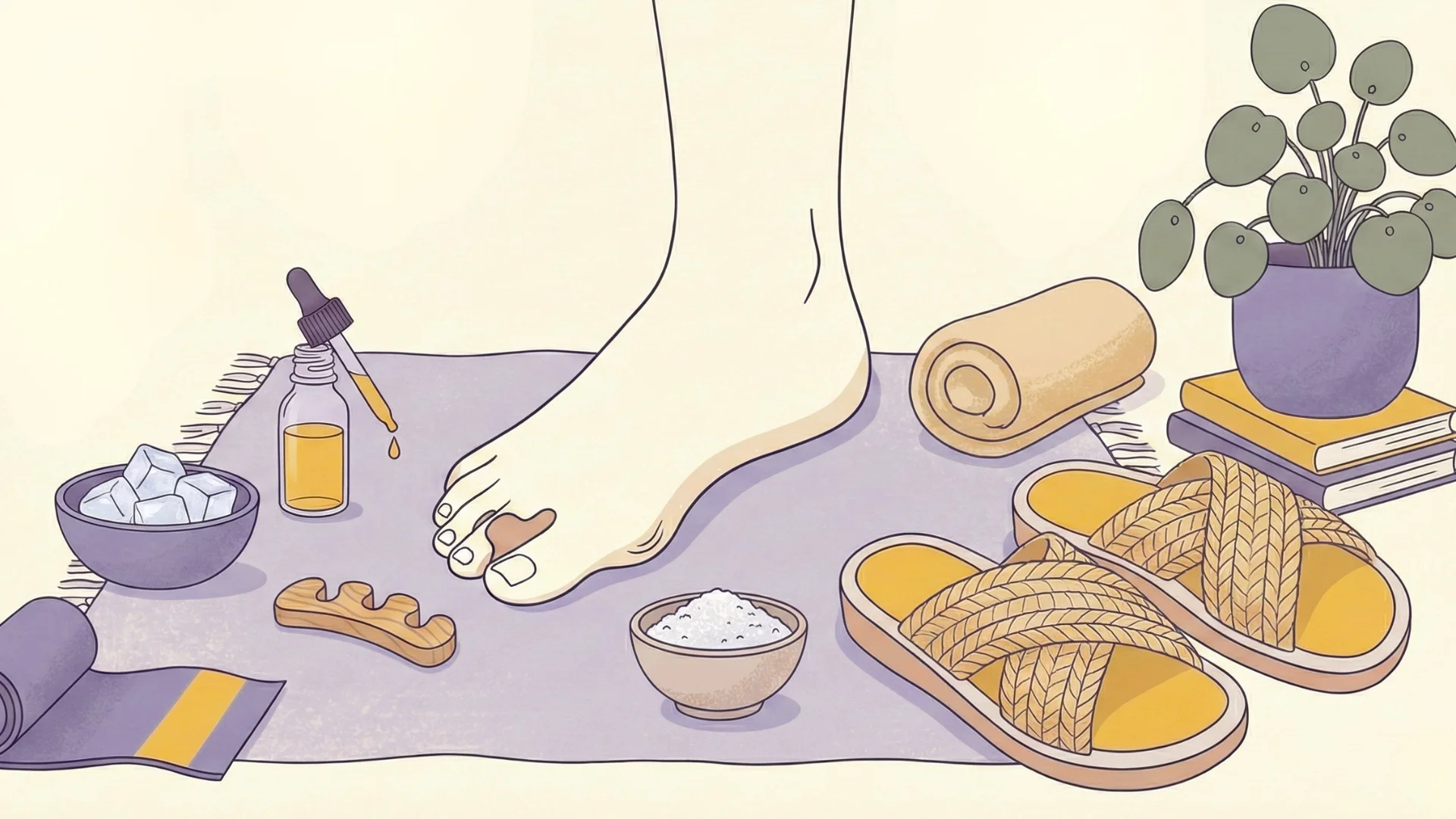
It begins as a little redness on the side of your big toe. And then, your favorite pair of shoes gets a little snug. And before you know it, there’s a bony lump growing on your foot that pulsates at the end of a long day walking. What Are Bunions: A Plain English Description Bunions, or hallux valgus is one of the most common foot deformities.
For many, the diagnosis is tantamount to a life sentence of inevitable surgery. But the idea of breaking bones and weeks on the mends is a sense of doom. And of course thousands more will become desperate to find out how to shrink bunions naturally. How can you get it to go away without going under the knife?
The answer is nuanced. A there’s no cream that can melt away this type of skeletal structure, you’re pretty safe from this type of calamity.) And without magic creams that dissolve bone, the protrusion can be very much mitigated, the soft tissue re-aligned and the advance of nastiness stopped cold in its tracks with focused non-invasive measures. In this guide, we’ll dive into the biomechanics of bunions and walk you through actionable, result-driven solutions to take control of your foot health and finally be able to walk without pain.
What Exactly Is a Bunion? (It’s Not Just a Growth)
In order to learn how to shrink bunion naturally, you must first know what that bump is. A popular theory is that a bunion is a growth of new bone, like a tumor or a callous.
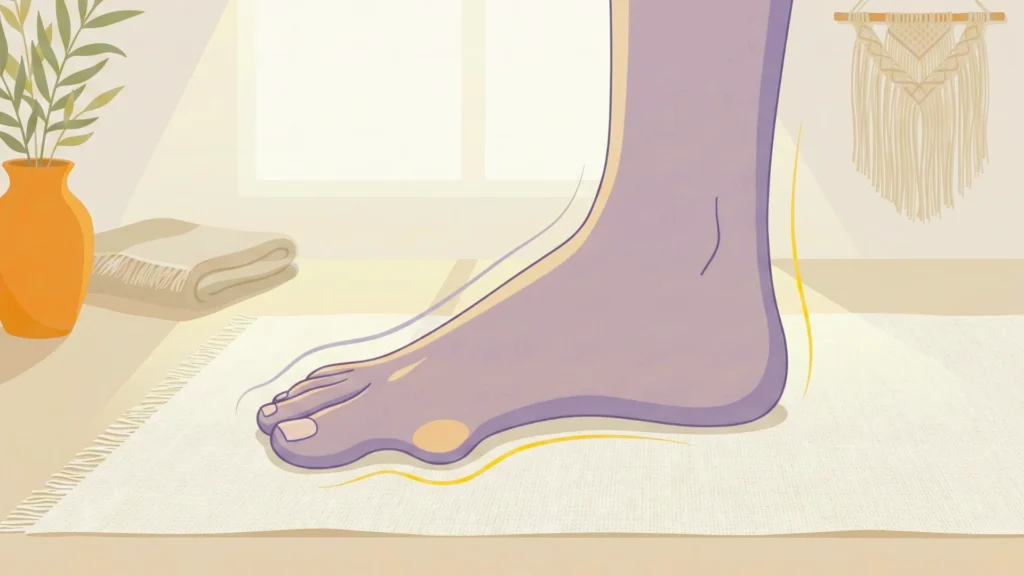
In reality, a bunion is a joint dislocation.
- The Shift: The long bone of your foot (the first metatarsal) shifts inward toward the other foot.
- The Drift: To compensate, your big toe (the phalanx) drifts outward toward your pinky toe.
- The Bump: The “bump” you see is actually the head of the metatarsal bone protruding sideways because the joint is no longer aligned.
This imbalance is frequently a result of genetics and years of restrictive footwear that forces the toes into an unnatural point. Researchers have commonly found an association between wearing tight, restrictive footwear and frequency of hallux valgus with a particular focus on women [4].
Can You Really Shrink a Bunion Without Surgery?
Let’s manage expectations. If your bunion is severe and the joint has fused, natural remedies will focus on pain relief rather than visual correction. However, for mild to moderate bunions, learning how to shrink bunions naturally involves two distinct goals:
- Decrease Inflammation: A lot of the size of a sore bunion is actually fluid and swollen bursal tissue (the sac cushioning the joint). With a decrease in this inflammation, the bunion appears to be smaller.
- Aligning Correction: By toning the muscles that draw your toe straight (abductor hallucis) and stretching the tendons whose imbalance deforms them, you can straighten your toe and reduce a bump.
Non-surgical approaches such as toe spreaders or strengthening exercises can decrease pain and delay the progression of the Bunion deformity [1, 6].
5 Effective Ways to Treat Bunions Naturally
If you catch it in time, a bunion is avoidable. Here is your action plan.
1. Ditch the “Foot Coffins” (Shoe Choice)
The most important part of discovering how to reduce bunions at home is getting rid of the source that gives them life: tight shoes. Current fashion often dictates a narrow, pointed toe box that draws the big toe inward.
The Fix: Switch to “anatomical” shoes or wide-toe-box shoes. Your shoes should look like a foot; widest at the toes, not the ball. That lets the big toe splay straight, so there’s no mechanical pressure pushing the joint out of alignment.
2. Use Toe Separators (The Braces for Your Feet)
Like braces for the teeth, toe separators (or spacers) straighten toes. These are silicone implants that go between your toes to comfortably push your big toe back into its natural position.
How to Use: Wear for 15–30min in the evening relaxing. You can also over time wear them inside wide-toe-box shoes during the day.
The Benefit: They stretch the bunched-up ligaments on the outside of the toe and allow the joint to “breathe,” giving instant relief from the deep ache of misalignment.
3. The “Big Toe Strap” Exercise
You have to build the muscle that pulls your toe away from the rest (abduction).
The Setup: Sit on a chair. Loop a thick rubber band or a toe exercise strap around the big toes of both feet.
The Move: Avoid letting your heels come apart. Turn your feet out the way you did with your big toes pulling away from each other against resistance of the band.
Reps:3 sets of 15 reps / per day. It is one of the most effective exercises for stimulating the abductor hallucis muscle and has been proven in trials to decrease the hallux valgus angle over time when done in moderation.[5]
4. Mobilize the Joint
A firm or hard bunion is a painful bunion! Now things like adhesion release and manual work can be performed to break up the adhesions and achieve greater range of motion.
The Move: Hold your big toe in a firm grip. Gently distract it (pull straight out) to create a small space in the joint and then rotate it slowly circles.
Why: This circulates synovial fluid and keeps the joint nice and flexible to avoid the arthritis that so often comes with long-term bunions.”
5. Reduce the Swelling (Ice & Diet)
Also, the “bump” looks enormous because it’s inflamed.
- Ice Therapy: Place ice on the bunion for 10 -15 minutes at the end of a long day that will help reduce op blood vessels, which can lead to less swelling in fluid sac.
- Anti-Inflammatory Diet: Omega-3 and turmeric-rich foods can help reduce systemic inflammation, which will render the joint less tender and swollen.
How betterhood Supports Your Foot Alignment
At betterhood, we don’t think that relieving pain should just be a temporary fix for something else, it’s about supporting the body from every angle. Even as you work through your feet, you need to maintain proper support in the rest of your kinetic chain.
Daily Support for Recovery
The actual correction of the bunion is by gentle but firm pressure. Recovery tools, such as balls used for massage specifically on the arch of the foot, can unlock tight adductor muscles and that pull the toe inward.
The Recovery Tool: Check out the recovery collection of products to help mobilize tight fascia in your feet, which will also support your bunion exercises.
Aligning the Kinetic Chain
Hallux valgus changes the way you walk (your gait), and many people suffering from it end up putting more weight on the outside of their foot. That can create knee and hip pain. Supportive insoles can help distribute your weight evenly, cutting back stress on the bunion joint and compensatory pain in your lower back.
Explore: Your feet always have the support you need to help bring them back to normal with our insoles.
Conclusion
Surgery should always be the absolute last resort. By mastering how to shrink bunions naturally, you are taking full charge of your foot health. It is a journey to reverse years of mechanical stress and damage, so patience is your strongest tool.
Begin your transformation today. Trade the “foot coffins” for shoes that let you breathe, make toe separators a non-negotiable part of your evening routine, and vow to strengthen your foundation. Your bunions didn’t crop up overnight, and they won’t vanish overnight either but by staying consistent with your care, you can minimize the bump, banish the pain, and step confidently into a pain-free future.
Explore More Health & Wellness Solutions:
Want to stay informed about wellness and everyday health issues? Here are some insightful reads to guide you. Explore the links below for practical tips and solutions.
- Ankle Pain From Walking: Hidden Mechanics Exposed
- How Can Knee Cap Support Help Prevent Injury and Reduce Pain While Running
- 10 Effective Home Remedies for Body Pain Relief Naturally
Frequently Asked Questions
They can’t “cure” a bunion in the sense of dissolving the bone, but as long as they’re on, they may be able to help push your toe back into alignment and stretch out tight tissues. This will stop it from getting worse and gives a lot of pain relief.
Yes. Severing the adductor muscle also pulls the toe back into alignment. It may not completely correct a serious bone deformity, but it is sufficient to stabilize the joint and reduce the cosmetic impact of the soft tissue swelling.
Generally, yes. It is similar to how your toes splay out when you’re barefoot compared to being stuffed in narrow shoes.” But if your arches are collapsed — meaning you have flat feet — you may need orthotic support to avoid overpronation, which can actually exacerbate bunions.
Indirectly, yes. Bursitis (inflammation of the fluid-filled sac) is also common with a bunion. A bunion can become more red and swollen associated with more pain if on a highly inflammatory food protocal (high in sugar, processed foods).
Surgery is generally advised when pain disrupts everyday activities (such as walking), and natural remedies don’t offer relief after 6 to 12 months of steady effort.
References
- Torkki, M., Malmivaara, A., Seitsalo, S., Hoikka, V., Laippala, P., & Paavolainen, P. (2001). Surgery vs orthosis vs watchful waiting for hallux valgus: A randomized controlled trial. JAMA, 285(19), 2474-2480 https://jamanetwork.com/journals/jama/fullarticle/193839
- Groiso, J. A. (1992). Juvenile hallux valgus: A conservative approach to treatment. The Journal of Bone and Joint Surgery. American Volume, 74(9), 1367-1374. https://doi.org/10.2106/00004623-199274090-00010
- Nix, S., Smith, M., & Vicenzino, B. (2010). Prevalence of hallux valgus in the general population: A systematic review and meta-analysis. Journal of Foot and Ankle Research, 3, 21. https://doi.org/10.1186/1757-1146-3-21
- Menz, H. B., Roddy, E., Marshall, M., Thomas, M. J., Rathod, T., Pons-Villanueva, J., & Croft, P. R. (2016). Epidemiology of shoe wearing patterns over time in older women: Associations with foot pain and hallux valgus. The Journals of Gerontology: Series A, 71(12), 1682-1687. https://doi.org/10.1093/gerona/glw004
- Kim, M. H., & Yi, C. H. (2015). Effect of toe-spread-out exercise on hallux valgus angle and cross-sectional area of abductor hallucis muscle in subjects with hallux valgus. Journal of Physical Therapy Science, 27(4), 1019-1022. https://doi.org/10.1589/jpts.27.1019https://www.jstage.jst.go.jp/article/jpts/27/4/27_jpts-2014-658/_article
- Bayar, B., Erel, S., Şimsek, İ. E., Sungur, İ., & Mirzanli, C. (2011). The effects of taping and foot exercises on patients with hallux valgus: A preliminary study. Turkish Journal of Medical Sciences, 41(3), 403-409. https://doi.org/10.3906/sag-0904-52https://journals.tubitak.gov.tr/medical/vol41/iss3/6/


