






Injury is often imagined as a single moment. A fall. A twist. A sudden overload that produces immediate pain and clear damage. These events are visible and easy to understand.
But many injuries do not begin this way.
They develop slowly, through repetition. Through movements performed hundreds or thousands of times without variation and postures held longer than the body was designed to tolerate. Through stress that is too small to trigger alarm, but too frequent to allow recovery.
This is micro-trauma, the accumulation of tiny, often unnoticed stress events that gradually alter tissue, movement, and nervous system behavior. [1]
It is not dramatic. It is incremental. And because it is incremental, it is often ignored until it becomes limiting.
The Body Adapts to What It Repeats
Human tissue is highly adaptable. Muscles, tendons, fascia, and joints continuously remodel in response to the loads placed upon them. When stress is appropriate and recovery is sufficient, tissues become stronger and more resilient. [2]
But adaptation depends on balance.
When stress is repeated without adequate variation or recovery, tissues begin to experience microscopic strain. These small disruptions may not produce immediate pain. Instead, they create subtle changes in tissue quality, hydration, elasticity, and coordination.
Over time, the body adapts not toward resilience, but toward protection.
Movement becomes more rigid. Muscles remain slightly tense. Joints explore smaller ranges. Efficiency shifts toward preservation rather than performance.
Repetition Without Awareness
Modern life is filled with repetitive behaviors that were never designed as physical stressors.
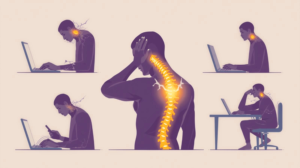
Typing on a keyboard for hours each day. Holding a phone in the same position repeatedly. Sitting with the spine flexed forward. Standing with weight shifted unevenly. Performing the same exercise patterns without variation. [3]
Each individual repetition is harmless. The body can tolerate it easily.
But repetition removes variability, and variability is what distributes load across tissues. Without variation, the same structures absorb stress again and again.
Eventually, capacity begins to narrow.
Why Micro-Trauma Often Goes Unnoticed
The nervous system is designed to prevent disruption of daily function. It does not immediately interpret every small tissue strain as pain. Instead, it attempts to compensate. [4]
Neighboring muscles increase their workload. Movement patterns subtly change. Posture adjusts to reduce stress on sensitive areas.
These adjustments allow activity to continue. Productivity is preserved. Life appears unaffected.
However, compensation redistributes stress rather than eliminating it. Over time, these altered patterns create new areas of overload.
Pain often appears only after compensation capacity is exceeded.
This delay makes micro-trauma difficult to recognize at its origin.
The Role of Fascia and Connective Tissue
Fascia, the connective tissue network that surrounds muscles and joints, plays a critical role in distributing mechanical stress. It functions as both a force transmitter and a sensory organ. [5]
Healthy fascia remains elastic and well-hydrated, allowing smooth force transfer.
Repetitive strain without variation reduces this elasticity. Fascia becomes less responsive, less fluid, and more resistant to movement. This contributes to sensations of stiffness, restriction, or heaviness.
The body begins to move less because movement feels less available.
And reduced movement further reinforces tissue rigidity.
Micro-Trauma Is Not Only Mechanical
Repetition affects not only tissue structure, but nervous system perception.
When the nervous system repeatedly experiences stress in specific regions, it increases monitoring of those areas. Sensitivity rises. Protective tension becomes more consistent. [4]
This can create persistent discomfort even in the absence of major structural injury.
The nervous system is not malfunctioning. It is responding to accumulated experience.
It learns patterns of stress and prepares the body accordingly.
Early Signs Often Appear as Subtle Changes
Micro-trauma rarely begins with sharp pain. It more often appears as:
Morning stiffness that resolves slowly, reduced ease of movement, persistent muscle tightness and fatigue during familiar tasks which is a sense of asymmetry or imbalance [1]
These signals represent early adaptation, not failure.
They indicate that load and recovery are no longer balanced.
Recovery Requires Variation, Not Just Rest
Rest alone may reduce symptoms temporarily, but lasting recovery requires restoring variability.
Movement in multiple directions redistributes load. Changing posture interrupts sustained compression. Breathing deeply restores tissue hydration and circulation. Alternating tasks prevents localized overload. [2]
The body responds positively to diversity of input.
Resilience is built through exposure to varied, manageable stress not through complete avoidance.
The Real Takeaway
Micro-trauma is not the result of a single harmful event. It is the outcome of accumulated repetition without sufficient variation or recovery.
It develops quietly, through habits that feel normal and productive.
The solution is not to eliminate activity, but to reintroduce diversity into how the body moves and functions.
Small interruptions in repetition can prevent large disruptions later.
Because injury rarely begins with collapse. It begins with accumulation.
And the body always reflects what it experiences most often.
Chief Science Officer: betterhood
Shayamal is a Human Performance Designer who works at the intersection of psychology, physiology, and human systems design, for the last 25 years he is helping high-performing leaders, teams, and athletes thrive in environments of stress, complexity, and change. His work spans across elite sports, corporate leadership, and chronic health and is grounded in the belief that true performance isn’t about pushing harder, but designing better.
References
Cleveland Clinic. (2023). Repetitive strain injuries (RSI). https://my.clevelandclinic.org
National Institutes of Health. (2022). Tissue adaptation and recovery. https://www.ncbi.nlm.nih.gov
World Health Organization. (2020). Sedentary behavior and health risks. https://www.who.int/news-room/fact-sheets/detail/physical-activity
American Psychological Association. (2023). Stress and its effects on the body. https://www.apa.org/topics/stress/body
Schleip, R. et al. (2012). Fascia as a sensory organ. https://www.ncbi.nlm.nih.gov


