






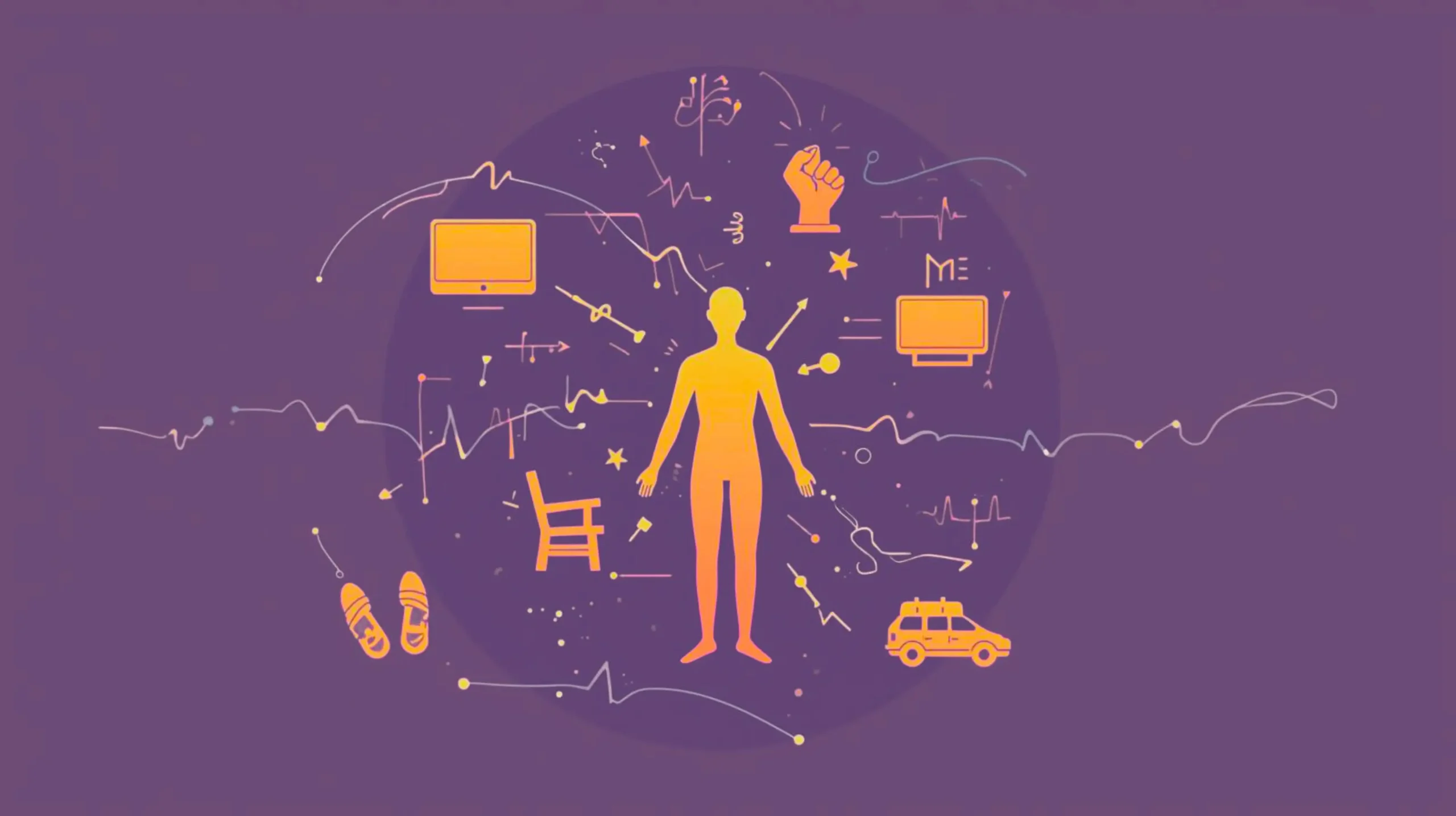
Efficiency has become the modern ideal. We optimize for speed, remove friction and design environments that demand less effort from the body – softer chairs, supportive shoes, automated transport, and screens that bring the world to our fingertips.
On the surface, this looks like progress. Less strain. Less fatigue. More convenience.
But beneath that convenience lies an uncomfortable truth: The human body was not built for constant comfort.
And when efficiency removes physical demand, the body slowly pays the price.
Comfort Isn’t Neutral – It’s a Biological Signal
The body adapts to what it experiences regularly. Movement strengthens muscles. Load builds resilience. Variation sharpens coordination.
Comfort, however, reduces stimulation.
When sitting replaces standing, driving replaces walking, and screens replace physical interaction, the nervous system receives fewer signals about balance, position, and effort. Muscles engage less. Joints explore smaller ranges. Circulation slows.
Over time, this doesn’t create rest, it creates underuse.
And underuse quietly becomes deconditioning.
The Chair That Supports and Weakens
Chairs are among the most normalized tools of comfort. They support the spine, reduce muscular effort, and make long work hours manageable.
Yet extended sitting alters posture, reduces core engagement, and limits hip mobility. The body becomes efficient at being seated, not at being capable.
The result often appears gradually:
- Persistent stiffness
- Reduced endurance
- Lower back discomfort
- Decreased metabolic activity
The issue isn’t sitting itself. It’s sitting without interruption or variation.
Shoes That Cushion and Disconnect
Modern footwear protects the foot from impact and terrain. That protection is valuable.
But excessive cushioning and structure can reduce sensory feedback from the ground, feedback that informs balance, coordination, and joint alignment.
Feet adapt by becoming less responsive. Intrinsic foot muscles engage less. Movement becomes guided by support rather than control.
Again, comfort isn’t harmful alone. Chronic reliance on it shifts capability elsewhere, often downward.
Cars That Save Time and Remove Motion
Transportation technology has expanded opportunity and accessibility. Yet replacing daily walking with passive travel reduces baseline physical activity.
Movement once embedded in routine life is now optional.
And optional movement often becomes absent movement.
This contributes not just to musculoskeletal decline, but to metabolic and cardiovascular changes that unfold silently over years.
Screens That Simplify and Compress Experience
Digital efficiency minimizes physical interaction. Communication, work, entertainment, and learning occur within small physical spaces.
Postures become fixed. Eye focus narrows. Breath patterns shallow. Micro-movements decrease.
This isn’t simply about posture, it’s about sensory narrowing. The nervous system thrives on variety. Screens often provide repetition.
The cost is subtle fatigue and reduced physical awareness rather than immediate injury.
Comfort as a Chronic Stressor
Stress is commonly associated with overload. But biological stress also emerges from insufficient challenge.
The body expects:
- Mechanical load
- Movement diversity
- Environmental variation
When these inputs disappear, systems regulating strength, coordination, and energy efficiency begin scaling down.
This mismatch between biological expectation and modern behavior creates a low-grade physiological stress, one marked not by exhaustion, but by gradual loss of capacity.
Reintroducing Effort Without Rejecting Progress
The solution isn’t abandoning comfort or technology. Efficiency has real value.
The opportunity lies in intentional contrast.
Standing after sitting, walking when possible and exploring varied movement. Allowing the body to experience effort regularly rather than occasionally.
Capability grows through engagement, not avoidance.
The Real Takeaway
Comfort feels like protection. But without balance, it becomes a limitation disguised as ease.
Efficiency removes effort from life. Biology still requires it.
Strength, coordination, and resilience are not maintained by convenience, they are maintained by participation.
Progress isn’t measured by how little the body must do. It’s measured by how much the body remains able to do.
Because sometimes the true cost of comfort isn’t discomfort avoided, It’s capability quietly surrendered.
Co- authored by: Shayamal Vallabhjee
Chief Science Officer: betterhood
Shayamal is a Human Performance Designer who works at the intersection of psychology, physiology, and human systems design, for the last 25 years he is helping high-performing leaders, teams, and athletes thrive in environments of stress, complexity, and change. His work spans across elite sports, corporate leadership, and chronic health—and is grounded in the belief that true performance isn’t about pushing harder, but designing better.


