





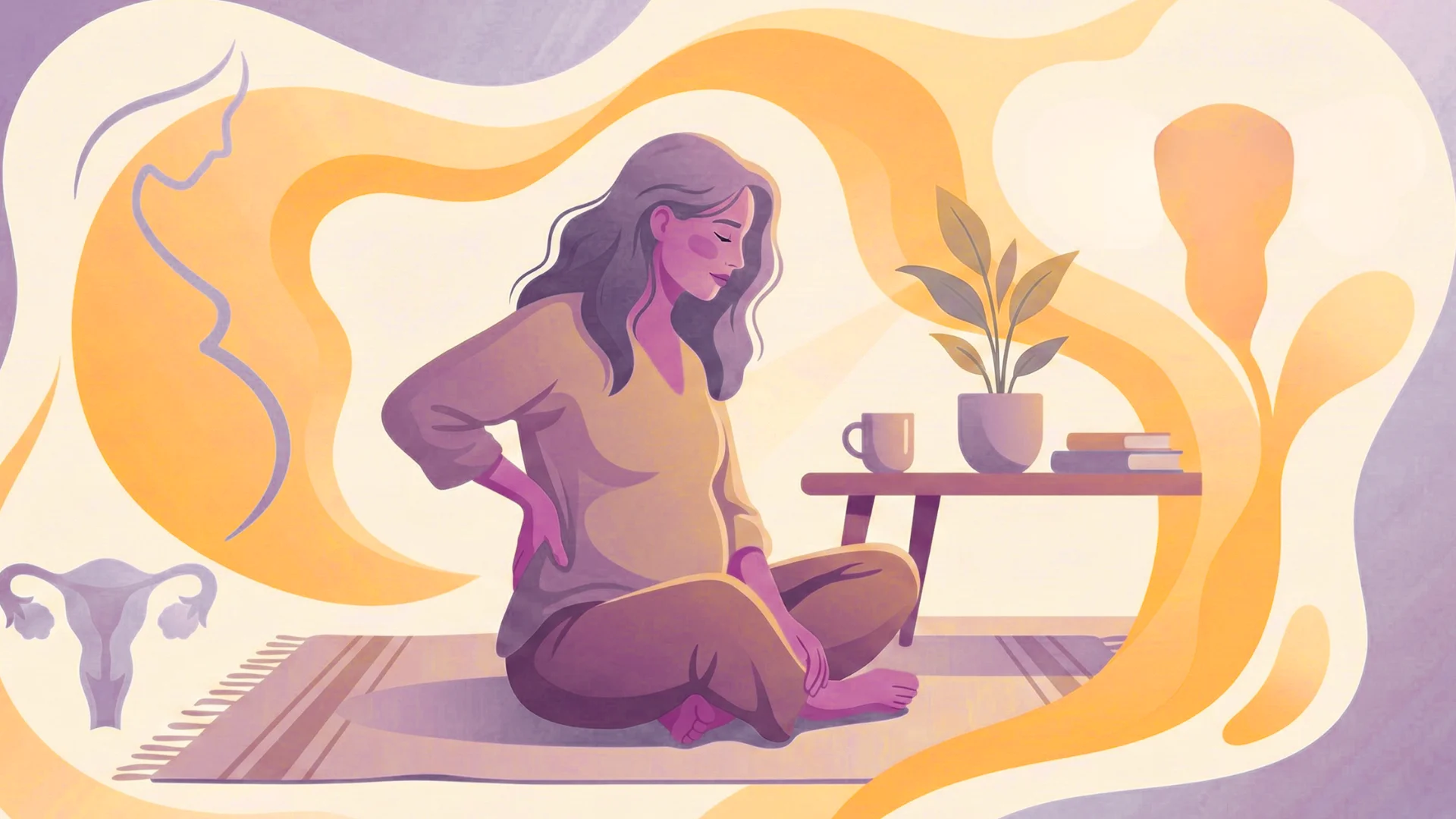
If you ever sense that your back pain comes and goes (like, gets worse at certain times of the month or shifting as we age), it’s not all in your head. Although back pain is a universal experience, back pain in women has its roots in biology and hormone-related roles, as well as various lifestyle factors unique to women.
Studies indicate that women are more likely than men to develop chronic pain in the spine.[1,2] Why? It’s a complicated mixture of anatomy and chemistry. The average woman usually (there are always exceptions) possesses a slightly wider pelvis which also changes the angle of the femur bone as it travels down to the knee and lays unique stress on specific muscles in the lower spine. [3] Throw in the hormonal rollercoasters of menstruation, pregnancy and menopause, and you have a “perfect storm” for back fatigue.
At betterhood, we believe pain is not a nuisance to be silenced but rather a signal. Regardless of whether it’s the deep thud of cramping or the toddler being carried fatigue, your body is begging you for support.
This guide is your compass to reading those signals and discovering relief that works with your body, not against it.
Common Types of Back Pain in Women
Not all pain feels the same. The great thing about knowing where it hurts is it’s the first step in learning why it hurts.
1. Lower Back Pain (The Lumbar Load)
This is the biggest complaint. This will commonly present as a deep throbbing in the belt line. Since your lumbar spine supports the weight of your upper body, it’s more likely to flare up during hormonal changes or when you gain weight.
2. Upper Back and Shoulder Pain (The Tension Trap)
This pain that sit in the space between shoulder blades, or creeping up into the neck, comes from an overheated gastric reflux. For many women, this is a result of structural factors such as heavy breast weight or incorrectly fitting support wear that digs into the trapezius muscles. It is also the “stress zone” where we hold tension subliminally during high-anxiety weeks.[4]
3. Pelvic & Middle Back Stiffness
This lesser-known, but equally irritating pain tends to be associated with rib or pelvic alignment. It can be set up by tight clothing, shallow “chest breathing” brought on by stress or the expansion of the ribcage during pregnancy.
How Hormones and Reproductive Health Trigger Back Pain in Women?
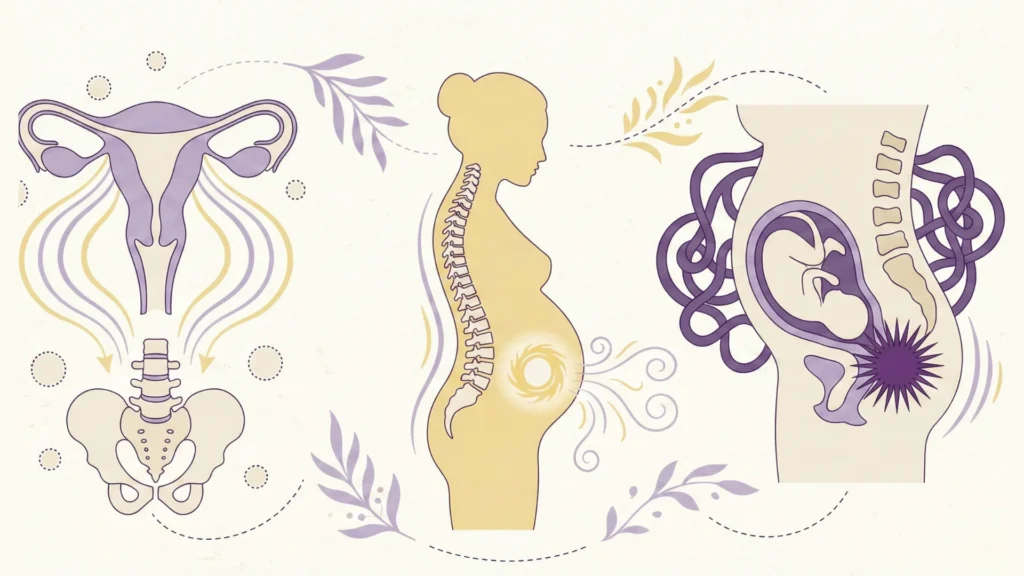
Here, it is about anatomy. These exciting stimuli are female-gender specific triggers.
The Menstrual Connection (Dysmenorrhea)
Ever wonder why you have back pain during your period? It’s because of the effect of prostaglandins; hormone-like substances that trigger the uterus to contract [5,6]. These contractions may radiate back, or you might also feel an aching in your lower back, as though you were experiencing a particularly painful period.
Pregnancy and “The Shift”
When you are pregnant, your center of gravity moves forward. To keep yourself from toppling over, you naturally lean back, squashing the lower lumbar vertebrae. At the same time, a hormone called Relaxin floods your system to relax pelvic ligaments for birth.[7,8] Although necessary, this laxity loosens the spine and contributes to what many refer to as the “pregnancy waddle” often accompanied by pain.
Reproductive Health Issues (Endometriosis)
Diseases like Endometriosis (per verse; tissue growing outside the uterus) or Fibroids can cause deep, sharp pain that’s focused in the lower back.[9,10] For pain that doesn’t cycle (comes and goes) like typical cramping, you need medical help.
Medical Conditions That Cause Back Pain in Women
And sometimes, the pain is symptom of a larger structural problem that many women face.
Osteoporosis: As women enter menopause, estrogen levels decline and their bone density diminishes quickly. [11,12] This can result in a “compression fractures” of the vertebra, one of two major causes of sudden, severe back pain and the second is gradual hunching.
Sacroiliac (SI) Joint Dysfunction: Your SI joints link your spine to your pelvis. Women’s hips are wider and ligaments more flexible, which can lead to misalignment in these joints, sending sharp pain shooting from one side of the lower back.[13,14]
Piriformis Syndrome: Spasms of the piriformis muscle in the buttocks can tighten and clamp down on the sciatic nerve. In view of the pelvic anatomy, this is a common finding in women.
Lifestyle & Posture-Related Back Pain
If so, our daily habits often unwittingly feed the pain loop.
The Parenting Slouch: Lifting kids, lugging heavy tote bags on one shoulder and bending over cribs creates asymmetrical loading of the spine.
The Foot and Ankle: High heels will tilt the pelvis forward (anterior pelvic tilt) and crush the lower back joints.
The Desk Fatigue: Sedentary corporate jobs have a toll on women’s health by weakening the glute muscles and tightening the hip flexors, tugging on the lower back when you’re standing again.
Treatment & Relief Options: The Betterhood Approach
Recovery is not just about medicine; it’s about an ecosystem of care.
Magnesium Therapy: Because menstrual cramps and muscle spasms are associated with magnesium deficiency, use topical Magnesium Oil or spray.[15,16] Unlike with pills, transdermal magnesium bypasses digestion for easier absorption to help relax your muscles faster.
Heat: For hormonal back pain, heat is better than ice. A hot water bottle, or a warm bath will increase blood flow to your pelvic area, which dilutes the prostaglandins that cause pain.
Ergonomic Support:
- Lumbar Cushions: Perfect for office or driving to support back at its natural curve.
- Pregnancy Support Belts: Use during pregnancy or whenever extra support is needed.
Mindful Movement: Gentle yoga poses such as Child’s Pose (Balasana) and Cat-Cow can lengthen the lumbar spine without exacerbating pain, providing instant relief from stiffness.[17,18]
Prevention Tips for Women
Build Your ‘Internal Corset’: Concentrate on deep core work (like Dead Bugs or Planks) rather than sit-ups. Hormones can soften the supports of the spine, and a strong core will help keep it all in line.
Bone Health Diet: Be sure to get plenty of Calcium and Vitamin D, especially after age 40, to help prevent osteoporosis.
Change Your Footwear: Don’t be afraid to switch from high heels to a supportive flat or sneaker and give your pelvic alignment a rest.
When to Consult a Doctor ?
While holistic care is potent, some symptoms require medical treatment. See a specialist if you have:
- Pain with fever or weight loss.
- Groin numbness or loss of control of the bowel/bladder.
- Pain that continues at night or does not get better with rest.
- Developing new back pain over 50, particularly in the setting of a history of osteoporosis.
Conclusion
The first step to regaining your comfort is understanding these women-specific causes of back pain. Your back is behind you at every stage of life; from toting backpacks to cuddling babies, enduring long workdays and surmounting the changes menopause brings. It doesn’t deserve merely to be suffered; it deserves treatment.
If you listen to your body’s beats and provide it with a few supports whether that means a magnesium ritual, a supportive cushion, or even just five minutes of mindful stretching then your relief is within reach: You can dial down the volume on pain and move through life with grace and strength.Small daily actions can lower pain, restore mobility, and help you move with confidence.
Start supporting your spine today because a stronger back means a stronger, freer you.
Explore More Health & Wellness Solutions:
Want to stay informed about wellness and everyday health issues? Here are some insightful reads to guide you. Explore the links below for practical tips and solutions:
- Struggling to Breathe? Here’s a Simple Postural Drainage Routine to do at Home
- Acupressure Points in the Foot: Benefits, Chart & Pressure Techniques
- How Can Knee Cap Support Help Prevent Injury and Reduce Pain While Running
Frequently Asked Questions
Yes. Hormones like estrogen and progesterone increase ligament looseness and pain sensitivity during periods, pregnancy, and menopause.
This is referred pain, uterine cramps triggered by prostaglandins can send pain signals from the pelvis to the lower back.
Yes. Leaning forward while nursing strains the neck and upper back, so use a nursing pillow and proper back support.
Sleep on your side with a pillow between your knees or on your back with a pillow under your knees to reduce spinal strain.
Yes. Walking boosts circulation and releases endorphins, helping relieve back pain without stressing the joints.
Sometimes. Cycle-related back pain can signal conditions like endometriosis, fibroids, or pelvic inflammatory disease.
Eat omega-3 rich foods plus calcium and magnesium sources to support bones, muscles, and reduce inflammation.
Yes. Yoga improves flexibility and strength. Poses like Cat-Cow and Pigeon can ease chronic back pain.
Yes. Stress hormones tighten muscles, especially in the neck, shoulders, and lower back.
If pain lasts over 6–12 weeks, causes numbness, follows injury, or you have a cancer history.
References
- Muñoz-García, D (2023). Gender-related issues in the management of low-back pain. Healthcare. https://pmc.ncbi.nlm.nih.gov/articles/PMC10660510/
- Meucci, R. D., Fassa, (2015). Prevalence of chronic low back pain: Systematic review. Revista de Saúde Pública, 49, 1. https://onlinelibrary.wiley.com/doi/10.1002/ejp.2146
- Apex Spine Center. (2025). Back pain in women compared to men: Causes, symptoms, treatment methods. https://www.apex-spine.com/news/back-pain-in-women-compared-to-men-causes,-symptoms,-treatment-methods
- American Psychological Association. (2018). Stress effects on the body. https://www.apa.org/topics/stress/body
- Nagy, H., & Khan, (2023). In StatPearls. StatPearls Publishing. https://www.ncbi.nlm.nih.gov/books/NBK560834/
- Itani, R., Soubra, L., (2022). Primary dysmenorrhea: Pathophysiology, diagnosis, and treatment updates. Cureus, 14(3), e22512. https://pmc.ncbi.nlm.nih.gov/articles/PMC8943241/
- Cleveland Clinic. (2022). Relaxin: Hormone, production in pregnancy & function. https://my.clevelandclinic.org/health/body/24305-relaxin
- University of Rochester Medical Center. (n.d.). Back pain in pregnancy. https://www.urmc.rochester.edu/encyclopedia/content?contenttypeid=134&contentid=52
- Center of Endometriosis. (n.d.). Back pain and endometriosis. https://www.centerofendometriosis.com/resources/relevant-information/back-pain-and-endometriosis/
- Chawla, R., Liao, C., & Cipriani, S. (2025). Co-occurrence of endometriosis and uterine fibroids: A systematic review and meta-analysis. https://pmc.ncbi.nlm.nih.gov/articles/PMC12495417/
- Keen, M. U., & Sriprasad, S. (2022). Osteoporosis in females. In StatPearls. StatPearls Publishing. https://www.ncbi.nlm.nih.gov/books/NBK559156/
- Gambacciani, M., & Levancini, M. (2023). Postmenopausal osteoporosis: Menopause hormone therapy and alternatives..https://pmc.ncbi.nlm.nih.gov/articles/PMC10721581/
- Kiapour, A., Joukar, (2020). Biomechanics of the sacroiliac joint https://pmc.ncbi.nlm.nih.gov/articles/PMC7041664/
- American Academy of Family Physicians. (2022). Sacroiliac joint dysfunction: Diagnosis and treatment. American Family Physician, 105(3), 239-247. https://www.aafp.org/pubs/afp/issues/2022/0300/p239.html
- Fathizadeh, N., Ebrahimi, E. (2010). Evaluating the effect of magnesium and magnesium plus vitamin B6 supplement on the severity of premenstrual syndrome. https://pmc.ncbi.nlm.nih.gov/articles/PMC3208934/
- Parazzini, F., Di Martino, M (2017). Magnesium in the gynecological practice: A literature review. Magnesium Research, 30(1), 1-7. https://pubmed.ncbi.nlm.nih.gov/28392498/
- Wieland, L. S, C. R. Yoga treatment for chronic non-specific low back pain.https://pmc.ncbi.nlm.nih.gov/articles/PMC4878447/
- National Center for Complementary and Integrative Health. (2020). Yoga for pain: https://www.nccih.nih.gov/health/providers/digest/yoga-for-pain-science
- Hannibal, K. E., & Bishop, M. D. (2014). Chronic stress, cortisol dysfunction, and pain: https://pmc.ncbi.nlm.nih.gov/articles/PMC4263906/
- Kikuchi, H., Yoshiuchi, K. (2021). Association between chronic low back pain and degree of stress: A nationwide cross-sectional study in Japan. Pain Research and Management, 2021, https://pmc.ncbi.nlm.nih.gov/articles/PMC8282867/