





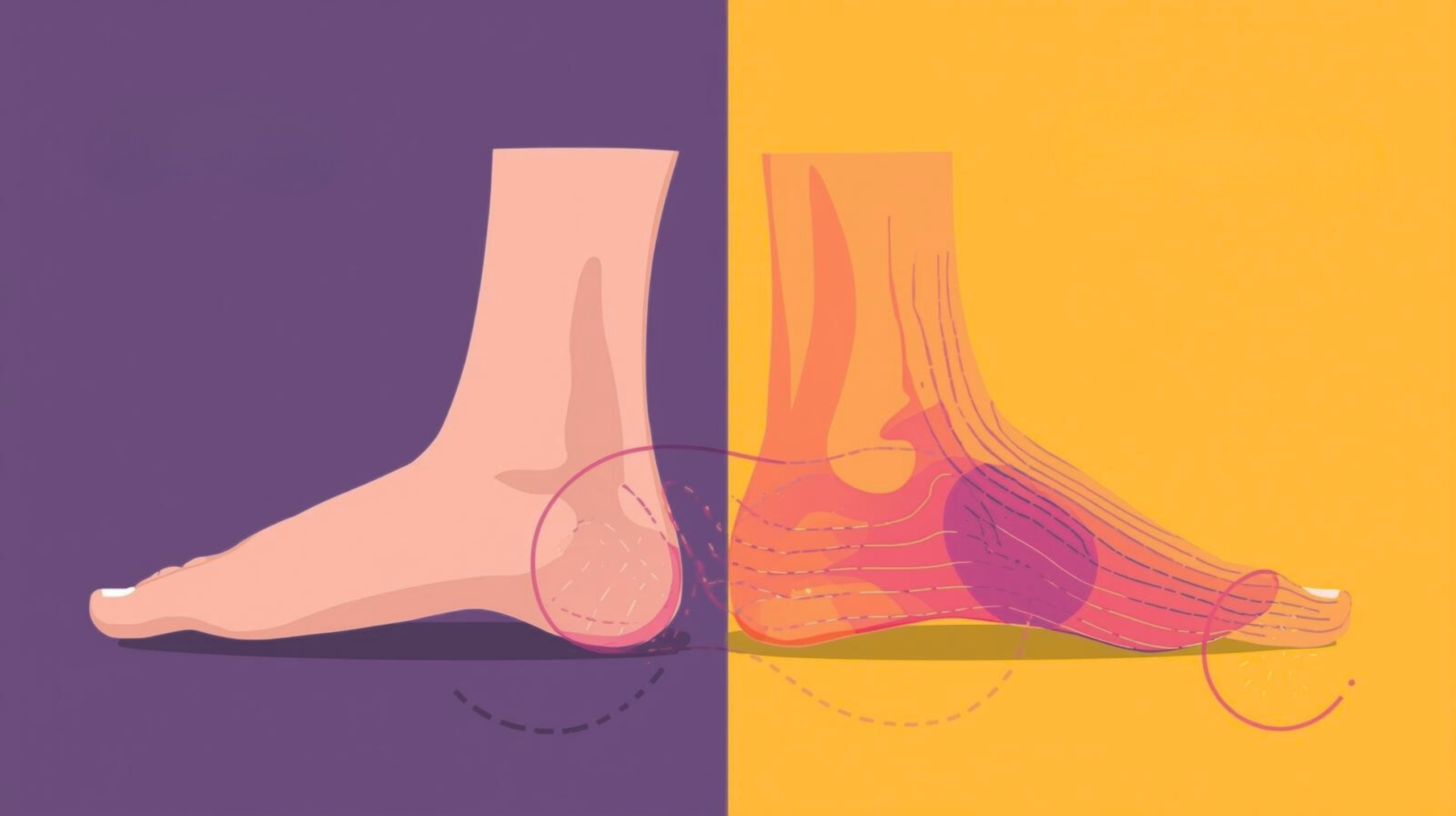
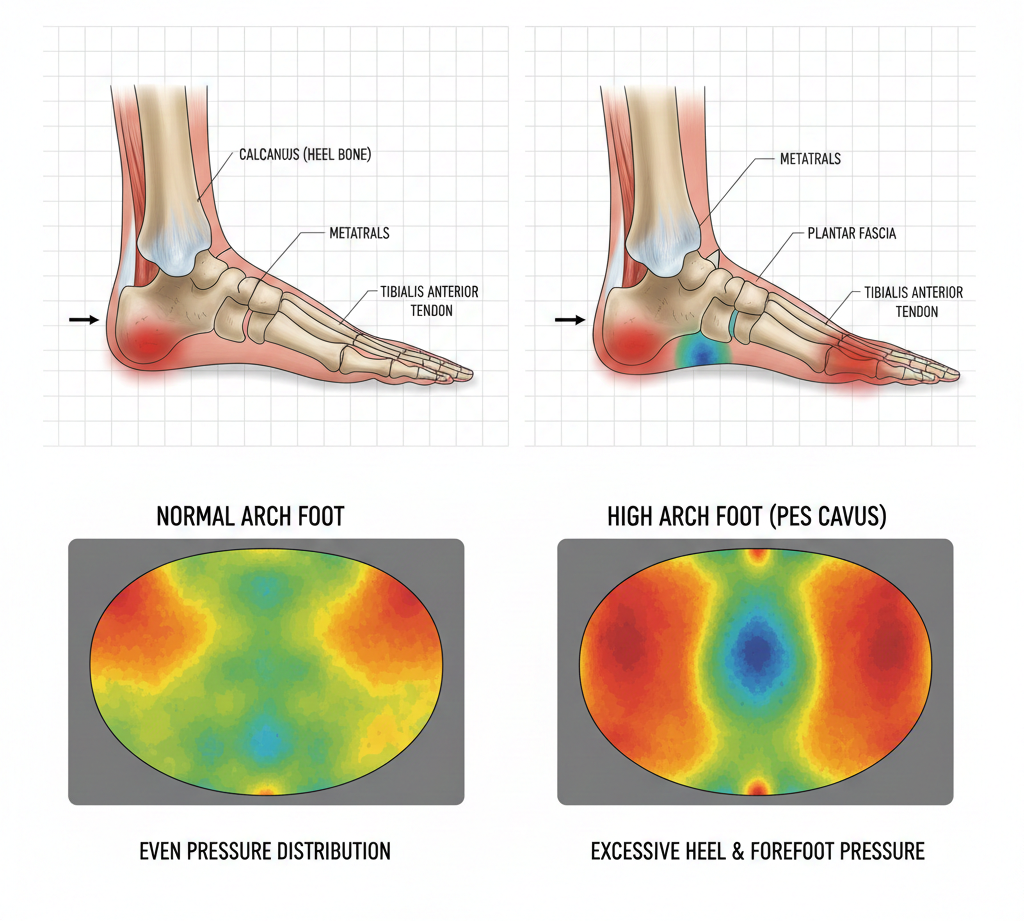
High arch feet, medically known as pes cavus, are a foot condition in which the arch of the foot remains abnormally high, even when standing or bearing weight. Unlike flat feet, where the arch collapses inward, high-arch feet create excessive pressure on the heel and the ball of the foot. This uneven weight distribution reduces the foot’s ability to absorb shock, often leading to pain, instability, and a higher risk of injury.
People with high arch feet commonly experience symptoms such as heel pain, forefoot pain, callus formation, frequent ankle sprains, clawed toes, and fatigue during walking or standing. Over time, these issues can extend beyond the feet, contributing to knee pain, hip discomfort, lower back pain, and other long-term musculoskeletal problems if left unaddressed.
High arches may be congenital, meaning a person is born with them, or they may develop later in life due to underlying neurological or muscular conditions that alter muscle balance and foot mechanics. In many cases, individuals remain undiagnosed for years, assuming recurring foot pain, balance issues, or repeated injuries are normal parts of daily life, until symptoms become severe enough to interfere with mobility and quality of life.
This article offers a comprehensive overview of high arch feet, covering their causes, symptoms, diagnosis, treatment options, corrective exercises, footwear recommendations, common myths, and frequently asked questions. Understanding pes cavus is the first step toward effective management, injury prevention, and long-term foot health.
What Are High Arch Feet?
High arch feet occur when the medial longitudinal arch of the foot remains elevated even when standing. Unlike a normal arch, which flattens slightly under body weight, a high arch does not absorb shock effectively.
Key Characteristics of High Arch Feet
- Visible high arch even while standing
- More weight on heel and forefoot
- Limited foot flexibility
- Increased risk of foot and ankle injuries
High arches can affect one foot or both and may worsen over time if left untreated.
High Arch Feet vs Normal Arch vs Flat Feet
| Feature | High Arch Feet | Normal Arch | Flat Feet |
| Arch height | Very high | Moderate | Low or absent |
| Shock absorption | Poor | Balanced | Excessive |
| Weight distribution | Heel & forefoot | Even | Midfoot |
| Injury risk | High | Low | Moderate |
| Common pain areas | Heel, ball, ankle | Minimal | Arch, knee |
Understanding this difference is crucial for choosing the right treatment and footwear.
Causes of High-Arch Feet
1. Neurological Conditions (Most Common Cause)
Many cases of pes cavus are linked to nerve or muscle disorders that affect foot mechanics.
Common neurological causes include:
- Charcot–Marie–Tooth disease (CMT)
- Stroke
- Cerebral palsy
- Spinal cord tumors or injuries
- Brain tumors
- Multiple sclerosis
These conditions cause muscle imbalance, pulling the foot into a high-arched position.
2. Genetic and Congenital Factors
Some individuals are born with naturally high arches without any underlying disease. This is often hereditary.
3. Muscle Imbalance
Weak intrinsic foot muscles combined with tight calf muscles can elevate the arch over time.
4. Injury or Trauma
Severe foot, ankle, or nerve injuries may alter foot structure, leading to high arch development.
Symptoms of High-Arch Feet
High arch feet symptoms vary depending on severity but often worsen with age and activity.
Common Symptoms
- Foot pain (especially heel and ball)
- Ankle instability
- Frequent ankle sprains
- Calluses under heel and forefoot
- Claw toes or hammer toes
- Plantar fasciitis
- Achilles tendon tightness
- Knee, hip, or lower back pain
High-Arch Foot Pain Explained
Because high arches do not flatten during walking:
- Shock is not absorbed efficiently
- Stress travels up the kinetic chain
- Overloading occurs in limited foot areas
This can lead to chronic pain and overuse injuries.
How High-Arch Feet Affect Body Biomechanics
High arches don’t just affect the feet; they impact the entire body.
Biomechanical Effects
- Reduced shock absorption
- Increased joint stress
- Altered gait pattern
- Higher risk of stress fractures
- Increased muscle fatigue
Over time, untreated high arches may contribute to:
- Knee osteoarthritis
- Hip pain
- Lower back pain
- Poor posture
Diagnosis of High-Arch Feet
A healthcare professional such as a podiatrist or orthopedist can diagnose pes cavus through:
Clinical Examination
- Foot posture analysis
- Gait observation
- Callus pattern inspection
Imaging Tests
- X-rays
- MRI (if neurological cause suspected)
- Nerve conduction studies (in some cases)
Early diagnosis improves outcomes significantly.
Treatment Options for High Arch Feet
Treatment depends on severity and underlying cause.
1. Conservative (Non-Surgical) Treatments
Custom Orthotics
Custom insoles help redistribute pressure and improve foot alignment.
Benefits:
- Reduced pain
- Better stability
- Improved shock absorption
Footwear Modifications
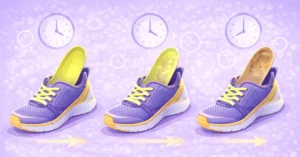
Proper shoes are critical for managing high-arched feet.
Best shoes for high arch feet:
- Cushioned soles
- Wide toe box
- Arch support
- Shock-absorbing midsoles
Avoid minimalist or overly stiff shoes.
Physical Therapy
Targets muscle imbalance and joint mobility.
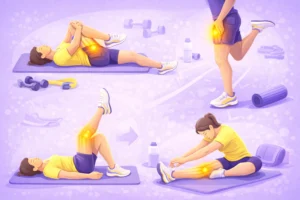
2. Exercises for High Arch Feet
Regular exercises help improve flexibility, strength, and balance.
Calf Stretch
- Reduces Achilles tightness
- Improves ankle mobility
Toe Curl Exercise
- Strengthens intrinsic foot muscles
Plantar Fascia Stretch
- Reduces heel pain
Balance Training
- Improves ankle stability
- Reduces sprain risk
(Always perform exercises under guidance if pain is severe.)
3. Pain Management
- Ice therapy
- NSAIDs (only as prescribed)
- Activity modification
4. Surgical Treatment (Severe Cases)
Surgery may be considered when:
- Pain is disabling
- Deformity worsens
- Conservative treatment fails
Surgical goals include:
- Correcting muscle imbalance
- Improving foot alignment
- Reducing pressure points
Shoes for High Arch Feet: What to Look For
Essential Features
- Extra cushioning
- Flexible sole
- Heel support
- Shock absorption
Footwear Types
- Running shoes with cushioning
- Orthopedic shoes
- Custom-fitted shoes
Shoes to Avoid
- Flat, hard soles
- High heels
- Unsupportive flip-flops
High Arch Feet in Children
Children with high arches should be evaluated early, especially if:
- One foot is affected more than the other
- There is a family history of neurological disease
- Balance issues are present
Early intervention can prevent long-term complications.
High Arch Feet and Sports
Athletes with high arches face higher injury risks.
Common Sports Injuries
- Stress fractures
- Ankle sprains
- Plantar fasciitis
- Achilles tendinitis
Proper footwear, orthotics, and strength training are essential.
Myths About High Arch Feet
Myth 1: High arches are always a good thing
False. While they may look “strong,” they often lack flexibility.
Myth 2: High-arch feet don’t need support
False. They often need more cushioning than flat feet.
Myth 3: Pain is unavoidable
False. Proper treatment can significantly reduce pain.
Can High Arch Feet Be Prevented?
While genetic or neurological causes cannot be prevented, complications can be minimized by:
- Wearing proper footwear
- Doing foot-strengthening exercises
- Seeking early diagnosis
- Avoiding repetitive high-impact stress
Living With High Arch Feet
With the right care:
- Pain can be managed
- Mobility can improve
- Quality of life remains high
Consistency in treatment is key.
Conclusion
High arch feet (pes cavus) are more than a simple structural variation of the foot; they represent a complex biomechanical condition that can influence movement, stability, and load distribution throughout the entire body. Although high arches may appear strong or well-aligned, they often lack the flexibility and shock-absorbing capacity required for efficient walking, running, and daily activities. As a result, individuals with pes cavus are more prone to foot pain, recurrent ankle sprains, callus formation, and overuse injuries, which may eventually affect the knees, hips, and lower back.
The good news is that high-arched feet can be managed effectively with the right approach. Early identification, combined with appropriate footwear, custom orthotic support, targeted strengthening and stretching exercises, and professional guidance from a podiatrist or physiotherapist, can significantly reduce discomfort and prevent long-term complications. Consistent care helps improve stability, distribute pressure more evenly, and support healthier movement patterns.
Ultimately, awareness is the most important first step. Recognizing the signs of high arch feet and addressing them proactively allows individuals to stay active, mobile, and pain-free. With informed decision-making and ongoing management, people with pes cavus can maintain both foot health and overall physical well-being well into the future.
Frequently Asked Questions
High-arch feet are commonly caused by neurological conditions, genetics, muscle imbalance, or injury.
They can cause pain and instability if untreated but are manageable with proper care.
Yes. Poor shock absorption can affect knees, hips, and the lower back.
Calf stretches, plantar fascia stretches, toe curls, and balance exercises are beneficial.
In many cases, yes. Orthotics help redistribute pressure and reduce pain.
Yes, especially if caused by neurological conditions or left untreated.