






Knee pain is not given much consideration until it turns out to be a very big impediment to an individual’s daily routine. However, you can recover faster when you know the actual reason for the pain. It can assist you in deciding what exercises are appropriate, what home remedies are effective in treating the knee pain and go for treatments that can make your movements comfortable. In this article, these insights will be uncovered and you will learn how to create stronger and more flexible knees.
The Journey to Knee Recovery Starts with Awareness
Why is guessing risky?
Attempting to alleviate knee pain without an understanding of what is the cause of this pain is normally annoying and futile, similar to attempting to repair a car without inspecting the engine. Most individuals believe that they are getting old or are walking too many miles, hence causing their knee pain yet tendinitis or early arthritis may be the underlying cause. In case, you do not guess right, you may resort to therapies or exercises that can make the situation even worse.
Think of a cook who bakes a cake without knowing the ingredients! The cause of your knee pain is similar to a formula that facilitates healing. It puts you on the path to recovery.
Common myths about knee pain causes
Several myths surround knee pain:
- Myth #1: Knee pain is simply age-related and unavoidable.
Though aging increases risk, pain often stems from modifiable factors like muscle weakness or poor footwear. - Myth #2: Rest always cures knee pain.
Complete rest can weaken muscles critical for knee support. Structured movement is often vital. - Myth #3: Medication alone solves knee pain.
Medications address symptoms temporarily; long-term relief requires treatment addressing causes.
Breaking myths early helps you avoid accidental knee sabotage!
Decoding the Root Causes: From Anatomy to Daily Habits
Understanding the knee’s inner workings
The knee is a complex hinge joint composed of:
- Bones: femur, tibia, and patella
- Cartilage: cushions movement, preventing bone friction
- Ligaments: stabilize joint (ACL, PCL, MCL, LCL)
- Tendons: connect muscles to bones, facilitating movement [1]
- Bursae: fluid-filled sacs for cushioning
Disruption in any of these components can cause pain and impair mobility. For example, a torn ACL can lead to instability, while damaged cartilage results in pain and stiffness.
Habits and lifestyle factors that sabotage knee health
Your daily habits can influence knee health either positively or negatively:
- Poor footwear accelerates joint stress.
- Excessive high-impact exercise overworks muscles and ligaments without adequate recovery.
- Sedentary lifestyle weakens supporting muscles around the knee [2].
- Obesity increases mechanical load drastically.
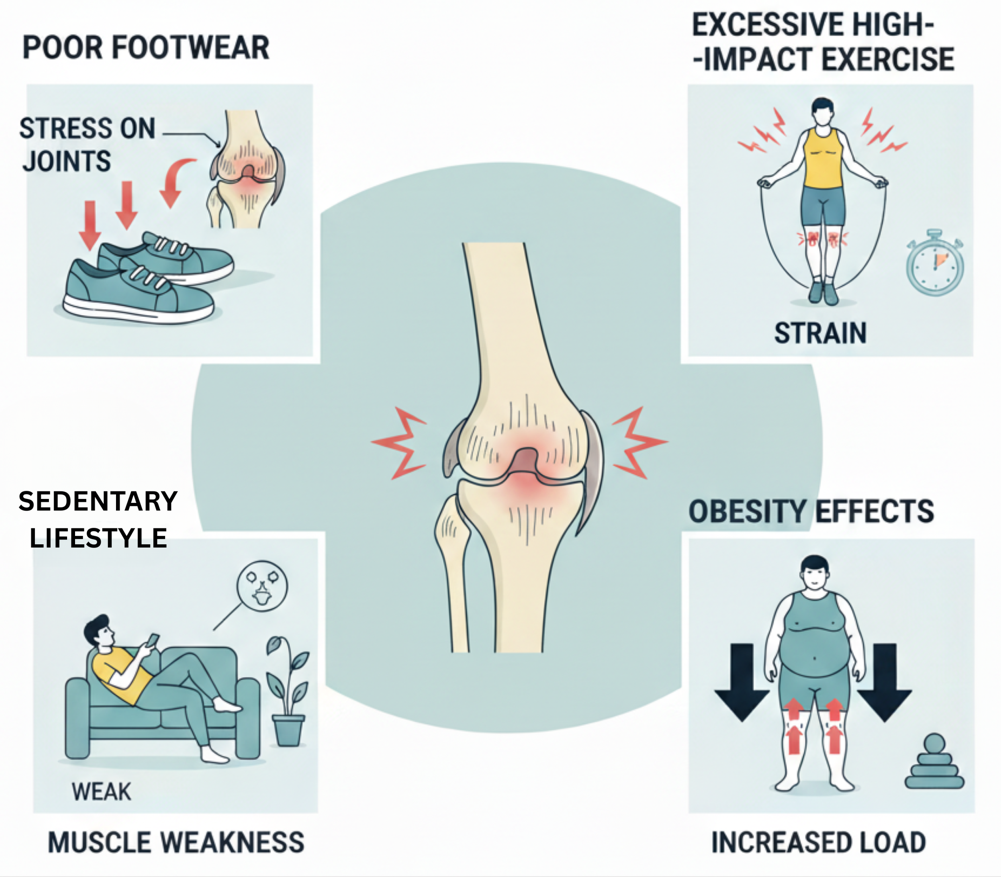
Spotting these saboteurs lets you tweak your lifestyle and reduce knee pain risks.
Age, gender, and unique knee pain triggers
Women, especially post-menopause, face a higher likelihood of knee osteoarthritis due to hormonal changes affecting cartilage health. Younger adults are prone to acute injuries caused by sports or trauma. Tailoring recovery plans to your personal demographic and activity profile maximizes success.
Spotting the Early Signs: Listening to Your Knees
Everyday clues you might miss
Early warning signs are subtle and easy to dismiss:
- Morning stiffness lasting more than 30 minutes.
- Occasional popping or clicking sounds.
- Mild swelling after activity.
- Slight weakness or instability sensations.
Ignoring these can allow problems to worsen silently.
Role of swelling, warmth, and motion limits
Swelling indicates inflammation or fluid buildup, a red flag that should not be ignored. Warmth further signals active inflammation, possibly from bursitis or infection. Limited joint motion, difficulty bending or straightening fully, reflects structural or functional impairment.
If these signs persist beyond a few days, consult a professional promptly.
When to worry about persistent pain
Persistent, progressive knee pain affecting daily activities indicates a need for intervention. Pain that disrupts sleep or worsens without clear triggers might indicate arthritis or significant injury.
Getting the Right Diagnosis: Not All Knee Pain Is Equal
Questions to ask yourself (and your doctor)
- When and how did pain begin?
- Which activities aggravate or relieve it?
- Is there swelling, instability, or locking?
- Do you have prior injuries or family arthritis history?
Clear answers help narrow down causes from sprains to degenerative diseases.
From home tests to professional evaluation
Simple home assessments like range of motion, walking gait check, or swelling visibility help but cannot replace medical diagnosis. Imaging tests like MRI or X-rays expose hidden internal damage [3]. Professional examination ensures correct diagnosis, avoiding treatment delays.
How does a knee pain location chart help?
Mapping pain location (front, inside, outside, back) helps identify involved tissues, guiding targeted therapy. For instance, front pain commonly relates to patellar tendon issues; inner pain to medial meniscus [4].
Recovery Strategies That Actually Work
Exercises for strength and flexibility
Customized exercises build muscle strength and maintain joint flexibility:
- Straight leg raises: Builds quadriceps without bending the knee.
- Hamstring curls: Strengthens back thigh muscles supporting mobility.
- Wall sits and chair squats: Functional strengthening improves balance.
- Calf and hip stretches: Reduce joint stress from tight muscles [5].
Regular, correct exercise breaks the vicious pain-weakness cycle.
Proven home remedies for faster relief
- Cold therapy curbs swelling immediately post-injury or flare-up.
- Warm packs relax stiff muscles and ease joint tightness.
- Elevation minimizes blood pooling, reducing inflammation.
A balanced diet rich in anti-inflammatory nutrients, like omega-3s, berries, and greens; supports joint health.
Choosing between medicine, therapy, and braces
Over-the-counter anti-inflammatory drugs provide symptom relief but do not address causes. Physiotherapy corrects movement patterns, builds strength, and enhances coordination; key to durable recovery. Knee braces reduce load and stabilize unstable joints during healing phases.
Tools and Aids to Boost Mobility
The value of knee caps and braces
Knee caps facilitate the process of swelling reduction through partial support and compression. Various types of braces are available, from soft sleeves to hinge support, which may assist in instability or recovery after accidents.
Why do footwear and daily support matter?
When you exercise or walk by wearing well-supported and cushioned shoes, it causes less strain on your knee joints.
New trends: Oils, patches, and alternative treatments
Some TENS machines and pain creams are less effective. Even though Ayurveda and acupuncture have been proved to work well under certain conditions, these should not be a substitute for medical treatment.
Making Long-Term Changes: Beyond Pain Relief
Preventing future injuries
Don’t exercise too much. Rather, do exercises that can gradually increase your flexibility and strength. You should always warm up before commencing any type of activity.
Diet, movement, and lifestyle tweaks that protect joints
Keep your weight in check. Consume foods rich in antioxidants, vitamin C and D and anti-inflammatory properties. You should take short breaks in between work to stretch and walk.
Building a sustainable routine for knee health
Regular low-impact workout and joint-friendly habits will enable you to maintain your mobility and delay the degenerative process [6]. Consistency has more importance compared to intensity.
Stories of Recovery: Real People, Real Progress
Lessons from patients who identified the real reasons
Jane’s knee pain was chalked up to ‘getting old’ until she discovered misalignment was the root cause. Following her corrected physiotherapy plan, she regained pain-free walking and gardening.
How tailored strategies turned setbacks into comebacks?
Mark suffered an ACL tear from sports but adhered to personalized rehab including strength and balance work. His return to running demonstrated the power of knowing and addressing one’s specific knee pain reasons.
Conclusion
Although knee pain may be irritating, once you understand the cause of your pain, your strategy to recover works faster. It is not a matter of guessing when you heal after knowing what has caused the pain. The information can result in specific interventions, such as medication, lifestyle changes, and exercise, which in turn would enhance mobility and quality of life. Be sympathetic, kind, and perhaps humorous to your knees when they creak instead of squeaking like the ones you thought they would. Take your knees as your companions to travel in.
Remember that happy feet dance more at a wedding and happy knees make happy feet. That’s what everyone wants.
Some people suffer from ankle pain due to flat feet which also triggers knees. Worry not! Insoles are your saviour. Check how:
Frequently Asked Questions:
1. Can knowing the cause of my knee pain speed up recovery?
Definitely. Tailored treatment based on your specific knee pain reasons accelerates healing and reduces relapse risk.
2. Are home treatments enough for mild knee pain?
They can be effective initially, but persistent or severe pain should be evaluated professionally to avoid complications.
3. Which habits worsen knee pain most often?
Skipping proper warm-up, wearing unsupportive shoes, being overweight, and ignoring early symptoms are top culprits.
4. How do aids like knee caps and braces help mobility?
They provide external support, reduce swelling, and improve joint stability enabling safer movement.
5. What should I do if pain returns after recovery?
Consult your healthcare provider; recurrence might mean incomplete healing or new injury necessitating adjusted treatment.
References
- Benjamin, M., Kaiser, E., & Milz, S. (2008). Structure‐function relationships in tendons: a review. Journal of anatomy, 212(3), 211-228. https://doi.org/10.1111/j.1469-7580.2008.00864.x
- Buford, T. W., Cooke, M. B., Manini, T. M., Leeuwenburgh, C., & Willoughby, D. S. (2010). Effects of age and sedentary lifestyle on skeletal muscle NF-κB signaling in men. Journals of Gerontology Series A: Biomedical Sciences and Medical Sciences, 65(5), 532-537. https://doi.org/10.1093/gerona/glp196
- Lawford, B. J., Bennell, K. L., Ewald, D., Li, P., De Silva, A., Pardo, J., … & Hinman, R. S. (2025). Effects of X-ray–based diagnosis and explanation of knee osteoarthritis on patient beliefs about osteoarthritis management: A randomised clinical trial. PLoS Medicine, 22(2), e1004537. https://doi.org/10.1371/journal.pmed.1004537
- Bunt, C. W., Jonas, C. E., & Chang, J. G. (2018). Knee pain in adults and adolescents: the initial evaluation. American family physician, 98(9), 576-585. https://www.aafp.org/pubs/afp/issues/2018/1101/p576.html
- Macklin, K., Healy, A., & Chockalingam, N. (2012). The effect of calf muscle stretching exercises on ankle joint dorsiflexion and dynamic foot pressures, force and related temporal parameters. The Foot, 22(1), 10-17. https://doi.org/10.1016/j.foot.2011.09.001
- Del Río, E. (2025). Thick or thin? Implications of cartilage architecture for osteoarthritis risk in sedentary lifestyles. Biomedicines, 13(7), 1650. https://doi.org/10.3390/biomedicines13071650