





Let’s be honest, nothing ruins your flow like that stubborn ache in your knees when you stand up, climb the stairs, or even stretch for the remote. And if your knees have started sounding like a pack of crunchy chips every time you sit down… yep, that’s them trying to tell you something.
Here’s the thing: knee pain isn’t just an “athlete problem” or something that magically appears when you turn 70. It’s sneaking up on everyone, thanks to long desk hours, endless driving, skipped warm-ups, or just sitting a little too much (we’ve all been there). The silver lining? You don’t need fancy treatments, weekly physio visits, or a pricey gym membership to fix it.
With the right mix of knee pain exercises, simple home remedies, and a few everyday lifestyle tweaks, you can strengthen your knees, ease inflammation, and move comfortably again, all from the comfort of your home.
This guide is your all-in-one knee-care survival kit-practical, science-backed, and surprisingly fun to follow. So grab your mat, loosen those legs, and let’s bring back those smooth, pain-free moves your knees were designed for.
Understanding Knee Pain: What’s Really Going On in There?
Before we jump into fixes and stretches, let’s take a quick peek inside the knee, because understanding what’s happening under the skin makes it easier to know why it hurts.
Think of your knee as a super-smart hinge, connecting your thigh bone (femur), shin bone (tibia), and that little shield in front, your kneecap (patella). Between them sits smooth cartilage, working like nature’s shock absorber every time you walk, squat, or chase the bus.
Holding it all together are tough ligaments, stretchy tendons, and strong muscles that keep things stable and moving smoothly. But here’s the catch: since your knees carry your body weight through every step, jump, and “just-one-more-stair,” they’re also the first to complain when something’s off.
So, when pain strikes, it’s not random; it’s your knee’s way of saying, “Hey, maybe let’s take care of me for once?”
When to Worry and When It’s Probably Just ‘Weekend Pain’?
Got knee pain? Here’s the big question: when can you handle it at home, and when is it time to call in a professional? Let’s break it down.
- If the pain started after a clear injury (twist, fall, or blow) and you can’t bear weight, see a doctor. [1]
- If you’re experiencing ongoing swelling, redness, deformity or instability (knee gives way), seek help.
- If your knee pain is mild-to-moderate, happens with certain movements, improves with rest, and you can still walk safely, it’s likely manageable at home with proper care.
- Important: Exercise and movement are proven first-line self-care for knee pain (especially osteoarthritis) rather than passive rest alone. [2]
So yes, your knees are crying for help, but they’re not beyond hope. Let’s give them what they need next.
Home Remedies That Actually Work (No Magic Potions, Just Science)

1. R.I.C.E Method
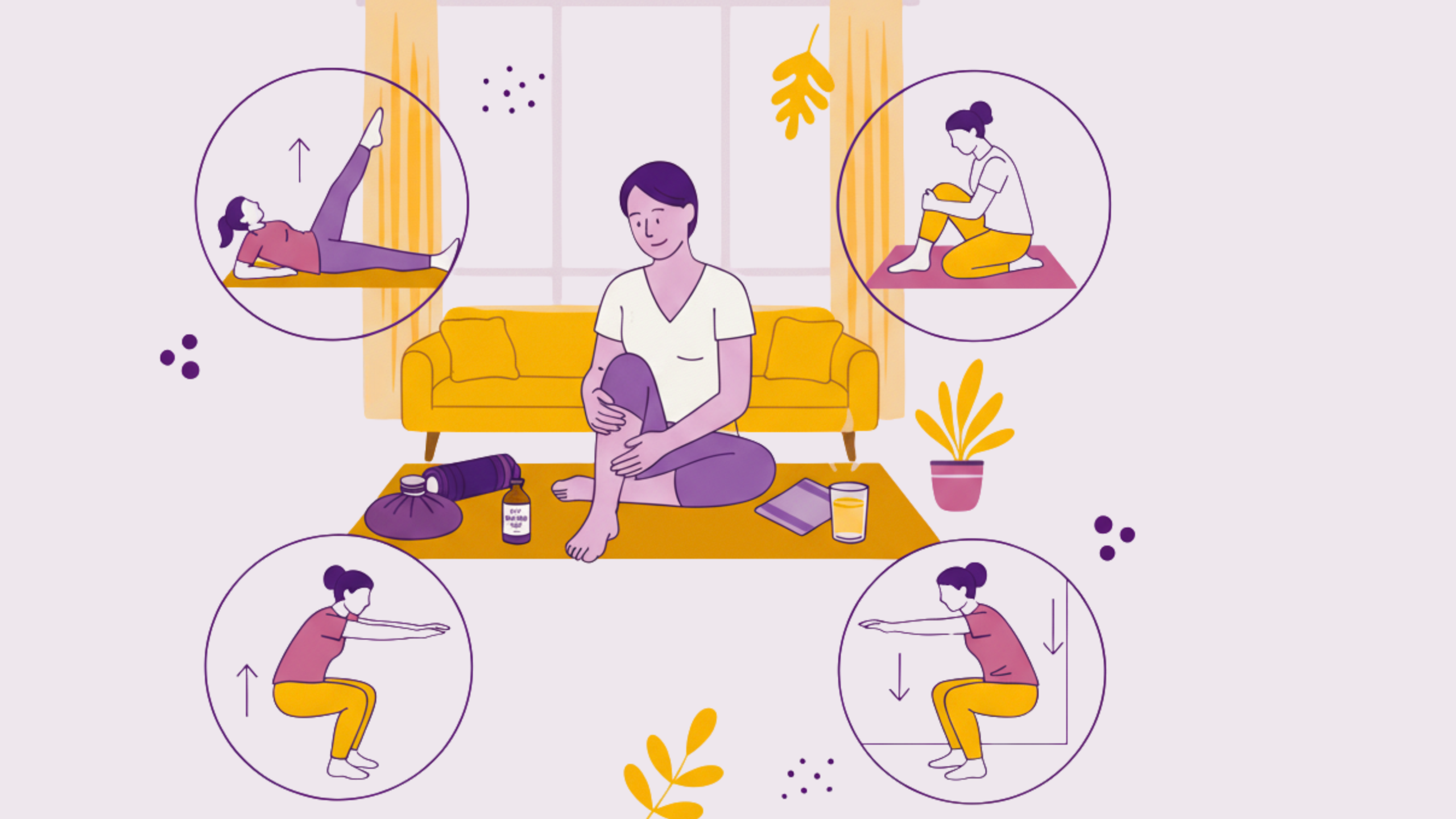
Sometimes, the best thing for an achy knee is a little Rest, Ice, Compression and Elevation (RICE). [3]
Raise your leg above heart level if it’s swollen, apply mild compression (knee sleeve), and avoid heavy load for a day or two. But don’t let this become habitual inactivity; long rest alone weakens muscles and worsens knee stability over time. [4]
2. Hot vs. Cold Therapy: Which One to Use?
If your knee is throbbing and inflamed after a workout, we’ve all been tempted to ice it, throw on a hot pad or both. Here’s what research says:
- Cold (ice): Best for acute injuries or flare-ups where inflammation and swelling are dominant. Applying an ice pack for up to 20 minutes restricts blood flow and helps reduce swelling. [5]
- Heat: Better when pain is chronic, stiff or the joint feels “tight.” Heat improves blood flow and relaxes tissues. [6]
- Some people alternate heat and cold (contrast therapy) but evidence is mixed on how much additional benefit that gives. [7]
Pro tip: If your knee is freshly injured, start cold. If it’s been bothering you for weeks and feels stiff, go for warmth.
3. Massage and Oils for Knee Relief
Massage around the knee increases blood flow, relaxes the muscles, and can improve comfort. Many people find self-massage or using a foam roller around the thigh and calf helpful. In fact, massage/acupressure has been shown to reduce musculoskeletal pain in a review. [8]
Natural oils with anti-inflammatory properties (like turmeric-infused or ginger oil) may provide supportive care although they’re not full replacements for movement or therapy, some studies show benefit of herbal compounds (e.g., boswellic acid + curcumin) in joint pain.
4. Natural Remedies for Arthritis & Joint Inflammation
Food and herbal compounds matter. For example:
- Omega-3 fatty acids (found in fish oil) have been shown to inhibit inflammatory enzymes and mediators like IL-1 and TNF-α in joint tissue. [9]
- Turmeric Paste – Curcumin, the active compound in turmeric, has strong anti-inflammatory properties. Applying turmeric paste mixed with warm coconut oil can reduce localized pain.[10]
- Ginger Compress – Ginger improves circulation and reduces muscle stiffness.
5. Supportive Braces and Knee Sleeves
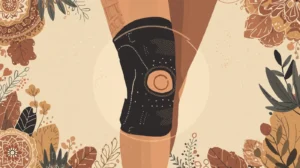
Over-the-counter knee braces, straps, and compression sleeves provide stability, reduce pressure on the joint, and prevent further injury. They are particularly useful for people with mild ligament issues or osteoarthritis.
The Power of Movement: Best Knee Pain Exercises You Can Do at Home
Now we’re getting into the fun part: knee pain exercises. Movement isn’t optional ,research clearly shows that exercise helps reduce pain, stiffness and improves function for knees, especially in osteoarthritis. [11]
Here are safe, evidence-based home exercises with a bit of guidance to keep the humour flowing (“your knees will thank you quietly”).
Warm-Up Moves for Safe Knee Workouts
Think of these as the “hello” before the “work”:
- Hamstring stretch: Lie on your back, loop a belt or towel under your foot, and gently raise your leg until you feel the back of the thigh stretch. Hold 20-30 s.
- Quadriceps stretch: Stand near a wall, hold onto something for balance, grab your ankle behind you and bring your heel toward your buttock until you feel the front thigh stretch. Hold 20-30 s.
- Calf stretch: Stand facing a wall, one leg forward with knee bent, the other leg back with knee straight and heel down. Lean in. 20-30 s each side.
These loosen things up gently. No drama, just prep.
Knee-Friendly Exercises for Strength, Mobility & Pain Relief
1. Straight Leg Raises (Beginner-Friendly Strength Builder)
Lie flat on your back. One leg bent at knee, foot flat. The other leg is straight. Slowly lift the straight leg (about 12 inches) off the floor, hold for 3–5 s, lower slowly. 10–15 reps × 2–3 sets.
Why? This exercise strengthens your quadriceps without loading the knee joint heavily.
2. Wall Sits or Supported Squats (Building Stability Without Chaos)
Stand with your back against a wall, feet ~30-40 cm (12-16 inches) away, slide down until knees are bent ~30-45°, hold for 10-20 s, then slide back up. Repeat 8-10 times.
Great for stabilizing the knee while keeping form safe.
3. Step-Ups (Functional Strength for Real Life)
Use a low stool or step (~10-15 cm height). Step up with one leg, bring the other up, then step down carefully one leg at a time. 10 reps each leg. Focus: slow and controlled.
This mimics climbing stairs or getting into a car, real-life value.
4. Seated Knee Extensions
Sit on a chair, back upright. Starting with the knee bent ~90°, straighten the leg until the knee is almost locked, hold for 2-3 s, then lower slowly. 10-15 reps each leg.
Helps improve knee mobility and strength without a full standing load.
5. Bridge Pose (For Strong Glutes + Better Knee Alignment)
Lie on your back, knees bent, feet flat hip-width. Press your feet into the floor, and lift your hips until your body forms a straight line from shoulders to knees. Hold for 5-10 s, lower slowly. Repeat 10 times.
Why include this? Because strong glutes support hips and knees, reducing knee strain. Research emphasizes that hip and knee muscle training yields better outcomes. [12]
Yoga for Knee Pain Relief
If you’re the “let’s yoga” type: good news. A recent clinical trial found that for individuals with knee osteoarthritis, yoga was non-inferior to strengthening exercises over 12 weeks for reducing knee pain and improving quality of life.[13]
Suggested yoga poses:
- Bridge Pose: (as above)
- Child’s Pose: Kneel, sit back on heels, lean forward with arms extended, gentle stretch of back, hips and knees.
- Low Lunge: One foot forward, other knee on mat, hips gently forward, builds hip flexor and quad flexibility.
- Legs-Up-the-Wall Pose: Lie on back, buttocks near wall, legs straight up the wall for gentle recovery.
The takeaway: whether you pick yoga or strength training, movement wins. And your knees will thank you quietly.
Joint-Friendly Diet: What to Eat for Pain-Free, Flexible Knees ?
What you eat shows up in how your knees feel. Some nutrients matter more than you might think:
- Omega-3 fatty acids (EPA & DHA) help reduce cartilage-degeneration enzymes and inflammatory mediators in joints.
- Vitamin D & Calcium: Maintaining bone health supports the joints that sit on top of bones.
- Protein & Collagen: Muscles need protein to repair; collagen aids joint tissue support (some emerging evidence).
- Phytonutrients: Found in berries, leafy greens, colourful vegetables,help combat oxidative stress in joints.
- Hydration: A well-lubricated joint is less cranky. Drink water.
Best Foods for Joint Lubrication
Feed your joints like you care:
- Fatty fish (salmon, mackerel) for omega-3s
- Flaxseed, chia seeds, walnuts- plant-based omega-3s
- Leafy greens (spinach, kale), colorful veggies, antioxidants
- Legumes & lentils- good protein and fiber
- Olive oil—healthy fats
Foods to Avoid (The Silent Knee Killers)
- Excess sugar and refined carbs: they increase inflammation
- Excess salt and processed foods:- may worsen swelling
- High-impact workout recovery chocolate? Maybe moderate.
Maintaining a healthy weight also matters; every extra kilo you carry adds stress to your knees.
Lifestyle Changes That Make a Huge Difference
Maintain Healthy Weight
Carrying extra weight means extra load on your knees, even small reductions in weight produce meaningful improvements in knee pain and function. [14]
Think of it this way: your knees don’t sign up to carry extra baggage, so don’t give them it.
Posture and Sitting Habits
Long hours sitting? Be smart:
- Avoid crossing legs or slumping.
- Keep chair height so your knees are ~90° bent.
- Stand up every 30-45 minutes, move around for 1–2 minutes.
- Use a supportive cushion if you have a stiff chair, your posture impacts knee alignment, hips, spine all interact. [15]
Stay Active (But Smartly)
Not all movement is equal. High-impact running, jumping may aggravate knees if they’re already unhappy. Better to choose:
- Walking
- Swimming
- Cycling
- Low-impact aerobics
These load the joint less and still build strength and mobility. Research shows aerobic and strengthening exercises together are effective.
Sleep, Recovery & Mindset
Your body repairs while you rest. Poor sleep can worsen pain perception and delay recovery.
Also: Cultivate patience. You’re not going from “ouch” to “championship sprinter” overnight. Gradually build consistency in your knee care.
When to Stop Home Remedies and See a Doctor for Knee Pain?
If you experience:
- Knee pain for more than a few weeks with no improvement
- Instability (knee gives way)
- Swelling, redness, warmth (possible infection or inflammation)
- Deformity or major trauma
Then you should consult a healthcare professional. Studies show that for conditions like knee osteoarthritis, exercise + braces + weight management form the core non-surgical strategy. [16]
Medical Supports That Complement Exercises
- Knee braces or supports for stability
- Topical treatments (NSAIDs, capsaicin) for short-term relief. [17] Physiotherapy-guided programs.
Remember: These aids help support your exercise and lifestyle routine; they are not replacements for movement.
Real Talk: Healing Knees Takes Patience (and Consistency)
Here’s the honest truth: Your knees won’t transform overnight. But with daily care, they will improve. Think of it like growing plants: you don’t water once and expect a forest. You water, give sunlight, trim, and adjust. Your knees are similar.
The Mindset Shift
- Celebrate the small wins (less creaking, less pain climbing stairs)
- Keep track of your progress (how far you walk, how stairs feel, how you get up from the sofa)
- Laugh at the knee pop; when you bend your knees, your body still has sense of humor.
- Be consistent: even 10–15 minutes of exercise and 1 good joint-friendly meal can add up
Quick Recap Checklist
- Three reliable home remedies: cold/heat, massage, natural anti-inflammatories
- Three top knee pain exercises you can start today: straight-leg raise, wall sit, bridge
- Diet focus: fish, greens, seeds, hydration; avoid processed snacks and extra stress on knees
- Lifestyle: move often, posture matters, minor weight loss helps big time
- When to upgrade to professional help
- Mindset: you’ve got this, and your knees will quietly thank you
Final Thoughts: Your Knees Deserve Better Care Than You Think
The fact is, your knees carry you through a lot; commutes, shopping, late nights, long drives, you name it. They rarely get a thank-you, but they deserve one. With the right blend of knee pain exercises, thoughtful home remedies, a joint-friendly diet and smart lifestyle decisions, you can bring real relief without surrendering your life to painkillers, couch-time or lengthy treatments.
Start small. One stretch, one walk, and one better food choice a day. Your knees might not notice immediately, but over the weeks you’ll feel the difference: less ache, more ease, more life.
And when your knees stop acting like squeaky hinges and start acting like your reliable support system again, you’ll know you made the right move.
Here’s to quiet knees, everyday movement, and the comfort of strength. Your joints will thank you.
Explore More Health & Wellness Solutions :-
Want to stay informed about wellness and everyday health issues? Here are some insightful reads to guide you. Explore the links below for practical tips and solutions.
- Herbal Pain Relief Spray: Natural Ingredients, Benefits, and How It Works
- Swollen Knee Treatment at Home: Remedies, Relief, and Prevention Tips
- Effective Lower Back Pain Self-Care: Tips for Relief and Prevention
Frequently Asked Questions:
1. Can knee pain go away on its own?
Mild knee pain from overuse or strain often improves with rest, ice, and gentle exercises. But if it lasts more than a few weeks, it’s best to get it checked by a doctor.
2. What is the fastest way to relieve knee pain at home?
Applying ice, doing light stretching, and keeping your leg elevated can bring quick relief. Pair that with knee-friendly exercises to strengthen the joint over time.
3. Is walking good for knee pain?
Yes, gentle walking can actually help keep your joints flexible and muscles strong. Just avoid uneven surfaces and take breaks if pain increases.
4. Which foods help reduce knee pain naturally?
Foods rich in omega-3s, antioxidants, and vitamin D like salmon, turmeric, and leafy greens can help reduce inflammation and support joint health.
5. When should I worry about knee pain?
If your knee pain comes with swelling, locking, or trouble walking, don’t ignore it. That’s your cue to visit a physiotherapist or orthopedic specialist.
References:
- Cleveland Clinic. (2025, July 20). Knee Pain: What It Is, Causes, Treatment & Relief. Cleveland Clinic. https://my.clevelandclinic.org/health/symptoms/21207-knee-pain
- Susko, A. M., & Fitzgerald, G. K. (2013). The pain-relieving qualities of exercise in knee osteoarthritis. Open Access Rheumatology: Research and Reviews, 5, 81–91. https://doi.org/10.2147/OARRR.S53974
- Burtchell, J. (2023, February 3). 8 natural home remedies for knee pain. Healthline. https://www.healthline.com/health/pain-relief/knee-pain-home-remedies
- Arthritis UK. (2025). Knee pain exercise sheet. https://www.versusarthritis.org/media/21787/kneepain-exercise-sheet.pdf
- Mayo Clinic Staff. (2023, January 25). Knee pain – Diagnosis and treatment. https://www.mayoclinic.org/diseases-conditions/knee-pain/diagnosis-treatment/drc-20350855
- The Orthopedic Clinic. (n.d.). 15 home remedies for knee pain. The Orthopedic Clinic. https://orthotoc.com/home-remedies-for-knee-pain/
- Verywell Health. (n.d.). Heat or ice for knee pain: What to use to feel better faster.. https://www.verywellhealth.com/heat-or-ice-for-knee-pain-5094143
- AARP Hearing Center. (2025, July 24). 9 home remedies for knee pain. AARP. https://www.aarp.org/health/healthy-living/knee-pain-home-remedies
- Maroon, J. C., Bost, J. W., & Maroon, A. (2010). Natural anti-inflammatory agents for pain relief. Surgical Neurology International, 1, https://pmc.ncbi.nlm.nih.gov/articles/PMC3011108/
- Lindler, B. N., Long, K. E., Taylor, N. A., & Lei, W. (2020). Use of herbal medications for treatment of osteoarthritis and rheumatoid arthritis. Medicines (Basel), 7(11), 67. https://doi.org/10.3390/medicines7110067
- Raposo, F., Ramos, M., & Cruz, A. L. (2021). Effects of exercise on knee osteoarthritis: A systematic review. Musculoskeletal Care https://pubmed.ncbi.nlm.nih.gov/33666347/
- Nascimento, L. R., Teixeira-Salmela, L. F., Souza, R. B., & Resende, R. A. (2018). Hip and knee strengthening is more effective than knee strengthening alone for reducing pain and improving activity in individuals with patellofemoral pain: a systematic review with meta-analysis. Journal of Orthopaedic & Sports Physical Therapy, 48(1), 19-31.https://www.jospt.org/doi/10.2519/jospt.2018.7365
- Abafita, B. J., Singh, A., Aitken, D., Ding, C., Moonaz, S., Palmer, A. J., & Antony, B. (2025). Yoga or Strengthening Exercise for Knee Osteoarthritis: A Randomized Clinical Trial. JAMA Network Open, 8(4), https://jamanetwork.com/journals/jamanetworkopen/fullarticle/2832290?
- Alleviate Pain Clinic. (n.d.). 10 effective nonsurgical treatments for knee arthritis: Evidence-based solutions for pain relief and improved function. https://www.alleviatepainclinic.com/blog/10-effective-nonsurgical-treatments
- Bilodeau, K. (2024, July 31). Take control of your knee pain. Harvard Women’s Health Watch. Harvard Health Publishing. https://www.health.harvard.edu/pain/take-control-of-your-knee-pain
- Misra, D., & Felson, D. T. (2024). Evidence-based review of nonsurgical treatments for knee and hip osteoarthritis. European Journal of Rheumatology, https://pmchttps://pmc.ncbi.nlm.nih.gov/articles/PMC11184962/.
- Shtroblia, V., Petakh, P., Kamyshna, I., Halabitska, I., & Kamyshnyi, O. (2025). Recent advances in the management of knee osteoarthritis: A narrative review. Frontiers in Medicine, 12, 1523027. https://doi.org/10.3389/fmed.2025.1523027