





How does self-awareness play a key role?
Congratulations! if you’re reading this, your knees have probably filed a (very loud) complaint. Spotting knee pain reasons at home starts with tuning into your own body. Self-awareness, although underrated, is the secret to detect the cause of neck pain.
- Notice which activities crank up the volume on your pain; sitting, running, or just realizing you’re not 18 anymore.
- Your personal history deserves mention. Did you once twist your knee heroically (or not-so-heroically) getting off the couch? Did your marathon-running ambitions end at 5K with a mysterious “crunch”?
- Keep an open (and honest) mind. Sometimes, that “injury” came from re-enacting a K-pop dance. No judgment.
Differentiating between types of knee pain by sensation
Not all knee pain speaks the same language. Learn the dialects:
- Sharp, sudden jolts: These are like surprise plot twists; often from injuries like ligament tears or meniscus troubles [1].
- Dull, persistent ache: That old “wear and tear” feeling, common with arthritis or overuse. Think of it as your knee’s slow burn.
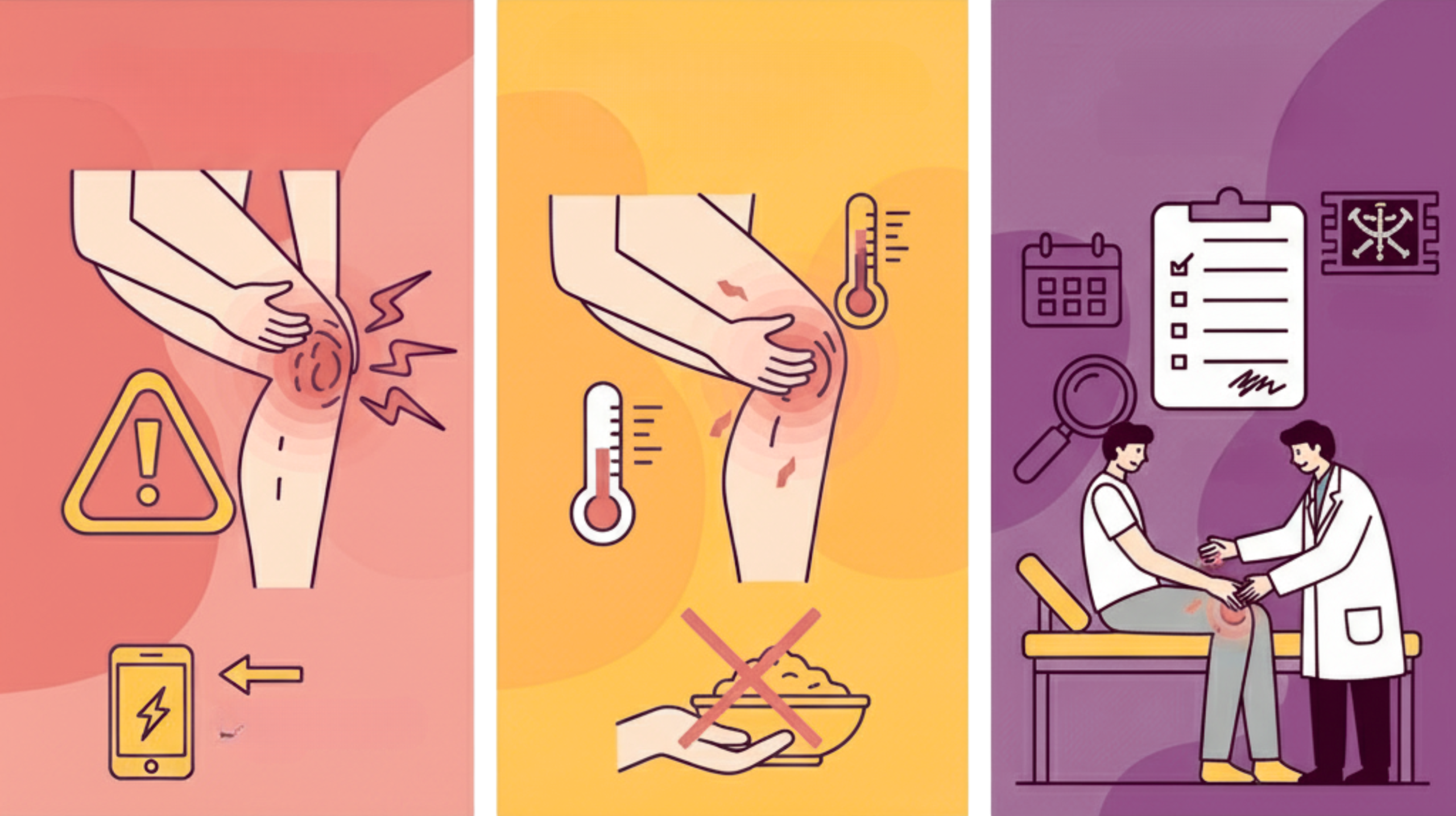
- Swelling or warmth: This is your knee sending an SOS signal for inflammation.
- Pops and clicks: Your knee’s way of saying, “Hey, something’s moving in here!” Usually related to cartilage wear or loose bodies in the joint.
Tuning into these sensations helps map the cause without a second opinion right away.
Impact of time and activity on pain patterns
Now, apply your inner time lord. Track pain in relation to your day:
- Morning stiffness? Your knee might be a fan of arthritis’s slow wake-up calls.
- Pain after activity? Likely from overuse.
- Relief after rest versus pain at rest: The latter can be a red flag for serious conditions.
Common Knee Pain Causes and How They Feel?
Let’s break down the “usual suspects,” because your knee isn’t playing villain out of boredom.
Sharp, Shooting Pain: What It Could Mean
Sudden stabbing pains usually come from injuries. Twisting your knee oddly during exercise or accidentally bumping into furniture (we’ve all been there) can cause ligament sprains or meniscus tears. These usually hurt right away and make certain movements impossible or extremely uncomfortable.
Aching and Stiffness: Signs of Wear and Tear
This kind of persistent aching signals aging cartilage or early arthritis, especially common in folks hitting their 30s [2]. It’s slower to announce itself but can make you feel stiff in the morning or after sitting too long.
Swelling and Warmth: Inflammation At Play
If your knee is visibly swollen, warm to the touch, and tender, inflammation is probably the culprit. It might be bursitis, tendinitis, or an infection in rare cases; don’t ignore these signs, especially if you also feel feverish.
Clicking, Locking, or Popping Sounds: Inside the Joint
Clicking sounds can be unnerving but are often related to cartilage wear or meniscal tears. Locking, where the knee gets stuck in one position, needs urgent attention from a healthcare professional.
Step-by-Step Home Examination for Knee Pain
The best self-diagnosis doesn’t involve Google-induced panic. Here’s a safe, practical method.
Visual Checks: What to Look for?
- Compare knees: Is one larger, more dramatic in shape, or an unusual shade of “angry tomato”?
- Check for bruising, swelling, or odd lumps. If one knee’s got a new “bump,” it may mean fluid (effusion), bursitis, or injury [3].
Gentle Touch and Palpation: Finding Tender Areas
- Use fingers to gently press around the kneecap, sides, back, and joint line. Notice spots that make you yelp, even if you’re trying to look tough.
- Does pressing in specific spots shoot pain through your sole? That’s data: joint line pain = meniscus; front of knee = patellar [4].
Movement Exploration: Testing Range and Pain Triggers
- Gently straighten and bend your knee, standing or sitting. Any sharp pain, clicks, or sense of “nope, not today”?
- Try squatting (within reason); does everything hurt, or just certain angles?
- If you cannot fully straighten or bend the knee, that’s a red flag for a significant injury or swelling [5].
Functional Tests: Stability and Strength Awareness
- Single-leg stand: Sway like a flamingo and see if pain or “wobble” increases.
- Rise from a chair WITHOUT using your hands (you might impress yourself); notice if weakness or pain stops you halfway.
- Gently hop on one foot (if safe); test for confidence, strength, and whether your knee immediately files a complaint to HR (Health Review).
Using Pain Location as a Diagnostic Clue
You’re now part geographer, part orthopedic detective. Here’s how knee pain’s precise map can clue you in.
Front, side, and back of knee: what does the pain location indicate?
- Front (anterior): Patellofemoral syndrome, tendinitis, or “runner’s knee [6].” Most likely if you spend a lot of your 30s stuck at desks, then suddenly test out HIIT.
- Inside (medial): Medial meniscus, MCL sprain, or arthritis; common if pain increases with going up or down stairs.
- Outside (lateral): Lateral meniscus, IT band syndrome, especially for runners and cyclists.
- Back (posterior): Hamstring strain, Baker’s cyst, or referred pain from other joints.
- If pain wanders, it might be “referred” from hip or foot mechanics. The body, unapologetically, likes to keep us guessing.
Differentiating ligament, tendon, cartilage, and joint pain
Cheat sheet for home anatomical sleuthing:
| Symptom/Trigger | Likely Structure | Typical Cause |
| Pain with twisting/rotation | Meniscus cartilage | Sports or sudden injury; degenerative |
| Pain with side-to-side motion | Ligaments (ACL, MCL) | Sudden direction changes |
| Pain with stairs/squatting | Ligaments (ACL, MCL) | Sudden direction changes |
| Persistent aching/popping | Joint (arthritis, loose body) | Age, long-standing injury |
Home Tools and Techniques to Aid Identification
You don’t need a white coat, but you might need your phone and a notebook.
Using mirrors and smartphones for self-assessment
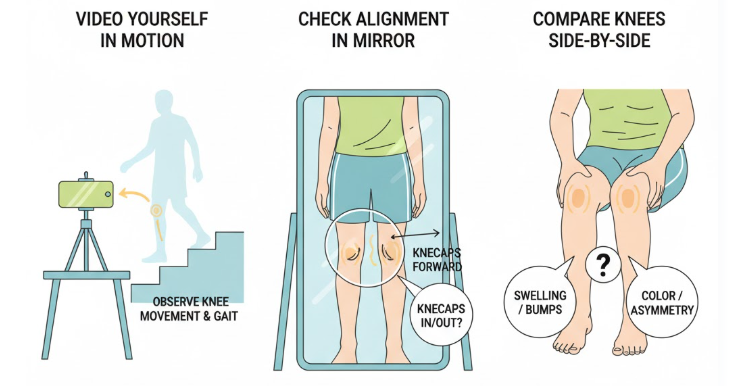
- Film yourself walking, squatting, or ascending stairs. No, this isn’t TikTok; watch for limping, awkward gait, or one knee “misbehaving.”
- Use mirrors to observe alignment. If your kneecaps point at each other or different zip codes, that’s useful info.
- Compare both knees for size, color, bumps, or “oddities”.
Keeping a pain diary: Tracking time, triggers, and relief
- Jot down when you feel pain, what you are doing, and crucially; what helps.
- Pain scale (1-10): Was that jog a “3” or a “9”? Was the extra slice of pizza… Is it worth it?
- Over a week, patterns emerge, and you’ll get a “my body in numbers” chart perfect for doctors or just bragging on fit-streaks.
When simple tests suggest advanced problems
Not all mysteries can be solved with a flashlight and wishful thinking:
- If pain makes you fall or buckle suddenly, seek medical advice.
- Large, sudden swellings or deformities are NOT “normal post-gym glow.”
- If your pain keeps you up at night, or you lose sensation below the knee, professional help trumps bravado.
Simple At-Home Measures to Ease Common Knee Pain Reasons
Here’s the good news: most mild knee pain relents to simple fixes. Cue your inner home therapist.
Cold and heat therapy: When and how to use them
- Cold packs (crushed ice wrapped in a towel) tame swelling and pain and make you look like you’ve got your pain game together.
- Heat pads help stiffness, especially in the morning or with “rusty joint” syndrome.
- Pro tip: Switch between ice and heat, but don’t microwave a sock unless you crave “burnt laundry” scent.
Recommended gentle movements and stretching
Try these “knee-friendly” moves:
- Straight leg raise: Recline, tighten thigh, and lift straight leg a few inches. Hold, lower, and repeat until you feel slightly athletic.
- Chair squats: Stand, squat until kneecaps hover just above toes, and rise again. If anyone asks, you’re “practicing sitting with style.”
- Step-ups: Use stairs or a sturdy box. Feel your quadriceps do more than just support snack runs.
- Thigh massage: Gently knead thigh muscles; a little DIY love can boost knee support.
Over-the-counter aids: What may help and what to avoid
- NSAIDs (paracetamol, ibuprofen, etc.): Good for short-term relief [7]; don’t use long-term without a conversation with your doc.
- Elastic knee supports: Help stabilize; just don’t wear them so tight they cut off circulation. “Mummy-chic” is not a good look.
- Avoid unproven herbal pills or lotions unless you enjoy “aromatic surprises” and questionable results.
When Home Identification Reveals Red Flags?
Important: Know when DIY should really mean “Do Involve Your” doctor.
Recognizing signs that require urgent medical attention
- Obvious deformity, large swelling, or inability to move your knee means “drop everything (gently) and call for help.”
- Fever, redness, and warmth could be an infection. This is not the time for turmeric pastes; call your doc.
- If you can’t bear weight, your knee “locks” (gets stuck in one position), or you lose sensation, seek help yesterday.
Understanding limitations of home assessment
- Home checks are for mild symptoms; major injuries need trained eyes (and high-def medical imaging).
- If pain worsens, spreads, or you have concerning symptoms, playing “WebMD roulette” is risky business.
- Accept that some mysteries, like the Bermuda triangle and your last missing left sock, are better left to professionals.
Preparing for the doctor’s visit: What information to share
- Bring your pain diary. It’s basically your “greatest hits” album, but with less glamour and more data.
- Note what relieves or worsens pain, the history of injuries (even embarrassing ones), and all current medications.
- Mention any family history of arthritis, autoimmune disease, or “grandpa’s trick knee that knows when it’ll rain.”
Integrating Preventive Habits Based on Self-Knowledge
Congrats, you now know your knees better than your favorite playlist. Here’s how to stay pain-free(ish).
Adjusting daily activities to ease knee stress
- Ditch the warrior poses that invite pain; choose movements that “challenge but don’t punish.”
- Alternate activities; don’t run daily, mix with swimming or cycling.
- Respect pain signals. “No pain, no gain” is a terrible motto and your knees agree.
Importance of footwear, posture, and ergonomics
- Shoes aren’t just fashion; they’re the foundation. Supportive soles protect knees, so ditch those “last legs” flip-flops.
- Office dwellers: Raise your chair, adjust monitor height, and keep both feet on the floor (not “creatively” cross-legged).
- Use knee-supporting seats or cushions. If your desk looks like you’re prepping for a NASA launch, you’re probably set.
Weight management and diet considerations in joint health
- Every kilo adds extra kilos of force on the knee. Sorry for the math, but think of excess weight as “frenemies” sitting on your knees.
- Add anti-inflammatory foods: leafy greens, berries, and fatty fish [8]. Limit processed foods; your knees prefer quinoa to chips, trust us.
- Stay hydrated. Even your cartilage loves a good drink.
Conclusion
Armed with new skills, from mirror selfies to step-ups, you’re ready to keep your knees as happy as possible. When in doubt, seek professional help. Your joints deserve the best, and so do you (and your heroic dance-floor moves).
Frequently Asked Questions:
1. Can I reliably diagnose knee pain at home?
You can identify clues to mild or moderate knee pain causes, but only a healthcare professional can make a full diagnosis. If pain persists or is severe, get an expert involved.
2. How do different types of knee pain feel?
Sharp pain is often injury– or ligament-related; dull, stiff pain suggests arthritis, and clicking or popping can point to meniscus or cartilage wear. Swelling is a sign of inflammation. Listen to your pain’s “greatest hits” for clues.
3. What are easy tests I can perform at home to understand my knee pain?
Visual comparisons, gentle palpation, movement tests (bending, squatting, step-ups), and keeping a pain diary all help isolate knee pain reasons. Use your phone for self-filming if you’re curious (or a little vain).
4. When should I stop home care and see a doctor?
If you experience large swelling, fever, major visual deformity, can’t bear weight, or your knee locks, consult a doctor urgently. If home treatments don’t work after a week, seek expert advice.
5. What lifestyle changes support knee pain relief after home identification?
Adjust activity levels, wear supportive shoes, optimize posture, manage weight, and maintain a balanced, anti-inflammatory diet. Your future self, and your knees, will thank you loudly (and, hopefully, painlessly).
References
- Smith, S. A. (1918). The diagnosis and treatment of injuries to the crucial ligaments. Journal of British Surgery, 6(22), 176-189. https://www.primarycare.theclinics.com/article/S0095-4543(06)00066-2/abstract
- van der Kraan, P. M. (2025). Osteoarthritis as an evolutionary legacy: biological aging and chondrocyte hypertrophy. Osteoarthritis and Cartilage Open, 100624. https://doi.org/10.1016/j.ocarto.2025.100624
- Villafuerte, A., Weiss, J. M., Aghalar, M. R., Sohal, D., Higgins, D., Nwachuku, A., & Moshkovski, F. G. (2010). Lower extremity. Physical Medicine and Rehabilitation, 121. https://books.google.com/books?hl=en&lr=&id=aFuYCAiW0hsC&oi=fnd&pg=PA121&dq
- Couture, J. F., Al-Juhani, W., Forsythe, M. E., Lenczner, E., Marien, R., & Burman, M. (2012). Joint line fullness and meniscal pathology. Sports health, 4(1), 47-50. https://doi.org/10.1177/1941738111422330
- Gupte, C., & St Mart, J. P. (2013). The acute swollen knee: diagnosis and management. Journal of the Royal Society of Medicine, 106(7), 259-268. https://doi.org/10.1177/0141076813482831
- Waryasz, G. R., & McDermott, A. Y. (2008). Patellofemoral pain syndrome (PFPS): a systematic review of anatomy and potential risk factors. Dynamic medicine, 7(1), 9. https://link.springer.com/article/10.1186/1476-5918-7-9
- Moore, N., Ganse, E. V., Parc, J. M. L., Wall, R., Schneid, H., Farhan, M., … & Pelen, F. (1999). The PAIN study: Paracetamol, Aspirin and Ibuprofen New tolerability study: a large-scale, randomised clinical trial comparing the tolerability of aspirin, ibuprofen and paracetamol for short-term analgesia. Clinical drug investigation, 18(2), 89-98. https://doi.org/10.2165/00044011-199918020-00001
- Dai, Z. (2024). A literature review on plant-based foods and dietary quality in knee osteoarthritis. European journal of rheumatology, 11(Suppl 1), S32. doi: 10.5152/eurjrheum.2022.21134