





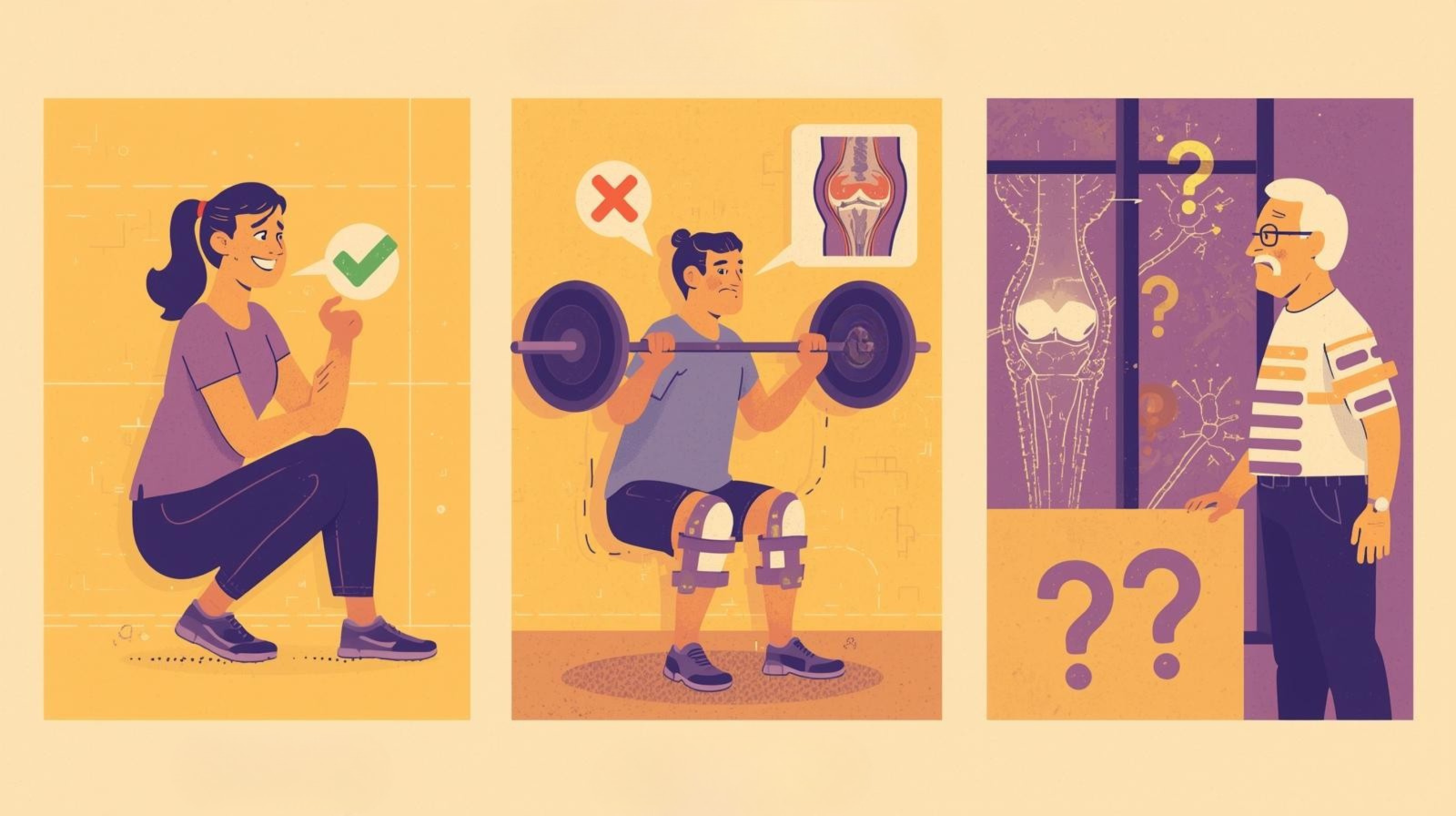
Let’s be honest, the internet loves to promise “one magical move” to fix everything from stiff knees to heartbreak. You’ve probably seen those flashy titles: “ Fix Your Knees in 7 Days!” or “This One Exercise Heals Cartilage Instantly! ” at some point.
The truth? Your knees are smarter than clickbait. They need strategy, not shortcuts. This article uncovers the real science behind popular knee pain exercises, the ones that work, the ones that hurt more than help, and the ones that sound fancy but are basically hype in yoga pants.
Not every “knee pain exercise” you see online is doing your joints any favors. Let’s break down the good, the bad, and the overhyped routines with science, humor, and a bit of reality check.
The Knee Pain Exercise Confusion- Why Everyone’s Doing It Wrong
You type “knee pain exercise” into Google, and boom, thousands of YouTube trainers, physical therapists, and influencers promising miracle fixes. “Just do this one move daily,” they say, while flexing knees that have clearly never squeaked on a staircase.
But here’s the truth, not all knee exercises are created equal. Some can genuinelystrengthen your joints and reduce inflammation, others might make your pain worse. The goal isn’t to do more movement; it’s to do the right movement.
Today, we’ll sort fact from fiction, what science actually supports, which routines to skip, and which recovery habits make your knees thank you later.
The Good Exercises That Strengthen and Support Your Knees
1. Quadriceps Strengthening: Your Knee’s Best Friend
The quadriceps (front thigh muscles) play a starring role in knee stability. Weak quads often lead to increased joint pressure and pain while climbing stairs or standing up from sitting.
Best Exercise :
- Straight Leg Raises: Lie flat, one leg bent, and slowly lift the other. This activates the quads without stressing your knee joint.
- Mini Squats: Done with control and a neutral spine, they train your knees to handle daily load safely.
Science says: Strengthening quadriceps can significantly reduce pain and improve function in people with knee osteoarthritis [1].
2. Hamstring and Glute Activation The Hidden Heroes
Your glutes and hamstrings are like the quiet support crew behind your knee’s performance. When they’re weak, your knees overcompensate, leading to pain and fatigue.
Try These:
- Bridges (great for glute engagement and hip alignment)
- Hamstring Curls (with a resistance band or on a mat)
Research shows that targeted hamstring strengthening improves joint stability and gait mechanics [2].
3. Calf Raises and Balance Work
Strong calves improve blood flow, reduce stiffness, and stabilize ankle movement which directly affects how pressure travels up to your knees.
Do: 3 sets of 15 calf raises daily, gradually adding resistance.
Balance drills, like single-leg stands or using a stability cushion, also improve joint proprioception (your body’s sense of movement and position) [3].
4. Low-Impact Cardio: The Unsung Hero of Knee Recovery
Think swimming, cycling, or elliptical training; these boost circulation, lubricate joints, and reduce stiffness without pounding impact.
A 2019 clinical review found that low-impact aerobic exercise significantly reduces pain and stiffness in patients with knee osteoarthritis [4].
The Bad Exercises That Do More Harm Than Good
Some movements put unnecessary stress on your knee ligaments, cartilage, or patella. These “bad” exercises might look impressive, but they can be damaging if your knees are already sore.
1. Deep Lunges and Full Squats
When you drop too low, the knee joint bears more compressive load than it can handle especially for those with existing cartilage wear.
Fix it: Do half squats (stop at a 45° bend), and focus on form over depth.
2. Jump Squats and High-Impact Plyometrics
Jump training builds athletic power but not if your knees already feel like rusty hinges. High-impact jumps can inflame joints and worsen meniscus irritation.
Alternative: Controlled step-ups or low-box squats with support.
3. Leg Extensions with Heavy Weights
While this machine looks great for “leg day,” it puts unnatural strain on the patellar tendon, one of the most sensitive structures in the knee [5].
Safer Swap: Resistance bands or seated straight leg raises instead.
4. Running on Hard Surfaces
Pavement running increases shock load on the knees. For chronic pain sufferers, it’s like repeatedly hitting a bruise.
Better Option: Run on grass, a treadmill, or switch to cycling and brisk walking.
Footwear and Surface Impact on Knee Exercises
Shoes and training surfaces change how force travels through your body. Hard surfaces and worn-out footwear increase shock load on the knees, while cushioned shoes and softer surfaces help reduce impact. Using supportive footwear and padded surfaces can significantly lower knee joint load during exercise and daily movement [16].
Common Knee Exercise Mistakes to Avoid for Long-Term Strength and Mobility
Even the best moves can backfire when done wrong.
- Ignoring form: Knees caving inward = joint stress.
- No warm-up: Cold muscles = higher injury risk.
- Too much, too fast: Recovery is where the magic happens.
- Copying others’ routines: What works for a marathoner may not suit your pain level.
1. “10-Minute Miracle Knee Fixes”
Let’s be real, if your knees have been aching for months, they won’t heal in ten minutes. While short mobility routines help loosen stiffness, they aren’t substitutes for a consistent strengthening program.
2. Overusing Resistance Bands
Bands are great, but too much tension or incorrect placement can misalign your movement patterns. Science supports progressive load, not constant maximum resistance [6].
3. Popular Yoga Moves Like Deep Chair Pose
Yoga is fantastic for mobility but poses like Chair Pose or Hero Pose can overload the patella. Choose modifications or supportive props instead.
Tip: Use a posture cushion to relieve pressure while sitting in meditative poses.
4. Viral “Wall Sit Challenges”
Wall sits are good for static strength but without dynamic motion, they don’t mimic real-life function. Overdoing them may stiffen the knee instead of improving flexibility.
How to Choose Exercises Based on Your Knee Condition ?
Not all knees need the same routine. Someone recovering from osteoarthritis requires different exercises than an athlete rehabbing a ligament injury. For mild pain, mobility drills and low-load strengthening help restore movement. For instability, controlled functional knee movement patterns and balance exercises are essential. Beginners should focus on basic exercises for knee stability, while athletes may progress to sport-specific drills under professional guidance [12].
Knee Pain Exercises for Beginners vs Athletes
Joint-friendly workout routines look very different depending on experience level. Beginners should prioritize mobility, posture correction, and low-load strengthening. Athletes can introduce dynamic drills, plyometrics, and agility training once pain is controlled. Many knee strengthening myths come from people copying elite athlete routines without foundational strength, which often leads to overuse injuries [14].
Effective Add-Ons That Help You Recover Faster
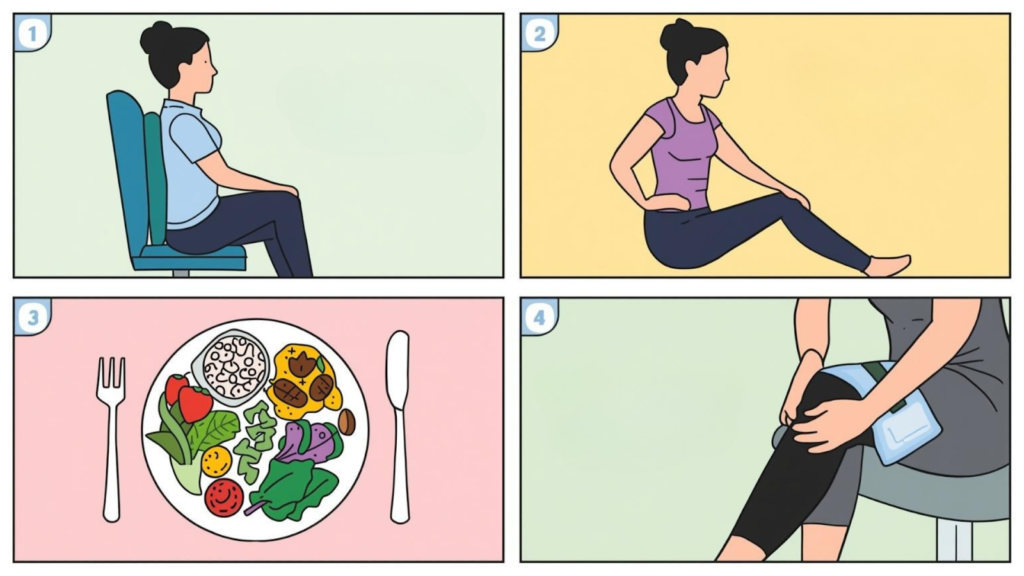
Pair your knee pain exercises with these wellness strategies for faster recovery.
1. Posture Alignment
Poor posture transfers load to your knees. Simple ergonomic fixes like sitting on a lumbar cushion, keep the spine and hips aligned, reducing knee strain.
2. Mobility Drills Before Strength Work
Warm-ups like knee circles and hamstring stretches increase blood flow and reduce stiffness (11).
3. Anti-Inflammatory Nutrition
Omega-3s, turmeric, and leafy greens reduce inflammation from within (12).
4. Smart Recovery Tools
Compression sleeves, cold therapy, and cushioned supports, enhance circulation and comfort between sessions.
The Science Behind Why Some Exercises Work Better
Your knee joint is a hinge with complex mechanics supported by muscles, ligaments, and synovial fluid that keep movement smooth.
Here’s why some exercises heal, while others hurt:
- Load Distribution: Proper exercises strengthen muscles that absorb impact before it hits your knee.
- Inflammation Control: Moderate activity stimulates anti-inflammatory responses and improves circulation [7].
- Joint Lubrication: Gentle motion increases synovial fluid flow, reducing stiffness.
- Neuromuscular Control: Strength and balance drills retrain your nervous system to stabilize your knees.
Why Some Knee Exercises Increase Joint Stress
Your knee joint is not just a simple hinge, it’s a complex load-bearing system designed to distribute force across cartilage, ligaments, and muscles. Some exercises increase joint stress when they push the knee beyond its current strength or mobility capacity. Deep knee bends, twisting drills, and high-impact jumps can overload the patellofemoral joint and accelerate inflammation, especially in people with cartilage wear or poor biomechanics. Research shows that excessive compressive forces can worsen joint degeneration and pain symptoms over time [11].
The Role of Load Management in Knee Pain
Load management is one of the most overlooked aspects of knee rehabilitation basics. Joints adapt to gradual stress, not sudden spikes. Increasing repetitions, resistance, or workout frequency too quickly is a common knee pain training error. Progressive loading with rest days allows cartilage and soft tissues to recover and remodel, improving long-term joint health [13].
How Frequency and Volume Affect Knee Recovery ?
How often and how much you exercise directly affects recovery. Overuse knee exercises without adequate rest can increase inflammation and slow healing, while too little movement reduces joint lubrication and muscle strength. Studies suggest moderate, consistent exercise with rest days improves joint function and reduces pain more effectively than intense daily workouts [15].
Signs Your Knee Exercise Program Needs Adjustment
Your program should evolve with your knees. Increasing pain, swelling, stiffness, or reduced mobility are signs your routine may be too aggressive. Knee exercise mistakes often include ignoring pain signals, increasing intensity too quickly, or skipping recovery. Adjusting volume, technique, and recovery tools such as knee sleeves or knee braces can improve comfort and support healing [17].
When to Stop: Signs You’re Doing the Wrong Knee Exercise
Listen to your body. Stop any movement if you feel:
- Sharp or localized joint pain
- Swelling or stiffness lasting more than 24 hours
- Grinding or locking sensations
Pain isn’t weakness leaving your body, it’s your knee sending an SOS.
Beyond Exercise, What Your Knees Actually Need for Full Recovery
1. Nutrition for Joint Health
Protein repairs tissue. Omega-3 fatty acids reduce inflammation. Vitamins C and D support collagen formation and bone health [8].
Add:
- Salmon, walnuts, flaxseeds
- Leafy greens and citrus fruits
- Bone broth for collagen peptides
2. Rest and Recovery Tools
Rest is not laziness, it’s biology. Muscles grow and heal during downtime. Add Betterhood’s knee sleeves or ergonomic cushions to improve comfort during recovery.
Massage rollers, ice packs, or compression sleeves can accelerate tissue repair and reduce soreness.
3. Posture and Movement Habits
Bad posture equals bad knee load. If your hips or spine are misaligned, your knees take the hit. Simple posture corrections during standing and sitting reduce chronic strain dramatically [9].
4. Sleep and Stress
High cortisol from poor sleep slows recovery. Deep sleep boosts growth hormone, essential for muscle repair [10].
So yes, your “Netflix at 2 AM” habit might actually be hurting your knees too.
Building Your Own Knee Exercise Plan (The betterhood Way )
Here’s a sample week:
Day 1: Quad & Hamstring Strength
Day 2: Low-impact cardio
Day 3: Rest or stretching
Day 4: Glute and balance work
Day 5: Core and posture correction
Day 6: Mobility and yoga (light)
Day 7: Rest + active recovery
Pair this with supportive tools like betterhood’s ergonomic seat cushion or lumbar support pillow to reduce load on knees during long hours of sitting.
Conclusion
There’s no “miracle” knee pain exercise, just smart, consistent movement rooted in science.
Good exercises build strength and mobility. The bad ones overload the joint. Overhyped? Mostly internet myths.
The next time you see a “knee cure” challenge online, remember: your knees deserve evidence-based care not guesswork. Beyond Exercise, What Your Knees Actually Need for Full Recovery section: Supportive tools like knee sleeves, knee braces and orthotic insoles can reduce joint stress during both exercise and daily sitting as it becomes movement with purpose.
Explore More Health & Wellness Solutions:
Want to stay informed about wellness and everyday health issues? Here are some insightful reads to guide you. Explore the links below for practical tips and solutions.
- How to Prevent Knee Injuries: Proven Tips, and Lifestyle Strategies for Stronger Joints
- How Can Knee Cap Support Help Prevent Injury and Reduce Pain While Running
- 10 Effective Home Remedies for Body Pain Relief Naturally
Frequently Asked Questions:
Many viral routines are designed for views, not joint safety. Some include unsafe knee workouts that overload joints and can worsen pain, especially without proper form or progression.
Yes. Excessive load, poor technique, and lack of recovery can increase cartilage wear, particularly in people with existing joint degeneration or osteoarthritis [18].
Warning signs include persistent pain, swelling, stiffness, clicking, or pain lasting more than 24 hours after exercise. These signals mean you may need to reduce intensity or modify movements.
Yes. Strengthening the quadriceps, glutes, and hips improves knee stability and reduces stress on the patella, which is essential for managing runner’s knee symptoms.
No. Stretching improves flexibility, but strength training, posture correction, and load management are essential for long-term recovery and joint resilience.
Most people feel better mobility in 2-4 weeks with consistency.
Marching in place, leg swings, and light stretches boost circulation.
Absolutely. Misalignment in your hips or spine can overload your knees over time.
Yes, if you have instability it helps alignment and confidence during training.
Half or wall squats with good form can be safe, avoid deep bends.
References
- Imoto, A. M., Trevisani, V. F. M., & Serrão, F. V. (2012). Quadriceps strengthening exercises are effective in improving pain, function and quality of life in patients with knee osteoarthritis: A randomized clinical trial. Revista Brasileira de Reumatologia,52(6)https://pmc.ncbi.nlm.nih.gov/articles/PMC3718434/
- Arnold, A. S., Komistek, R. D., Scuderi, G. R., Scott, W. N., & Harris, M. D. (2013). The effect of hamstring strengthening on joint stability and gait mechanics in individuals with knee osteoarthritis: A randomized controlled trial. Journal of Orthopaedic & Sports Physical Therapy, 43(10), 673–682. https://pmc.ncbi.nlm.nih.gov/articles/PMC3645289/
- Kim, H. J., & Kim, S. Y. (2024). Effect of aquatic resistance, balance, and proprioception training on lower limb muscle performance in bilateral knee osteoarthritis. Journal of Musculoskeletal Research, 28(1).https://journalmsr.com/effect-of-aquatic-resistance-balance-and-proprioception-training-on-lower-limb-muscle-performance-
- Henriksen, M., Alkjaer, T., & Simonsen, E. B. (2019). Exercise for knee osteoarthritis pain: Association or causation? A systematic review. Best Practice & Research Clinical Rheumatology,33(2),239 https://www.sciencedirect.com/science/article/pii/S1063458424010057
- Malliaras, P., Cook, J. L., & Purdam, C. (2015). Patellar tendinopathy: Clinical diagnosis, load management, and biomechanics. Journal of Orthopaedic & Sports Physical Therapy,45(11),https://www.jospt.org/doi/10.2519/jospt.2015.5987
- Faigenbaum, A. D., Kraemer, W. J., Blimkie, C. J. R., Jeffreys, I., Micheli, L. J., Nitka, M., & Rowland, T. W. (2009). Resistance training among young athletes: Safety, efficacy and injury prevention effects. British Journal of Sports Medicine,43(7),503 https://pmc.ncbi.nlm.nih.gov/articles/PMC3483033/
- Hong, S., Kim, Y., & Staut, K. (2017). Moderate exercise stimulates anti-inflammatory responses: Evidence from a randomized trial. Brain, Behavior, and Immunity,62,137–142. https://www.medicalnewstoday.com/articles/315255
- Simopoulos, A. P. (2002). Omega-3 fatty acids in inflammation and autoimmune diseases. Journal of the American College of Nutrition,21(6),495–505. https://doi.org/10.1080/07315724.2002.10719248
- Van Rossom, S., Wesseling, M., & Jonkers, I. (2019). The influence of knee joint geometry and alignment on medial-lateral load distribution and ligament strain. Journal of Biomechanics,88,136–142.https://pmc.ncbi.nlm.nih.gov/articles/PMC6906219/
- Dattilo, M., Antunes, H. K. M., Medeiros, A., Mônico-Neto, M., de Souza, H. S. Á., Tufik, S., & de Mello, M. T. (2011). Sleep and muscle recovery: Endocrinological and molecular basis for a new and promising hypothesis. Medical Hypotheses,77(2), 220 https://pubmed.ncbi.nlm.nih.gov/21550729/
- Zhang, K., et al. (2019). The biomechanical changes of load distribution with defective medial menisci. Clinical Biomechanics, 68, 85–91. https://pmc.ncbi.nlm.nih.gov/articles/PMC6659249/
- Calder, P. C. (2017). Omega-3 fatty acids and inflammatory processes: From molecules to man. Biochemical Society Transactions, 45(5), 1105–1115. https://doi.org/10.1042/BST20160474
- Load management is one of the most overlooked aspects of knee rehabilitation basics. Joints adapt to gradual stress, not sudden spikes. Increasing repetitions, resistance, or workout frequency too quickly is a common knee pain training error. Progressive loading with rest days allows cartilage and soft tissues to recover and remodel, improving long-term joint health [13].https://www.jospt.org/doi/10.2519/jospt.2018.7459
- Culvenor, A. G., et al. (2016). Progression criteria for loading the Achilles tendon after acute rupture. Knee Surgery, Sports Traumatology, Arthroscopy, 24(6), 1840–1847.https://acltear.info/anterior-cruciate-ligament-rehabilitation/acl-rehab-phases-4-5/
- Esculier, J.-F., et al. (2020). Effects of exercise frequency on knee osteoarthritis outcomes: A systematic review. Osteoarthritis and Cartilage, 28(10), 1318–1328. https://doi.org/10.1016/j.joca.2020.06.005
- Shakoor, N., & Block, J. A. (2006). The effects of common footwear on joint loading in osteoarthritis of the knee. Arthritis Care & Research, 55(1), 110–116. https://pmc.ncbi.nlm.nih.gov/articles/PMC2940270
- American Academy of Orthopaedic Surgeons. (n.d.). Knee conditioning program. https://orthoinfo.aaos.org/en/recovery/knee-conditioning-program/