





Knee pain affects people of different ages. The existence of myths about knee pain, however, complicates identifying what really causes it and thereby prevents healing and mobility.
There are myths about knee pain, just like weeds in a garden, which hide the truth and make it more difficult to have healthy joints. The world is full of misconceptions, starting from old stories related to weakening of knees with age to overused clichés regarding rest and surgery.
This paper relies on science and practical examples to debunk the seven most popular myths about knee pain. It also demonstrates the way of coming out from a stiffer knee.
Why do myths persist around knee pain?
- Anecdotal stories passed down with good intentions.
- Simplifications for complex joint health issues.
- Misinformation on social media and even sometimes from well-meaning professionals.
How do misconceptions delay proper care?
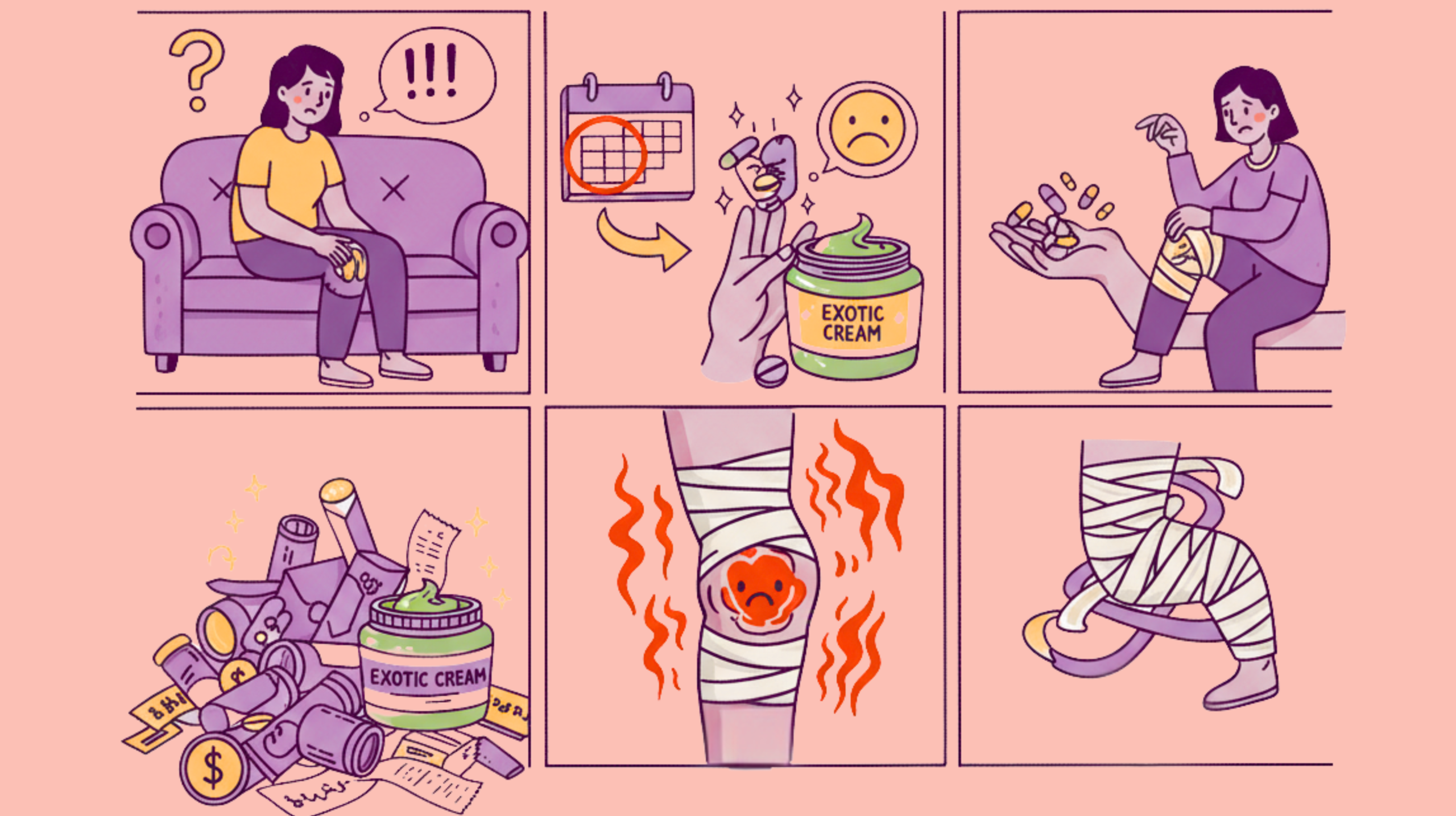
- People delay seeing doctors, attributing pain to “normal wear and tear.”
- They try popular but ineffective or even harmful remedies.
- Misdirected treatment wastes time and money; worse, it risks worsening injury.
Myth 1: Knee Pain Is Just a Normal Part of Getting Older
What does science reveal about age and knee pain?
While age brings joint changes, knee pain is not an inevitable sentence to discomfort. Research shows many older adults maintain healthy knees through strong muscles and good joint care [1]. Cartilage thinning happens, but symptoms depend on many factors beyond age.
How can activity and health choices alter this narrative?
Regular low-impact exercise, maintaining a healthy weight, and avoiding joint injuries modulate how knee pain presents with age. So, aging gracefully and pain-free is possible, but it demands awareness and care.
Warning: blaming your knees on age alone is the equivalent of blaming your Wi-Fi when the router is off.
Myth 2: Rest Is the Ultimate Fix for Knee Pain
The dangers of prolonged inactivity
Sitting out or avoiding movement when knees hurt can cause muscle atrophy and joint stiffness, ironically making knees weaker and pain worse long term [2]. Rest is part of recovery only immediately after acute injury.
Benefits of appropriate, guided physical activity
Properly designed exercise strengthens muscles stabilizing the knee, improves circulation, and lubricates the joint [3]. Balance is key: rest when needed, but don’t let your knees become “couch potatoes.”
Reminder: Your knees don’t like being benched for a season longer than the playoffs.
Myth 3: Surgery Is Inevitable if You Have Knee Pain
Advances making nonsurgical treatment effective
Surgery is no longer always necessary to treat knee pain. It can be treated with physical therapy, medications, and injections. Strength and performance can be largely enhanced by physiotherapy even after damage [4].
Criteria for when surgery is actually necessary
In case you experience serious damage to the joints or have weak or locked knees, then you may require surgery. It is, however, a procedure that is normally resorted to following other less invasive procedures.
Myth 4: Knee Pain Only Comes from Direct Knee Injuries
Referred pain and systemic causes
The knee is not necessarily the genuine one. Knee pain that is not the result of an accident may be the problem of hips or back, nerves, or systemic factors such as gout.
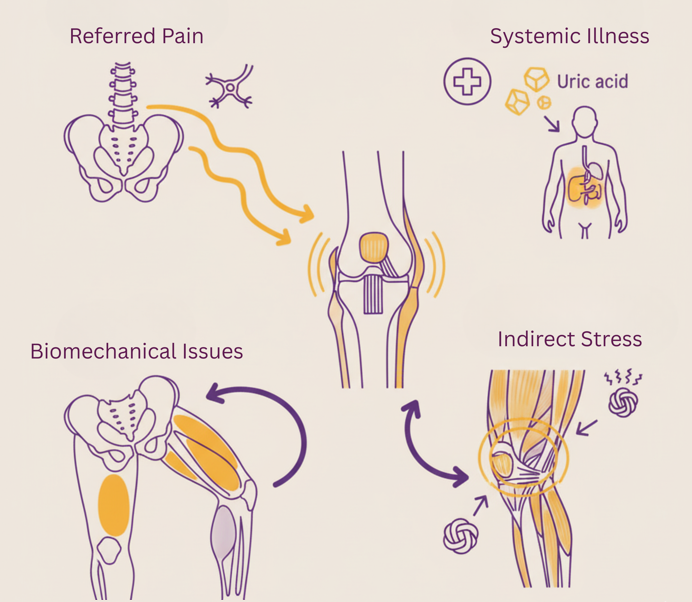
The role of muscles, ligaments, and biomechanics
Knee stress may be due to poor posture or because of unequal leg strength [5]. This can be really painful even in the case of no minor injury.
Myth 5: Popping or Cracking Knees Are Harmless
Why do some noises indicate a problem?
Popping may signal ligament strain or cartilage fraying. Repeated grinding likely means cartilage deterioration needing evaluation.
When do sounds just mean “you’re getting old”?
Occasional clicking without pain often isn’t concerning, more akin to joints “waking up.”
Pro tip: Not all knee noises are plot twists; some are just background music.
Myth 6: Medications Can Cure Knee Pain Completely
What medications do they treat, and what don’t they?
Painkillers and anti-inflammatories mask symptoms but don’t fix underlying joint or muscle problems.
Complementary treatments for lasting relief
Exercise, physiotherapy, weight management, and sometimes injections form a comprehensive plan.
Myth 7: One-Size-Fits-All Treatments Work for Knee Pain
The necessity of personalized diagnosis and rehab
Each knee pain reason is unique. Treatment must target cause, severity, and patient lifestyle.
Combining therapies for maximum benefit
A combo of exercise, medication, support devices, and lifestyle tweaks works best.
How Scientific Understanding of Knee Pain Shapes Better Recovery?
Importance of accurate diagnosis
Clear diagnosis guides troubleshooting, such as MRI for ligament tears or arthritis grading.
Exercise, physiotherapy, and lifestyle integration
Tailored strengthening and range-of-motion efforts, guided by experts, protect and enhance knees [6].
Role of Home Remedies and Supportive Equipment in Managing Knee Pain
Evidence-based home treatments
- Ice and heat packs are used appropriately.
- Anti-inflammatory diet including turmeric and omega-3s.
- Gentle home exercises like straight leg raises and hamstring curls.
Using knee braces, caps, and ergonomics wisely
Braces offload stressed areas and provide stability during rehab. Ergonomic shoes and cushions reduce undue joint load.
Making Long-Term Changes: Beyond Pain Relief
Preventing future injuries
Avoid ad hoc intense workouts. Incorporate progressive strengthening and flexibility routines. Warm up adequately before activities.
Diet, movement, and lifestyle tweaks that protect joints
Maintain a healthy weight. Consume foods with antioxidants, vitamins C and D, and anti-inflammatory properties. Break sedentary time with short walks or stretches.
Building a sustainable routine for knee health
Slow and steady wins the race: balance daily activity, rest, and rehab exercises tailored to you.
Stories of Recovery: Real People, Real Progress
Lessons from patients who identified the real reasons
Jane’s knee pain was chalked up to ‘getting old’ until she discovered misalignment was the root cause. Following her corrected physiotherapy plan, she regained pain-free walking and gardening.
How did tailored strategies turn setbacks into comebacks?
Mark suffered an ACL tear from sports but adhered to personalized rehab, including strength and balance work. His return to running demonstrated the power of knowing and addressing one’s specific knee pain reasons.
Your knee story can also be one of comeback with the right knowledge and care!
Conclusion
Although, at times, knee pain feels irritating, with understanding of what causes the pain, it can speed up the process from guesswork to strategy. Such information will result in adopting targeted measures such as medication, lifestyle modifications, and exercise that enhance the quality of life and boost mobility. Be patient with your knees and be empathetic, as they are your lifetime partners. Always keep in mind that happy feet can give you more freedom to do more work. That’s what everyone wants.
Muscle pain may take place in different parts of the body. Know its causes and relief strategies:
Frequently Asked Questions:
1. Is knee pain always related to arthritis?
No, knee pain arises from various causes such as injuries, inflammation, or biomechanical issues. Arthritis is common but not the sole source. Proper evaluation identifies the exact cause for targeted treatment.
2. Can physical activity worsen knee pain?
Appropriate, low-impact exercise strengthens muscles and improves knee function, but improper or excessive activity on an injured knee can worsen pain. Balance and guidance are essential.
3. When should I consider knee surgery?
Surgery is considered when conservative treatments fail and severe joint damage or instability persists. Early rehabilitation often reduces the need for surgery.
4. How do knee braces help and when should they be used?
Braces provide support, reduce pain, and improve stability during activity. They should be chosen and used under professional advice to ensure effectiveness.
5. What home remedies have proven benefits for knee pain?
Cold/heat therapy, gentle strengthening exercises, elevation, and an anti-inflammatory diet have shown benefits in managing symptoms alongside medical treatment.
References
- Christiana, M., Muhaimin, A., & Nurcahyo, A. (2023). Elderly Activities to Keep Your Knee Healthy. Jurnal eduhealth, 14(01), 262-270. https://ejournal.seaninstitute.or.id/index.php/healt/article/view/1514
- Abboud, J. A., & Abboud, S. K. (2008). No more joint pain. Yale University Press. https://books.google.com/books?hl=en&lr=&id=UyD1Q-l2Z0sC&oi=fnd&pg=PP1&dq
- Zeng, C. Y., Zhang, Z. R., Tang, Z. M., & Hua, F. Z. (2021). Benefits and mechanisms of exercise training for knee osteoarthritis. Frontiers in physiology, 12, 794062. https://doi.org/10.3389/fphys.2021.794062
- Torres, R., Ribeiro, F., Duarte, J. A., & Cabri, J. M. (2012). Evidence of the physiotherapeutic interventions used currently after exercise-induced muscle damage: systematic review and meta-analysis. Physical Therapy in Sport, 13(2), 101-114. https://doi.org/10.1016/j.ptsp.2011.07.005
- Newton, R. U., Gerber, A., Nimphius, S., Shim, J. K., Doan, B. K., Robertson, M., … & Kraemer, W. J. (2006). Determination of functional strength imbalance of the lower extremities. The Journal of Strength & Conditioning Research, 20(4), 971-977. https://journals.lww.com/nsca-jscr/abstract/2006/11000/DETERMINATION_OF_FUNCTIONAL_STRENGTH_IMBALANCE_OF.39.aspx
- Dhahbi, W., Materne, O., & Chamari, K. (2025). Rethinking knee injury prevention strategies: the joint-by-joint training approach paradigm versus traditional focused knee strengthening. Biology of Sport, 42(4), 59-65. DOI: https://doi.org/10.5114/biolsport.2025.148544