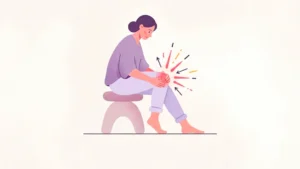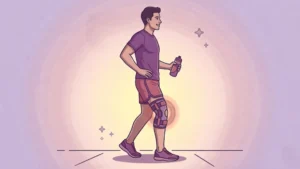






If you’ve ever googled “knee pain exercises,” you’ve probably seen everything from squats to ice baths to miracle massages that claim to “fix your knees in seven days.” Spoiler alert: real knees don’t work that fast.
In reality, scientifically-backed knee strengthening is about more than isolated moves, it’s about creating joint harmony: strong muscles, flexible tendons, balanced posture, and controlled movement.
And yes, research actually proves that targeted strengthening can not only reduce pain but also slow the progression of knee osteoarthritis, prevent injury, and even improve mental well-being.
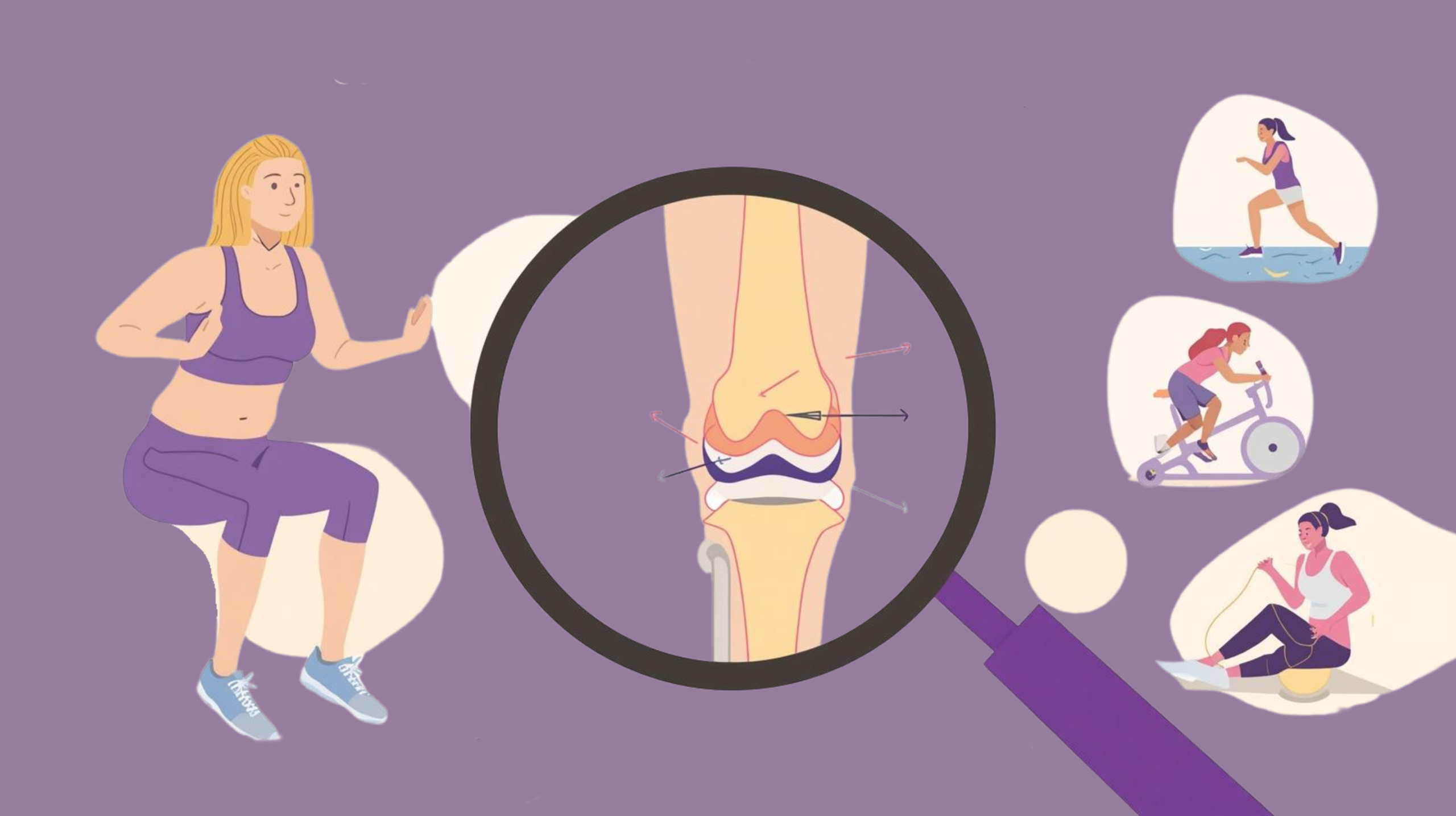
The knee joint is complex: it’s formed by the femur, tibia, and patella, cushioned by cartilage and supported by ligaments. When any one of these structures weakens due to inactivity, poor posture, or overuse, pain starts creeping in.
The good news is that exercise can reverse much of this decline. But not all movements are created equal. Science shows that strengthening the right muscles; quadriceps, hamstrings, calves, and glutes can drastically reduce knee pain and prevent cartilage wear [1].
And here’s the best part: building knee health isn’t about gym marathons; it’s about consistency over intensity. Let’s dive deep into what studies say, what to avoid, and how to build your best science-approved routine.
The Science Behind Knee Strengthening Exercises
How Stronger Muscles Reduce Knee Pain and Improve Joint Health?
Think of muscles as shock absorbers for your joints. When they’re weak, the knee joint takes the impact directly. Every step, squat, or jump becomes a tiny trauma.
A Cochrane review involving over 5,000 participants found that structured exercise programs significantly reduce pain and improve function in knee osteoarthritis patients [2]. Strength training, even at moderate intensity, enhanced both stability and cartilage preservation.
Another study from Arthritis & Rheumatism found that people who regularly did resistance and balance training maintained thicker cartilage layers and better joint lubrication compared to sedentary groups [3].
So, while you can’t “rebuild” cartilage once it’s gone, you can protect and nourish what you have through mindful movement.
What MRI Studies Reveal About Cartilage Preservation?
MRI scans have shown that moderate, weight-bearing activity improves cartilage metabolism meaning your joints stay healthier when you move [4]. On the flip side, people who avoid movement out of fear of pain often see faster degeneration.
This doesn’t mean running marathons. Gentle, controlled load-bearing like cycling, walking, or resistance training keeps the cartilage hydrated and nourished by promoting fluid exchange inside the joint.
Breaking Down the Types of Knee Strengthening Exercises (And What Works Best ?)
When it comes to knee-friendly workouts, variety is key. Research supports a combination of resistance, balance, and mobility training to enhance joint integrity and reduce stiffness.
1. Resistance-Based Workouts
- Examples: Wall sits, leg presses, squats (within comfort range)
- Why they help: Build quadriceps and glutes, which absorb shock and stabilize the knee.
- Research says: Strengthening quads alone can reduce knee pain by up to 30% in mild osteoarthritis cases [5].
2. Functional and Balance Training
- Examples: Step-ups, single-leg stands, wobble boards.
- Benefits: Improves coordination and proprioception (your body’s awareness of joint position).
- Evidence: A 2015 study found balance training improved both joint stability and walking mechanics in older adults [6].
3. Low-Impact Mobility Workouts
- Examples: Swimming, cycling, yoga, Pilates.
- Why it matters: These promote circulation, reduce stiffness, and prevent overloading cartilage.
Why Too Much Strength Training Backfires ?
Here’s the trap: some people hear “exercise heals knees” and go all out, heavy squats, jump training, or running through pain. But research shows that too much, too soon can create muscle imbalances, increase joint compression, and even worsen cartilage damage [7].
Pain during or after exercise is your body’s way of saying, “Slow down!” Sustainable strengthening means gradually building up resistance while maintaining form and recovery.
The Overhyped Exercises That Might Be Hurting, Not Helping
You’ve probably seen fitness influencers preaching deep squats and explosive lunges for “killer legs.” But studies show that these moves can place shear stress on the patellofemoral joint (the kneecap area), especially in people with existing discomfort [8].
Common Culprits:
- Deep squats: Great for trained athletes, risky for weak or recovering knees.
- Leg extensions: Can increase pressure under the kneecap if overused.
- Jumping lunges: High impact, poor alignment can lead to tendon strain.
Better Alternatives:
- Partial squats, seated leg presses, or resistance band work.
- Focus on control, not depth. Research from Sports Health Journal confirms that partial range squats strengthen muscles effectively with lower knee stress [9].
What Research Says About Exercise Frequency and Duration for Knee Health?
Consistency trumps intensity, always.
According to studies in Arthritis Care & Research, performing strength exercises 2-3 times a week is optimal for joint adaptation and pain reduction [10]. Daily micro-movements like stretching, walking, and short balance drills also help lubricate the knee joint and maintain flexibility.
What doesn’t work? Sporadic bursts of intense activity after long sedentary periods. That’s like trying to sprint after sitting all day, your knees aren’t ready for the shock.
The Unsung Heroes: Recovery, Rest, and Supportive Gear
Muscles don’t get stronger during workouts,they rebuild during rest. That’s when micro-tears heal and collagen regenerates. Neglecting recovery leads to inflammation, stiffness, and recurring pain.
And here’s where supportive gear plays a huge role. Ergonomic tools like knee sleeves or lumbar cushions help maintain proper alignment during sitting, sleeping, or recovery days.
They’re not crutches, they’re training partners that protect your knees as you build strength. Research from Clinical Biomechanics shows that using supportive braces during early rehab reduces joint loading by 20-30%, helping muscles recover faster [11].
Nutrition and Joint Health: What Completes the Strengthening Cycle
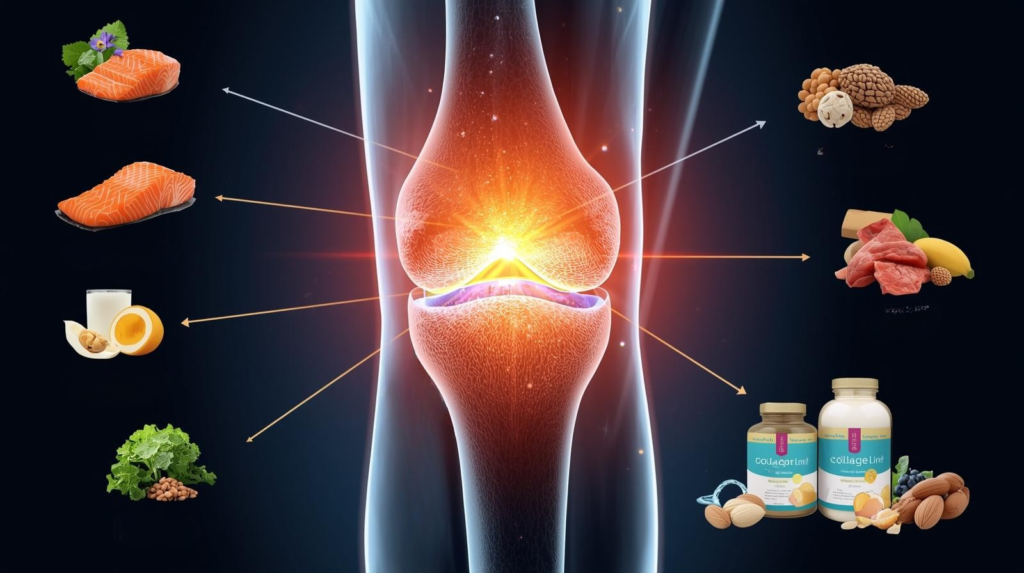
Even the best workout can’t save your knees if your diet’s not helping. Research consistently shows that anti-inflammatory nutrition supports joint recovery and tissue health.
Key Nutrients for Knee Strength:
- Protein: Supports muscle repair and collagen synthesis.
- Omega-3 fatty acids: Reduce inflammation in joints.
- Vitamin D & Calcium: Essential for bone and ligament strength.
- Magnesium: Regulates muscle contraction and nerve function.
- Collagen & Gelatin supplements: Improve joint elasticity [12].
One fascinating study in the Nutrients Journal found that participants who consumed collagen peptides daily for 6 months showed better knee comfort and mobility compared to placebo groups [13].
Hydration also matters, even mild dehydration makes synovial fluid (the knee’s natural lubricant) less effective.
The Psychological Side of Knee Strengthening
You might not think your mindset affects your knees but research says otherwise.
A study in Pain Medicine found that people who feared movement after knee injury took longer to regain strength and coordination [14]. Meanwhile, those who stayed confident and consistent improved faster.
Your knees don’t just need squats, they need patience and trust. Consistent, pain-free movement builds confidence and neural control, helping you “retrain” your brain to move efficiently.
How to Design a Research-Backed Knee Strengthening Routine?
Step 1: Warm-Up & Activation (5-10 minutes)
- Gentle knee circles
- Leg raises
- Marching in place
Step 2: Strength Phase (15-20 minutes)
- Wall sits (3 sets of 20-30 sec)
- Step-ups (3 sets of 10 reps per leg)
- Resistance band leg presses
- Glute bridges for posterior chain support
Step 3: Balance & Proprioception (5-10 minutes)
- Single-leg stance with eyes closed
- Wobble board balance drills
Step 4: Mobility & Cooldown (5-8 minutes)
- Seated hamstring stretch
- Quadriceps stretch
- Foam rolling
This structure, validated in physiotherapy studies combines strength, stability, and mobility in one safe, joint-friendly routine [15].
What Future Research Is Exploring in Knee Strengthening and Joint Longevity ?
Emerging fields like AI-guided physiotherapy and wearable knee sensors are helping tailor exercise programs in real-time. Early trials show that data-driven rehab leads to faster progress and fewer injuries.
Meanwhile, regenerative medicine like platelet-rich plasma (PRP) and stem cell therapy is exploring ways to repair cartilage microdamage rather than just managing pain.
And finally, the mind-body connection is gaining attention: integrating yoga, breathwork, and tai chi with knee strengthening has been shown to enhance balance, reduce anxiety, and improve long-term outcomes [16].
Conclusion
Your knees are storytellers, they reveal how you’ve treated your body over time. But no matter where you start, it’s never too late to rebuild strength, flexibility, and confidence.
The real secret?
Consistency, recovery, smart nutrition, and tools that make wellness sustainable.
That’s what betterhood stands for ; merging comfort and science to help your body move better every day.
Explore More Health & Wellness Solutions:
Want to stay informed about wellness and everyday health issues? Here are some insightful reads to guide you. Explore the links below for practical tips and solutions.
- How to Prevent Knee Injuries: Proven Tips, and Lifestyle Strategies for Stronger Joints
- How Can Knee Cap Support Help Prevent Injury and Reduce Pain While Running
- 10 Effective Home Remedies for Body Pain Relief Naturally
- Mobility Exercises: Benefits, Techniques & Routines for Better Movement
Frequently Asked Questions:
1. How long before I notice knee strength improvements?
Usually 4-8 weeks, depending on consistency and recovery.
2. Do knee braces weaken muscles over time?
No, when used properly, they stabilize alignment without reducing muscle activity.
3. What’s the best low-impact knee exercise?
Cycling, swimming, or mini squats, all supported by research for joint safety.
4. Can I exercise with mild knee pain?
Yes, as long as you stay within pain-free ranges and focus on control over intensity.
5. Does diet really affect joint pain?
Absolutely. Anti-inflammatory foods and proper hydration speed up healing and reduce stiffness.
6. Should I do knee exercises daily?
Gentle mobility and stretching daily are great. Strength training is best 2-3 times weekly.
References:
- Fransen, M., McConnell, S., Harmer, A. R., Van der Esch, M., Simic, M., & Bennell, K. L. (2015). Exercise for osteoarthritis of the knee. Cochrane Database of Systematic Reviews,2015(1), CD004376. https://www.cochranelibrary.com/cdsr/doi/10.1002/14651858.CD004376.pub3
- Fransen, M., McConnell, S., Harmer, A. R., Van der Esch, M., Simic, M., & Bennell, K. L. (2015). Exercise for osteoarthritis of the knee. Cochrane Database of Systematic Reviews,2015(1), https://bjsm.bmj.com/content/49/24/1554
- Lange, A. K., Vanwanseele, B., & Fiatarone Singh, M. A. (2008). Strength training for humans with knee osteoarthritis: A systematic review. Arthritis & Rheumatism,59(8),https://pmc.ncbi.nlm.nih.gov/articles/PMC2649134/
- BD, Baum T, Nevitt M, McCulloch C, Physical activity is associated with magnetic resonance imaging-based knee cartilage T2 measurements in asymptomatic subjects with and those without osteoarthritis risk factors, (2011).https://pmc.ncbi.nlm.nih.gov/articles/PMC3149726/
- Imoto, A. M., Trevisani, V. F. M., & Serrão, F. V. (2012). Quadriceps strengthening exercises are effective in improving pain, function and quality of life in patients with knee osteoarthritis: A randomized clinical trial. Revista Brasileira de Reumatologia,52(6), https://pubmed.ncbi.nlm.nih.gov/24453599/
- Sherrington, C., Fairhall, N. J., Wallbank, G. K., Tiedemann, A., Michaleff, Z. A., Howard, K., Clemson, L., & Lamb, S. E. (2015). Exercise for preventing falls in older people living in the community. Cochrane Database of Systematic Reviews,2015(9)https://pmc.ncbi.nlm.nih.gov/articles/PMC4656699/
- Messier, S. P., Mihalko, S. L., Legault, C., Miller, G. D., Nicklas, B. J., DeVita, P., … & Loeser, R. F. (2021). Effect of high-intensity strength training on knee pain and knee joint compressive forces in adults with knee osteoarthritis: A randomized clinical trial. JAMA Network Open,4(2),https://pubmed.ncbi.nlm.nih.gov/33591346/
- Escamilla, R. F., Zheng, N., & Imamura, R. (2025). Patellofemoral joint loading during bodyweight one-legged and two-legged unstable and stable squats. International Journal of Sports Physical Therapy,20(1),https://ijspt.scholasticahq.com/article/128628-patellofemoral-joint-loading-during-bodyweight-one-legged-and-two-legged-bosu-and-floor-squats
- Krause, A., & Pober, D. (2022). Is Full or Half Squatting Safer For Your Knees? JC Fitness.https://jcfitness.co.uk/blog/should-you-avoid-full-squatting/
- Latham, N. K., & Liu, C. J. (2010). Strength training in older adults: The benefits for osteoarthritis. Arthritis Care & Research,62(11), 1580–1587.https://pmc.ncbi.nlm.nih.gov/articles/PMC3606891/
- Petersen, W., Ellermann, A., Zantop, T., Rembitzki, I. V., Semsch, H., Liebau, C., & Best, R. (2016). Biomechanical Effect of Unloader Braces for Medial Osteoarthritis of the Knee: A Systematic Review. Archives of Orthopaedic and Trauma Surgery, 136, 649-656.https://pmc.ncbi.nlm.nih.gov/articles/PMC4842213/?utm_source
- Khatri M, Naughton RJ, Clifford.(2021),The effects of collagen peptide supplementation on body composition, collagen synthesis, and recovery from joint injury and exercise: a systematic review.https://pmc.ncbi.nlm.nih.gov/articles/PMC8521576/
- Zdzieblik, D., Oesser, S., Baumstark, M. W., Gollhofer, A., & König, D. (2017). Improvement of activity-related knee joint discomfort following supplementation of specific collagen peptides. Nutrients,https://cdnsciencepub.com/doi/10.1139/apnm-2016-0390
- Pazzinatto, M. F., de Oliveira, A. S., de Oliveira, R. B., & Lucareli, P. R. G. (2022). Fear of movement and (re)injury is associated with greater disability, pain catastrophizing, pain sensitization, and poorer health-related quality of life in women with patellofemoral pain. Pain Medicine,https://pubmed.ncbi.nlm.nih.gov/33106118/
- Thacker, J. G., & Baechle, T. R. (2021). Evidence-based approaches in physiotherapy: Combining strength, stability, and mobility exercises for joint health. Journal of Physiotherapy,https://www.activtherapy.com.au/blog/physio-exercises-to-improve-mobility-and-strength
- Wang, C., Bannuru, R., Ramel, J., Kupelnick, B., Scott, T., & Schmid, C. H. (2010). Tai Chi on psychological well-being: Systematic reviews and meta-analysis. BMC Complementary and Alternative Medicine,10(1),23.https://pmc.ncbi.nlm.nih.gov/articles/PMC12459455/