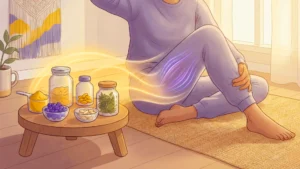







Although working out is meant to strengthen you, it is not meant to leave you feeling like a painful lump of uncoordinated muscles on your bed. If you have done a particularly challenging workout or if you have attempted a new exercise, you most likely have experienced post-workout pain: achy muscles, stiff joints, and awkward movements. It can sometimes feel like your body has forgotten how to move.
Post-workout pain can certainly be a cause for concern, but it can also be a positive sign that your body is repairing itself and getting stronger.
This article analyzes pain after workouts, and more importantly, provides a variety of quick and practical recovery tips that can be done even in a busy schedule. These tips will include warm-ups, nutrition adjustments, and self-care.
If you are tired of limping around after leg day and if you cringe at the thought of the soreness that will set in after a workout, continue reading. Let’s turn pain from a workout into reinforced muscles to aid your future workouts.
What Actually Causes Muscle Pain After Workouts?
Is It Just Soreness Or Something Deeper?
Every time you work your muscles, you are causing microscopic tears in the muscle fibers. When your muscles recover from this, they may feel sore. Before you panic, this is actually a completely normal part of the muscle growth/strength building process. Your body is designed to handle this. As your muscles recover from the tears, you may feel soreness. Soreness is essentially your muscles saying, “Hey, we’re adapting and getting stronger here!”
During intense training, your body goes through more than just micro-tears. As a part of the healing process, inflammation occurs, and fluid builds up around the stressed tissues. Metabolic byproducts, aka “waste products,” accumulate in your muscles. These factors contribute to that tight, heavy “I can’t lift my leg without wincing” feeling that makes you question every life choice that led you to that workout.
Not every pain is bad and sometimes pain is just a part of the natural process and your body is literally rebuilding stronger. And some of it, however, you need to watch a little more closely.
Common Reasons why some workouts hurt more than others
What makes one workout much more painful than another? Is it why your new CrossFit class made it so you couldn’t sit on the toilet for three days, but your normal jogging routine doesn’t work for you at all? Here are some reasons that define how sore you feel after.
Intensity and Volume of the Test: If you lift heavy weights or do sets of high repetitions, you are putting overload on the muscles which causes micro damage to your muscle fibers. More damage means that ‘After Exercise Soreness’ (DOMS) are more apparent.[1]
The Presence of New and Challenging Movements: If you find yourself in a new exercise setting or start to drastically change your workout routine, your body needs to adjust to the demands that are placed on it. The nervous system and muscle fibers need to get into a new state of working. During this adaptation phase your muscles will be strained and the soreness will be increased.[2]
Poor Warm-up or Cool-down: Muscles need a proper warm-up before getting any training volume or intensity, and a cool-down afterwards. The warm-up should be long and gradual enough to allow your muscles to get in a good blood flow, and potentially be stretched if the warm-up incorporates some kind of range of motion or mobility. If a warm-up is neglected, and training is too intense, micro-damage will be greater, and there will be soreness that will last to a greater extent afterwards.
Proper warm-ups do significantly decrease the chances of muscle injuries and soreness. Warm-ups decrease muscle injuries by extremely high percentages, of about 30%-50%. Because the risk is so high, so is the reward [5].
Insufficient Recovery (Sleep, Nutrition, Hydration): Soreness tends to stick around much longer when there is already a shortage of recovery materials. Adequate protein has to be consumed for muscle repairs, carbohydrates for top energy levels, and water for the cells in order to function optimally. Quality sleep is just as important to trigger the release of growth hormone, which is critical for muscle repair [6].
Post-Workout Muscle Pain: What’s Normal, What’s Not, and How to Recover Faster?
Post-Workout Muscle Pain- “Good” Soreness
Let’s also call this productive pain, this is when your workout has been effective, and your body is responding accordingly to it. Here is what we consider to be healthy and productive post workout muscle pain:
- The first signs of muscle soreness may mean that the body is adapting itself to higher physical exertion levels and will be perfecting muscle shape and health.
- After 12 to 24 hours of workout you may experience pain that peaks between 24 and 48 hours after your workout. The worst pain, which is also known as “second-day syndrome” should be going away steadily in the next few days. You might also be able to notice manual improvements around day 3-4 after the workout.
- Soreness that is reduced with movement. Mild soreness that lessens with movement is less of a bad sign, and a sign of muscle adaption.
- A good sign that pain is not muscle injury, is movement. When you do pain reducing stretches, and you notice that the muscle soreness is going away, that means there is no injury and it is the muscle’s adaptation.
- Minor discomfort that does not impede your daily routine: Even though it may be slower, you can still take the stairs. You are still able to perform essential activities such as walking, bending, and lifting small items.
- If your discomfort feels like this, your muscles are repairing and reinforcing themselves. You are even developing your fitness, even though it may not be the most enjoyable at the moment.
When to Be Concerned About Post-Workout Muscle Pain ?
The following are some warning signs. There is pain that indicates that something is wrong. Be careful if you experience:
- Avoiding sharp and stabbing discomfort during and after your workouts. The dull discomfort that is present is called doms however, it is present due to an acute injury. If you experience such discomfort, and feel that something pops, tears, or is severely painful, you need to stop what you are doing.
- Redness, heat, and swelling that is concentrated around the muscles: Even though inflammation can be normal, swelling and heat around the skin along with redness is due to an injury and can be a serious one such as a muscle tear or strain, and it may require medical attention.
- The pain is so bad you can’t walk, bend, or perform other basic movements: If you can’t walk or perform normal daily activities, or the pain is debilitating enough that you are limping or can’t use the affected limb, that is beyond normal soreness [13].
- Pain that continues to get worse: In normal delayed onset muscle soreness (DOMS), pain and soreness get worse for a day or two and then improve. If pain is getting worse more than two days after an activity, there is likely an injury that needs to be addressed [14].
- Signs of nerve injury or joint instability: Weakness, numbness, and tingling are all signs of possible nerve damage or joint instability. If you feel that a joint is “giving out,” this is an indicator of possible ligament damage, which requires a healthcare provider to evaluate [15].
If you are experiencing these symptoms, don’t try to be tough. The sooner you recognize the injury, the better chance you have for an optimal recovery. Make an appointment with a physician, physical therapist, or sports medicine physician.
Smart Recovery Tips That Truly Support Healing and Performance

Now, let’s jump right into practical, helpful tips from legitimate studies that assist in faster recovery from muscle soreness. No gimmicks, only real life examples and studies that show what works.
Do Not Skip Warm-Up and Cool Down
You should be eager to jump right into your workout and out of the workout to get things done.
A warm up that is done properly is simply to avoid potential future injuries. Muscles like to be informed that they are about to be doing work. It’s been shown that the warm up is reducing the delayed muscle soreness for as long as 50% for 2 days [16]. The ROI is very high for a warm up which takes less than 10 minutes.
Your workout should consist of 5-10 minutes of walking or cycling to do warm-up. After this, you must perform some dynamic stretches. After you finish your workout, you can do some static stretches and walk to cool down. Your muscles will appreciate these activities.
Gentle Active Recovery Instead of Complete Rest
As much as you might want to sink into a couch when you feel sore, try to lay off the complete rest. In paradox, light activity actually speeds up recovery better than complete rest.
Active recovery means movements that are low in intensity. In order to minimize the strain on your muscles, feel free to do some light walking, swim a little, or even do some yoga. Exercise at this level will increase blood circulation and, in turn, will help your muscles heal faster by delivering essential oxygen and nutrients, and minimizing the byproducts of muscle activity.
Active recovery is when you engage in low-intensity exercise. Research states that after high-intensity interval training, active recovery improves perceived muscle soreness more than passive rest. The phrase “muscle soreness” is particularly important because improvements in perceived muscle soreness is an important factor in recovery.[17]
How Proper Hydration and Nutrition Accelerate Post-Workout Muscle Recovery ?
1. Hydration:
Water helps solve numerous cellular activities in your body, including repairing muscle. When you exercise, you start losing fluids through sweat, and if you don’t replace them, your body enters a recovery deficit. Dehydration puts you at a greater risk for muscle soreness and slows the nutrient replenishment to your muscle tissues. Additionally, your body’s ability to remove cellular waste is compromised [20].
Plan to drink around 125-150% of the fluids lost during exercise (yes, more than the volume lost in order to compensate for fluid loss in urine during the recovery period). [21]
2. Protein:
Muscles are composed of protein, and thus in order to repair the microtears, sufficient protein is needed. Studies indicate that ingestion of 20-40 grams of high-quality protein, 1-2 hours post-exercise, constitutes optimal muscle protein synthesis (the body’s muscle rebuilding process) [22].
3. Carbohydrates:
While protein is glorified, carbohydrates play a fundamental role in the recovery of muscle and need to be replenished in order to restore glycogen stores, the energy fuel for your muscles during high-intensity workouts. Post-exercise ingestion of carbohydrates is needed to restore energy [23]. Additionally, carbohydrates play a role in improving the recovery of muscles.
4. Micronutrients and Healthy Fats:
Of the richest sources of antioxidants and anti-inflammatory foods, omega-3 fatty acids are the most important to incorporate into your diet, especially considering the inflammation and oxidative stress caused by training of high intensity [24].
Bottom line: Consume both carbohydrates and protein within 30-60 minutes of completing your workout. Good options are protein shakes with bananas, bowls of rice and chicken, and Greek yogurt with granola and berries. Make sure you are fully hydrated. If your urine is darker than light lemonade, you need to hydrate more.
Mobility Work and Stretching to Maintain Flexibility
The body of research surrounding stretching and muscle soreness is somewhat complicated. Stretching by itself won’t prevent delayed onset muscle soreness (DOMS), and won’t bring about dramatic decreases in the soreness you are feeling. However, stretching is one of the more important components of your recovery strategy [25].
Mobility work and gentle stretching, done consistently, will help to improve your range of motion, and will prevent muscles from tightening. Flexibility is important in the prevention of compensatory movement patterns that could result in injuries down the line, and is also important in free movement of the joints through their full range of motion. Think of this work as preventive maintenance that will help you with your overall movement patterns [26].
Massage, Self-Care, and Heat
There is a lot of good evidence and science for the many manual ways of recovery when your muscles are a little more sore than usual.
Heat therapies: Using heat on your muscles that are sore will increase the blood circulation to that area, which brings more nutrients and oxygen to the area and relaxes the tight and tense tissues. After soreness sets in on the second day, heat packs, a warm bath, or a hot water bottle can soothe the soreness. After intense exercises, while the inflammation is highest, avoid heat therapies to cool the water or ice spas.
Foam rolling and bodywork are fantastic. Both professional massages and self-myofascial release (for instance, using a foam roller) have been shown to decrease delayed onset muscle soreness (DOMS) and improve recovery.
Topical Pain Relief While healing, soft tissue injuries trigger pain. Pain relief roll-ons, and sprays are topical analgesics that can give you temporary relief. Some include menthol or camphor to create a warm or cool sensation. They do not speed up healing, but will allow you to stay active.
Bottom line: Adding 10-15 minutes of foam rolling to your workouts (before or after or both!) is great. If you can afford it, use a massage gun or get a professional sports massage. Use heat in chronically tight areas or topical pain relief when soreness is impacting your day. These practices may feel like a luxury, but they are a vital part of recovery.
Sleep and Rest: The Unsung Heroes of Recovery
If you want to take away one recovery tip, it is to make sleep your priority. This is when the magic happens.
Because the body is so dynamic and complex, we won’t spend time on specifics, but our body is breaking down tissue and rebuilding constantly. During deep sleep, a hormone called the growth hormone is released, essential for repair and regrowth of tissues. Sleep restores the body and calms the inflammation and the nervous system, consolidates the learning of movements (motor learning) from your workouts, and restores the nervous system [31].
Sleep deprivation is associated with decreased muscle protein synthesis (keeping the tissue healthy by making new proteins) and increasing protein breakdown (loss of tissue) which can lead to atrophy (wasting of muscle) [32].
In order to optimize recovery, athletes and fitness enthusiasts should sleep for 7-9 hours a night, and even more during heavy training periods. Sleep isn’t a luxury, it’s a necessity for muscle recovery.
Unquestionably, sleep is as important as your nutrition and your training, so develop a consistent sleep schedule, a dark and cool sleep environment, screen time pre-bed, and caffeine in the afternoons. If you are training hard and not sleeping enough, you are wasting your effort.
Final Thoughts: Be Attentive to Your Body
Workout muscle soreness is often a signal that you are expanding your limits and growing stronger. The secret to avoiding injury and achieving your long-term fitness goal is to recognize the difference between valuable soreness and detrimental pain.
Use the recovery strategies we’ve discussed, and not only when you feel desperate and can barely walk. Make them a part of your routine: warm up and cool down after every workout, eat nutritious meals, stay hydrated, take active recovery days, sleep, and rest when your body needs it.
Recovery is when the real magic happens: it is not wasted time. The workout only creates a stimulus for growth, but it is during the recovery when the growth actually happens.
Now go and train smart, recover smarter, and turn that post-workout pain into post-workout power!
Explore More Health & Wellness Solutions:
Want to stay informed about wellness and everyday health issues? Here are some insightful reads to guide you. Explore the links below for practical tips and solutions.
- Back Pain Relief Spray: Fast-Acting Solution for Muscle and Joint Pain
- Stop Suffering! The Best Back Pain Stretches to Do Right in Your Living Room
- Office Chair for Back Pain Guide: Ergonomic Features, Benefits, and Buying Guide
Frequently Asked Questions:
1. Is post-workout muscle pain normal?
Yes, it’s normal to experience mild to moderate muscle soreness a day or two after a workout (this is called delayed onset muscle soreness hat new exercises and increased intensity). This pain is often a result of delayed onset muscle soreness (DOMS) and will generally dissipate within a couple of days.
2. What is the appropriate duration of workout muscle soreness?
Most exercise-related muscle soreness is gone within 24 to 72 hours. If the pain lasts beyond this time frame or if it becomes worse after a few days, muscle strain/overuse could be occurring instead of healthy recovery.
3. How can I recover my muscles faster after exercise?
Proper hydration, protein intake, good sleep and gentle active recovery such as walking or stretching all help muscles repair faster. Assistance tools that help to create alignment can also take unnecessary stress from muscles.
4. How do I tell if the muscle pain is an injury?
Sharp pain, swelling, restricted movement or pain that is caused while exercising could reveal an injury. Muscle soreness will feel dull or tight and eventually respond to gentle movement and rest.
5. Should I Exercise When I’m Sore?
It’s generally safe to do some light activity with mild achiness- in fact, it can help circulate your blood.But working out hard with those very tight muscles might just slow your recovery and amp up that injury risk.
References
1. Cedars-Sinai. (2025, January 1). What is delayed onset muscle soreness? https://www.cedars-sinai.org/stories-and-insights/healthy-living/what-is-delayed-onset-muscle-soreness
2. German Journal of Sports Medicine. (2024). UPDATE Delayed onset muscle soreness (DOMS). https://www.germanjournalsportsmedicine.com/archive/archive-2024/issue-5/update-delayed-onset-muscle-soreness-doms-muscle-biomechanics-pathophysiology-and-therapeutic-approaches/
3. Cleveland Clinic. (n.d.). Delayed onset muscle soreness (DOMS): What it is & treatment. https://my.clevelandclinic.org/health/diseases/delayed-onset-muscle-soreness
4. Armstrong, R. B. (1992). Causes of delayed onset muscle soreness and the impact on athletic performance. Journal of Strength and Conditioning Research, 8(4), 210-221. https://journals.lww.com/nsca-jscr/abstract/1992/08000/causes_of_delayed_onset_muscle_soreness_and_the.2.aspx
5. Mayo Clinic Press. (2025, March 11). How to warm up and cool down for exercise. https://mcpress.mayoclinic.org/nutrition-fitness/how-to-warm-up-and-cool-down-for-exercise/
6. MDPI. (n.d.). Emerging perspectives on post-exercise recovery nutrition. Nutrients, 16(23), 4081. https://www.mdpi.com/2072-6643/16/23/4081
7. Physiopedia. (n.d.). Delayed onset muscle soreness. https://www.physio-pedia.com/Delayed_Onset_Muscle_Soreness
8. UT Physicians. (2021, June 30). Difference between soreness & pulled muscles. https://www.utphysicians.com/how-to-tell-the-difference-between-soreness-and-an-injury/
9. Houston Methodist. (2020, August 25). Is your pain just muscle soreness or a serious injury? https://www.houstonmethodist.org/blog/articles/2020/aug/is-your-pain-just-muscle-soreness-or-a-serious-injury/
10. Rebound Orthopedics & Neurosurgery. (n.d.). How to know the difference between soreness and pain. https://www.reboundmd.com/news/how-know-difference-between-soreness-pain