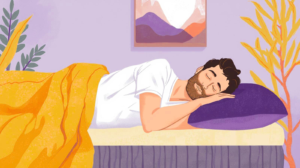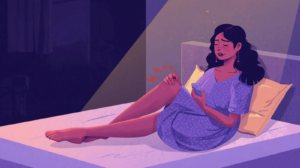







Sleeping on your back may sound simple, but nailing down your supine pose could mean the difference between a good night’s sleep and some soreness in the morning. This guide is for anyone with back pain, a terrible night’s sleep or who just wonders if they could make their own sleeping position a little more customized and comfortable.
Lots of us find lying on our back hard going and we might not realise it’s because we’re omitting a few key setup ingredients or making frequent positioning errors. We will learn about how the correct supine position maintains the healthy curvature of your spine, and affects your quality of sleep. You’ll also find the indispensable pillows and gear that can make an uncomfortable back-sleeping experience your most restful yet.
When you’re finished reading, you’ll know exactly how to set up your bed and body as well as practical strategies for easing into the transition if you currently sleep on your side or stomach.
Understanding Supine Sleep Position and Its Key Benefits
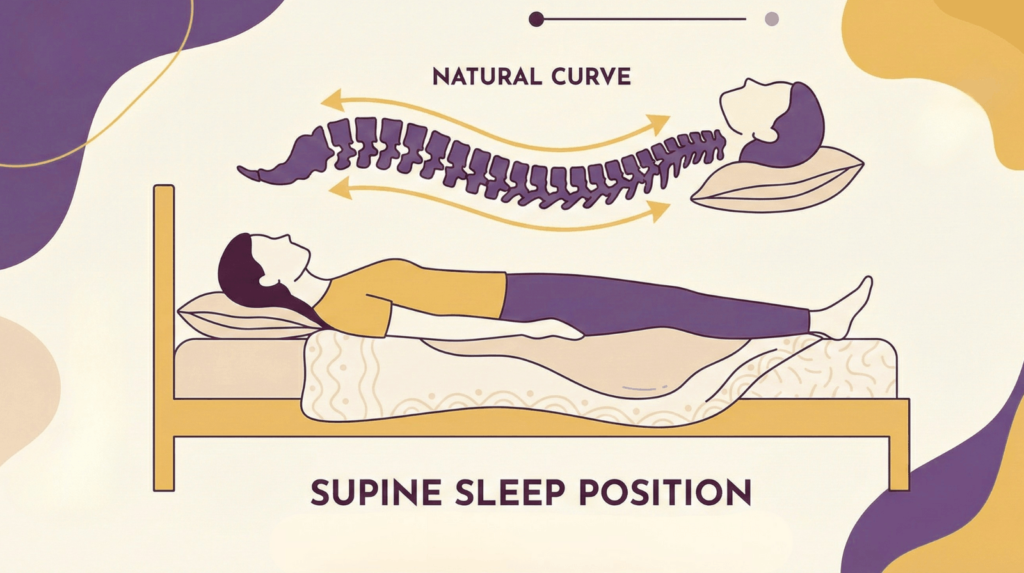
Definition of supine posture and proper back sleeping alignment
Supine is laying flat on your back with you facing up (your face, and torso directed up). Doing it correctly will align your head, neck and spine in a neutral position while sleeping on side. You often place your arms at your sides or slightly wider, and you straighten your legs (or bend them slightly).
Correct alignment for all the back sleepers is when their head lies squarely on a pillow that preserves a natural curve of the neck and does not tilt it too far using dynamic position sense either backward or forward. Your spine should have a nice S-shaped curve, with your lower back still resting naturally arched and supported. The goal is to be in a place where your ears are stacked over your shoulders, and your shoulders are stacked over your hips.
Natural spinal curve maintenance during sleep
Sleeping on your back is particularly good for maintaining the natural curves in your spine. Your neck (cervical spine), mid-back (thoracic spine) and lower back (lumbar spine) are specifically curved to work together as shock absorbers, balanced in such a way that weight is evenly distributed so that the pressure on any one vertebra is kept to a minimum.
Sleeping on your back, gravity will aid in keeping your body supported rather than forcing it off of alignment. Your spine doesn’t have to combat rotational forces or compensate for asymmetrical weight distribution which we know can happen with side or stomach sleeping. This will put your intervertebral discs in a neutral, rehydrated and decompressed state during rest allowing you to promote optimal back health and minimize pain.
Less pressure points than other sleeping options
Back sleepers When you sleep on your back, the weight of your body is spread over a wider surface area than if you were sleeping on one side, which helps relieve pressure from key joints and body parts. Specifically, side sleepers may feel pressure points around their shoulders and hips, while the stomach position makes it easy to strain your neck and lower back.
Lying in the supine position eliminates these pressure points, as it allows your mattress to support you along the full expanse of your back. Heavier parts of your body — say, your pelvis and shoulders — will sink a tad into the mattress but stay properly aligned. This uniform support prevents painful pressure points and sleepless nights, as well as morning creaks and groans.
Enhanced breathing and circulation advantages
Sleeping on your back elevates your airways and chest cavity, so you manage to breathe more deeply and effectively. With nothing to press against your chest, you don’t have a pillow down there and you’re not feeling the weight of your own body. The diaphragm has all the freedom it needs to move around. This better way of breathing may help some people to alleviate their snoring and sleep apnea.
Supine positioning is also good for the blood circulation. Your heart does not have to overcome gravity in order to pump blood to elevated limbs; nor are major blood vessels compressed as they can be by other sleep positions. With the regular flow of blood to your arms and legs all night, there is no chance you will get caught with numb or tingly appendages when you wake-up.
Why Sleeping on the Back Is Good for the Spine?
Maintaining Neutral Spine Alignment Throughout the Night
Sleeping on your back helps maintain the natural S-curve of your spine, without bending or twisting it. Your head, shoulders and hips are on the same plane, so gravity can work for you. This alignment releases pressure on spinal joints and allows muscles to fully relax, which results in less morning stiffness.
Preventing Cervical and Lumbar Spine Compression
Supine position achieves reduced pressure on the neck and lower back by maintaining proper spinal alignment and support. Pillows under the head can avoid neck strain, and a pillow placed beneath the knees supports the lumbar arch. Even weight distribution minimizes disc compression and nerve irritation when sleeping at night.
Reducing the Risk of Sleep-Related Back Pain
Stomach or side sleepers who have back pain from a wonky spine alignment will likely notice improvement in and prevention of aches if they adjust to sleeping on their backs. The Neutral position permits discs to rehydrate and tissues to recover at an even level without stress. The result is that over time, you wake up with less pain, better posture and daily mobility.
Improvement of Sleep Quality by Supine Position
Deeper REM Sleep Cycles and Fewer Sleep Disruptions
Sleeping on your back promotes a neutral spine posture that can minimize pain and make you less likely to toss and turn. This stability helps to facilitate more fluid sleep stages in your brain, so you also get longer and continuous REM cycles. Less pressure points also means less tossing and turning during the night.
Minimized Facial Wrinkles and Skin Irritation
Sleeping on your back with this case prevents friction that causes sleep lines and wrinkles! Bacteria and allergens that can stimulate breakouts are less likely to have contact with bedding, too. Hair wins as well, with less tangling, breakage and scalp compression while you snooze.
Decreased Acid Reflux and Heartburn Symptoms
Sleeping on the back, particularly with a slightly elevated head, can help prevent stomach acid from rising into the esophagus. It aids you in maintaining a healthy sleeping posture, and the incline minimizes nighttime heartburn and GERD. Some individuals may have fewer post-dinner discomforts if they sleep on their back.
Improves the Blood Flow in Your Body by 10% Which Reduces Snoring.
Supine helps clear airways, as the head neck and chest remain in a natural position. It starts to break down fats in the chest, thereby allowing freer (and deeper) breathing and more efficient oxygen intake as well as better lung expansion. With proper pillow support, it could also help decrease snoring and other sleep interruptions caused by breathing issues.
Common Back Sleeping Mistakes That Reduce Comfort and Spinal Support
Incorrect Pillow Height and Thickness
Your neck can be thrown out of alignment, and the benefits of back sleeping can be negated by the wrong pillow. If it’s too thick for you, it will push your head and neck forward; if too thin, your head and neck will fall back. The perfect pillow allows your neck to be in neutral alignment with the rest of your spine, meaning it should not be tilted up or down while you sleep. Memory foam or contour pillows commonly provide the most consistent support for your neck.
Sleeping on a Mattress That Lacks Proper Back Support
A soft and saggy mattress makes your lower back sink, even when you are lying in a good supine position stretching your spine. Medium-firm to firm beds have the right balance of support and comfort for back sleepers. If your mattress is worn or lumpy, especially after 7-8 years, it could be contributing to back pain instead of alleviating it.
Incorrect Leg and Arm Positioning Techniques
Inefficient positioning of the limbs can result is undue tension in the body. Do not sleep with your arms over your head; keep them relaxed at your side or across the abdomen. Bend your knees a little or use cushioning under your knees to take the load off your lower back and allow for optimal spinal alignment.
Essential Equipment for Maximizing Supine Sleep Success
Choosing the Right Pillow for Neck Support
Invest in the right pillow to enable comfortable back sleeping. Your neck will be neutral here; it should not be pushed forward or tilted back. A pillow of average thickness is ideal for most people who like to sleep on their backs, and will keep your head in line with the rest of your spine.
Memory foam pillows conform to the natural curve of your neck, while latex pillows give more responsive support. Steer clear of very thick or fluffy pillows which may cause the neck to be strained and prevent proper spinal alignment. Pillows that are specifically made for back sleeping, such as those with a gentle contour to the middle and slightly more loft under the neck, can make your sleep more comfortable and may reduce morning stiffness.
Selecting the Optimal Mattress Firmness
The firmness of a mattress impacts the alignment of the spine when lying down. The ideal is a medium-firm bed; this type of mattress supports the lumbar region while permitting hips and shoulders to traverse down into it – this way, your spine remains straight.
Too soft of a mattress can create the midsection to sink, putting stress on the lower back. One that’s too firm can cause pressure points at the tailbone, shoulders and heels and make for restless sleep. The proper ratio also helps to hold posture and facilitate sound, restful sleep.
| Mattress Type | Firmness Level | Best For |
| Memory Foam | Medium-Firm | Pressure relief and contouring |
| Innerspring | Firm | Those who sleep hot |
| Latex | Medium-Firm | Responsive support |
| Hybrid | Medium | Combination of benefits |
The perfect firmness level will vary depending on your weight. Heavier people may require firmer support to avoid sinking too much, while lighter folks might prefer a bed that feels medium-firm. Spend at least 10-15 minutes on the mattress you’re considering in the store, lying as you do at home.
Using Knee Pillows for Lower Back Relief
Adding a pillow or rolled-up towel under the knees is the perfect solution for many when lying on your back. This small lift helps reduce pressure on your lumbar spine and results in less morning stiffness. It also aids in loosening up the hip flexors and is good for those who suffer from lower back pain or sciatica.
The pillow can be small. Begin with mild support and change as necessary. Your knees should be softly supported but not lifted too high. This position typically has the opposite effect on circulation than impeding it.
Additional Accessories for Enhanced Comfort
Other basic accessories can help ease sleeping. If your mattress feels too soft, you can create lumbar support by placing a thin pillow or rolled towel under the lower back. Weighted blankets might work for less nighttime activity and for a sense of security, when cut to about 10% of body weight.
Though a slender pillow or foot cradle to keep your legs aligned can just as easily avoid the feet rolling outward and straining the lower back. Because they hold more heat, Back sleepers may need breathable bedding, cooling overlays or even a gentle breeze to help avoid night sweats and minimize the tossing and turning at night.
How To Overcome Challenges When Transitioning To Back Sleeping ?
Gradual Adjustment Strategies for Side and Stomach Sleepers
It can take a while to transition to sleeping on your back, if that is not what your body has grown accustomed to. Begin by practicing lying on your back for 15-20 minutes before bedtime and work up gradually to 1-2 weeks. This helps your nervous system understand the position as one of relaxation.
Side sleepers can try the “pillow fortress,” placing pillows on each side of them to help prevent them from rolling over. “If you’re typically a stomach sleeper, slipping a small pillow under your knees will help take pressure off the lower back and keep hips at ease,” she says. Spending time back lying during other daytime activities, such as reading or doing breathing exercises can also help you gain comfort more quickly.
Managing Initial Discomfort During the Transition
It is okay if you feel slight discomfort during the first few weeks as your back adapts. Tightness in the lower back is frequent and can be alleviated by tucking a small pillow or rolled towel beneath knees to bolster the normal curve of the spine.
If you find your neck is stiff, it may be time to enlarge the amount of solace cushion stuffed in the pillow case. With back sleeping, your ears should be level with your shoulders (as opposed to tilted forward or backward). You may also experience temporary sleep disturbance and soreness in the upper back area. A little gentle stretching and 3-4 weeks to adjust for the body to settle into a new position not of its own making.
Creating an Optimal Sleep Environment
How your bedroom is arranged has a lot to do with getting acclimated to back sleeping. You may need to pay special attention to temperature, because resting completely flat can create a build-up of heat. Try and keep your room around 65-68°F, just a tad bit lower than other sleeping positions. Some people feel gently circulating air from a ceiling fan or white noise machine can also help, without creating drafts.
Firmness of the mattress matters more than a lot of people realize. A medium-firm mattress provides the right spinal alignment for back sleepers. A supportive topper can also assist during the adjustment period if your current mattress feels too soft.
Add lighting and humidity to complete the scene. Have blackout curtains or eye masks to promote relaxation, and reduce exposure to evening blue light to stimulate melatonin production. By maintaining the relative humidity at 30–50%, you can help reduce dryness, which you may feel more if you’re a back sleeper – especially in the colder weather.
Conclusion
Sleeping on your back can, indeed, be a game-changer, for your spine and sleep quality alike. When you stay supported in proper spinal alignment all night, you’re priming yourself for better rest and fewer aches come morning. The trick is getting the right pillow support and being patient as your body adapts to this new posture.
Don’t expect to be able to sleep on your back overnight. Like any major sleep change, it may take time (as well as the right environment) for this position to work for you. Begin with a supportive pillow that will keep your neck in line with your spine and you might benefit from tucking a small pillow under your knees for added comfort. Your spine will be grateful for this modification and you might just start to sleep a whole lot better after practicing this daily for a few weeks.
Explore More Health & Wellness Solutions:
Want to stay informed about wellness and everyday health issues? Here are some insightful reads to guide you. Explore the links below for practical tips and solutions:
- Struggling to Breathe? Here’s a Simple Postural Drainage Routine to do at Home
- Acupressure Points in the Foot: Benefits, Chart & Pressure Techniques
- How Can Knee Cap Support Help Prevent Injury and Reduce Pain While Running
Frequently Asked Questions
No, you’re not being short-changed if you like to sleep on your back (so long as your spine is properly supported). It’s generally the pillows or mattresses that are inadequate that cause discomfort, not the position itself.
Yes. The position in which one sleeps impacts spinal alignment, respiration, circulation and muscle tension. Bad posture causes one to wake up multiple times, stiff and less well-slept.
Perhaps the best position for alignment of your spine, says Patel, is lying on your back with your neck in a neutral position and a pillow under your knees. Side sleeping with adequate support is also a good alternative.
Yes. Sleeping on your back can help to achieve and preserve natural spinal curves, minimize joint pressure, and sustain a balanced distribution of weight with the correct sleep setup.
Yes. Sleeping on your back helps keep the head, neck, and spine in neutral alignment, which can support better posture and reduce muscle imbalances over tim
References
- Cary, D., Jacques, (2021). Examining relationships between sleep posture, waking spinal symptoms and quality of sleep: A cross sectional study. PLOS ONE, 16(11), e0260582. https://doi.org/10.1371/journal.pone.0260582
- Saini, Y., Rai, (2025). Relationship between sleep posture and low back pain: A systematic review. Musculoskeletal Care, 2025, 1-14.https://www.ablesci.com/scholar/paper?id=8KpADYw2r
- De Koninck, J.,(1983). Sleep positions in the young adult and their relationship with the subjective quality of sleep. Sleep, 6(1), 52-59. https://doi.org/10.1093/sleep/6.1.52
- Jacobson, B. H., (2010). Effect of prescribed sleep surfaces on back pain and sleep quality in patients diagnosed with low back and shoulder pain. Applied Ergonomics, 42(1), 91-97. https://doi.org/10.1016/j.apergo.2010.05.004
- Bolton, R., Hulsh (2022). Effects of mattress support on sleeping position and low-back pain. Sleep Science and Practice, 6, Article 7. https://doi.org/10.1186/s41606-022-00073-x
- Hu, X., Gao, Y., (2025). The effect of mattress firmness on sleep architecture and PSG characteristics. Nature and Science of Sleep, 17, 503-512. https://doi.org/10.2147/NSS.S503222
- Ren, S., Wong, (2016). Effect of pillow height on the biomechanics of the head-neck complex: Investigation of the cranio-cervical pressure and cervical spine alignment. PeerJ, 4, e2397. https://doi.org/10.7717/peerj.2397
- Jeon, M. Y., Jeong, (2014). Improving the quality of sleep with an optimal pillow: A randomized, comparative study. The Tohoku Journal of Experimental Medicine, 233(3), 183-188. https://doi.org/10.1620/tjem.233.183
- Anson, G., Kane, (2016). Sleep wrinkles: Facial aging and facial distortion during sleep. Aesthetic Surgery Journal, 36(8), 931-940. https://doi.org/10.1093/asj/sjw074
- Khoury, R. M., (1999). Influence of spontaneous sleep positions on nighttime recumbent reflux in patients with gastroesophageal reflux disease. American Journal of Gastroenterology, 94(8), 2069-2073. https://doi.org/10.1111/j.1572-0241.1999.01279.x
- Fujiwara, Y., Arakawa, (2012). Gastroesophageal reflux disease and sleep disturbances. Journal of Gastroenterology, 47(7), 760-769. https://doi.org/10.1007/s00535-012-0601-4
- Simadibrata, D. M, (2023). Left lateral decubitus sleeping position is associated with improved gastroesophageal reflux disease symptoms: A systematic review and meta-analysis. World Journal of Clinical Cases, 11(31), 7329-7338.https://doi.org/10.12998/wjcc.v11.i31.7329