







Aging is a natural process accompanied by gradual declines in muscle mass, bone density, metabolism, and overall physical capacity. From the age of 30 onward, adults typically experience sarcopenia, progressive muscle loss which accelerates in later decades. Reduced muscle mass leads to decreased strength, mobility issues, higher risk of falls, and diminished quality of life.
Strength training, also known as resistance or weight training, is a powerful intervention to counteract these declines [1]. Unlike aerobic exercise, which primarily benefits cardiovascular health, strength training targets muscles, bones, joints, and metabolism, offering holistic health benefits.
This article explores why strength training is crucial for aging adults, details its multiple health benefits, provides practical exercise recommendations, and outlines complementary strategies to optimize overall health and longevity.
Why Strength Training Is Crucial as We Age
1. Muscle Mass and Sarcopenia Prevention
Sarcopenia is one of the most significant contributors to frailty in older adults. Muscle loss begins in the 30s and accelerates after 50, with up to 30% muscle mass lost by age 70 if not addressed. Strength training stimulates muscle hypertrophy, increases protein synthesis, and prevents the decline in muscle function.
Benefits:
- Maintains strength for daily tasks like lifting groceries or climbing stairs.
- Reduces fall risk by improving balance and coordination.
- Enhances energy expenditure, supporting weight management.
2. Bone Health and Osteoporosis Prevention
Osteoporosis is a condition characterized by reduced bone density, increasing fracture risk. Weight-bearing and resistance exercises stimulate osteoblast activity, promoting bone formation and strength.
Benefits:
- Improves bone mineral density, especially in the hips, spine, and wrists.
- Enhances joint stability and reduces fracture risk.
- Supports posture and overall skeletal health.
3. Metabolism and Weight Management
Muscle tissue is metabolically active. Strength training increases basal metabolic rate (BMR), facilitating calorie burning even at rest.
Benefits:
- Reduces fat accumulation, especially visceral fat linked to metabolic disorders.
- Improves insulin sensitivity, lowering the risk of type 2 diabetes.
- Supports maintenance of healthy body composition.
4. Functional Independence
Maintaining functional strength is critical for autonomy in older adults. Resistance training enhances the ability to perform daily activities safely and efficiently.
Benefits:
- Improves lifting, reaching, and walking abilities.
- Reduces dependence on caregivers and increases self-sufficiency.
- Promotes confidence in performing everyday tasks [2].
Health Benefits of Strength Training for Older Adults
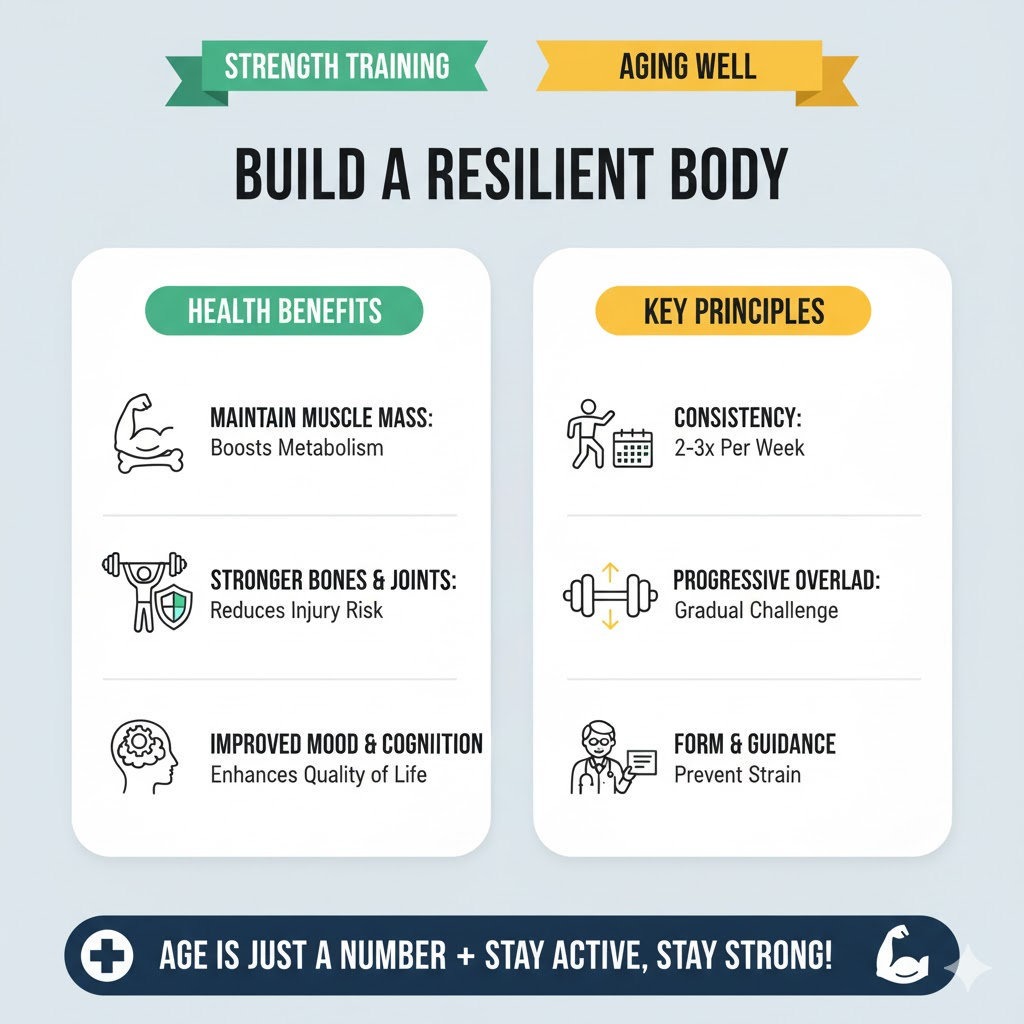
1. Cardiovascular and Metabolic Health
While aerobic exercise is essential for heart health, strength training also provides cardiovascular benefits:
- Lowers resting blood pressure and improves arterial flexibility.
- Enhances glucose metabolism and reduces risk of metabolic syndrome.
- Supports weight control, indirectly reducing cardiovascular strain.
Scientific Evidence: Studies show that resistance training 2–3 times per week can reduce systolic blood pressure by 4–5 mmHg and improve HbA1c in older adults with prediabetes.
2. Mental Health and Cognitive Function
Strength training impacts mental well-being through:
- Increased endorphin release, reducing anxiety and depression.
- Improved cognitive performance, including memory, executive function, and attention.
- Enhanced sleep quality, which indirectly supports brain health.
Scientific Evidence: Research indicates that older adults who engage in regular resistance training exhibit slower cognitive decline and improved mood compared to sedentary peers.
3. Joint Health and Mobility
Strengthening muscles around joints protects them from injury and degeneration:
- Reduces pain associated with osteoarthritis.
- Improves flexibility, balance, and range of motion.
- Supports healthy gait and reduces risk of falls.
Scientific Evidence: Resistance exercises targeting quadriceps, hamstrings, and hip muscles improve knee function and reduce osteoarthritis symptoms.
4. Longevity and Quality of Life
Higher muscle mass and strength are associated with longer life expectancy and reduced risk of chronic diseases:
- Enhances daily energy levels and vitality.
- Reduces fatigue and increases participation in social and physical activities.
- Supports independence, self-esteem, and overall quality of life [3].
Types of Strength Training Exercises
1. Resistance Bands
- Low-impact and safe for older adults with joint issues.
- Portable, inexpensive, and effective for building strength in upper and lower body.
2. Free Weights and Dumbbells
- Allow adjustable resistance to match individual strength levels.
- Target multiple muscle groups and improve bone density.
3. Bodyweight Exercises
- Simple and accessible, requiring no equipment.
- Examples: squats, push-ups, lunges, step-ups.
4. Machines at Gyms
- Provide controlled movement patterns, reducing injury risk.
- Suitable for beginners or those recovering from injuries.
5. Functional Strength Exercises
- Mimic real-life movements: lifting grocery bags, reaching overhead, or bending to pick items.
- Enhance balance, coordination, and overall functional fitness.
Common Myths About Strength Training for Older Adults
Despite strong evidence supporting longevity strength training, many myths still discourage older adults from participating.
Myth 1: Strength training is unsafe for seniors
Reality: When properly designed and supervised, senior resistance workouts are safe and significantly reduce injury risk by improving strength, balance, and coordination.
Myth 2: Muscle loss is inevitable with aging
Reality: While age-related strength decline is common, it is not irreversible. Strength training is the most effective tool for muscle loss prevention at any age.
Myth 3: Only heavy weights build strength
Reality: Moderate resistance, bodyweight, and resistance bands can effectively stimulate muscle adaptation and support functional fitness aging.
Myth 4: Cardio is enough for healthy aging
Reality: Aerobic exercise alone does not prevent sarcopenia or bone loss. Healthy aging fitness requires resistance training for muscles and bones.
Designing a Safe and Effective Strength Training Program
Strength training is highly beneficial for older adults, but safety and proper design are crucial to maximize benefits while minimizing risks. Older adults may have chronic conditions, mobility issues, or joint limitations, so programs must be tailored to individual capabilities [4].
1. Frequency and Duration
- Recommended frequency: 2–3 non-consecutive days per week. This allows sufficient recovery between sessions.
- Session duration: 30–60 minutes, including warm-up, exercise sets, and cool-down.
- Rationale: Muscles need 48–72 hours to recover from resistance exercises. Training too frequently without rest can lead to injury, fatigue, or decreased motivation.
Example Schedule:
- Monday: Upper body strength and core
- Wednesday: Lower body strength and balance exercises
- Friday: Full-body functional exercises
2. Intensity and Progression
- Start with moderate resistance that allows 8–12 repetitions with good form.
- Gradually increase weight or resistance over weeks (progressive overload) to stimulate muscle adaptation.
- Use a perceived exertion scale (RPE 5–7/10) for beginners who may not track exact weights.
- Avoid maximal lifting early on to reduce risk of joint or tendon injury.
Practical Tip: Begin with light dumbbells or resistance bands, then increase intensity once form and confidence improve.
3. Warm-Up and Cool-Down
- Warm-Up: 5–10 minutes of light aerobic activity (walking, stationary cycling) plus dynamic stretching to increase blood flow and prepare joints.
- Cool-Down: 5–10 minutes of gentle stretching to enhance flexibility, reduce soreness, and gradually lower heart rate.
- Rationale: Warming up improves muscle elasticity and reduces injury risk, while cooling down prevents post-workout stiffness.
4. Safety Considerations
- Proper Form: Avoid jerky movements, lock joints, or hyperextend limbs. Use mirrors or trainers to check technique.
- Joint Alignment: Keep knees aligned with toes during squats and avoid excessive forward lean in lifts.
- Breathing: Exhale during exertion, inhale during relaxation. Holding breath can spike blood pressure.
- Medical Clearance: Older adults with chronic conditions like hypertension, diabetes, or cardiovascular issues should consult a physician before starting.
- Monitoring Fatigue: Stop or reduce weight if pain, dizziness, or shortness of breath occurs.
5. Exercise Selection
- Focus on major muscle groups: legs (quadriceps, hamstrings, and glutes), back, chest, arms, shoulders, and core.
- Include functional exercises mimicking daily activities: sit-to-stand, step-ups, and carrying light loads.
- Include balance and coordination drills: single-leg stands, tandem walking, or heel-to-toe walking to reduce fall risk.
Sample Beginner Circuit:
- Chair squats – 2 sets of 12 reps
- Wall push-ups – 2 sets of 10 reps
- Seated row with resistance band – 2 sets of 12 reps
- Standing calf raises – 2 sets of 15 reps
- Side leg lifts—2sets of 10 reps per side
6. Tracking Progress
- Keep a training log for weights, repetitions, and perceived exertion.
- Gradually increase either resistance or reps every 2–3 weeks.
- Monitor strength, balance, and endurance improvements to adjust the program appropriately.
When to Start Strength Training for Healthy Aging
The best time to start strength training is now.
- Muscle mass begins declining in the 30s
- Bone density decreases steadily with age
- Metabolic rate slows, increasing fat accumulation
Starting early supports metabolic health aging but even adults in their 60s, 70s, and 80s experience meaningful improvements in strength, mobility, and independence.
Key Insight: It is never too late to begin an active aging routine focused on strength, balance, and mobility.
Strength Training for Men vs Women as They Age
While both men and women benefit equally from resistance training, aging affects them differently.
Men
- Experience gradual testosterone decline
- Tend to lose muscle mass faster after 60
- Benefit from progressive resistance to preserve lean mass
Women
- Face accelerated bone loss after menopause
- Higher risk of osteoporosis and fractures
- Benefit greatly from bone density exercise through resistance and impact loading
For both sexes, strength training improves posture, metabolism, confidence, and long-term function.
How Strength Training Reduces Fall Risk
Falls are one of the leading causes of injury and disability in older adults. Strength training is a proven fall prevention exercise strategy.
Mechanisms:
- Strengthens lower-body muscles (glutes, quadriceps, calves)
- Improves reaction time and neuromuscular control
- Enhances balance and gait stability
- Increases confidence in movement
Functional exercises such as sit-to-stand, step-ups, and loaded carries directly translate to safer daily movement.
Signs You Are Progressing Safely With Strength Training
Tracking progress helps ensure training is effective and safe.
Positive Signs Include:
- Increased strength or repetitions with good form
- Improved balance and coordination
- Reduced joint pain and stiffness
- Better posture and ease with daily activities
- Faster recovery between sessions
Progress should feel challenging but manageable, not exhausting or painful.
Home-Based Strength Training Options for Seniors
Strength training does not require a gym. Many effective senior resistance workouts can be done at home.
Home-Friendly Options:
- Resistance bands
- Light dumbbells or household items
- Chair-based exercises
- Wall-supported movements
- Bodyweight exercises
Bodyweight training, when progressed appropriately, can support functional fitness aging and maintain independence.
When to Modify or Stop Strength Training
While strength training is safe, modifications may be needed.
Modify or Stop If You Experience:
- Sharp or persistent joint pain
- Dizziness or chest discomfort
- Severe fatigue or shortness of breath
- Swelling or inflammation that worsens
Consult a healthcare provider or physiotherapist to adjust intensity, volume, or exercise selection.
Complementary Strategies for Aging Well
Strength training is highly effective, but its benefits are maximized when combined with lifestyle strategies including nutrition, cardio, flexibility, and recovery.
1. Nutrition for Muscle and Bone Health
- Protein Intake: Aim for 1.0–1.2 g/kg of body weight per day for older adults to support muscle repair and prevent sarcopenia.
- Sources: lean meats, fish, dairy, legumes, eggs.
- Sources: lean meats, fish, dairy, legumes, eggs.
- Calcium and Vitamin D: Essential for bone density.
- Sources: milk, fortified plant-based drinks, leafy greens, and safe sun exposure for Vitamin D.
- Sources: milk, fortified plant-based drinks, leafy greens, and safe sun exposure for Vitamin D.
- Healthy Fats: Omega-3 fatty acids reduce inflammation and support joint health.
- Sources: salmon, walnuts, flaxseeds.
- Sources: salmon, walnuts, flaxseeds.
- Hydration: Adequate water intake prevents fatigue, supports metabolism, and aids recovery.
2. Cardiovascular Exercise
- Purpose: Complement resistance training by supporting heart health, enhancing endurance, and promoting fat loss.
- Recommendations:
- 150 minutes/week of moderate-intensity aerobic exercise (walking, swimming, cycling).
- Short bouts (10–15 minutes) can be effective if longer sessions are challenging.
- Rationale: Cardiovascular fitness improves oxygen delivery to muscles, reduces cardiovascular risk, and enhances recovery after strength training.
3. Flexibility and Balance Training
- Importance: Reduces risk of injury, improves range of motion, and enhances functional independence.
- Examples: Yoga, Pilates, tai chi, dynamic stretching.
- Integration: Include 10–15 minutes after strength sessions or on rest days.
- Evidence: Regular stretching improves mobility and joint health, particularly in hips, shoulders, and spine.
4. Sleep and Recovery
- Adequate Sleep: 7–9 hours per night is essential for muscle repair and growth hormone release.
- Rest Days: Include 1–2 days per week for recovery, especially after intense workouts.
- Active Recovery: Light walking, stretching, or foam rolling promotes circulation without stressing muscles.
5. Stress Management
- Why It Matters: Chronic stress increases cortisol, which can lead to muscle breakdown and hinder recovery.
- Techniques:
- Mindfulness meditation or deep breathing exercises.
- Engaging in hobbies or social activities for emotional well-being.
- Avoid overtraining, which can elevate stress hormones and reduce progress.
6. Lifestyle and Environmental Factors
- Ensure a safe exercise environment: stable flooring, proper lighting, and supportive footwear.
- Avoid exercising in extreme temperatures or without proper hydration.
- Encourage social support: group classes or training with a partner improves adherence and motivation.
Conclusion
Strength training is a cornerstone of healthy aging. It not only preserves and builds muscle mass but also strengthens bones, enhances metabolism, supports cognitive function, and improves emotional well-being. By incorporating resistance exercises, proper nutrition, and complementary strategies such as cardio, flexibility training, and stress management, older adults can maintain independence, vitality, and longevity.
Looking for more health and wellness solutions? Don’t miss these related guides:-
References
- Liu, C. J., & Latham, N. K. (2009). Progressive resistance strength training for improving physical function in older adults. Cochrane Database of Systematic Reviews, 2009(3), CD002759. https://www.cochranelibrary.com/cdsr/doi/10.1002/14651858.CD002759/full
- Nelson, M. E., et al. (2007). Physical activity and public health in older adults: Recommendation from the American College of Sports Medicine and the American Heart Association. Circulation, 116(9), 1094–1105. https://www.ahajournals.org/doi/10.1161/CIRCULATIONAHA.107.185650
- Westcott, W. L. (2012). Resistance training is medicine: Effects of strength training on health. Current Sports Medicine Reports, 11(4), 209–216. https://journals.lww.com/acsm-csmr/abstract/2012/07000/resistance_training_is_medicine__effects_of.13.aspx
- Peterson, M. D., Sen, A., & Gordon, P. M. (2011). Influence of resistance exercise on lean body mass in aging adults: A meta-analysis. Medicine & Science in Sports & Exercise, 43(2), 249–258. https://journals.lww.com/acsm-msse/fulltext/2011/02000/influence_of_resistance_exercise_on_lean_body_mass.8.aspx
Frequently Asked Questions
Yes. Properly designed resistance training strengthens muscles around joints, reduces stiffness, and improves function, often decreasing arthritis-related pain.
Not always. Adequate protein, calcium, and vitamin D from food may be sufficient. Supplements should be considered only if deficiencies are identified by a healthcare provider.
Absolutely. Strength training improves neuromuscular control and stability, making it one of the most effective tools for fall prevention.
Yes, especially for beginners. However, progressive resistance (bands or weights) is often needed long-term to continue muscle loss prevention.
Beginners or individuals with medical conditions benefit from supervision initially. Once technique and confidence improve, many can train safely independently.


