






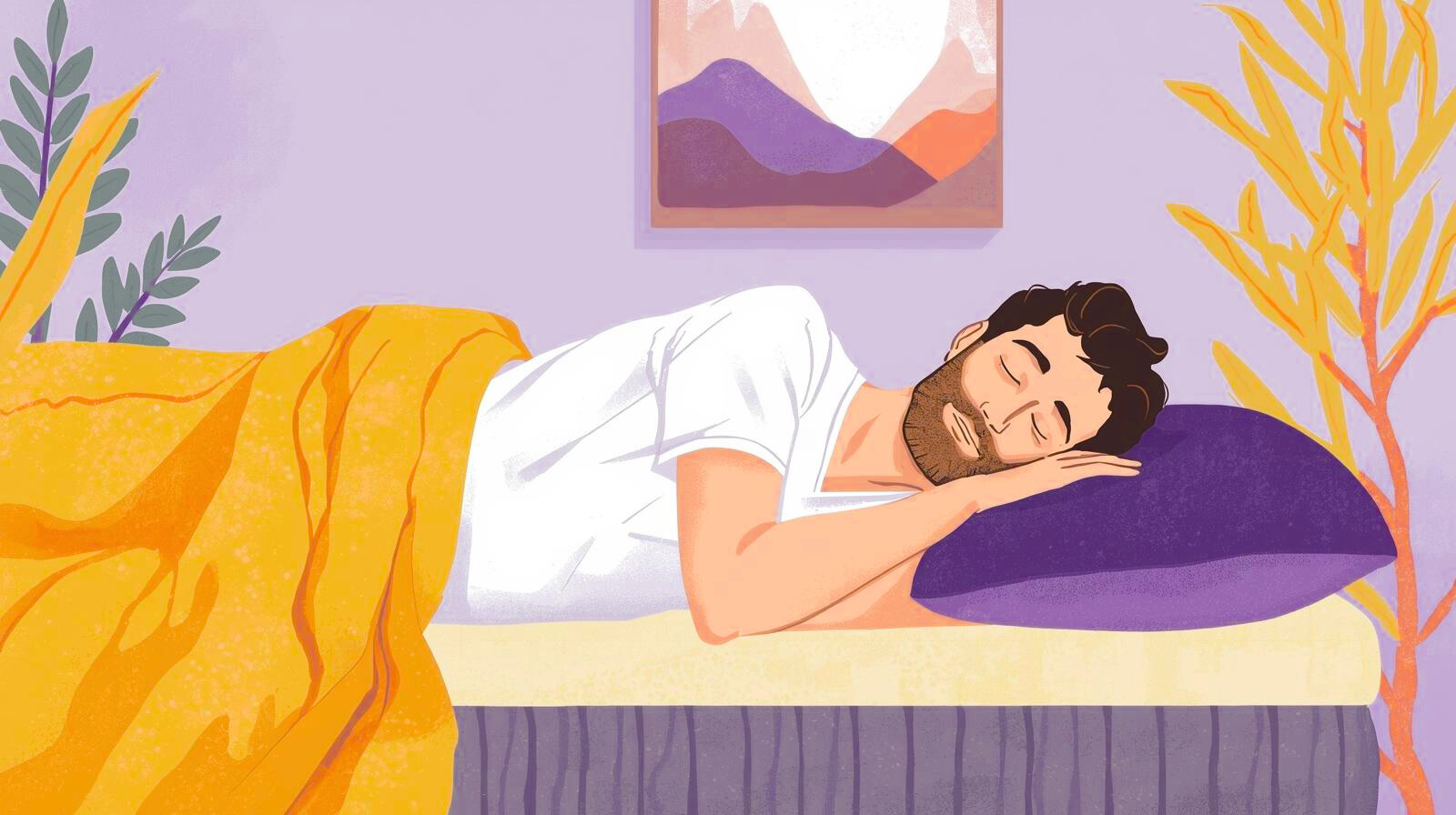
Have you ever wondered what has made those memory foam mattresses feel like they are hugging your body? Or why there are so many who wouldn’t live without them for back pain relief ? You’re about to learn all you need to know about one of the most exceptional materials that changed the entire sleep world, and, it all began with a mission into outer space.
Memory foam has entered the layman’s lexicon as a byword for comfort, but there’s more to it than a squishy mounting point for your head. Whether you are looking for your first memory foam mattress, or if you are simply interested in memory foam in general and trying to find out whether it’s the best option for your particular needs, this guide has got all of that covered.
What Memory Foam Is and Why It Became Popular ?
Memory foam is a unique type of viscoelastic polyurethane foam which reacts to body heat and pressure, allowing it to conform to the body shape. When you lie on it, memory foam molds to your body and directly presses against it so that your pressure shifts across its surface and doesn’t only accumulate in certain areas; then, when you get up again, it slowly regains its original shape, that’s why it’s called “memory” foam.
But here’s what sets it apart: Instead of conventional mattresses that push back against your body, memory foam contours around and under you, sinking at heat points such as the shoulders and hips while supporting the curve of your spine. This one-of-a-kind quality has made it a game-changer for those suffering from debilitating pain, poor sleep and daily discomfort.
Origination and Early Developments from NASA
Origins and early history (early 1980s and earlier) as published by NASA
Your memory foam mattress is a product of the space race. 1 In 1966, NASA developed a viscoelastic polyurethane foam to pad astronauts during shuttle launches and on re-entry into the earth’s atmosphere. NASA’s Ames Research Center The “slow spring-back foam” material that METI created was designed to lessen shock, but also serves separate purposes for astronaut padding while in their seats and to equalize the pressure of the cockpit [1].
Memory foam, which was initially created for airplane seating, came to the consumer market in the 1980s with medical instruments such as hospital beds and wheelchair cushions [2]. It was introduced to the consumer market in the 1990s by Tempur-Pedic as modern sleep comfort.
How Does Memory Foam Work ?
So, what’s the science behind this far-out material?
Viscoelastic Material Response
The word “viscoelastic” is all you need to know about what memory foam is like. The “visco” part is because they’re viscous: As the material reacts to pressure, it deforms slowly and sluggishly. And it’s “elastic,” meaning it bounces back to an original shape after pressure is removed. This combination yields the classic slow-mo feeling you get when pressing your hand into memory foam.
The cellular structure of the foam is composed of billions of tiny open or closed cells that press when squeezed. These cells are constructed with different resistance levels so that the material responds proportionally to the amount of force exerted and contours more deeply when you need greater support.
Heat and Pressure Responsiveness
The response of it is temperature-sensitive, which is why some call it “thermally elastic” foam. The warmth of your own body softens the foam to yield more pliable consistency, and therefore molds to your body’s very shape. That’s why it feels more firm in a cold room and softer in a warm one.
As you lie down, the foam slowly begins to soften as it reacts to your body temperature and weight. This process takes 2-3 minutes, which is why you experience this “sinking in” feeling when foam is being heated by your body and shaped. This temperature responsiveness is in fact a feature, not a bug, it’s what makes the foam so able to provide personalized support.
Contouring Effect and Body Adaptation
The magic has to do with how memory foam redistributes pressure. Conventional mattresses form pressure points when the heaviest parts of your body (your shoulders, hips and heels) are pressing down. Memory foam eliminates these pressure points by distributing your weight across a larger surface area and it relieves the pressure point of stress on any one spot.
Scientific research confirms this works. Research has shown that an ideal mattress design is a factor in gaining good sleep quality, pain relief and spinal alignment [3]. The contouring lets your spine keep its natural S-curve whether you’re a back, side or stomach sleeper, a must for preventing and alleviating back pain.
What are the Benefits of Memory Foam ?
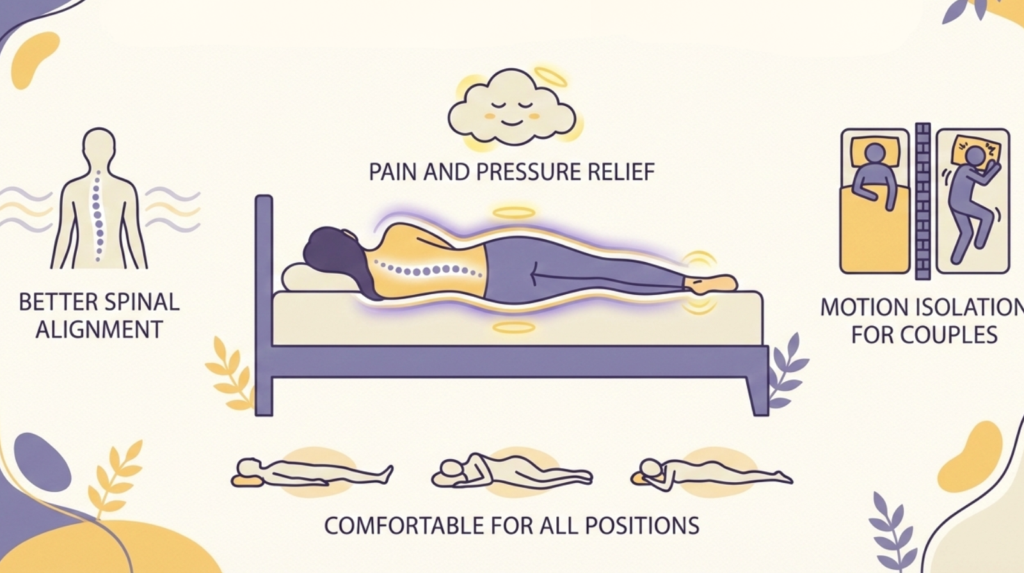
Now on to why there are millions of people who have made the move over to memory foam.
Pain and Pressure Relief
Memory foam could be your answer if you suffer from soreness in the morning. It has been reported that sleep surfaces prescribed to such a patient significantly reduced back pain and led to the improvement of sleep quality in both patients with low back and shoulder pain [4].
A meta-analysis concluded that medium-firm mattresses are the best for sleeping comfort and pain relief [3]. Memory foam is very good at this as it prevents any pressure points where you might become uncomfortable. The weight is evenly distributed to deliver relief across your body’s pressure points, joint and muscles.
Many people with chronic pain from conditions like arthritis and fibromyalgia swear by memory foam as a solution for better sleep. And when the material molds to your body, you’ll toss and turn less while trying to find a comfortable position, which leads to better (and more restful) night’s sleep.
Better Spinal Alignment
The alignment of your spine during sleep is crucial to its health. When your mattress is too plush, your hips sink too deeply; when it’s too firm, your shoulders and hips lack/give. The answer is that memory foam hits the middle.
In clinical trials, medium firm mattresses provide the best spinal alignment and lower morning pain & stiffness (3). Memory foam can help support the natural curvature of your spine, the cervical curve which lies in your neck, the thoracic curvature in your upper back and the lumbar curve in lower back while keeping everything properly aligned as you doze.
Studies from the American Chiropractic Association show that realignment of the spine diminishes morning pain and optimizes your quality of sleep (5). “If you have your spine aligned in a supported position, those muscles can go to sleep,” he said, “as opposed to having them be active all night long trying to compensate for things pushing and pulling on the spine.”
Motion Isolation for Couples
Here’s a benefit that especially appeals to couples: motion isolation. Memory foam tends to swallow motion, rather than move across the bed. That means that when your partner gets up to use the bathroom in the middle of the night, rolls over or repositions, you won’t feel it on your side of the bed.
It’s especially beneficial for partners who have different sleep schedules or if you’re a light sleeper. Old-fashioned innerspring mattresses function similar to trampolines, with movement rippling across the whole bed. This motion transfer is reduced by memory foam’s close conforming, so the sleeper and their partner can both enjoy uninterrupted sleep.
Comfortable for All Sleeping Positions
Whether you sleep on your back, side, stomach, or are a combination sleeper, memory foam is adjustable to meet the needs of all types of sleepers.
- Backsleepers: Get the lumbar support you need while the foam cradles your natural curve on your lower back
- Side sleepers: Find relief at shoulders and hips to eliminate pain and numbness
- Stomach sleepers: Look for something that supports without causing the midsection to sink in too much holding the spine in alignment.
- Combo sleepers: get the feeling of floating while your foam reacts to your movements all night long
What are the Types of Memory Foam ?
All memory foam is not created equal. Here’s a guide to the various kinds.
1. Traditional Memory Foam
This is the actual viscoelastic foam that NASA created. What it does provide is excellent pressure relief and body contouring, though there are a few drawbacks, namely heat retention. Classic memory foam has a closed-cell structure that doesn’t facilitate much airflow, which causes it to sleep warm.
Traditional memory foam tends to have the slowest response time (that “quicksand” feeling) and offer the deepest contour. It is the cheapest and, for a lot of people, still the best because it’s just as comfortable as options that cost at least three times as much, particularly if you don’t normally sleep hot.
2. Gel-Infused Memory Foam
To address heat retention, gel for higher and medium density foams is added which are called gel-infused foam or gel visco foam. The gel also helps draw heat away from pressure points more quickly than regular memory foam (6).
Gel memory foam has the same conforming feel and pressure relief of traditional memory foam, but it’s infused with cooling beads to help better control heat. It also has a slightly faster response time and a cooler sleeping surface, both great choices for those who sleep hot or reside in warmer climates compared to the puffy layer of foam on top of the DreamCloud.
3. Open-Cell Memory Foam
Open-cell memory foam has a more open cell structure that allows air to circulate better than closed-cell foam. The “open” cells allow air to circulate easily, letting heat escape from the body faster.
This technology keeps Memory foam pressure-relieving properties with increased breathability. Open-cell foam tends to feel a bit less dense than standard memory foam and be a little more responsive, finding a good balance between contouring and responsiveness.
4. Eco or Plant-Based Memory Foam
The latest iteration substitutes some petroleum-based polyurethane with oils sourced from plants, usually soybeans or castor beans. Plant-based memory foam makers say their material is 10 times more breathable than traditional memory foam.
In addition to better cooling, plant-based foams have a tendency to also feature:
- reduced (volatile organic compound) VOC emissions
- Reduced chemical smell upon unboxing
- More environmentally friendly manufacturing process
- Quicker response times, less feeling of “quicksand”
Slightly pricier but more eco-friendly, memory foam is popular among environmentalists and people sensitive to chemical smells.
Pros and Cons of Memory Foam
Let’s be honest about the pros and cons of both.
Advantages: Comfort, Support, Durability
Pros:
- Great pressure relief: Takes away painful pressure points
- Great motion isolation: Best for couples
- Allergen Resistant: Dust mite and allergen resistant
- Personalized support: Self-adjusts to your individual body type
- Pain relief: Relieves back, joint and muscular pain
- Longevity: Good memory foam mattresses last 8-10 years or longer
- Silent: There is no squeaking or creaking of springs like in innerspring mattresses
- Low maintenance: No flipping (though rotating is a good idea)
Disadvantages: Heat Retention, Off-Gassing, Weight
Cons:
- Temperature: Classic memory foam can trap heat (although there are newer gel options that do not).
- Off-gassing: New mattresses might emit a chemical smell for the first few days
- Heavy: More difficult to maneuver and rotate than other mattress styles
- Initial adjustment: Cushion needs getting used to.
- Price: Good memory foam is more expensive than cheap innersprings
- Latency and response time: Slower to adapt when transitioning positions (reduced “bounce”)
- Edge support: May feel less secure than an innerspring when sitting on the edge
The good news? All of these cons have been remedied in newer memory foam mattresses with cooling features, low- VOC certificates and more advanced compounds.
How to Choose Memory Foam: Density, Firmness Levels & Key Factors
Shopping for memory foam? Keep these factors in mind.
- Density and Firmness Level
- Density (pounds per cubic foot) Quality and durability is shown by:
- Low density (3-4 lbs/ft³): Cheaper but not as durable, deteriorates more quickly
- Medium density (4-5 lbs/ft³): The best of both worlds, comfort and longevity
- High density (5+ lbs/ft³): highest durability and support, best quality
- It’s also subjective and is typically rated on a scale from 1-10:
- Plush (3-4): Ideal for side sleepers under 130 lbs
- Medium (5.5): Best for the majority of combination sleepers and pairs
- Medium-firm (6-7): Research-backed support for the spine (3)
- Firm (8-9): Weight Back/stomach sleepers greater than 230 lbs.
Foam Certifications and Safety
When seeking supplements, look for these certifications to guarantee safety and quality:
- CertiPUR-US®: Certified foam free of harmful chemicals including:
- Ozone depleters
- Mercury, lead, and heavy metals
- Formaldehyde
- Phthalates
- Low VOC emissions (<0.5ppm) (8)
OEKO-TEX Standard 100: Testing for harmful substances
GREENGUARD Gold: Product certified for low chemical emissions for better indoor air quality
Made Safe: Screens for toxins found in materials
It’s not only that these certifications matter for your health. More concentrated VOCs can cause eye and respiratory irritation, headaches, and health effects (9). Certified foams minimize these risks.
Cooling Features and Thickness
Cooling technologies to look for:
- Gel infusions or phase-change materials
- Open-cell foam structure
- Breathable cover fabrics
- Airflow channels or ventilation zones
- Copper or graphite infusions
Studies have shown that temperature controlled sleeping surfaces can greatly impact the quality of sleep and thermal comfort levels (10). If you’re a hot sleeper, look for cooling features.
Thickness matters:
- 6-8 inches: For use in children’s or guest rooms
- 10-12 inches: What you’ll need for standard comfort – suitable for most adults
- 12-14 inch design: Luxury comfort with added support levels
- 14+ inches: Luxury models with high-end features
Other Uses of Memory Foam
Memory foam has benefits that go well beyond mattresses.
Pillows, Mattress Toppers, Cushions
Memory foam pillows that keep your head and neck in alignment. They come in various shapes:
- Traditional
- Contoured (cervical support)
- Shredded foam (adjustable)
- Triangular (raise for acid reflux or to stop snoring)
Mattress toppers (2-4 inches thick) are a great, affordable way to change your current mattress by adding memory foam benefits without purchasing an entirely new mattress.
Pad for use with an office chair, car seat or wheelchair; great comfort and pressure relieving support to the back and coccyx.
Office Chairs and Footwear
Memory foam is no less used in seat cushions and lumbar support of numerous ergonomic office chair for day-long sitting comfort. The chair cushions provide relief for the lower back, and conditions a good posture that supports long sessions at work.
Memory foam insoles and shoe inserts cushion your feet and provide comfort, support, relief, and are a way to personalize your hard-to-fit footwear for your fitness needs. Today, you can find memory foam technology in athletic shoes, work boots and everyday footwear.
Medical Supports and Orthopedics
Memory foam is still widely used in the medical field:
- An overlay for a hospital bed to prevent decubitus ulcers
- Wheelchair cushions for extended comfort
- Neck, back and knee orthopaedic supports
- Post-surgical support pillows
- Pregnancy support pillows
- CPAP mask cushioning
Pressure-distributing memory foam is highly beneficial to patients with restricted mobility or for those rehabilitating from an injury.
Care, Maintenance and Lifespan
Taking care of your memory foam makes it last longer, and also keeps it hygienic.
How to Wash and Protect Memory Foam
DO:
- Use a waterproof, breathable mattress protector (stops stains, dust mites, allergens)
- Monthly vacuuming using an upholstery attachment helps remove household dust, which can be harmful to your upholstered furniture.
- Turn 180° every 3-6 months for even wear
- Blot (Do not rub-will cause color transfer) spills immediately with a clean, dry cloth and allow to air dry.
- Air out periodically by taking the bedding off for a few hours
- Completely dry any damp spots with a fan before concealing.
DON’T:
- Wash or dry your memory foam (machine washing and drying will damage the cellular structure)
- Use strong chemicals, bleach, or ammonia-based cleaners
- Saturate the foam with liquid
- Steam clean or apply heat (may damage the foam)
- Jump or stand on the mattress
- Do not bend or fold the mattress during transport
Warning Signs That Replacement Is Needed
Your memory foam mattress should be replaced if you see:
- Visible indentation or impression greater than 1.5 inches
- Lack of support: You are sinking down further than before or you feel springs/foundation through the foam
- A) Waking with new pains despite having slept well previously
- Allergy symptoms (sneezing, congestion) [from dust mites]
- Signs of wear: Tears, cuts, or exposed foam
- Smells that Won’t Outgas
- Age: 8-10 years for high-quality foam, less for lower-density varieties
And memory foam that holds its shape can last 7-10 years – more than most innerspring mattresses (5-7 years.).
Conclusion
Memory foam has traveled light years from its NASA roots to emerge as one of the most popular sleep surfaces here on planet earth and with good reason. Not only does the Lucid form to your body, relieve pressure points, and support spinal alignment, but it’s also suitable for those of who you want to invest in a better night sleep by providing pain relief.
Whether you choose traditional, gel-infused, open-cell or plant-based memory foam, you’ll be buying into a material with decades of scientific studies and general consensus that says it fills the role quite handily. The trick is selecting the perfect density, firmness, features and more that best suit your needs, body shape and type of sleeper.
Just remember that a good mattress is an investment in your health. Bad sleep impacts everything from your mood to your productivity to how healthy you’ll be in the long run. If you’re simply not getting a good enough night’s sleep on your current mattress, memory foam could be some kind of help your body has been calling for.
Sweet dreams await!
Explore More Health & Wellness Solutions:
Want to stay informed about wellness and everyday health issues? Here are some insightful reads to guide you. Explore the links below for practical tips and solutions.
- How to Prevent Knee Injuries: Proven Tips, and Lifestyle Strategies for Stronger Joints
- How Can Knee Cap Support Help Prevent Injury and Reduce Pain While Running
- 10 Effective Home Remedies for Body Pain Relief Naturally
- Mobility Exercises: Benefits, Techniques & Routines for Better Movement
Frequently Asked Questions
Yes, memory foam is great for hip and joint pain. Its ability to alleviate pressure points evenly by spreading the weight allows painful joints to be relaxed.
A good memory foam mattress should last 7-10 years with regular use; making it longer lasting than an average innerspring mattress.
Yes, memory foam on it’s own will soften and break in naturally during the first 30-90 days as the cells open up.. conform to your body. This “breaking-in” time is a common sense phase that, in many cases, leads to better comfort.
With any memory foam mattress, they all have a new “new mattress smell” from off-gassing of VOCs when the foam is made and encased for shipment. That’s normal, and if the room is ventilated, it should clear up within 24-72 hours.
“Better” depends on your needs. Gel memory foam sleeps cooler and is quicker to respond than traditional foam, but still provides the same pressure relief. The gel foam cooling is beneficial if you sleep hot or live in a warm climate.
References
- NASA. (2016, February 11). Memory foam. https://www.nasa.gov/image-article/memory-foam/
- Wikipedia. (n.d.). Memory foam. https://en.wikipedia.org/wiki/Memory_foam
- Radwan, A., Fess, P., James, D., Murphy, J., Myers, J., Blankenhorn, M., Hooper, M., Sharp, R., & Pacheck, M. (2015). Effect of different mattress designs on promoting sleep quality, pain reduction, and spinal alignment in adults with or without back pain; systematic review of controlled trials. Sleep Health, 1(4), 257-267. https://doi.org/10.1016/j.sleh.2015.08.001
- Jacobson, B. H., Boolani, A., Dunklee, G., Shepardson, A., & Acharya, H. (2010). Effect of prescribed sleep surfaces on back pain and sleep quality in patients diagnosed with low back and shoulder pain. Applied Ergonomics, 42(1), 91-97. https://www.sciencedirect.com/science/article/pii/S0003687010000724
- Wolf Mattress. (2024, October 30). Top 10 benefits of sleeping on a memory foam mattress. https://wolfmattress.com/blogs/blog/top-10-benefits-of-sleeping-on-a-memory-foam-mattress
- National Mattress. (2026, January 14). Do cooling mattresses actually work? Science, materials, and real benefits. https://www.nationalmattress.ca/blog/do-cooling-mattresses-actually-work
- Simply Rest. (2025, November 16). Memory foam: Traditional, gel, or plant-based? https://simplyrest.com/which-memory-foam-is-best/
- CertiPUR-US. (n.d.). Frequently asked questions. https://certipur.us/about-the-certification/frequently-asked-questions/
- Consumer Reports. (2025, November 16). VOCs and other toxic chemicals in mattresses. https://www.consumerreports.org/home-garden/mattresses/mattresses-without-harmful-chemicals-vocs-a1852704784/
- Pacheco, D., Singh, A., & Dimitriu, A. (2024, April 15). Sleeping for one week on a temperature-controlled mattress improves sleep quality and cardiovascular recovery. Nature and Science of Sleep.https://pmc.ncbi.nlm.nih.gov/articles/PMC11048088/