





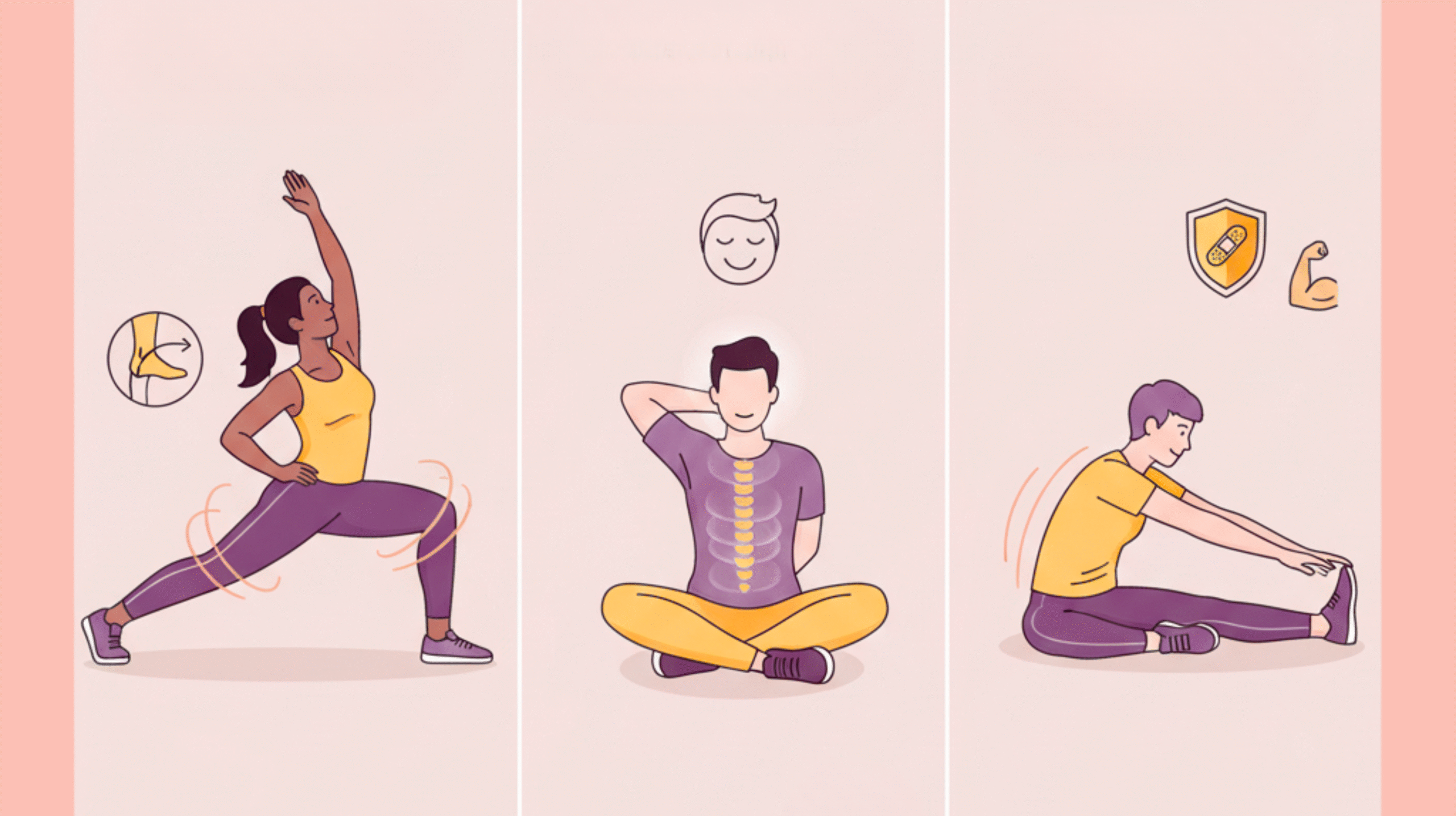
Flexibility is one of the most significant aspects of fitness, though it is generally not taken into consideration. Flexibility is often less prioritized when compared to strength training, cardio or even diet. It is not regarded as a goal but a bonus. Nevertheless, studies have found that regular stretching exercises are capable of enhancing posture, mobility, and quality of life and also assisting individuals to retain their flexibility.
Stretching does not simply mean bending to touch your toes or performing the splits. Rather, it is primarily meant to ensure the well-being and flexibility of your muscles, joints, and connective tissues. A flexible body is less stiff, and it is more decisive as it is able to move and it is less prone to injury during sports or other daily activities. Stretching exercises are also helpful for athletes who desire to perform better, office workers who struggle with their stiffness, and aged people who desire to remain independent.
This article aims at providing you with a complete picture of the use of stretching to enhance your flexibility. We will discuss the definition of the word “flexibility,” the science of stretching, the various ways of stretching, and exercise routines of the body (upper, lower, and core). At the end of it, you will know how to stretch and why it is essential to stretch each day.
What Is Flexibility, and Why Does It Matter?
Definition of Flexibility
Flexibility is the ability of a muscle or group of muscles to lengthen through a range of motion at a joint. It is determined by several factors, including the elasticity of muscles and tendons, joint structure, and the condition of connective tissues such as ligaments and fascia. Unlike strength or endurance, flexibility is more difficult to measure precisely, but it is a critical fitness component for overall health.
The Role of Muscles, Joints, and Connective Tissue
Flexibility is not limited to muscles alone. Joints play a crucial role in determining how far you can move, while connective tissues such as tendons and fascia influence how much stretch a muscle can tolerate. For example, the ball-and-socket structure of the hip joint naturally allows for greater flexibility than the hinge-like knee joint [1]. Regular stretching improves not just muscle length but also joint mobility and neuromuscular coordination, making movements smoother and less restricted.
Benefits in Daily Movement and Sports Performance
Everyday activities such as bending, reaching, and walking rely on functional flexibility. A lack of flexibility can cause stiffness, awkward movement patterns, and muscle imbalances that increase the risk of injury. For athletes, flexibility can be the difference between good performance and great performance. Flexible hamstrings improve running stride, flexible shoulders allow smoother swimming strokes, and hip mobility enhances squatting and jumping efficiency.
Long-Term Health Benefits
Flexibility training has long-term health implications. Regular stretching improves posture by reducing muscular imbalances, particularly in the shoulders, chest, and hip flexors. Poor posture, such as forward head tilt or rounded shoulders, often stems from tight muscles. Stretching can also lower the risk of falls among older adults by improving balance and mobility [2]. Additionally, it reduces the risk of chronic pain syndromes, especially in the back and neck.
Benefits of Stretching for Flexibility
1. Improved Range of Motion
Stretching allows muscles and joints to move more freely through their natural range of motion. Improved range of motion helps athletes perform dynamic movements like lunges or jumps more effectively, and it helps everyday individuals perform simple tasks like bending to tie shoelaces without discomfort.
2. Better Posture and Spinal Alignment
Poor posture is a modern epidemic due to prolonged sitting, computer use, and smartphone reliance. Stretching the chest, shoulders, and hip flexors can counteract this by lengthening tight muscles that pull the body into unhealthy positions. Over time, this restores balance and proper spinal alignment.
3. Reduced Risk of Injuries
Tight muscles are more prone to strains and tears. Stretching before and after workouts helps keep muscles supple, reducing injury risks during physical activity [3]. Moreover, flexibility ensures that joints move properly, preventing compensatory movement patterns that often lead to injuries.
4. Enhanced Workout and Athletic Performance
Athletes benefit from stretching because flexible muscles respond better to training demands. Dynamic stretches, for instance, prime muscles for explosive movements, while static stretches improve recovery. Whether lifting weights, sprinting, or practicing yoga, flexibility enhances overall performance.
5. Relaxation, Stress Relief, and Mental Wellness
Stretching is not purely physical; it has psychological benefits as well. Slow, controlled stretching promotes relaxation, reduces stress, and activates the parasympathetic nervous system. Combined with deep breathing, stretching becomes a meditative practice that improves mental clarity and well-being.
Types of Stretching Exercises
Stretching is not one-size-fits-all. Different methods serve different purposes, depending on whether the goal is warming up, cooling down, rehabilitation, or flexibility improvement. Below are the primary types of stretching and how they can be applied effectively.
1. Static Stretching
Definition and Examples
Static stretching involves holding a muscle in a lengthened position for 15-60 seconds. Examples include hamstring stretches (touching your toes), quadriceps stretches, and seated butterfly stretches.
When to Use
Static stretching is best performed after exercise during the cool-down phase [4]. At this time, muscles are warm and more pliable, which reduces injury risks and enhances flexibility gains.
2. Dynamic Stretching
Definition and Examples
Dynamic stretching involves controlled, active movements that take muscles through their full range of motion without holding the end position. Examples include leg swings, walking lunges, high knees, and arm circles.
Benefits Before Workouts and Sports
Dynamic stretches are ideal before workouts or sports because they activate muscles, increase blood flow, and prime the nervous system for performance. Unlike static stretching, dynamic movements enhance strength and agility without reducing power output.
3. PNF (Proprioceptive Neuromuscular Facilitation) Stretching
Explanation of Method
PNF stretching combines passive stretching with muscle contractions to increase flexibility. The most common method is “contract-relax,” where you stretch a muscle, contract it against resistance, and then relax it into a deeper stretch.
Who Benefits Most
PNF is often used in physical therapy and athletic training. It is highly effective for improving flexibility quickly but requires a partner or therapist for optimal execution.
4. Ballistic Stretching
Definition and Techniques
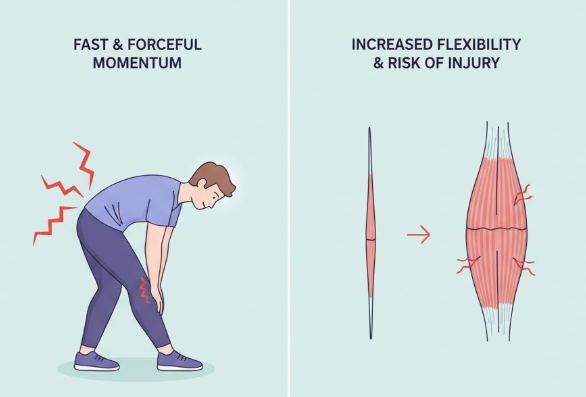
Ballistic stretching involves using bouncing or jerking movements to push the body beyond its normal range of motion. For example, repeatedly bouncing down toward your toes is a classic ballistic stretch.
Unlike static or dynamic stretching, ballistic stretches are fast and forceful, relying on momentum rather than controlled muscular movement. While they can increase flexibility, they also place stress on muscles and connective tissues, making them more risky if done incorrectly [5].
Risks and Precautions
Ballistic stretching is not recommended for beginners because it may cause muscle strains or tendon injuries. However, athletes involved in explosive sports such as sprinters, martial artists, or basketball players may use ballistic stretching under supervision to mimic the rapid movements required in their sport. Safety guidelines include warming up thoroughly, using gradual progression, and avoiding excessive bouncing.
5. Active vs Passive Stretching
Active Stretching
In active stretching, you use your own muscle strength to hold a position without external assistance. For example, lifting your leg high in front of you and holding it there engages the hip flexors while stretching the hamstrings. Active stretching builds strength and stability along with flexibility, making it highly functional for athletes and dancers.
Passive Stretching
Passive stretching relies on an external force such as gravity, a partner, or props (like a strap or wall) to assist in holding a stretch. A common example is using a yoga strap to pull your leg closer to your chest in a hamstring stretch. Passive stretching is excellent for relaxation and deeper flexibility gains but requires caution to avoid overstretching [6].
Both methods are effective, and a balanced routine often combines them depending on your goals.
Best Stretching Exercises for Flexibility
Now that we’ve covered the different types of stretching, let’s explore specific exercises for the upper body, lower body, core, and full-body mobility. These stretches can be incorporated into daily routines or tailored for pre- and post-workout use.
Upper Body Stretches
1. Neck Stretch
- Sit or stand tall.
- Tilt your head to one side, bringing your ear toward your shoulder.
- Hold for 20-30 seconds, then switch sides.
- Benefit: Relieves tension from desk work and improves neck mobility.
2. Shoulder Cross-Body Stretch
- Bring your right arm across your chest.
- Use your left hand to gently press the arm closer to your body.
- Hold for 20-30 seconds per side.
- Benefit: Improves shoulder mobility, especially useful for overhead movements.
3. Overhead Triceps Stretch
- Lift one arm overhead, bend the elbow, and reach down your back.
- Use the opposite hand to gently push the elbow inward.
- Hold 20-30 seconds per side.
- Benefit: Loosens triceps and lats, improving reach and posture.
4. Chest Opener (Doorway Stretch)
- Stand in a doorway, and place your hands on the frame at shoulder height.
- Step forward gently until you feel a stretch across your chest.
- Hold for 20-30 seconds.
- Benefit: Counters forward shoulder rounding and improves posture.
Lower Body Stretches
1. Hamstring Stretch (Seated or Standing)
- Sit with one leg extended and reach toward your toes, or stand and bend forward with straight legs.
- Hold for 20-30 seconds.
- Benefit: Improves hamstring flexibility, aiding running and squatting.
2. Quadriceps Stretch
- Stand on one leg, bend the opposite knee, and hold the ankle behind you.
- Keep knees close and hips pushed slightly forward.
- Hold 20-30 seconds per leg.
- Benefit: Stretches quads and hip flexors, crucial for runners and cyclists.
3. Calf Stretch (Wall Stretch)
- Stand facing a wall, place your hands against it, and extend one leg behind you with your heel pressed to the ground.
- Hold 20-30 seconds per side.
- Benefit: Prevents Achilles tendon issues and supports ankle mobility.
4. Hip Flexor Stretch (Lunge Stretch)
- Step one leg forward into a lunge position, with the back knee lowered.
- Push hips forward gently.
- Hold 20-30 seconds per side.
- Benefit: Opens tight hips caused by prolonged sitting.
Core and Back Stretches
1. Cat-Cow Stretch
- Begin on all fours.
- Inhale, arch the back (cow).
- Exhale, round the spine (cat).
- Repeat 8-10 times.
- Benefit: Improves spinal mobility and reduces stiffness.
2. Seated Spinal Twist
- Sit with legs extended, bend one knee, and cross it over the opposite leg.
- Twist torso toward the bent knee side.
- Hold for 20-30 seconds on each side.
- Benefit: Increases spinal flexibility and relieves lower back tension.
3. Cobra Pose (Bhujangasana)
- Lie on your stomach, place palms under shoulders, and lift your chest upward.
- Keep elbows soft and shoulders relaxed.
- Hold for 20-30 seconds.
- Benefit: Stretches abdominal muscles and improves spinal extension.
4. Child’s Pose (Balasana)
- Kneel on the floor, sit back on your heels, and extend your arms forward on the ground.
- Hold for 30-60 seconds.
- Benefit: Relieves back tension and promotes relaxation.
Full-Body Stretches
1. Downward-Facing Dog (Adho Mukha Svanasana)
- Begin on all fours, lift hips up and back, forming an inverted “V.”
- Keep heels reaching toward the ground.
- Hold for 20-30 seconds.
- Benefit: Stretches shoulders, hamstrings, calves, and spine simultaneously.
2. Standing Forward Fold
- Stand tall, hinge at the hips, and let your upper body hang toward the floor.
- Bend knees slightly if needed.
- Hold for 20-30 seconds.
- Benefit: Loosens hamstrings, calves, and lower back.
3. Butterfly Stretch
- Sit with feet together, knees out to the sides.
- Hold ankles and gently press knees toward the ground.
- Hold for 20-30 seconds.
- Benefit: Improves hip and groin flexibility.
4. Side Body Stretch
- Stand with feet shoulder-width apart.
- Raise one arm overhead and lean gently to the opposite side.
- Hold 20-30 seconds on each side.
- Benefit: Lengthens obliques and improves torso flexibility.
Stretching Routines for Flexibility
Creating structured routines ensures consistency and effectiveness. Here are routines for different times and needs.
1. Daily Stretching Routine (Morning & Evening)
- Morning (5-10 minutes): Focus on gentle dynamic stretches to wake up muscles [7]. Examples: arm circles, leg swings, torso twists, cat-cow stretch.
- Evening (5-10 minutes): Focus on static stretches to relax and release tension. Examples: seated hamstring stretch, quadriceps stretch, child’s pose, butterfly stretch.
Tip: Pair stretches with deep breathing to promote relaxation.
2. Pre-Workout Dynamic Stretching Routine
- Leg Swings (Front & Side): 10-15 reps per leg.
- Walking Lunges with Twist: 10-12 per side.
- Arm Circles & Shoulder Rolls: 10 reps forward and backward.
- Torso Twists: 10-15 reps each side.
Purpose: Increases blood flow, warms up muscles, improves performance, and reduces injury risk.
3. Post-Workout Static Stretching Routine
- Hamstring Stretch: Hold 20-30 seconds per leg.
- Quadriceps Stretch: Hold 20-30 seconds per leg.
- Calf Stretch: Hold 20-30 seconds per leg.
- Chest Opener: Hold 20-30 seconds.
Purpose: Helps muscles cool down, reduces stiffness, and improves flexibility over time.
4. Desk/Office Stretching Routine
- Neck Stretch: Tilt head side to side, hold 15-20 seconds.
- Shoulder Rolls: 10 forward, 10 backward.
- Seated Torso Twist: Hold 15-20 seconds per side.
- Hip Flexor Stretch (Standing Lunge): Hold 15-20 seconds per side.
Tip: Perform these every 1-2 hours to counteract prolonged sitting and maintain mobility.
Common Mistakes to Avoid While Stretching
- Overstretching and Forcing Flexibility: Can lead to muscle strains. Stretch only to the point of mild discomfort.
- Skipping Warm-Ups: Stretching cold muscles increases the risk of injury. Begin with light cardio or dynamic movement.
- Bouncing During Static Stretches: Ballistic movements in static stretches can tear muscle fibers. Hold stretches steadily.
- Holding the Breath: Proper breathing ensures oxygen flow and relaxation. Inhale deeply before and during stretches [8].
- Inconsistent Practice: Flexibility gains require regular stretching; occasional sessions provide minimal benefit.
Tips to Maximize Flexibility Gains
- Be Consistent and Progressive: Gradually increase stretch duration and intensity.
Combine Stretching with Strength Training: Balanced strength supports flexibility and joint stability. - Use Props for Support: Bands, yoga blocks, and straps help maintain proper alignment and deepen stretches safely.
- Incorporate Yoga or Pilates: These practices combine flexibility, strength, and body awareness.
- Listen to Your Body: Avoid pain or overextension; mild tension is acceptable, but sharp pain is a warning.
Who Should Do Flexibility Training?
- Athletes and Sports Professionals: To improve performance, prevent injuries, and enhance range of motion.
- Older Adults: Maintains mobility, balance, and independence while reducing the risk of falls [9].
- Office Workers: Counteracts stiffness caused by prolonged sitting and improves posture.
- People Recovering from Injuries: With guidance from medical professionals or physiotherapists to regain mobility safely.
Safety Guidelines for Stretching
- Warm Up Before Stretching: Light movement or cardio to increase muscle temperature.
- Hold Stretches for 15-30 Seconds: Longer holds can be incorporated gradually for advanced flexibility.
- Avoid Jerky or Bouncing Movements: Ensures muscles and tendons are not overstressed.
- Stop if You Feel Pain: Mild tension is normal; sharp pain indicates overstretching.
- Seek Expert Advice for Injury-Specific Stretches: Prevents worsening existing conditions and promotes recovery.
Conclusion
Stretching should be done regularly to ensure that you are in good health and flexible and mobile in general. Exercising improves your athletic ability, reduces stress, prevents injuries, and increases your balance. A few minutes of stretching each day can be beneficial in theto any person who might be an athlete or a person sitting at the office as well as the older generation. To achieve optimal outcomes, it is necessary to combine exercises of strength and flexibility, apply safe methods, and be consistent. Stretching is not only healthy to your body but also can assist you in developing a good habit, which is essential for well-being.
Your knees might hurt after a certain age. Check how you can control it with effective means:
Frequently Asked Questions:
1. What are the best stretching exercises for flexibility?
Dynamic stretches before workouts and static stretches after workouts, including hamstring stretch, quadriceps stretch, hip flexor stretch, cat-cow, and butterfly stretch, are highly effective.
2. How long should I stretch each day?
A total of 10-20 minutes daily is sufficient for most individuals. For targeted flexibility improvement, stretches can be held for 15-60 seconds and repeated 2-4 times per muscle group.
3. Should I stretch before or after workouts?
Dynamic stretching is recommended before workouts to warm up muscles. Static stretching is best after workouts to cool down and improve flexibility.
4. Can stretching alone improve flexibility?
Yes, consistent stretching improves flexibility, but combining it with strength training and proper posture practice enhances results and supports joint stability.
5. How long does it take to see results?
Noticeable improvements in flexibility may occur within 3-6 weeks of consistent practice, depending on individual factors like age, fitness level, and stretch intensity.
References (APA Style)
- Cleveland Clinic (2025). Hip Joint: What It Is, Anatomy & How It Works. Retrieved from: https://my.clevelandclinic.org/health/body/24675-hip-joint [Viewed on 31 October 2025]
- Emilio, E. J. M. L., Hita-Contreras, F., Jiménez-Lara, P. M., Latorre-Román, P., & Martínez-Amat, A. (2014). The association of flexibility, balance, and lumbar strength with balance ability: risk of falls in older adults. Journal of sports science & medicine, 13(2), 349. https://pmc.ncbi.nlm.nih.gov/articles/PMC3990889/
- Jamtvedt, G., Herbert, R. D., Flottorp, S., Odgaard-Jensen, J., Håvelsrud, K., Barratt, A., … & Oxman, A. D. (2010). A pragmatic randomised trial of stretching before and after physical activity to prevent injury and soreness. British journal of sports medicine, 44(14), 1002-1009. https://doi.org/10.1136/bjsm.2009.062232
- Van Hooren, B., & Peake, J. M. (2018). Do we need a cool-down after exercise? A narrative review of the psychophysiological effects and the effects on performance, injuries and the long-term adaptive response. Sports Medicine, 48(7), 1575-1595. https://doi.org/10.1007/s40279-018-0916-2
- Mahieu, N. N., McNair, P., De Muynck, M., Stevens, V., Blanckaert, I., Smits, N., & Witvrouw, E. (2007). Effect of static and ballistic stretching on the muscle-tendon tissue properties. Detection and approach of intrinsic risk factors for achilles tendinopathy, 75. https://libstore.ugent.be/fulltxt/RUG01/001/050/069/RUG01-001050069_2010_0001_AC.pdf#page=85
- Healthline (2020). Passive Stretching: Benefits, Examples, and More. Retrieved from: https://www.healthline.com/health/exercise-fitness/passive-stretching [Viewed on 31 October 2025]
- Opplert, J., & Babault, N. (2018). Acute effects of dynamic stretching on muscle flexibility and performance: an analysis of the current literature. Sports medicine, 48(2), 299-325. https://doi.org/10.1007/s40279-017-0797-9
- Dhaniwala, N. K. S., Dasari, V., & Dhaniwala, M. N. (2020). Pranayama and breathing exercises-types and its role in disease prevention & rehabilitation. Journal of Evolution of Medical and Dental Sciences, 9(44), 3325-3331. DOI: 10.14260/jemds/2020/730
- Stathokostas, L., Little, R. M., Vandervoort, A. A., & Paterson, D. H. (2012). Flexibility training and functional ability in older adults: a systematic review. Journal of aging research, 2012(1), 306818. https://doi.org/10.1155/2012/306818