






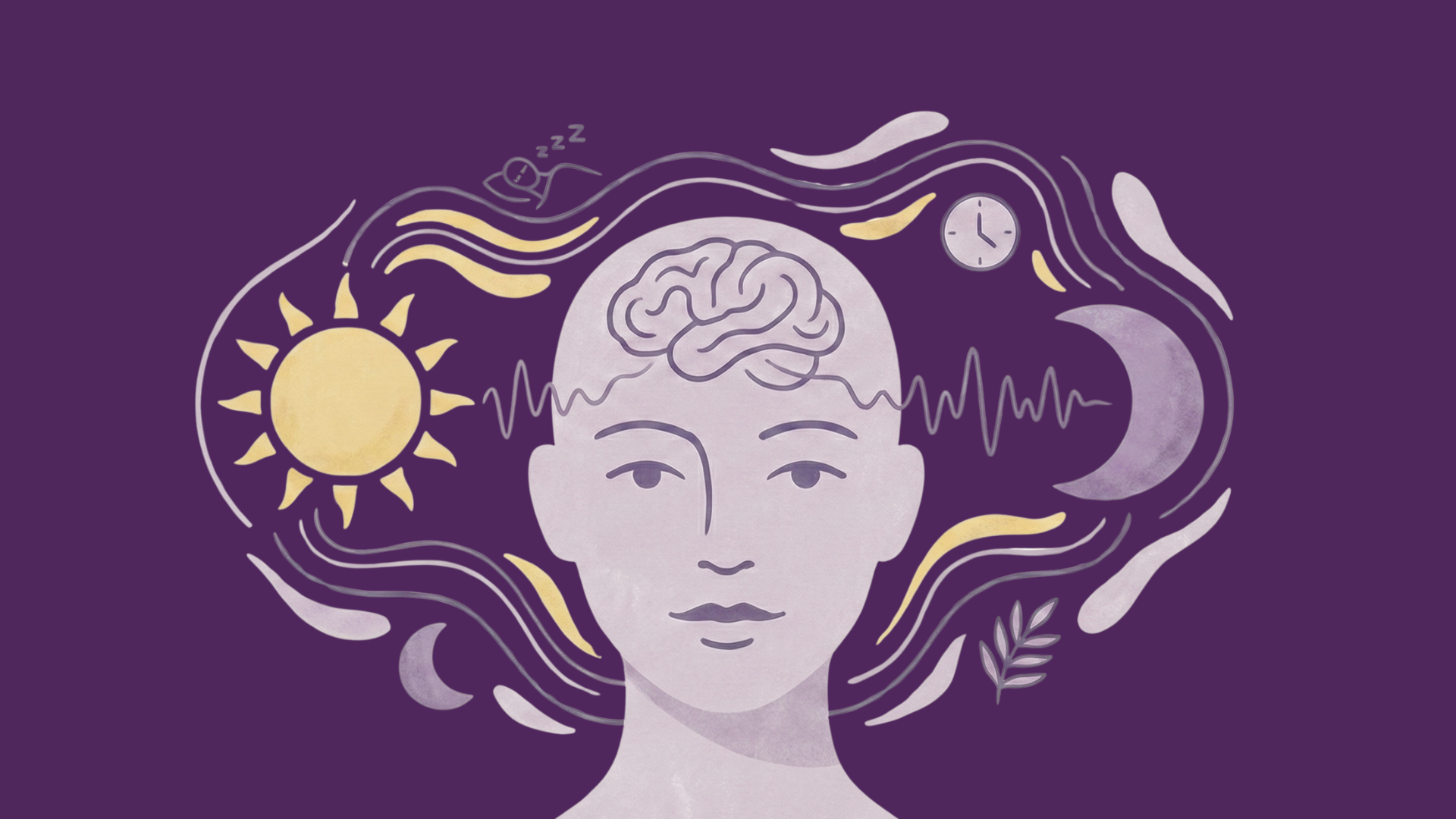
If you’ve ever wondered why you can’t fall asleep “on command,” why your mid-afternoon slump happens like clockwork, or why a series of late nights leaves you feeling off ? Well, it’s not all in your head. Your body operates on an internal clock known as your circadian rhythm and it quietly controls more than just your bed time.
Here’s the good (and relieving!) news: Many struggles with sleep are about timing, not motivation. When your rhythm doesn’t match up when you take in light from the middle of the night, live an irregular schedule, travel, work shifts or eat at odd times, your brain sends “awake” and “sleepy” signals at inappropriate times. That mismatch might manifest as insomnia, sluggishness, crankiness, low energy or the archetypal “tired but wired” sensation.[1]
And if timing is the base of the equation, recovery quality is that beneficial multiplier. Even after you establish a good pattern, bad sleeping posture can leave the body subtly tense with resultant lighter sleep and less rest.
That’s where betterhood’s common theme comes into play: support the body (the neck, spine, posture), so your brain can actually finish making that recovery happen on a schedule of its choosing or rather, according to the one determined by your circadian rhythm.
What Is the Circadian Rhythm? (Your 24-Hour Body Clock)
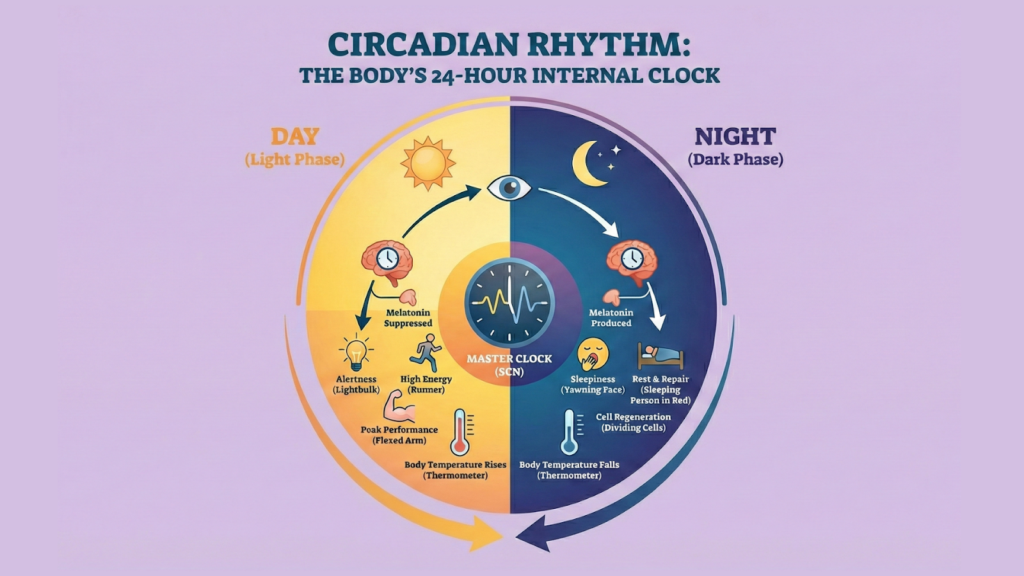
Basically, your circadian rhythm is your body’s internal 24-hour cycle responsible for orchestrating daily functions such as sleep and wakefulness, energy levels and alertness and hormone flow.
The master clock in your brain: the SCN
Hardwired into this network, is a small region of the brain known as the suprachiasmatic nucleus (SCN). It functions much like a master timekeeper, regulating timing signals throughout the body based on light information from your eyes. Melatonin rhythms are also known as the privileged insiders to harmonize our internal timing with the day-night timing. [2]
Why light matters so much
Light is the best “reset signal” for your clock. That morning light pushes your rhythm earlier, and that evening/night light delays it. In a large review, we learn that morning light generally shifts the clock earlier and evening/nighttime light delays it directly affecting sleep timing or even aspects of mood. [3]
How Circadian Rhythm Regulates Sleep? (Light, Melatonin, and Timing)
Most people believe sleep is only all about being tired. But sleep is also getting tired at the right time.
- Light exposure and melatonin release
Your brain interprets the light-dark cycle to determine when to release melatonin, a hormone closely tied with nighttime sleepiness. According to the NHLBI, the light-dark cycle helps control when your brain generates and releases melatonin, which promotes its sleep-wake cycle. National Heart, Lung and Blood Institute
- Why irregular schedules backfire
When your schedule varies constantly, it’s late night on weekends, early mornings during the week, for example, your circadian rhythm doesn’t have a chance to settle down. This often results in: You are wide awake at bedtime, then tired in the morning, then foggy all day long and then somehow mysteriously energised late again.
This isn’t your body “playing up.” It is your clock trying to make patterns and failing because the signals keep moving.
Circadian Rhythm and Mood (Why Timing Affects How You Feel)
Mood isn’t just psychological, it’s physiological. Your brain’s emotional regulation is closely linked to when you go to bed and how deeply you sleep there, as well as the consistency of daily cues.
Rhythm disruption can affect emotional stability
Insufficient or irregular light exposure and circadian disturbance are associated with sleep and mood complaints. One recent review refers to light as the master circadian regulator of sleep and affect (i.e., mood-related processes). [4]
Practically, we may see this as:
- More anxious or reactive after staying up late
- Lower frustration tolerance
- A “flat” mood when you’re out of sync with your sleep schedule
Seasonal changes and emotional regulation
Reduced exposure to daylight in the winter activates circadian timing changes in some individuals, adding to seasonal affective disorder (SAD). The NIMH lists SAD and features light therapy as a possible treatment. [5]
No need to diagnose yourself from an article but if you have dips in mood that track with seasons or wonky sleepwalking cycles, it’s a strong sign rhythm support could serve you well.
Circadian Rhythm and Daily Energy Levels (Chronotype, Peaks, and Crashes)
How to hack your ‘chronotype’ for more productive work hours (and deep sleep)
Your chronotype is your natural disposition toward earlier or later sleep and wake times. There are those who truly are wired to feel best earlier; and there are late bloomers. Sleep Foundation details chronotypes (actually, this framework is often presented as “early bird vs night owl”) and how these inclinations impact sleep preference.[6]
It’s not about trying to graft yourself upside down into someone else’s rhythm, it’s learning what your body does, then figuring out how to make that work in real life.
Why energy crashes happen
Energy “crashes” often happen when:
- Your body clock is out of sync with your responsibilities
- Too much variation to your sleep timing day and night
- You get hardly any morning light and way too much evening light
Then there’s a physical layer: if your neck, shoulders or hips do not have sufficient support at bedtime, your body will micro-adjust all night. And even if you sleep “enough hours,” you might wake up feeling like you never quite recovered.
This is where correct posture-and-recovery concept comes into sharp focus: alignment and comfort help you slide to, and stay in, deeper sleep that isn’t as choppy.
What Disrupts Your Circadian Rhythm? (Modern Life Triggers)
1. Late-night screen exposure
Artificial light at night is known to halt the secretion of melatonin, which has an impact on circadian rhythms. The light at night from electronics may also negatively impact health, in part through suppression of melatonin, according to studies.[7]
It’s a realistic goal: cut down on bright screens late in the evening; not for ever, but at least within that 60-minute window before going to sleep.
2. Shift work
And shift work can impose a schedule that requires you to be awake when your body’s internal clock is pushing for sleep. “Circadian Misalignment” created by CDC/NIOSH Circuitry responsible for wake/sleep The shift into night work places workers against their internal circadian clocks, induced from working, sleep and other non-work activities. CDC
If you are doing shift work, try to optimize for consistency where possible (anchor sleep, controlled light exposure and a strong pre-sleep routine).
3. Travel and jet lag
Jet lag is the name given to a disruption of the circadian rhythm resulting from travel across time zones. Stanford’s Human Performance subject illumination timing as one of three key tactics in fighting jet lag (lighttiming, meal timing and sleep schedules).[8]
4. Irregular meal timing
The timing of meals can function as a “time cue” for your body. Late meals, irregular first-meal times, or large amounts of food consumed during the night can leave your system feeling like it’s still in daytime mode when you’re hoping to get some shut-eye.
How to Tell if Your Circadian Rhythm is Off (Spoiler: It’s Super Common, Not a Personal Failure)
If you’re trying to tell if you have a rhythm issue, these are common clues:
- Having trouble falling asleep, especially if you find your second wind of the day at bedtime
- Waking up tired, despite getting enough time asleep
- Mental fog and agitation in the morning especially
- Too tired at the wrong times, like falling asleep after lunch but being awake till late at night
One useful reframe: the goal isn’t for you to “sleep harder.” That is, to send clearer timing signals so your biology cooperates.
How to Reset Your Circadian Rhythm The Natural Way ?
You don’t need to dramatically overhaul your life. The most effective circadian fixes are simple, dull ones, boring in a good way.
Morning light exposure (the #1 reset lever)
Morning light is one of the best ways to set your clock. Even a brief outdoor walk shortly after waking can help your brain calibrate the rhythm of the day.
The NHLBI describes the impact of light on melatonin and sleep/wake cycles.[9]
Consistent sleep schedule (anchor wake time first)
Fix only one timing variable and you should fix your wake time. If rising at the same time each day is a habit, melatonin timing over days and weeks will be more consistent.
If you are shifting earlier, do it gradually:
- Go to bed 15-30 minutes earlier every couple days
- Keep wake time steady
- Combine it with morning light so your brain “cements” the change.
Meal timing (circadian-friendly)
- Try to keep all your meals within the same window of daytime feeding. Consistency can help your body predict its energy needs and maintain a more consistent level of alertness.
- Have breakfast (or your first meal) at about the same time every day. That daily “start signal” can strengthen your body’s circadian rhythm.
- Try to stay away from big late-night dinners. Digestion can keep you activated and make it feel harder to fall asleep.
- If you do get hungry at night go for something light and big on protein. A small choice won’t fill you up, but it can prevent hunger.
Evening wind-down habits
- Dim the lights 60-90 minutes before bed. Dimmer light helps your brain register that night is coming.
- Switch to more measured inputs like reading, stretching or a shower. High stimulation often delays sleepiness.
- Keep intensity low mentally and physically. Stressful tasks or hot conversations might push your clock to a later time.
- Create a recovery-mindful sleep environment: cool, dark, quiet and supportive. It’s not a luxury to be comfortable; it helps your nervous system calm down.
Conclusion: Rhythm health =sleep, mood and energy health.
Your body’s timing system is called a circadian rhythm. And time of day changes everything. When your rhythm is in sync, sleep comes easily, mornings start feeling more stable and your energy no longer wildly swings. When it’s out of whack, you can do “all the right things” and still feel off.
Begin with the basics: Morning light, a consistent wake time, steadier meals and an easy wind-down. And then support the recovery itself because good rhythm plus good posture is where sleep starts to feel truly restorative, not merely “long enough.”
This is also where a non-coerced Betterhood product can slot in. If you’re reliable with your schedule but working tight or sore, it’s possible your pillow doesn’t support proper neutral neck alignment and that the way you sleep is failing to put your shoulders and spine at ease in between. A supportive posture set-up can eliminate those nighttime micro-adjustments and in doing so, make sleep feel deeper and more restorative
Explore More Health & Wellness Solutions
Want to stay informed about wellness and everyday health issues? Here are some insightful reads to guide you. Explore the links below for practical tips and solutions:-
- Insomnia Symptoms: Signs, Causes, and Daily Health Impact
- Struggling to Breathe? Here’s a Simple Postural Drainage Routine to do at Home
- Acupressure Points in the Foot: Benefits, Chart & Pressure Techniques
- How Can Knee Cap Support Help Prevent Injury and Reduce Pain While Running
Frequently Asked Questions:
It’s your body’s 24-hour internal clock regulating sleep, energy, and hormones via the brain’s SCN, synchronized primarily by light exposure.
It controls melatonin release through light-dark cycles; irregular light or schedules cause insomnia, “tired but wired” states, and poor sleep quality.
Late-night screens, shift work, jet lag, irregular meals, all misalign your internal clock, leading to low energy and mood swings.
Get morning sunlight, fix wake times, eat daytime meals consistently, dim evening lights, and create a supportive sleep environment.
Disrupted rhythms elevate cortisol, impair emotional regulation, cause afternoon crashes, and worsen conditions like seasonal affective disorder (SAD).
References (APA)
[1] National Heart, Lung, and Blood Institute. (2022). How sleep works: Your sleep/wake cycle. https://www.nhlbi.nih.gov/health/sleep/sleep-wake-cycle
[2] National Institute of Neurological Disorders and Stroke. (2025). Brain basics: Understanding sleep. https://www.ninds.nih.gov/health-information/public-education/brain-basics/brain-basics-understanding-sleep
[3] Prayag, A. S., Münch, M., Aeschbach, D., & Chellappa, S. L. (2019). Effects of light on human circadian rhythms, sleep and mood. Sleep Medicine Clinics. https://pmc.ncbi.nlm.nih.gov/articles/PMC6751071/
[4] LeGates, T. A., Fernandez, D. C., & Hattar, S. (2014). Light as a central modulator of circadian rhythms, sleep and affect. Nature Reviews Neuroscience. https://pmc.ncbi.nlm.nih.gov/articles/PMC4254760/
[5] National Institute of Mental Health. (n.d.). Seasonal affective disorder. https://www.nimh.nih.gov/health/publications/seasonal-affective-disorder
[6] Sleep Foundation. (2025). Chronotypes: Definition, types, & effect on sleep. https://www.sleepfoundation.org/how-sleep-works/chronotypes
[7] Harvard Health Publishing. (2012). Light at night from laptops, TVs, and more may harm health. https://www.health.harvard.edu/press_releases/light-from-laptops-tvs-electronics-and-energy-efficient-lightbulbs-may-harm-health
[8] Stanford Human Performance. (2024). Fighting jet lag: How to get the light timing right. https://humanperformance.stanford.edu/news/fighting-jet-lag-how-to-get-the-light-timing-right/
[9]Centers for Disease Control and Prevention, National Institute for Occupational Safety and Health. (n.d.). Desynchronization of homeostatic and circadian processes (Work hour training for nurses, Module 2). https://www.cdc.gov/niosh/work-hour-training-for-nurses/longhours/mod2/17.html


