






Quantum healing (QH) is a term that has gained widespread attention in the wellness, spirituality, and alternative medicine space. It is often described as a holistic approach to healing that connects the mind, body, and consciousness using principles inspired by quantum physics. Supporters believe that by shifting awareness, intention, and energy at a quantum level, the body can heal itself naturally.
In today’s fast-paced, stress-driven lifestyle, many people seek healing methods that go beyond conventional medicine. QH appeals to those who believe that illness is not just physical but also emotional, mental, and energetic. While the concept is popularized by spiritual teachers and wellness practitioners, it is also surrounded by controversy due to its loose association with modern physics.
This article explores what QH is, how it works, popular techniques, potential benefits, scientific perspectives, and frequently asked questions, helping readers make informed decisions.
What Is Quantum Healing?
Quantum healing is a holistic healing philosophy that proposes that the body can heal itself by accessing deeper levels of consciousness. The term was popularized by Dr. Deepak Chopra in the late 20th century and combines elements of:
- Mind–body medicine
- Meditation and visualization
- Energy healing
- Conscious awareness
- Eastern spiritual traditions
The core idea is that the human body is not just a physical structure but also an energetic system influenced by thoughts, beliefs, and emotions.
Origins and History of Quantum Healing
Quantum healing emerged at the intersection of ancient healing traditions and modern interpretations of quantum physics.
Ancient Roots
Many principles associated with it can be traced back to:
- Ayurveda
- Traditional Chinese Medicine
- Yoga philosophy
- Buddhist and Vedantic teachings
These systems believed that life energy (prana or qi) flows through the body and that imbalance causes disease.
Modern Popularization
In the 1980s, authors and spiritual teachers began using quantum physics terminology such as “energy fields,” “vibrations,” and “observer effect” to explain mind-body healing in modern language. While physicists caution against literal interpretations, the terminology helped bridge science and spirituality for mainstream audiences.
Understanding the “Quantum” in Quantum Healing
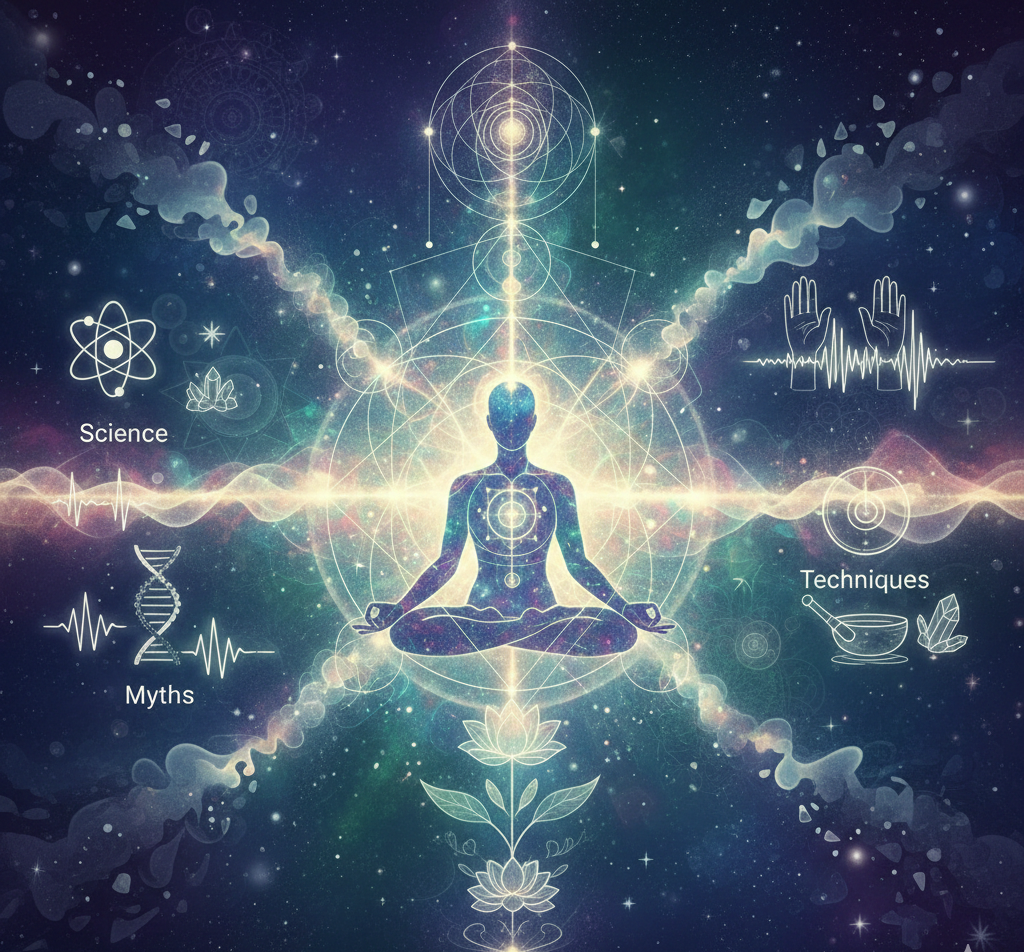
What Is Quantum Physics?
Quantum physics studies matter and energy at the smallest scales: atoms and subatomic particles. It reveals that:
- Particles behave like waves
- Observation affects outcomes
- Energy exists in probability fields
How Quantum Healing Uses These Ideas
It applies these concepts metaphorically rather than scientifically. Practitioners suggest that:
- The body exists in a field of energy
- Conscious awareness influences physical outcomes
- Healing can occur by shifting intention at a subtle level
Important distinction: It is not a scientifically proven medical treatment but a complementary wellness philosophy.
How Quantum Healing Works (According to Practitioners)
Quantum healing practitioners believe healing occurs through awareness and intention rather than external intervention.
Step-by-Step Conceptual Process
- Entering a relaxed state (meditation or deep breathing)
- Focusing awareness inward
- Identifying emotional or mental blocks
- Using intention or visualization
- Allowing the body’s intelligence to restore balance
This approach emphasizes self-regulation, stress reduction, and emotional processing.
Popular Quantum Healing Techniques
1. Meditation and Mindfulness
Meditation is a core QH practice used to quiet the mind and access deeper awareness.
Benefits:
- Reduces stress hormones
- Improves emotional regulation
- Enhances mind-body connection
2. Visualization and Intention
Practitioners visualize healing light or healthy organs to “signal” the body toward wellness.
3. Energy Healing Modalities
Includes Reiki, pranic healing, and chakra balancing, often associated with quantum healing frameworks.
4. Quantum Touch
A hands-on or distance healing technique focusing on breathwork and energy awareness.
5. Conscious Breathing
Controlled breathing techniques are believed to shift energy patterns and nervous system responses.
Benefits of Quantum Healing (Reported and Observed)
While scientific evidence is limited, many individuals report subjective benefits.
Commonly Reported Benefits
- Reduced stress and anxiety
- Improved emotional clarity
- Better sleep quality
- Enhanced sense of well-being
- Increased self-awareness
Psychological and Neurological Perspective
Practices like meditation and visualization are known to:
- Activate the parasympathetic nervous system
- Reduce cortisol levels
- Improve mental health markers
These effects may explain many reported benefits without invoking quantum mechanisms.
Quantum Healing vs Conventional Medicine
| Aspect | Quantum Healing | Conventional Medicine |
| Approach | Holistic | Symptom-based |
| Evidence | Anecdotal | Clinical trials |
| Focus | Mind-body-energy | Biological mechanisms |
| Regulation | Unregulated | Highly regulated |
| Use Case | Complementary | Primary treatment |
It should never replace medical treatment, especially for serious conditions.
Scientific Perspective on Quantum Healing
What Science Says
- There is no empirical evidence that quantum physics directly enables healing through intention alone.
- Terms like “quantum energy” are often used metaphorically, not scientifically.
- Many benefits can be explained through the placebo effect, stress reduction, and neuroplasticity.
Placebo Effect and Mind-Body Medicine
The placebo effect demonstrates that belief and expectation can produce measurable physiological changes, supporting mind-body interaction but not quantum claims.
Common Myths About Quantum Healing
Myth 1: Quantum Healing Cures All Diseases
False. No credible evidence supports this claim.
Myth 2: It Replaces Doctors
False. It is a complementary practice, not a substitute.
Myth 3: It Is Proven Quantum Physics
False. It borrows terminology but does not follow scientific rigor.
Is Quantum Healing Safe?
Generally, practices like meditation and visualization are safe when used responsibly. However:
- Avoid practitioners who discourage medical care
- Be cautious of expensive “miracle cure” claims
- Always consult healthcare professionals for illness
Who Can Practice Quantum Healing?
It is often practiced by:
- Wellness coaches
- Meditation teachers
- Energy healers
- Yoga and mindfulness instructors
There is no standardized certification, so discernment is essential.
How to Start Quantum Healing Practices at Home
Beginner Steps
- Practice daily meditation (10–20 minutes)
- Learn conscious breathing techniques
- Journal emotional patterns
- Use guided visualization audios
- Maintain realistic expectations
Quantum Healing and Mental Health
Mindfulness-based practices associated with it have shown benefits in:
- Anxiety disorders
- Stress management
- Emotional resilience
However, they should complement, not replace, therapy or psychiatric care.
The Future of Quantum Healing
As integrative medicine grows, mind-body approaches may become more accepted. However, future progress depends on:
- Ethical practice
- Clear boundaries between science and spirituality
- Evidence-based integration
Conclusion
It represents humanity’s desire to understand healing beyond the physical body. While its scientific foundations remain unproven, its practices often overlap with well-established mind-body techniques such as meditation, mindfulness, and stress management.
When approached with clarity, ethics, and realistic expectations, it can serve as a complementary wellness practice, not a replacement for evidence-based medicine.
True healing lies in balance: respecting science, honoring consciousness, and taking responsibility for one’s well-being.
Frequently Asked Questions
Quantum healing is a holistic approach that focuses on healing the mind and body through awareness, meditation, and intention.
No. While meditation and mindfulness are scientifically supported, quantum healing itself lacks empirical proof.
There is no scientific evidence that quantum healing can cure diseases. It may support emotional well-being and stress reduction.
Yes, when practiced responsibly and alongside medical care.
The term was popularized by Dr. Deepak Chopra, inspired by Eastern philosophy and modern physics concepts.
Yes. Practices like meditation and breathwork are proven to reduce stress.
References
- Harvard Medical School. (2020). Understanding the effects of mindfulness on the brain. Harvard Health Publishing. https://www.health.harvard.edu
- National Center for Complementary and Integrative Health. (2023). Mind and body practices. U.S. Department of Health and Human Services. https://www.nccih.nih.gov
- World Health Organization. (2019). WHO global report on traditional and complementary medicine. World Health Organization. https://www.who.int


