





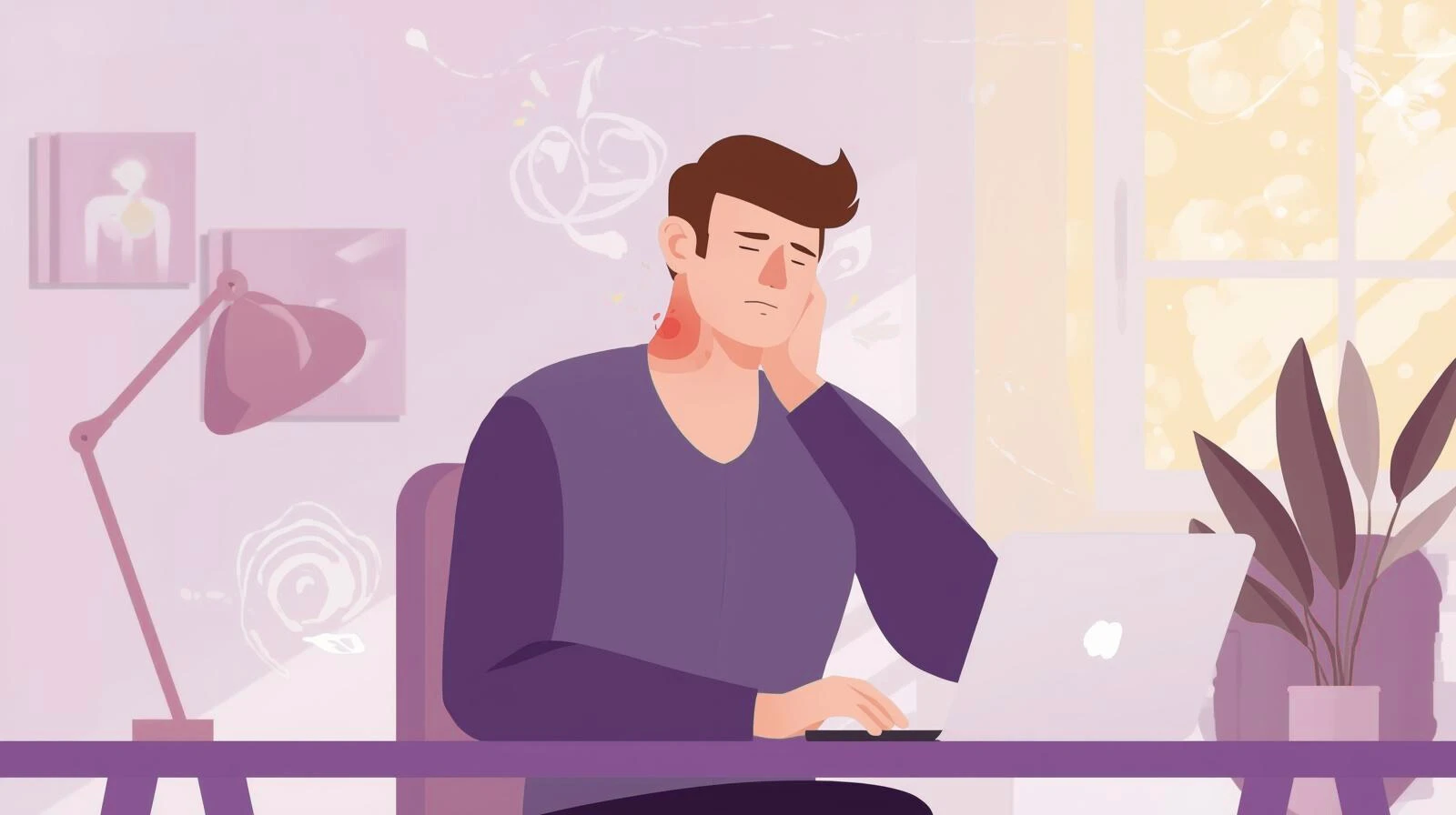
We’ve all been there. You end a marathon 10-hour shift at your desk or, maybe, you’ve spent the whole metro ride to work with your eyes cast downward on your phone, catching up on WhatsApp groups or Instagram reels. You look up, and there it is; a sharp, nagging pull in your neck that makes you want to slap on a pain balm until the soreness goes away.
In a life of hurry-burry Indians, the neck pains are usually treated as a minor ‘adjustment’ problem. We say to ourselves, “Thoda thand lag gayi hogi” (It must be the cold) or “Galat so gaya hunga” (I must have slept wrong). But whether it’s the stress of muscling a clunky two-wheeler through Bangalore traffic or the stiffness that comes after a hearty deep-cleaning session ahead of a family pooja, neck pain is your body’s way of telling you things are a bit off-kilter.
At betterhood we believe that you shouldn’t have to ‘just deal with it. Knowing what type of neck pain you have is the first step to prove neck pain relief. And this guide will help you decode that ache and move in the direction of a lighter, pain-free neck.
Anatomy of your neck explained
To figure out why your neck aches, we have to take a look its structure. Your neck, or cervical spine, is a wonder of evolutionary engineering. It is made up of 7 tiny bones (vertebra) stacked upon each other, and supported by a sophisticated system of soft tissues such as muscles, ligaments and nerves [1].
These seven bones bear the weight of your head, which comes in at around 4 to 5kg ; the typical weight for an adult’s noggin! When you lean your head forward at 45 degrees to look at a smartphone, the effective weight that is placed on your neck muscles grows to an incredible 22 kg [2]. This “static load” accumulates over time as wear and tear, inflammation and the different types of pain that we experience in our bodies today.
Understanding the 5 Most Common Types of Neck Pain
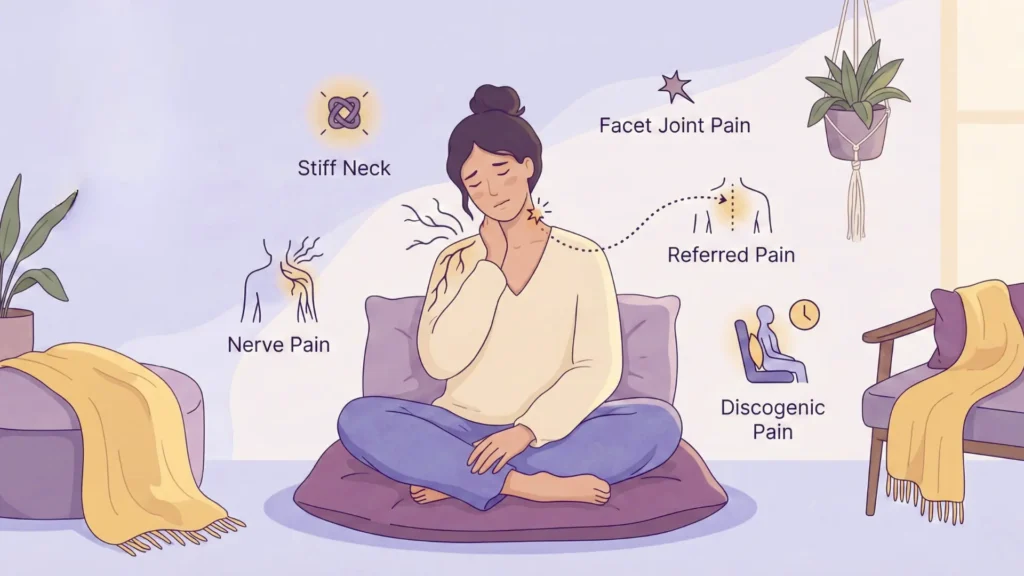
Not all neck pain is created equal. Description The pain may be a dull ache, or it may feel like an electric shock.
1. The “Stiff Neck” (Muscle Pain and Spasms)
This is the pain we urban Indians feel most often. It typically feels like a hard “knot” in the muscle.
The Cause: Sitting for extended periods, sudden jerky movements in traffic, sleeping on a pillow that doesn’t provide adequate neck support.
The Feel: A dull, pregnant burn that intensifies when you attempt to turn your head one way or another.
2. Nerve Pain (Cervical Radiculopathy)
This happens when a nerve root in your neck is pinched or irritated.
The Cause: Often a herniated disc or bone spurs caused by years of bad posture.
The Feels: A shooting or electric nature that often extends down the shoulder and into the arm. You may also have a “pins and needles” feeling in your fingers.
3. Facet Joint Pain
The facet joints are the smaller joints of the vertebrae. They let you crane and wiggle your neck.
The Cause: Osteoarthritis, or repetitive strain from looking up or down all day.
The Feel: A stabbing, intense pain that is typically focused on one point. It usually feels particularly bad when you tip your head back.
4. Referred Pain
And occasionally, the pangs that you’re feeling in your neck are actually emanating from elsewhere like upper back or even the heart.
The Cause: Trigger points in the shoulders or, rarely, systemic problems.
The Feeling: A dull, gnawing pain that feels like it travels.
5. Discogenic Pain
This pain comes from the intervertebral discs, or shock absorbers between your bones.
The Cause: Degenerative change or “wear and tear” of the joint that takes place as you age, which is commonly exacerbated by not moving.
The Feel: Pain that gets worse as you keep your head immobile for extended periods (during a long movie or violent).
Neck Pain Symptoms in Daily Life: Simple Tests to Identify the Cause
How do you tell if your pain is just that, the result of a pulled muscle, or something more serious? Try these daily activity checks:
- The “Reverse Parking” Test: When you are reversing your car, or scooter and need to look back to reverse as you do this, do You feel locked that once checking the rearview or any other area? Facet Joint Stiffness If you find yourself turning more of your body than just your neck, its probably some type of Facet Joint stiffness.
- “Water Can” Check: However, if you experience a sudden shooting pain down your arm when lifting a 20L water bottle or heavy grocery bag, that’s a red flag for Nerve Compression.
- The “Screen-Time” Ache: Does your neck feel okay in the a.m. but develop that burn by 4:00 p.m.? This is a telltale sign of Postural Fatigue or “Tech Neck.”
7 Core Causes of Neck Pain in Modern India
1. Tech Neck (Smartphone Overuse)
The average Indian spends more than 4 hours a day on a smartphone. That constant downward gaze is the #1 reason for early-onset cervical problems [3].
2. Ergonomics “Jugaad”:
We have all been working from sofas, mattresses or dining tables. By not setting up properly, the neck is in an unnatural position for hours.
3. The “Commuter’s Strain”:
Vibration from terrible roads and repetitive motion of breaking in traffic put micro-stress on the cervical ligaments.
4. Low Levels of Physical Activity:
When a person lives a sedentary lifestyle, the muscles that support your neck are weak and all the strain falls on the spine.
5. Stress and Tension:
Our shoulders are a place where we store stress. When you’re concerned about a deadline, or something that’s happened in your family, your “traps” (trapezius muscles) engage and yank on the base of your skull.
6. Incorrect Sleeping Posture:
Sometimes the pillow we use, is too high or lies too flat (lean left-right) keeping your neck kinking-for 8 hours without adjusting with not a proper sleeping posture to avoid kinking again same time used either.
7. Nutrient deficiencies:
Suboptimal levels of Vitamin D3 and Vitamin B12, which are prevalent in Indian population as well can lead to muscle weakness and increased sensitivity to pain [4].
Level 1-3 Progressive Relief Tips
At Betterhood, we recommend a percentage-based strategy to recovery. If your neck is in a “spasm phase,” do not start heavy on the exercises.
Phase 1: Passive Relief (The “Calm Down” Phase)
- Heat: Use warm water bag/heating pad for 15 minutes. It increases blood flow and loosens tight knots.
- Soft Tucking: Laying flat without a pillow, softly tuck your chin towards the chest (as if having a double chin). This softly stretches the back of your neck.
Phase 2: Active Mobility (The “Loosen Up” Phase)
- Shoulder Rolls: The majority of neck pain originates in the shoulders. Soar your shoulders back: Repeat 10 times every hour.
- Scapular Squeeze: Pretend you have a pencil between your shoulder blades and squeeze them together. This is an essential component to any exercise protocol for posture correction.
- Assisted Stretches: Tilting your ear toward your shoulder and letting the weight of your hand provide a very gentle stretch.
Level 3: Habits to Last (The “Build Resilience” Stage)
Isometric Strengthening: Firmly push your palm to your forehead and hold with resistance using your neck muscles (don’t actually move the head). Follow the same process for the back and sides.
Keep it moving: Try exercises that will mobilise your routine in everyday life to keep the joints lubricated.
Role of betterhood: Your Recovery Partners
Sometimes, movement alone isn’t enough because our environment keeps pulling us back into bad habits. This is where ergonomic gear acts as your “training wheels.”
- Cervical Pillows: A supportive, curved pillow will help keep your neck in the natural “c-curve” position throughout the night and that means you won’t have to deal with morning stiffness.
- Neck Supports & Braces: If you’ve suffered a strain, a soft support around your neck will reinforce the proprioceptive information that would allow you to stop yourself from slouching on a commute of any reasonable duration.
- Lumbar Supports: It’s strange but when you support your lower back your neck pain goes away. When your lower back is supported, your head tends to sit more directly over your shoulders. Pair these with exercises for joint pain relief and you’re sure to get back on your feet even faster.
When to Get Help? (Red Flags)
Most of the time, neck pain will go away with the help of rest and good ergonomics; but you should contact a doctor if you have:
- Rapid unexplained weight loss or fever in addition to the neck pain.
- Inability to hold urine or stool.
- You can’t button up your shirt: A more serious weakness in your hands.
- Pain in the wake of a major trauma, such as a fall or car crash.
- Severe, “worst-ever” headache and neck stiffness.
Conclusion:
When your neck hurts, it isn’t just a physical sensation; it’s an impediment to living life as fully as you’d like. It prevents you from concentrating at work, playing with your kids or simply spending a quiet evening. But when you know what kind of neck pain you’re dealing with and address the root causes, like your posture and movement habits, that burden can start to feel lighter.
Our mission at Betterhood is to enable everyone to create a life where movement feels like one of life’s joyous gifts, not another chore. Take a little stretch now, and raise your screen tomorrow, and remember that improved health isn’t necessarily about giant leaps; it’s about tiny, consistent islands.
Explore More Health & Wellness Solutions:
Would you like to be up-to-date on everyday health and wellness issues? Here are some interesting pieces to help you. Follow the links below if you want practical tips or solutions:
- What Causes Back Pain? Understanding Root Triggers & Prevention Tips
- 10 Effective Home Remedies for Body Pain Relief Naturally
- Wrist Support Braces Explained: Protocols for Pain Relief
- Pillow for Neck Pain: Best Contour Pillow Every Side Sleeper Needs
Frequently Asked Questions
While you may get temporary relief, popping those joints can weaken the ligaments over time. It’s better to stick to deep stretching or visit a certified manual therapist.
Yes, cold air on the neck can cause muscle(s) to tighten up or spasm. It is very typical in Indian offices where the AC vent can be tickling right on your back.
If you’re waking with more pain than what you went to bed with, or if you constantly catch yourself shoving your hand under your head for support, it’s a probable suspect.
Yes, Evidence shows that chronic musculoskeletal pain in Indian population is frequently associated with low Vitamin D levels [4].
Absolutely. Stress activates a “fight or flight” response and when we are anxious, the brain sends signals to have our shoulders raised involuntarily resulting in long term neck muscle tension.
References
- Mayo Clinic. (2023). Neck pain: Symptoms & causes. https://www.mayoclinic.org/diseases-conditions/neck-pain/symptoms-causes/syc-20375581 [1]
- Harvard Health Publishing. (2022). Text neck: How to avoid another pain in the neck. https://www.health.harvard.edu/pain/text-neck-how-to-avoid-another-pain-in-the-neck [2]
- PubMed / Hansraj, K. K. (2014). Assessment of stresses in the cervical spine caused by posture and position of the head. https://pubmed.ncbi.nlm.nih.gov/25393825/ [3]
- Journal of Family Medicine and Primary Care. (2019). Vitamin D deficiency and its association with musculoskeletal pain. https://www.ncbi.nlm.nih.gov/pmc/articles/PMC6430279/ [4]