




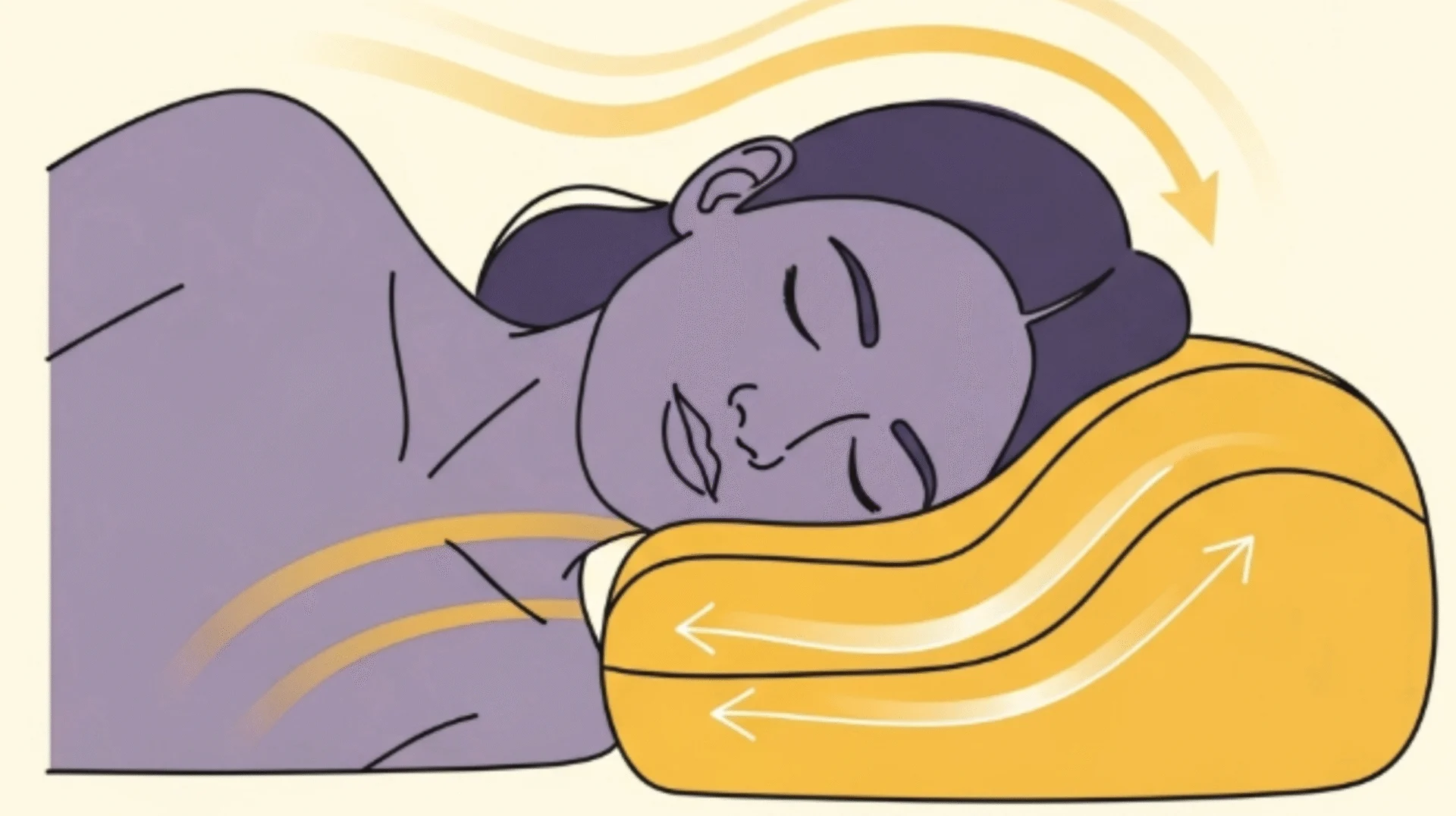
If you woke up this morning having to turn your whole upper body just to look sideways, your pillow might be misaligning your spine. Waking up with a stiff neck is a common struggle, especially for side sleepers whose neck drops at an awkward angle all night. Upgrading to the best contour pillow designed for cervical alignment is one of the simplest ways to protect your neck posture and sleep pain-free.[1]
In this guide, you’ll learn why flat or overly soft pillows trigger morning stiffness, how contour support cradles your neck, and practical habits for waking up refreshed.
Understanding Neck Pain: How the Best Contour Pillow Helps
Most people blame morning neck stiffness on long laptop shifts or phone scrolling. While daytime posture matters, waking up with a stiff neck is usually triggered by improper cervical support while you sleep. Upgrading to the best contour pillow keeps your head, neck, and spine neutrally aligned, preventing overnight joint strain.
Common Reasons for Morning Neck Pain:
- Improper pillow height: Sleeping on flat cushions or stacking multiple pillows at awkward angles.
- Unsupported side sleeping: Letting your neck tilt or sag sideways, overstretching cervical muscles.
- Daily muscle tension: Carrying stress and upper-back tightness into bed.
Why Side Sleepers Experience Pain
Side sleeping requires your pillow to bridge the shoulder-to-ear gap. If your pillow is too thick or too flat, your neck bends all night unnaturally, leading to sharp pain on one side or general morning stiffness. An ergonomic contour pillow cradles your head and supports the natural curve of your neck for pain-free sleep.
Unsure if your morning stiffness is caused by improper pillow height? Take the Betterhood 2- minute neck pain assesment Test to evaluate what kind of pain you have
Why Choosing the Right Pillow for Neck Pain Matters
How the Wrong Pillow Makes Neck Pain Worse?
Imagine holding your head at a weird angle while watching TV for two hours. That is what a bad pillow does to your spine all night. Multiple studies confirm that an improper pillow increases cervical spine pressure, leading to not just neck pain, but sometimes even headaches [4].
Benefits of a Contour Pillow for Side Sleepers
The best pillow for neck pain is not soft, squishy, and shapeless. A contour pillow is ergonomically designed to cradle your neck and keep your spine aligned. Benefits include:
- Reduced neck stiffness.
- Improved blood circulation.
- Fewer headaches caused by poor sleep posture.
- Deeper, uninterrupted sleep cycles.
In addition, contour pillows provide consistent shoulder support, which prevents upper back strain common in side sleepers. No more waking up feeling like you have arm-wrestled your mattress!
Research finds this targeted support can enhance comfort and body posture while also minimising tossing and turning, leading to higher overall sleep quality and daytime energy [5]. Their ergonomic design keeps the airways open, which helps reduce snoring and promotes better muscle recovery overnight – snuggle up, you are helping your spine and your social life at the same time!
Difference Between Orthopaedic Pillow for Neck Pain and Regular Pillows
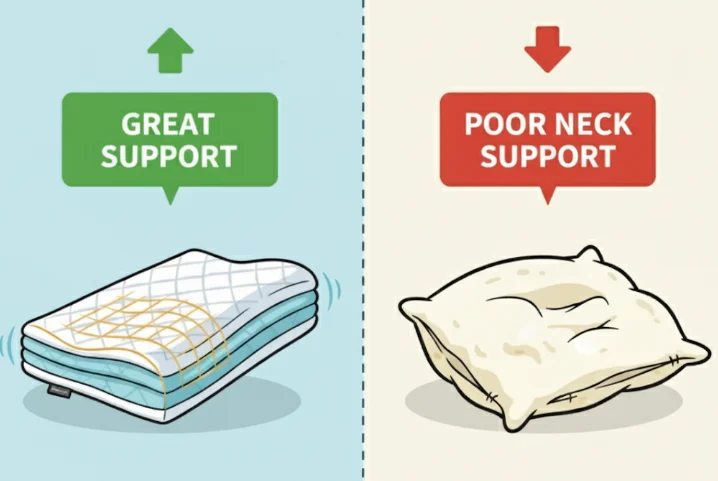
An orthopaedic pillow for neck pain is like the Tesla of pillows: high-tech, scientifically designed, and built for performance. Regular pillows? More like beat-up sedans. Orthopaedic pillows use contour curves and memory foam that adapt to your unique shape, while regular pillows flatten faster than a cheap hostel pancake.
Key Features of the Best Contour Pillow
Ideal Design for Side Sleepers
Side sleepers require a contoured pillow featuring a central dip for the head and a raised ergonomic curve for the neck. This shape bridges the gap between your ear and shoulder, keeping your cervical spine neutrally aligned all night.
Memory Foam vs. Latex
• Memory Foam: Cradles your neck, relieves pressure points, and adapts to your exact head shape. Studies show high-density memory foam provides superior satisfaction for waking neck pain relief.
• Latex: Naturally breathable, durable, and slightly firmer. It is an excellent choice for hot sleepers who need firm cervical support.
Adjustable Height and Firmness
Shoulder width varies from person to person. Pillows with removable foam layers let you adjust the pillow height (loft) until your neck and head rest in a straight line with your back.
Cooling Features and Breathability
Overheating during sleep leads to frequent tossing and turning, which increases neck muscle strain. Gel-infused memory foam and breathable mesh covers promote airflow to keep you comfortable through the night.
How a Contour Pillow for Neck Pain Supports Healing
Supporting the Natural Curve of Your Spine
Your neck has a natural forward curve called cervical lordosis. Contour pillows mirror this curve, cradling your head and supporting your neck joints so your spine rests in a natural, strain-free position.
Relieving Shoulder and Neck Pressure Points
Flat, shapeless pillows concentrate your head’s weight onto a narrow area of the neck. Ergonomic contour pillows distribute weight evenly across your head, neck, and upper shoulders, preventing muscle tightness and nerve pressure.
Best Sleeping Setup for Side Sleepers
If you sleep on your side, place a small pillow between your knees to prevent your pelvis and lower back from twisting overnight. Pairing a knee pillow with a contour neck pillow maintains complete head-to-toe alignment.
How Orthopaedic Support Aids Recovery
Proper neck recovery requires keeping cervical tissues in a neutral position overnight. By preventing awkward bending for 6 to 8 hours, an orthopaedic contour pillow allows fatigued neck muscles and ligaments to rest and repair.
Natural Ways to Heal and Relieve Neck Pain Alongside a Good Pillow
How to Cure Neck Pain Fast at Home?
Simple remedies: Warm compresses, gentle stretching, and yes, swapping your old pillow for one designed for healing.

Sleeping flat on your back with no pillow at all is sometimes recommended for quick neck pain relief, but side sleepers – don’t try this at home!
Best Exercises and Stretches for Neck Pain Relief
- Neck tilts (side-to-side).
- Shoulder rolls.
- Chin tucks.
Each 10 times, twice daily. Studies confirm exercise therapy helps manage chronic neck pain [7].
How to Get Rid of Neck Pain Without Medication?
Do not spend too much time in front of a computer. Take breaks to move around and keep your pillow game strong. Ginger or turmeric teas have anti-inflammatory properties and are also considered effective for providing relief.
Yoga, Posture Correction, and Lifestyle Changes
Yoga poses like cat-cow and child’s pose provide immense neck pain relief. Maintaining posture while sitting (like Grandma told us 100 times) also reduces strain.
Expert Tips for Choosing the Best Pillow for Neck Pain
Key Points to Check Before Buying
- Height (thicker for side sleepers, thinner for back sleepers).
- Firmness (medium typically works best).
- Material (memory foam or latex).
- Hypoallergenic properties.
Finding the Right Pillow Height for Side Sleepers
Measure the width of your shoulder and multiply it by 0.7 (yes, math in a pillow article!). That’s approximately the pillow loft you need for perfect alignment.
How to Test a Pillow for Comfort and Support?
Lie down on your side in the store. If your nose, chin, and belly button feel aligned like a straight railway track, you have got the right one.
Reviews, Recommendations, and Trusted Brands
There are multiple top-reviewed brands that sell orthopaedic pillows. No! We won’t recommend any brands. Still, to name a few, My Frido, Tynor, and Betterhood are some brands that have good reviews online. Do proper research before finalising the one you will buy. But don’t fall for marketing drama; always test comfort first.
Conclusion: Restoring Comfort with the Best Contour Pillow
Side sleeping creates an unnatural gap between your ear, neck, and shoulder. Standard flat or soft pillows allow your neck to sag overnight, causing stretched cervical muscles and waking stiffness. Switching to the best contour pillow fills this gap, cradling your head and keeping your spine neutrally aligned so you wake up refreshed and pain-free.
- Relevant Support: For targeted cervical alignment during side sleeping, explore the Betterhood Ergonomic Cervical Pillow to keep your spine resting in a natural line all night.
Need more information about pillows for neck pain? Check out our other related articles here:
- https://betterhood.in/learn/cervical-pillow-sleeping-positions/
- https://betterhood.in/learn/common-mistakes-people-make-with-contour-pillows/
Disclaimer
The information published on Betterhood Learn, including text, exercises, pressure point protocols, and product suggestions, is for educational and informational purposes only. It is not a substitute for professional medical advice, diagnosis, or treatment. Always consult an orthopaedic doctor, physiotherapist, or qualified healthcare provider regarding any health condition or chronic pain, especially for specialist cases involving pregnancy, post-surgical recovery, or pre-existing medical conditions. Never delay or disregard professional medical advice because of something you have read on this site.
Frequently Asked Questions:
1. What is the best pillow for neck pain after sleeping?
Contour pillows with medium firmness and adjustable height are usually the best options.
2. Can a pillow really heal neck pain long-term?
Healing depends on consistency. A pillow won’t fix years of bad posture overnight, but research confirms it significantly reduces pain when used correctly.
3. How long does it take to get relief from neck pain with a new pillow?
Most people report improvement within 1–2 weeks of switching.
4. Should you use an orthopaedic pillow for neck pain only at night?
Night use is most critical, but some people use travel-sized orthopaedic pillows for naps or even desk breaks.
5. Can a contour pillow occasionally be used while sleeping on your back as well as on your side?
Yes! Contour pillows will support you no matter how you sleep: on your side, back, or stomach. You don’t need to do rolling or pillow gymnastics because they keep your neck straight and make the ache less.
References:
- Cary, D., Jacques, A., & Briffa, K. (2021). Examining relationships between sleep posture, waking spinal symptoms and quality of sleep: A cross sectional study. Plos one, 16(11), e0260582. doi: 10.1371/journal.pone.0260582.r004
- Lei, J. X., Yang, P. F., Yang, A. L., Gong, Y. F., Shang, P., & Yuan, X. C. (2021, October). Ergonomic consideration in pillow height determinants and evaluation. In Healthcare (Vol. 9, No. 10, p. 1333). MDPI. https://doi.org/10.3390/healthcare9101333
- Gordon, S. J., Grimmer-Somers, K. A., & Trott, P. H. (2010). Pillow use: the behavior of cervical stiffness, headache and scapular/arm pain. Journal of pain research, 137-145. https://doi.org/10.2147/jpr.s10880
- Türkmen, C., Esen, S. Y., Erden, Z., & Düger, T. (2023). Comfort and Support Values Provided by Different Pillow Materials for Individuals with Forward Head Posture. Applied Sciences, 13(6), 3865. https://doi.org/10.3390/app13063865
- Zhang, Y., Xiao, A., Zheng, T., Xiao, H., & Huang, R. (2022). The relationship between sleeping position and sleep quality: A flexible sensor-based study. Sensors, 22(16), 6220. doi: 10.3390/s22166220
- WebMD (2024). Memory Foam Pillows: What You Need to Know. Retrieved from: https://www.webmd.com/sleep-disorders/memory-foam-pillows-what-to-know [Viewed on 16 September 2025]
- de Zoete, R. M. (2023). Exercise therapy for chronic neck pain: tailoring person-centred approaches within contemporary management. Journal of Clinical Medicine, 12(22), 7108. doi: 10.3390/jcm12227108