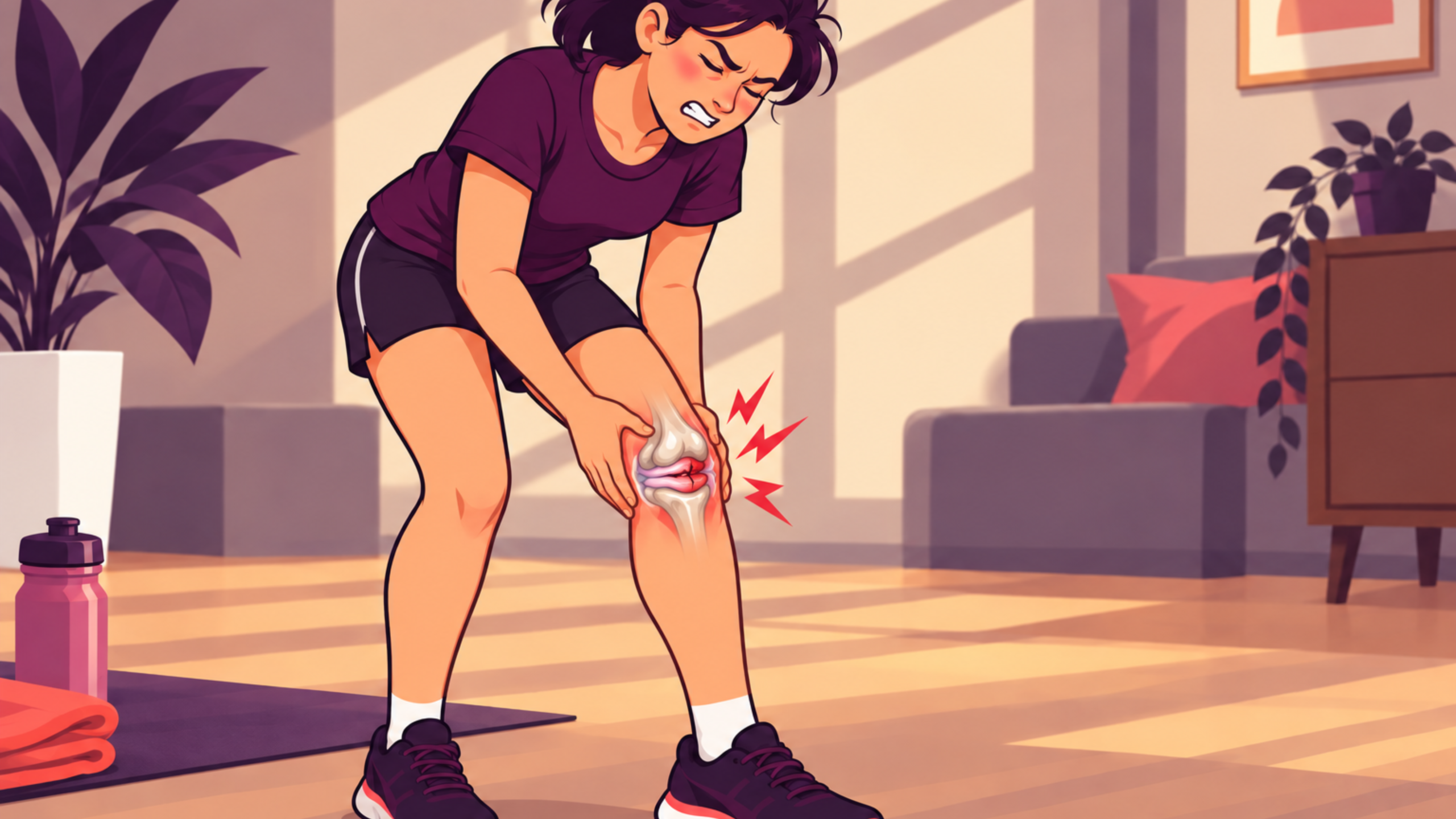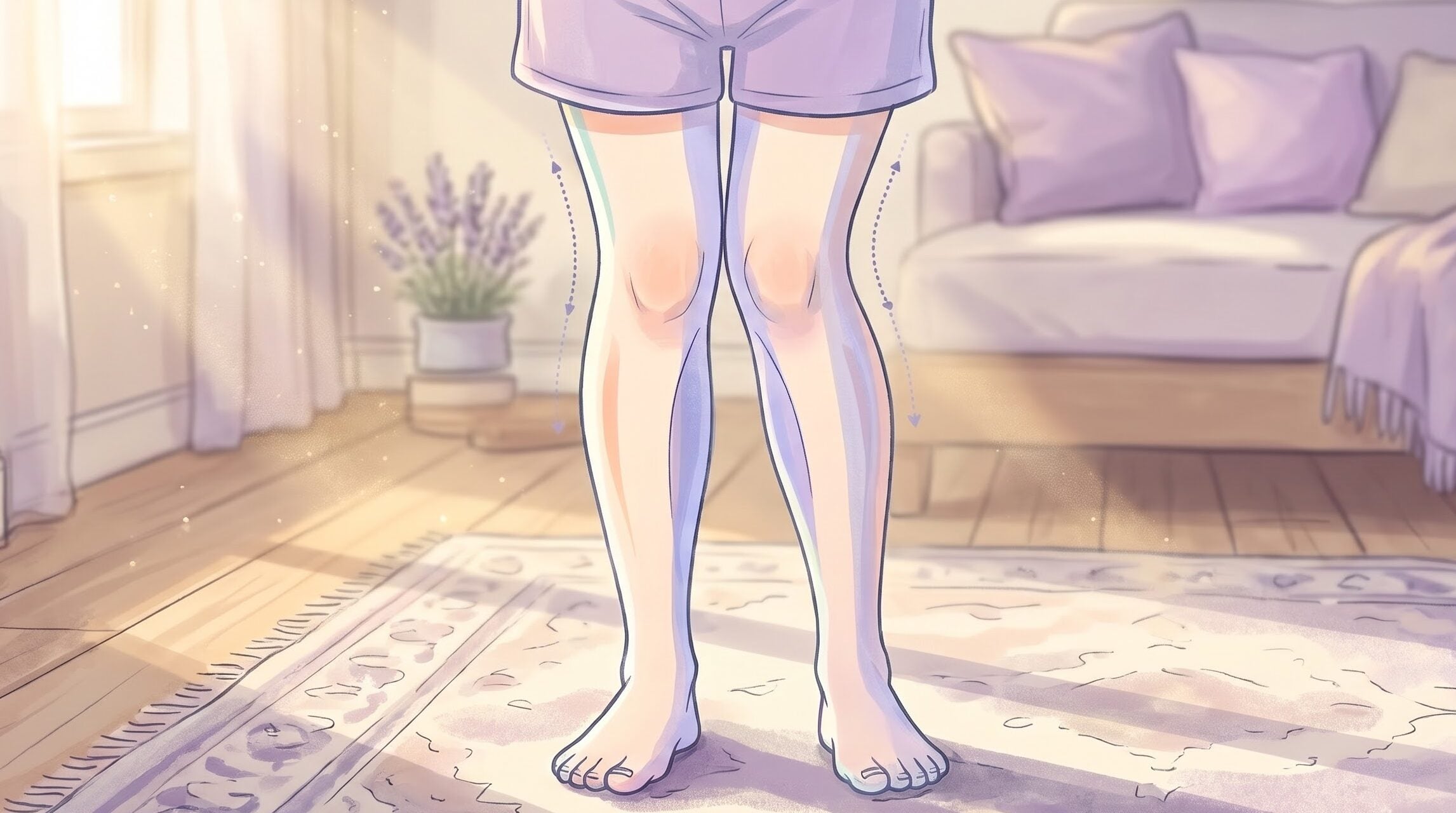
Have you noticed your inner knees brushing together during an evening walk or noticed your shoe soles wearing down unevenly? For many, this physical change brings quiet anxiety about posture breakdown, long-term joint wear, or future surgery. First, let’s clear up a common point of confusion: “Knot knees” (or knot knee) is a common misspelling and phonetic variant of knock knees (medically known as genu valgum), a knee-alignment condition where the knees angle inward and touch while the ankles remain separated.
Whether you are in the early onset stage of noticing subtle stride changes, actively managing daily joint discomfort, or taking a cautious, preventative approach to your long-term movement health, you are not helpless. Inward knee alignment does not mean you are destined for chronic pain. By understanding how your lower-body mechanics work, distinguishing between normal childhood development and adult joint strain, and practising targeted physio exercises, you can protect your joints, improve your walking posture, and regain total movement confidence.
What Are Knot Knees (Genu Valgum)?
Knot knees, or genu valgum, describe a structural or functional alignment pattern where the thigh bones (femurs) angle inward toward the midline of the body. When standing upright with your knees touching, a noticeable gap remains between your inner ankle bones.[1]
Knock knees, or genu valgum, represent a common angular deformity of the knee joint that affects roughly 10% to 11% of the global and Indian populations.
Childhood vs. Adult Knot Knees: Understanding the Crucial Difference
Understanding when knock knees develop is essential for knowing how to manage them effectively:
Childhood Onset (Normal Developmental Phase):
In young children between the ages of 2 and 5, knock knees are a completely normal stage of skeletal growth. As toddlers learn to walk and balance, their lower limbs naturally adjust. In the vast majority of children, this alignment self-corrects by age 6 or 7 as bones, ligaments, and muscles mature, requiring no medical intervention or special braces.
Interactive Age Milestone Tracker (Is Your Child’s Leg Alignment Normal?)
Take a moment to look at your child standing barefoot on a flat floor.
You don’t need fancy medical equipment to keep an eye on your child’s knee alignment. Here is how pediatric orthopaedists perform a preliminary physical check:
- The Setup: Have your child stand straight, barefoot, with their inner knees lightly touching.
- The Observation: Look at their inner ankles. In knock knees, the knees touch while the ankles stay separated.
- The Measurement: Take a soft measuring tape and measure the gap between their inner ankle bones (known clinically as the intermalleolar distance).
- Gap under 5 cm (2 inches): Mild physiologic knock knees, completely normal for ages 2 to 5.
- Gap between 5–8 cm (2 to 3 inches): Moderate alignment, worth tracking every 6 months to ensure it is improving as they reach age 6 or 7.
- Gap over 8 cm (3+ inches) or widening over time: Time to schedule a quick evaluation with a paediatrician or pediatric orthopaedist.[2]
| Age Range | Expected Leg Alignment | Physical Manifestation | Recommended Action |
| 0 – 2 Years | Slight Bowlegs (Genu Varum) | Knees curve slightly outward as toddlers balance | Normal growth stage; observe |
| 2 – 5 Years | Knock Knees Peak (Genu Valgum) | Knees angle inward and touch when walking | Normal development; monitor |
| 6 – 8 Years | Natural Straightening | Legs realign naturally as bones & muscles mature | Reassure; no braces needed |
| 8+ Years | Adult Alignment | Legs settle into standard adult posture | Consult if ankle gap >8 cm |
What this means for you:
If your 3- or 4-year-old’s knees touch when they walk, this is almost always a normal part of skeletal growth. Their leg bones and ligaments are naturally adjusting as they learn to run, jump, and balance.[2]
Adult Onset (Requires Proactive Joint Care):
When knock knees persist into adulthood or develop later in life, the underlying causes are different. Adult valgus alignment usually stems from prior joint injury or ligament trauma, excessive body weight placing chronic load on the joints, nutritional gaps (such as Vitamin D or calcium deficiencies during bone formation), or joint degeneration like osteoarthritis.
What causes knock knees in adults?
Unlike childhood alignment that usually resolves naturally, adult-onset knock knees almost always have an identifiable underlying cause. In adults, inward knee alignment falls into two categories: residual childhood alignment that never fully corrected as the skeleton matured, or acquired knock knees that develop later in life due to specific factors:
- Osteoarthritis: This is the most common cause. Cartilage loss in the outer (lateral) compartment of the knee causes the joint to collapse into valgus alignment, overloading the inner knee and accelerating wear.
- Weight Gain and Obesity: Each step subjects the knee to loads equal to 3 to 6 times body weight. Extra weight increases mechanical stress on the joint, accelerating cartilage loss and shifting alignment.
- Prior Joint Injury: Knee fractures that did not heal in optimal alignment, ACL tears, or meniscus injuries can leave a residual valgus deformity that worsens as secondary arthritis develops.
- Ligament Laxity: Stretching or weakening of the medial collateral ligament (MCL) due to injury, ageing, or tissue creep can fail to restrain inward valgus drift.
- Metabolic & Rheumatologic Conditions: Less commonly, metabolic issues like rickets (vitamin D deficiency), chronic kidney disease, or inflammatory arthritis can trigger alignment changes in adults.
Can knock knees be corrected without surgery?
The answer depends on your age and goals:
- In Children: Yes, because the skeletal structure is still growing, childhood genu valgum naturally resolves on its own in most cases.
- In Adults: While targeted exercises cannot change adult skeletal bone shape, conservative non-surgical management can successfully correct your knee tracking, walking posture, and pain levels. By strengthening the glutes and outer hips while supporting your foot arches, you reduce inner knee pressure, eliminate daily walking pain, and protect your joints from premature wear. Surgery (such as an osteotomy) is reserved only for severe cases with advanced joint degeneration.
Targeted Exercises for Knock Knees (Genu Valgum Strength Protocols)
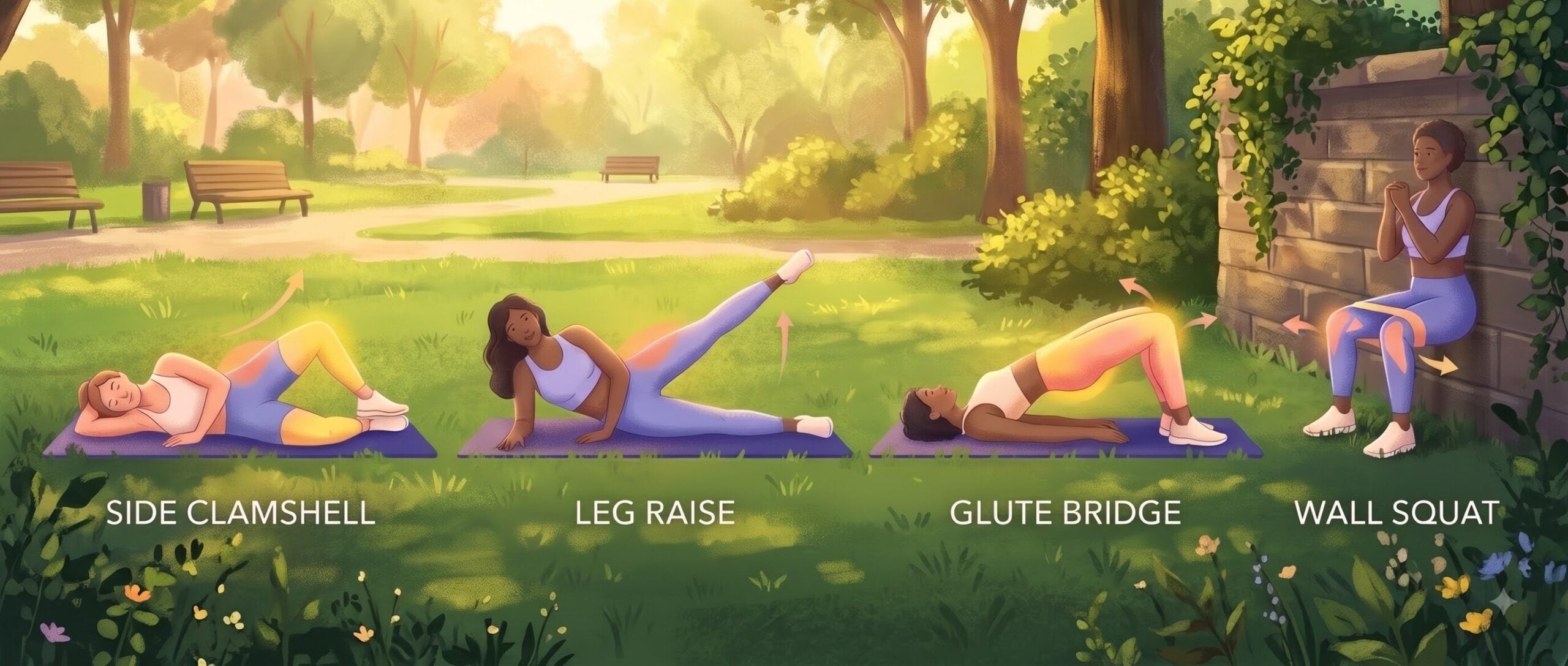
These physio-approved exercises strengthen your outer hips and glutes to help pull knot knees back into healthy alignment during daily movement.
- Side-Lying Clamshells
- Target: Gluteus medius & hip stabilisers.
- How to Do It: Lie on your side with knees bent at 90°. Keeping your feet together, lift your top knee without rotating your hips. Pause for 2 seconds, then lower.
- Volume: 3 sets of 12–15 reps per side to support knot knees.
- Side-Lying Leg Raises
- Target: Hip abductors & lateral thigh strength.
- How to Do It: Lie on your side with your top leg straight and toe pointing forward. Smoothly lift the leg to 45°, then lower with control.
- Volume: 3 sets of 10–12 reps per side.
- Glute Bridges with Alignment Focus
- Target: Gluteus maximus & pelvic stability.
- How to Do It: Lie on your back with knees bent, feet flat. Drive through your heels to raise your hips into a straight line, actively pressing your knees outward.
- Volume: 3 sets of 12 reps.
- Wall Squats with Resistance Band
- Target: Quadriceps & proper kneecap tracking.
- How to Do It: Place a mini-band above your knees, slide into a shallow wall squat (30°), and press outward against the band—a safe, non-surgical protocol for managing knot knees.
- Volume: Hold for 20–30 seconds (3 rounds).[5]
How Walking Posture Triggers Knock Knee Pain
Walking relies on a precise chain reaction: specific muscles must fire to keep your legs tracking straight. When you walk with poor posture, such as slouching forward or letting your feet roll inward (over-pronation), your primary hip stabilisers (gluteus medius) fail to engage properly. Slip cushioning arch support insoles into your footwear to prevent collapsed arches from pulling your lower legs inward.
To compensate, your inner thigh muscles over-tighten, actively pulling your knees inward. For anyone with knot knees, this improper muscle firing multiplies joint friction with every step on hard concrete or tiled floors, turning routine daily walks into a source of inner knee friction, aching pain, and joint wear. Slipping on a breathable, stabilising knee sleeve during long walks provides compression and joint awareness to help protect against daily friction.
For beginners, starting with low-impact daily walking routines builds stamina without joint stress.
Rules for Knee-Safe Walking
- Walk Tall: Keep your chest open and eyes forward so your pelvis stays balanced and your core stays engaged.
- Heel-to-Toe Roll: Land softly on your heel and push off your big toe to keep your foot arches elevated.
- Track Forward: Consciously guide your kneecaps straight over your middle toes to stop your knees from brushing together.
When to Consult an Orthopaedic Specialist
While mild inward knee angling can often be managed with targeted home exercise protocols, it is important to know when professional medical evaluation is required.
When to See a Specialist (Red Flags)
Consult an orthopaedic doctor or physiotherapist if you notice:
- Sharp or Persistent Pain: Aching along the inner or outer knee during routine walking or climbing stairs.
- Asymmetrical Alignment: One knee curves inward noticeably more than the other, or only one leg is affected.
- Instability or Buckling: A wobbly joint that feels like it might give way under your weight.
- Visible Limping: Difficulty walking smoothly or sudden changes in your foot placement.
- Late Onset or Persistence: Inward angling that appears suddenly in adulthood or persists in children past age 7 or 8.
Daily Lifestyle & Joint Care Habits
- Arch Support & Footwear: Use supportive shoes or cushioning orthotic insoles to prevent flat feet from pulling your knees inward.
- Gradual Pacing: Increase walking duration or speed by no more than 10% per week to let your tendons and joints adapt safely.
- Targeted Compression: Wear a breathable knee sleeve during longer walks or standing shifts for gentle joint stability and spatial awareness.
Conclusion: Building Daily Knee Confidence and Movement Freedom
Noticing that your knees touch when you walk can bring up worries about posture breakdown or future joint pain. However, understanding your lower-body mechanics is the single best step toward protecting your joints. Whether you are managing early alignment changes, dealing with daily inner knee friction, or taking a preventative approach, you have proactive, non-surgical options.
By improving your walking posture, strengthening key hip stabilisers like your gluteus medius, and choosing supportive footwear, you relieve mechanical stress on your knee joints and prevent long-term wear. You don’t need drastic measures to see progress; small, consistent daily adjustments add up.
Take your first step today: Try adding 3 sets of side-lying clamshells to your morning routine, and keep your chest tall with your knees tracking straight ahead during your next evening walk!
Disclaimer
This content is for informational and educational purposes only and does not constitute formal medical advice, diagnosis, or treatment. It is not intended to replace professional evaluation by a qualified physician, orthopaedic specialist, or physical therapist. Always consult your healthcare provider before starting any new exercise routine or if you experience severe joint pain, limping, or knee instability.
Frequently Asked Questions (FAQs)
Q1. Is walking good for knock knees?
Yes! Brisk walking in supportive, cushioned shoes strengthens your lower-body muscles and promotes joint fluid circulation. Focus on maintaining an upright posture and tracking your knees forward over your middle toes.
Q2. Is “knot knee” a different medical condition?
No. “Knot knee” is simply a common phonetic spelling or colloquial term for knock knees (genu valgum). Both terms refer to the inward angling of the knees.
Q3. Can flat feet cause knock knees?
Yes. When the arches of your feet collapse inward (over-pronation), your lower leg rotates inward, which pulls the knee joint toward the midline. Addressing foot arch support often improves knee alignment during movement.
Q4. What happens if adult knock knees are left unmanaged?
Leaving severe valgus alignment unaddressed can lead to premature wear of the outer knee cartilage, uneven hip stress, and an increased risk of early knee osteoarthritis.
Reference:
- https://www.hss.edu/health-library/conditions-and-treatments/list/knock-knee
- https://kidshealth.org/en/parents/knock-knees.html
- https://www.jeremyburnhammd.com/knock-knees-in-adults-causes-treatment-and-when-surgery-helps/
- https://my.clevelandclinic.org/health/diseases/knock-knees-genu-valgum
- https://pharmeasy.in/blog/bone-health-best-exercises-for-knock-knees-genu-valgum-you-should-try/