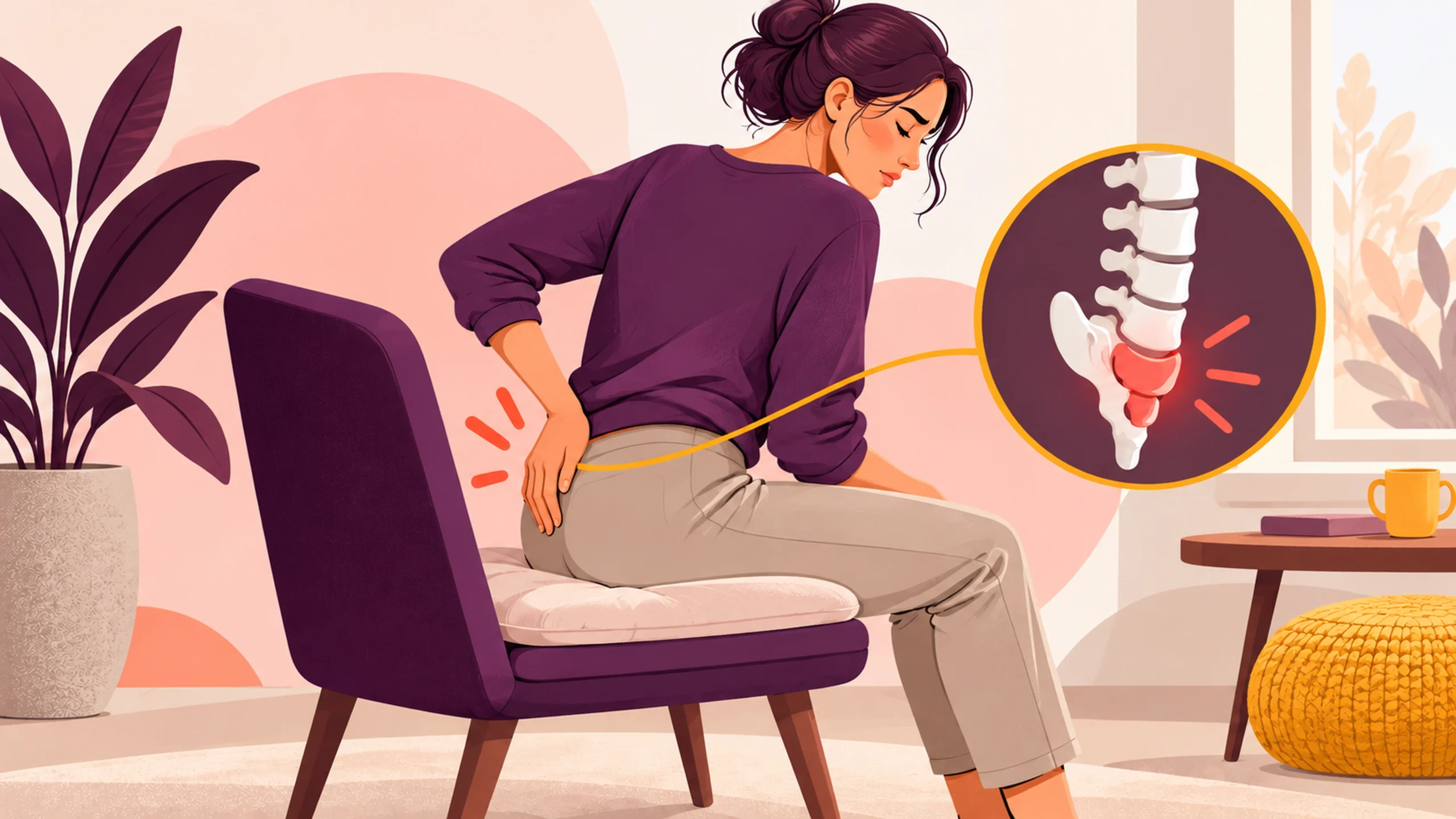
Finding a comfortable position to sit, relax, or go about your day should not feel like a constant effort. Yet, for many people dealing with a tailbone in pain, a simple shift in posture, a long drive, or sitting down to enjoy a meal can bring on a sharp, aching, or persistent discomfort right at the bottom of the spine.
If you are dealing with a tailbone in pain, even small daily routines like standing up from a chair or riding over a speed bump can become surprisingly uncomfortable [1]. It is a common experience. However, because it happens during routine movements, it often leaves people wondering why it started and what it actually means.
This article explores why tailbone discomfort shows up during everyday activities, clarifies common misconceptions, and explains practical steps to manage discomfort and know when it is time to consult a healthcare professional.
What Is Tailbone Pain?
The tailbone, clinically known as the coccyx, is a small bone structure located at the base of the spinal column, just above the buttocks [1]. It serves as an attachment site for various muscles, ligaments, and tendons in the pelvic region. It also helps support body weight when sitting [6].
Medical professionals refer to tailbone pain as coccydynia [3]. Discomfort in this region can stem from several factors, including:
- Local tissue sensitivity
- Surrounding muscle tension
- Repetitive pressure
- Prior impact [1]
Because the tailbone interacts with surrounding tissues during sitting and changing positions, discomfort in this area rarely stems from a single isolated cause. It also cannot be diagnosed from a single symptom alone [4].
Understanding tailbone pain without injury or after a routine activity requires looking at how daily habits and movements interact with this sensitive area [1].
Why Does My Tailbone Hurt During Everyday Activities?
Many everyday activities involve sitting or changing positions in ways that place pressure on the lower pelvic area [1]. Recognising how these situations contribute to discomfort can help you make simple adjustments.
Why Does My Tailbone Hurt When Sitting on the Floor?
Sitting on the floor for family meals, traditional gatherings, or daily prayers is a normal part of life in many households. However, tailbone pain when sitting on the floor is a frequent complaint.
- The Experience: You may feel an ache or pressure at the base of your spine after sitting cross-legged or flat on the floor for a short period [4].
- What Contributes to Discomfort: Unpadded floor surfaces are hard. When sitting upright on a hard floor without cushioning, body weight can shift backward onto the lower spine and coccyx rather than being evenly distributed across the buttocks [1].
- Practical Adjustment: Sitting on a folded blanket or a firm cushion can help elevate the hips and reduce direct pressure on the base of the spine [2].
Note: Sitting on the floor does not automatically damage or dislocate the tailbone. While a hard surface can aggravate sensitive local tissues or irritate existing inflammation, it is an aggravating factor rather than a cause of structural injury [4].
Why Does My Tailbone Hurt When Standing Up?
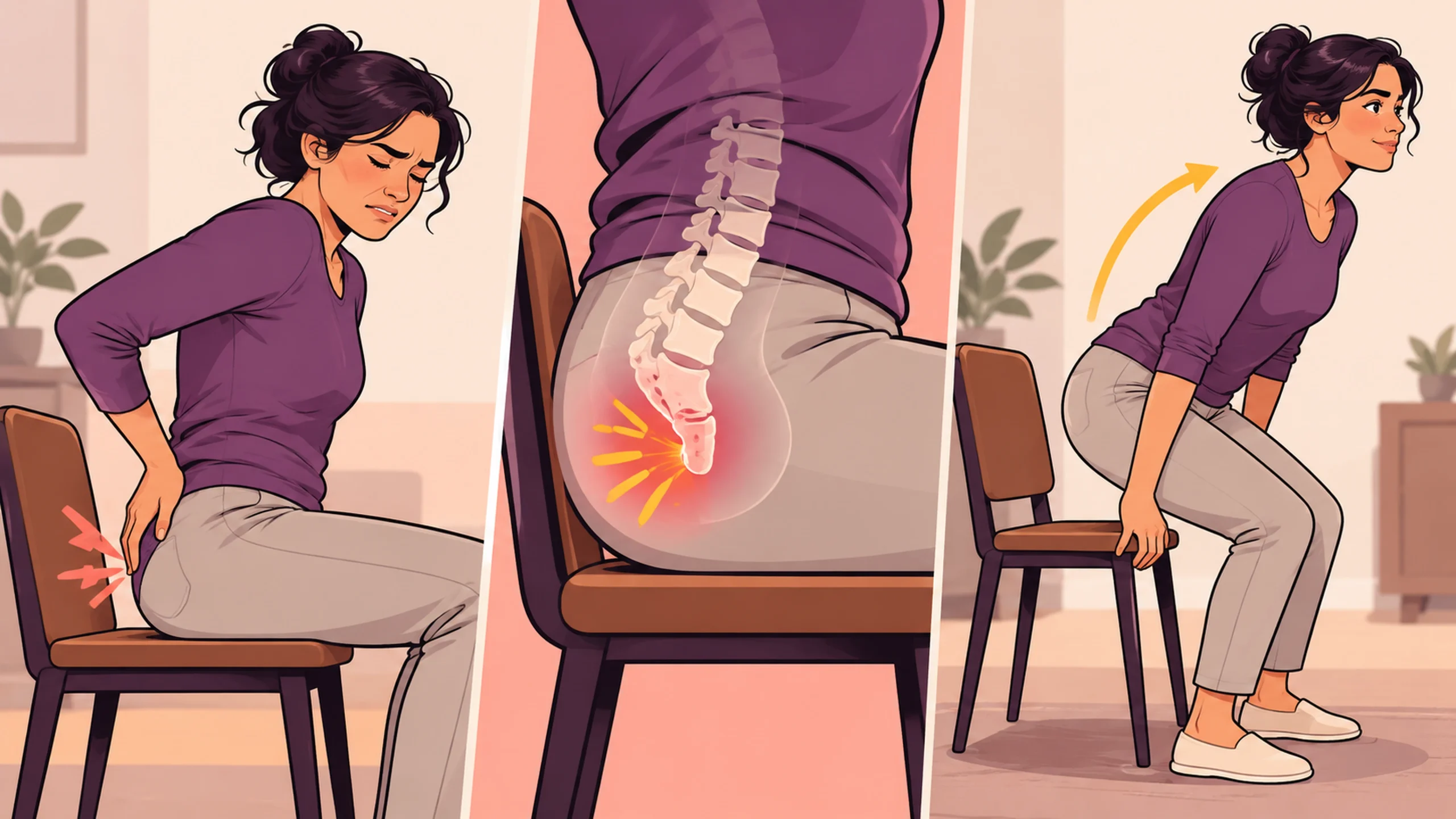
Transitioning from a seated position to standing is one of the most common coccydynia symptoms and triggers [1].
- The Experience: As you push yourself up from a chair, couch, or floor, you feel a localised ache or catch at the base of the spine that eases once you are standing upright [1].
- What Contributes to Discomfort: Moving from sitting to standing involves a dynamic shift in the pelvis, during which surrounding pelvic muscles contract [6]. If the tissues or joints around the coccyx are already tender or inflamed, this movement can trigger discomfort [1].
- Practical Adjustment: Leaning slightly forward at the hips before standing and using your leg muscles to drive the movement can help reduce direct strain on the tailbone area [2].
Can Travel Make Tailbone Pain Worse?
Riding in auto-rickshaws, riding two-wheelers, or navigating long commutes on uneven roads frequently triggers or worsens discomfort [1].
- The Experience: Tailbone pain during travel often presents as a dull or throbbing ache that increases with road bumps or prolonged trips [4].
- What Contributes to Discomfort: Transport seating and two-wheeler saddles often provide limited shock absorption. Frequent jolts from uneven road surfaces can apply repeated pressure to the lower pelvis, especially when sitting upright or leaning back [4].
- Practical Adjustment: Changing positions when safe to do so, using additional seating padding where possible, and taking short breaks during long journeys can help manage travel-related discomfort [1].
Lying Down and Resting Positions
Finding a comfortable resting position can sometimes be difficult when the tailbone is sensitive [2].
- The Experience: You may notice discomfort when lying flat on your back on a firm mattress or sofa [2].
- What Contributes to Discomfort: Lying flat on a firm surface can apply direct pressure to the coccyx [2].
- Practical Adjustment: Resting on your side with a pillow between your knees, or placing a pillow under your knees when lying on your back, may help relieve direct pressure on the base of the spine [5].
For those managing desk-based routines, sitting in one position for long periods can similarly aggravate symptoms. Taking periodic breaks to stand up and change positions helps relieve continuous pressure [1].
Tailbone Pain During Pregnancy and After Childbirth
Pregnancy and the postpartum period involve physical changes that can make tailbone discomfort more noticeable [5].
Pregnancy-Related Discomfort
During pregnancy, hormonal changes soften the ligaments around the pelvis to prepare for delivery [3]. This increased ligament flexibility, combined with changes in body weight and posture, can alter pelvic alignment and place additional stress on the tailbone area [6].
Tailbone Pain After Childbirth
Experiencing postpartum tailbone pain or tailbone pain after childbirth is a recognised concern [5]. During vaginal delivery, the coccyx may be pushed backward as the baby passes through the birth canal, which can stretch or strain surrounding ligaments and muscles [5].
What to Keep in Mind
- Recovery Varies: Tissue healing and recovery times differ for everyone. Discomfort after childbirth often improves gradually over time as local inflammation resolves [5].
- Professional Guidance: Pregnancy and childbirth do not inherently cause permanent damage to the tailbone [5]. However, if postpartum tailbone pain makes daily tasks or sitting difficult, consulting a healthcare professional or a physiotherapist can provide safe, individualised guidance [1].
What Can You Do When Tailbone Pain Affects Daily Life?
Managing tailbone discomfort generally focuses on simple, conservative steps to reduce direct pressure and manage local irritation [1].
- Modify Sitting Posture: Lean slightly forward when sitting to transfer weight onto your thighs and pelvic sit bones rather than leaning directly back onto the tailbone [2].
- Change Positions Frequently: Avoid remaining seated for extended periods without moving. Periodically standing or walking helps relieve static pressure [1].
- Use Supportive Seating: Placing a pressure-relieving cushion (such as a wedge or cutout cushion) on hard or unyielding chairs can make sitting significantly more comfortable [2].
- Apply Temperature Relief: Applying a cold pack or warm compress to the area for short periods may help soothe localised discomfort or surrounding muscle tightness [2].
- Maintain Gentle Movement: Light walking, as tolerated, helps keep the hips and pelvis mobile without placing excess stress on the lower spine [4].
Guidance Note: Conservative adjustments are intended to help keep daily activities manageable while tissues heal naturally. If self-care measures do not bring relief, consult a doctor or physiotherapist for an evaluation [1].
Tailbone in Pain: Myths vs. Facts
Misunderstandings about tailbone pain can lead to unnecessary anxiety or over-restriction of everyday movement.
| Misconception | What the Evidence Supports |
| Myth 1: “Sitting on the floor is inherently harmful to the tailbone.” | Fact: Floor sitting is a standard human posture. While hard floors may aggravate an already tender tailbone due to direct pressure, sitting on the floor does not cause structural damage to a healthy spine [4]. |
| Myth 2: “Pain when standing up means the tailbone is dislocated.” | Fact: Pain during the transition from sitting to standing is typically related to surrounding muscle movement or localised tissue irritation [1]. True coccyx dislocation is uncommon and usually results from significant direct trauma [6]. |
| Myth 3: “Tailbone pain during pregnancy causes permanent damage.” | Fact: Hormonal and structural shifts during pregnancy are normal adaptations. While they can lead to temporary tenderness, tailbone discomfort related to pregnancy usually resolves gradually with time and conservative care [5]. |
| Myth 4: “Complete bed rest is the best way to recover.” | Fact: Prolonged bed rest can contribute to muscle stiffness and weakness. Gentle movement within comfortable limits, combined with sitting modifications, is generally preferred over continuous rest [4]. |
| Myth 5: “Persistent tailbone pain always indicates a serious condition.” | Fact: While persistent symptoms warrant professional assessment, most cases of tailbone pain are linked to non-serious musculoskeletal factors such as tissue irritation or muscle strain [1]. |
When Should You See a Doctor for Tailbone Pain?
Most tailbone discomfort improves over time with conservative management [1]. However, knowing when to see a doctor for tailbone pain ensures you obtain appropriate guidance when necessary [4].
Arrange a routine medical assessment if:
- Tailbone pain persists for more than a few weeks without improvement despite modifying sitting positions [1].
- Discomfort progressively worsens or significantly interferes with routine daily activities, work, or sleep [1].
- Pain during bowel movements is persistent or worsening [3].
Seek Immediate or Urgent Medical Attention If:
- Pain follows severe, direct physical trauma, such as a high-impact fall directly onto the buttocks [4].
- You experience signs of infection around the upper buttocks crease, such as localized swelling, redness, warmth, or pus/drainage [4].
- You experience progressive weakness, numbness or tingling in the legs or pelvic area [1].
- There are sudden, unexplained changes in bowel or bladder control [1].
Frequently Asked Questions
Can constipation contribute to tailbone in pain?
Yes. Straining during bowel movements or passing hard stools can place temporary pressure on the pelvic floor muscles and nearby structures, which may aggravate tenderness in the tailbone region [3].
Can tailbone in pain come and go?
Yes. Tailbone discomfort can fluctuate depending on sitting duration, seat firmness, travel conditions, and physical activity levels [4]. Symptoms may temporarily flare up after long periods of sitting and settle with movement [1].
Can tailbone in pain make it difficult to sleep?
Yes, particularly when sleeping flat on the back on a firm mattress that puts direct pressure on the coccyx [2]. Changing sleeping postures or using supportive pillows can help reduce nighttime discomfort [5].
Can tailbone in pain return after it has improved?
Yes. Discomfort can temporarily return if you experience prolonged sitting, travel over rough roads, or undergo new strain on the lower back and pelvic area [4]. Re-applying simple posture adjustments usually helps manage minor recurrences [1].
References
- NHS. Tailbone (coccyx) pain. Available from: https://www.nhs.uk/conditions/tailbone-coccyx-pain/
- Mayo Clinic. Tailbone pain: How can I relieve it? Available from: https://www.mayoclinic.org/diseases-conditions/back-pain/expert-answers/tailbone-pain/faq-20058211
- Cleveland Clinic. Tailbone Pain (Coccydynia). Available from: https://my.clevelandclinic.org/health/diseases/10436-coccydynia-tailbone-pain
- Healthdirect Australia. Tailbone (coccyx) pain and injury. Available from: https://www.healthdirect.gov.au/symptoms/aches-and-pains/tailbone-coccyx-pain-and-injury
- Royal Berkshire NHS Foundation Trust. Coccyx pain following childbirth – physio advice. Available from: https://www.royalberkshire.nhs.uk/leaflets/coccyx-pain-following-childbirth-physio-advice
- Lirette LS, Chaiban G, Tolba R, Eissa H. Coccydynia: An Overview of the Anatomy, Etiology, and Treatment of Coccyx Pain. Ochsner Journal. 2014;14(1):84–87. Available from: https://pmc.ncbi.nlm.nih.gov/articles/PMC3963058/