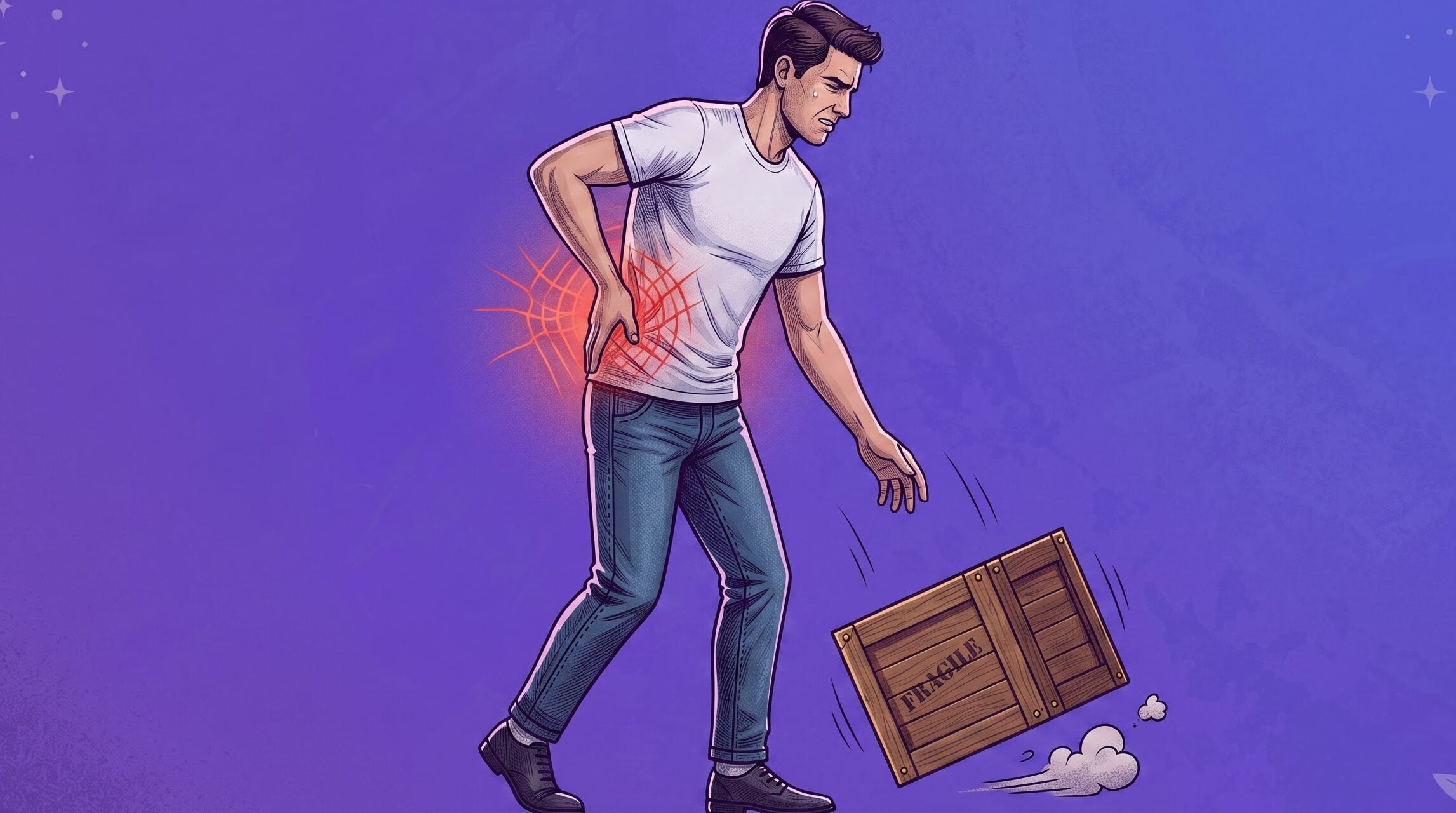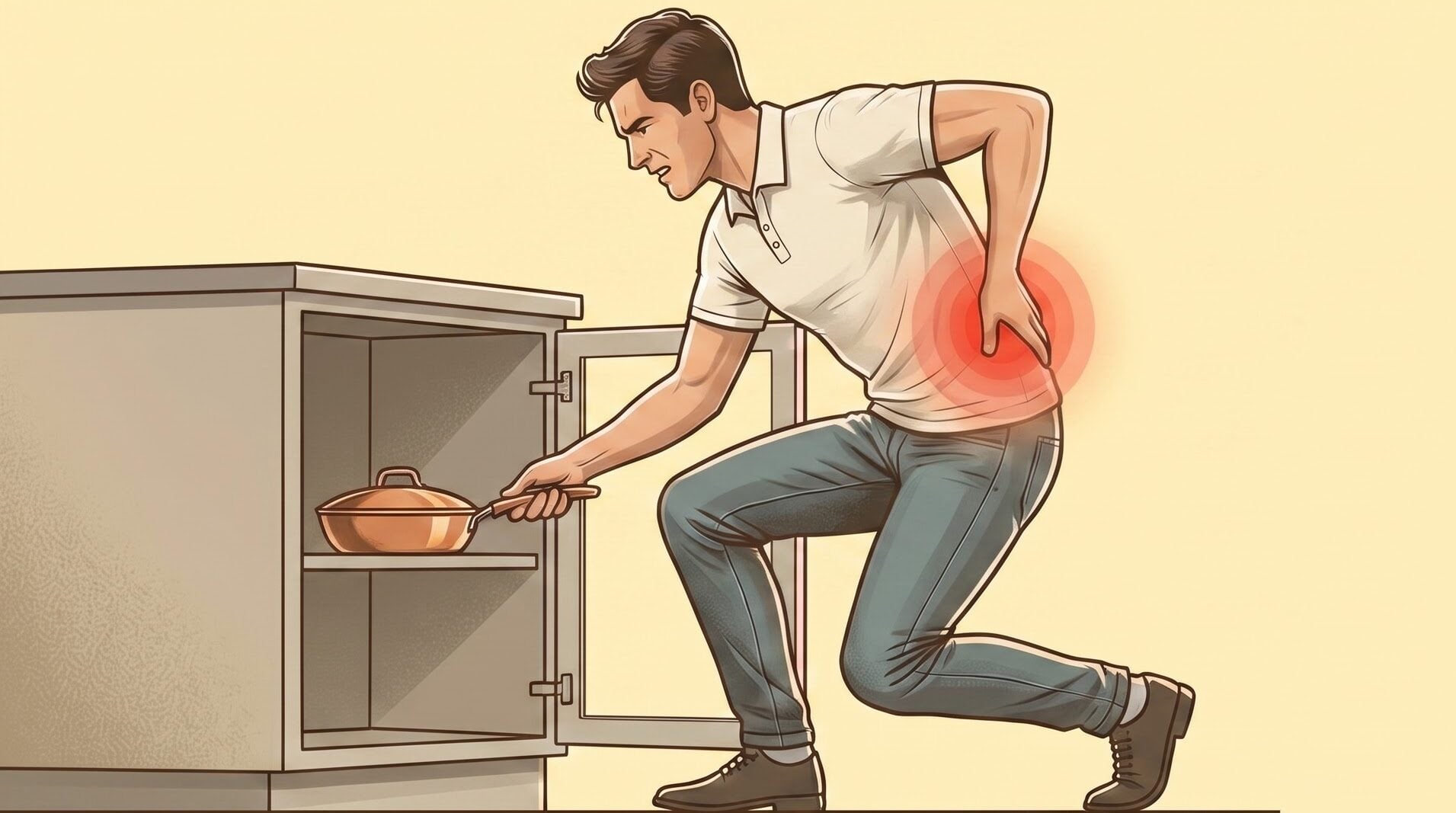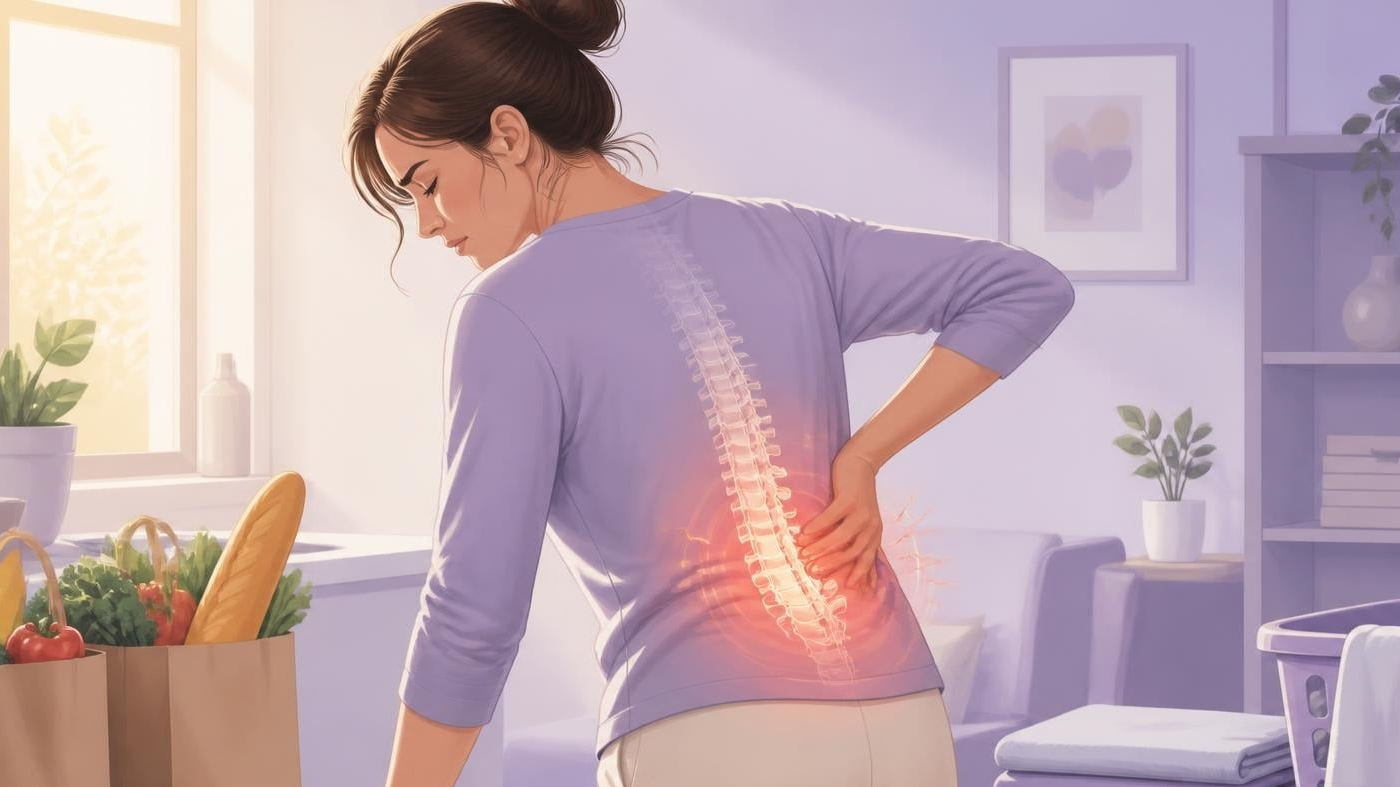




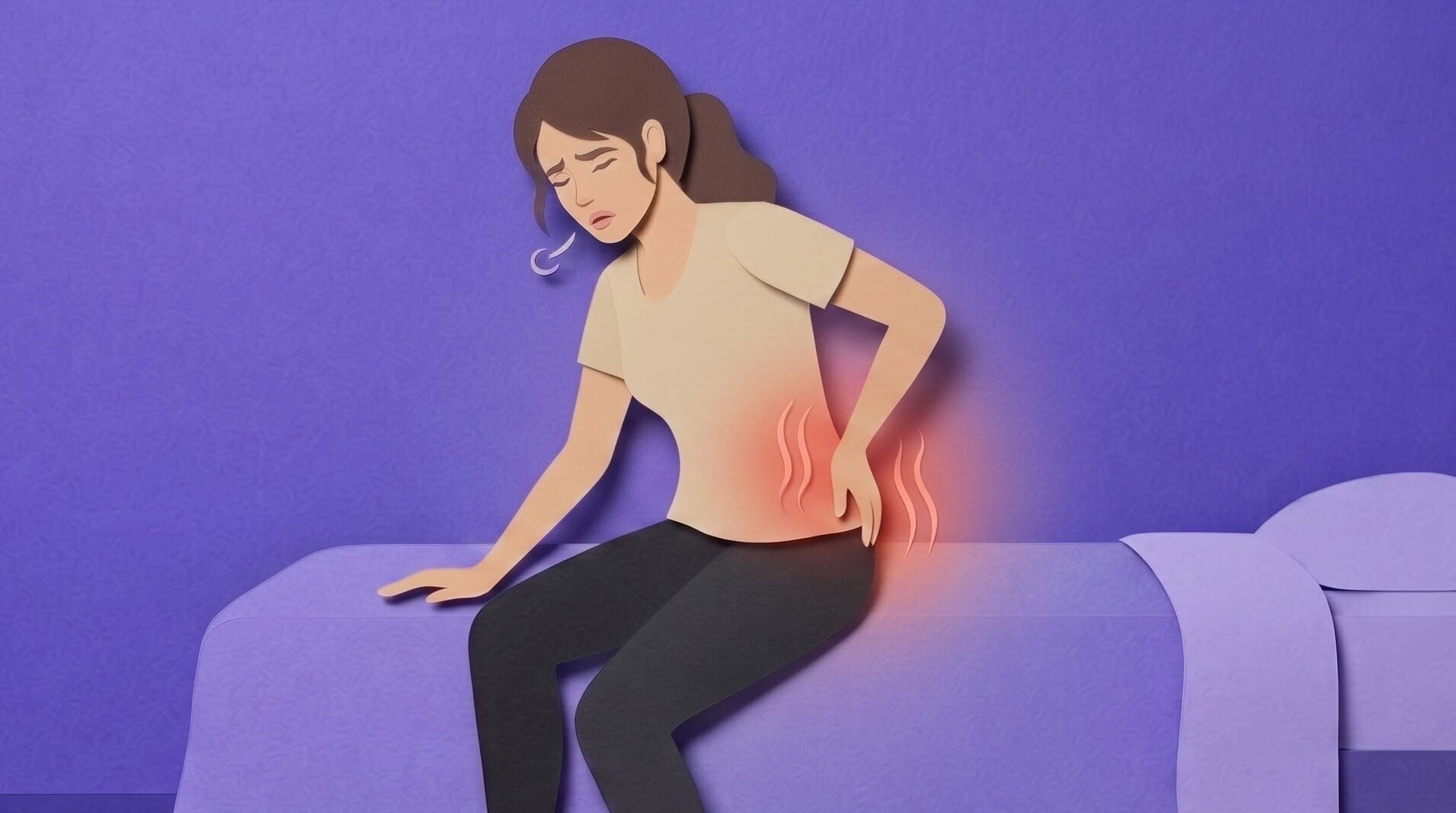
Imagine waking up in the middle of the night with a jolt of fire shooting down the back of your leg like a live wire, leaving you wondering if you are experiencing sciatica red flags that require emergency attention. Or trying to stand up from your living room sofa, only to feel a sharp, lightning-bolt spasm in your lower back that leaves you completely frozen in place.
If you are dealing with sciatica or a slipped disc right now, you know how alarming it can be. Pain this intense quickly hijacks your thoughts, causing your mind to leap to worst-case scenarios: Is my spine collapsing? Did I permanently damage a nerve? Do I need to get to the emergency room right now?
Take a deep breath and let your shoulders drop. First, the most important thing you need to know: severe pain does not equal immediate danger [1].
The vast majority of sciatica cases, even the agonizing ones that leave you lying flat on the floor, are not medical emergencies. The human spine is remarkably resilient, and most disc-related pain settles down over time with simple, conservative care [2].
However, your body has a clear alarm system for the rare occasions when a spinal nerve is under genuine threat. Doctors call these warning signals sciatica red flag symptoms [3].
Knowing how to spot these red flags helps you answer the single most urgent question on your mind: Do my symptoms require emergency medical care, or can I manage this safely at home?
Why Are Some Sciatica Red Flags Considered Medical Emergencies?
In short, no. Roughly 90% of people experiencing sciatica recover without ever stepping foot inside an emergency department or operating room [2].
Sciatica happens when the large sciatic nerve, which travels from your lower back, through your hips, and down each leg, becomes irritated. Most often, this occurs because one of the rubbery cushions between your vertebrae (an intervertebral disc) bulges or slips, pressing against a nearby nerve root [4].
Because spinal nerve roots are packed with sensitive pain receptors, even a small amount of inflammation can trigger excruciating discomfort. You might feel a dull ache, a deep muscle spasm, or a burning sensation shooting down to your toes.
As agonizing as that can be, pain alone simply tells us that a nerve is irritated, not that it is permanently damaged [1].
Spotting sciatica red flags early ensures you seek medical assistance before significant nerve compression occurs.
Why Are Some Sciatica Symptoms Considered Red Flags?
If pain isn’t the main indicator of emergency danger, what is? The answer comes down to loss of physical function.
Think of a spinal nerve root like a high-speed cable carrying two distinct types of messages:
- Sensory Signals: These tell your brain what you feel, including heat, cold, and intense pain.
- Motor & Autonomic Signals: These tell your muscles to move and your internal organs how to function.
When a slipped disc gently rubs against the nerve cable, it sparks fiery sensory pain. It hurts severely, but the cable itself is still functioning.
However, if a massive disc herniation physically crushes that cable, signals are blocked entirely [5]. Your brain suddenly loses its ability to communicate with key leg muscles or pelvic organs.
Emergency care isn’t required to turn off high pain levels, it is required when a compressed nerve loses its ability to send vital operational signals [3,5].
Crucial Sciatica Red Flags and Emergency Warning Signs
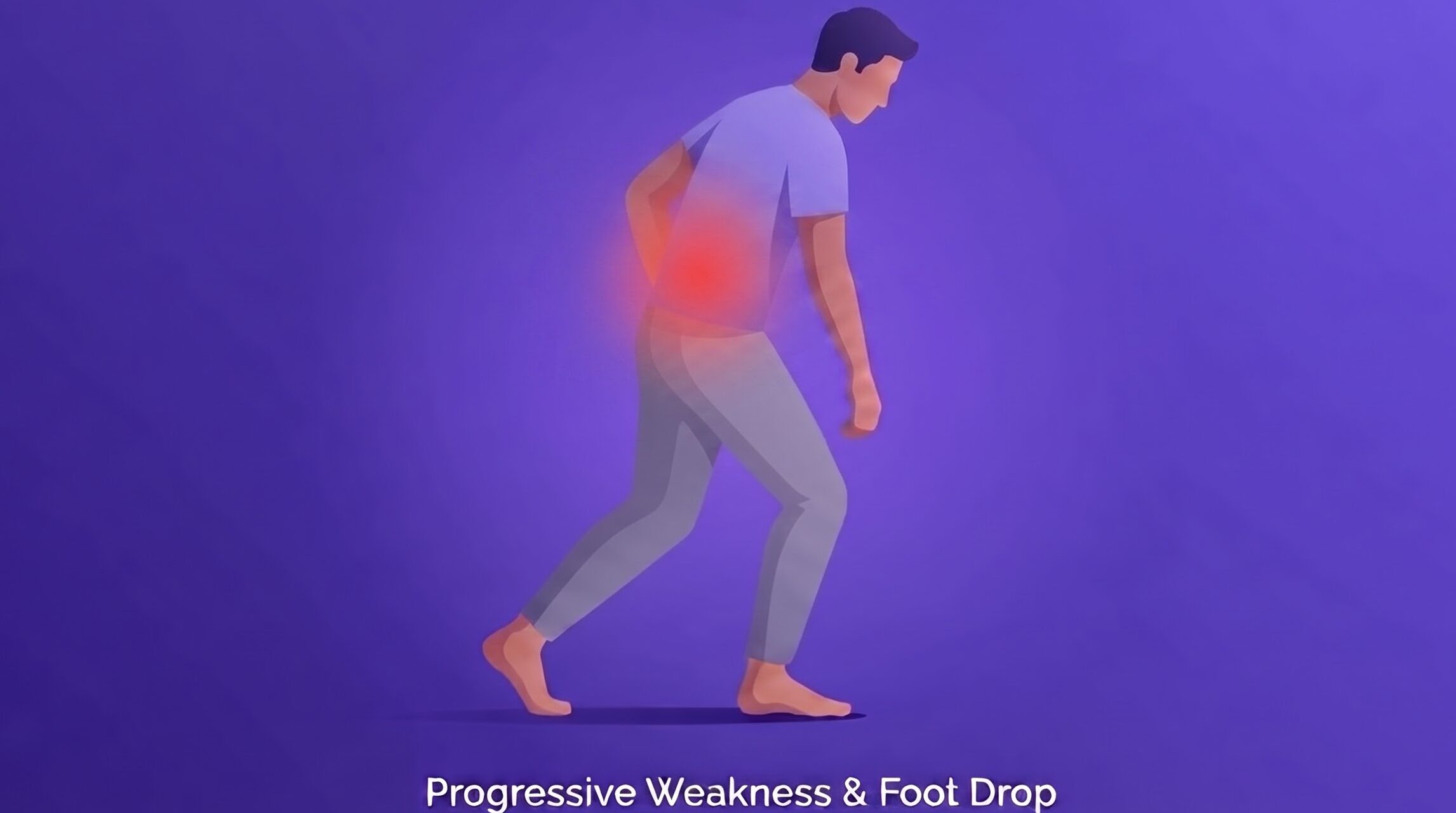
While you can safely manage routine sciatica through standard medical care, go directly to the nearest emergency room if you notice any of these warning signs.
1. Loss of Bowel or Bladder Control (Critical Red Flag)
This is the single most critical red flag in spine health. It typically manifests as sudden incontinence—leaking urine or losing control of your bowels or urinary retention, where you feel a heavy urge to pee but cannot physically release urine .
This occurs when severe disc herniation compresses the cauda equina nerve bundle, causing Cauda Equina Syndrome (CES), which requires immediate emergency evaluation to prevent permanent nerve damage [5,6].
2. “Saddle Anesthesia” (Emergency Sciatica Red Flag)
Saddle anesthesia refers to a loss of sensation in the areas that would touch a horse’s saddle, including your groin, genitals, buttocks, and inner thighs [5]. A common warning sign is noticing that wiping with toilet paper feels completely numb or “dead,” signaling severe pressure on sacral nerves [5,6].
3. Progressive Leg Weakness (Severe Sciatica Red Flag)
True motor weakness occurs when leg muscles physically fail to respond, causing your leg to buckle, stumble, or give out when standing [3]. If this physical weakness is visibly worsening over hours or days, it requires immediate emergency attention [3,4].
4. “Foot Drop” (Motor Deficit Red Flag)
Foot drop happens when nerve signals telling your foot to flex upward are interrupted, causing your toes to drag along the floor [4]. To compensate while walking, you may find yourself lifting your knee unnaturally high to prevent your foot from catching.
5. Symptoms in Both Legs Simultaneously
Classic sciatica almost always travels down just one leg at a time. Developing severe shooting pain, widespread numbness, or weakness in both legs at once (bilateral sciatica) suggests a central disc herniation pressing directly into the middle of your spinal canal [5,6].
6. Back Pain Accompanied by Fever or Major Trauma
Severe spine pain starting immediately after high-impact trauma, such as a car crash or fall, requires immediate evaluation [3]. Likewise, back pain accompanied by a high fever, chills, or night sweats needs urgent testing to rule out spinal infections like discitis or an epidural abscess [3].
Quick Sciatica Red Flags Self-Assessment Checklist
If you are currently experiencing a flare-up and trying to figure out your next move, use this simple checklist.
- [ ] Bowel/Bladder Changes: Have you lost control of your bowels/bladder, or are you unable to pee when your bladder feels full?
- [ ] Groin/Saddle Numbness: Do you feel numbness or a loss of feeling in your groin, private parts, or buttocks when wiping?
- [ ] Foot Drop: Is your foot dragging along the ground, or are you unable to lift your toes off the floor?
- [ ] Bilateral Weakness: Are you experiencing severe numbness or weakness in both legs simultaneously?
- [ ] Leg Failure: Are your legs giving out beneath you, causing you to stumble or collapse?
- [ ] Fever or Trauma: Did this pain begin right after a major accident, or is it accompanied by a high fever and chills?
Understanding Your Results: What to Do Next
Now that you have reviewed the checklist, your next step is clear depending on your answers.
If You Checked ANY Box Above:
Seek emergency medical care immediately. Do not adopt a “wait and see” approach hoping things clear up. Have a family member drive you to the nearest Emergency Department or call emergency transport if you are alone.
Upon arrival, healthcare providers will perform a focused neurological exam and arrange urgent MRI imaging to assess nerve compression [5].
If You Checked NO Boxes Above:
Take a deep breath, your symptoms do not show emergency red flags.
If you do not meet any of the sciatica red flags, standard home care and non-emergency conservative treatments are usually sufficient.[1, 2]
How to Protect Your Back During Daily Recovery
Once you know your symptoms aren’t an emergency, you face a practical hurdle: how to get through your daily routine without triggering sharp flare-ups.
When a spinal nerve is inflamed, routine movements like bending, sitting at a desk, or standing in the kitchen place continuous mechanical load on your lower lumbar discs [8]. While your body naturally clears inflammation over time, unassisted daily movements can repeatedly irritate sensitive tissue.
Protecting your lower back during this acute phase requires a practical approach:
- Position Adjustments: Place a pillow under your knees when sleeping on your back to reduce sciatic tension.
- Ergonomic Sitting: Avoid deep, soft sofas that force your pelvis to tilt backward and round your spine.
- Pacing Activity: Avoid long stretches of continuous sitting or standing by changing positions every 20–30 minutes.
How the Betterhood LS Belt Can Support Daily Activities During Non-Emergency Recovery
- After red flags are ruled out: The focus shifts from emergency assessment to managing everyday activities while your back recovers.
- During daily activities: The Betterhood LS Belt can be used as a supportive accessory around the lower back while you remain gently active.
- When extra support is useful: It may be helpful during prolonged sitting, standing, commuting, or light movement when you want additional external support.
- Know its limits: The belt is not a treatment for sciatica, nerve compression, or any emergency condition.
- Do not delay medical care: If red-flag symptoms appear, the belt should never be used instead of seeking medical evaluation.
- As part of recovery: Once serious symptoms have been ruled out, the belt can complement an appropriate recovery plan.
Rebuilding Confidence After a Sciatica Scare
Recognizing sciatica red flags gives you immediate clarity and peace of mind. By ruling out a medical emergency today, you can stop worrying about worst-case scenarios and direct your energy toward what truly matters: giving your lower back a safe, supportive environment to recover comfortably.
Frequently Asked Questions
Can severe sciatica pain be an emergency if I can still walk? Severe pain alone is rarely a medical emergency if your motor nerve function remains intact and you can walk without your leg buckling or toes dragging [3].
Can a slipped disc cause permanent nerve damage? Permanent nerve damage is uncommon with standard disc herniations, posing an immediate threat primarily during rare emergencies like Cauda Equina Syndrome [5].
Should I go to the emergency room for sciatica at night? You only need an emergency room visit at night if you develop red flags like incontinence, urinary retention, saddle numbness, or sudden leg weakness [5].
How long should I wait before seeing a doctor for routine sciatica? Schedule a non-emergency appointment with a doctor or physical therapist if your pain persists, worsens, or significantly limits your daily activities. [3]
What is the difference between severe sciatica and Cauda Equina Syndrome? Routine sciatica causes severe pain down a single leg from nerve root irritation, whereas Cauda Equina Syndrome compresses the entire lower nerve bundle, causing pelvic organ dysfunction and bilateral leg symptoms [5].
Can I wear the Betterhood LS Belt if my symptoms are not an emergency? If your symptoms are not an emergency, the Betterhood LS Belt may be used as a supportive accessory during selected daily activities. It should not replace medical evaluation or prescribed treatment.
References
- Cleveland Clinic. Sciatica: Causes, Symptoms, Diagnosis & Treatment [Internet]. Cleveland Clinic; 2023 [cited 2026 Aug 1]. https://my.clevelandclinic.org/health/diseases/12792-sciatica
- Mayo Clinic. Herniated disc: Symptoms & causes [Internet]. Mayo Clinic; 2022 [cited 2026 Aug 1]. https://www.mayoclinic.org/diseases-conditions/herniated-disk/symptoms-causes/syc-20354095
- National Institute for Health and Care Excellence (NICE). Low back pain and sciatica in over 16s: assessment and management [NG59]. London: NICE; 2016 (updated 2020). https://www.nice.org.uk/guidance/ng59
- National Institute of Neurological Disorders and Stroke (NINDS). Low Back Pain Fact Sheet [Internet]. Bethesda (MD): National Institutes of Health; 2020 [cited 2026 Aug 1]. https://www.ninds.nih.gov/health-information/disorders/low-back-pain
- American Association of Neurological Surgeons (AANS). Cauda Equina Syndrome [Internet]. AANS; [cited 2026 Aug 1]. https://www.aans.org/patients/conditions-and-treatments/cauda-equina-syndrome/
- American Academy of Orthopaedic Surgeons (AAOS). Cauda Equina Syndrome – OrthoInfo [Internet]. AAOS; 2021 [cited 2026 Aug 1]. https://orthoinfo.aaos.org/en/diseases–conditions/cauda-equina-syndrome/
- Nachemson AL. Disc pressure measurements. Spine (Phila Pa 1976). 1981;6(1):93-97. https://doi.org/10.1097/00007632-198101000-00020