




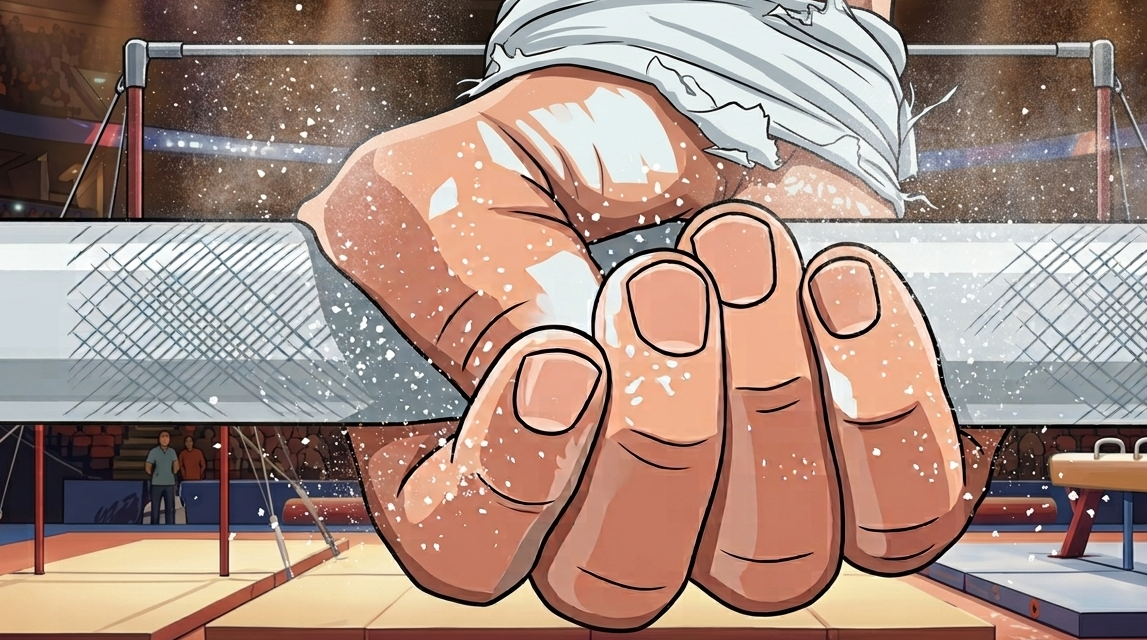
The second a heavy bar leaves the floor in a hook grip, you feel it instantly. Hundreds of pounds of sharp steel grinding into your thumb. The wrist support hook grip setup is built to fix this pain and save your max pull.
You use the hook grip because wrapping your fingers over your thumb creates a vice-like lock that stops the bar from rolling. It is hands-down your most secure way to hold massive weight without relying on straps.
The catch? It’s pure pain.
Shredded skin, crushed nerves, and deep thumb bruising can force you to dump a personal record mid-lift, not because your muscles gave out, but because the sheer agony forced your brain to quit. To make matters worse, as that heavy weight drags on your hands, your wrist joint can shear out of position, driving brutal stress right up your forearms and elbows.
So how do you harness the raw gripping power of the hook grip without destroying your hands? The answer lies in leveraging a specialized wrist support hook grip system that shields your thumb base while keeping your carpals perfectly stacked under tension.
What Is Hook Grip Pain and Why Do Lifters Need a Wrist Support Hook Grip Setup?
Hook grip is a weightlifting technique where you wrap your thumb directly around the barbell first, and then wrap your fingers over your thumb to lock it in place.
Unlike a regular grip, where your thumb sits on top of your fingers, the hook grip creates a wedge or “lock” between your hands and the bar.
Why Hook grip hurts so much?
When lifting heavy barbells, using a hook grip hurts because the heavy weight pinches your thumb directly against the metal bar.
How to do the hook grip?
- Place your thumb on the bar first pointing around the circumference.
- Wrap your index and middle fingers directly over your thumb (pinching your thumb between your fingers and the steel bar).
- Wrap your ring and pinky fingers around the bar normally.[1]
How do you Fix Hook Grip Pain?
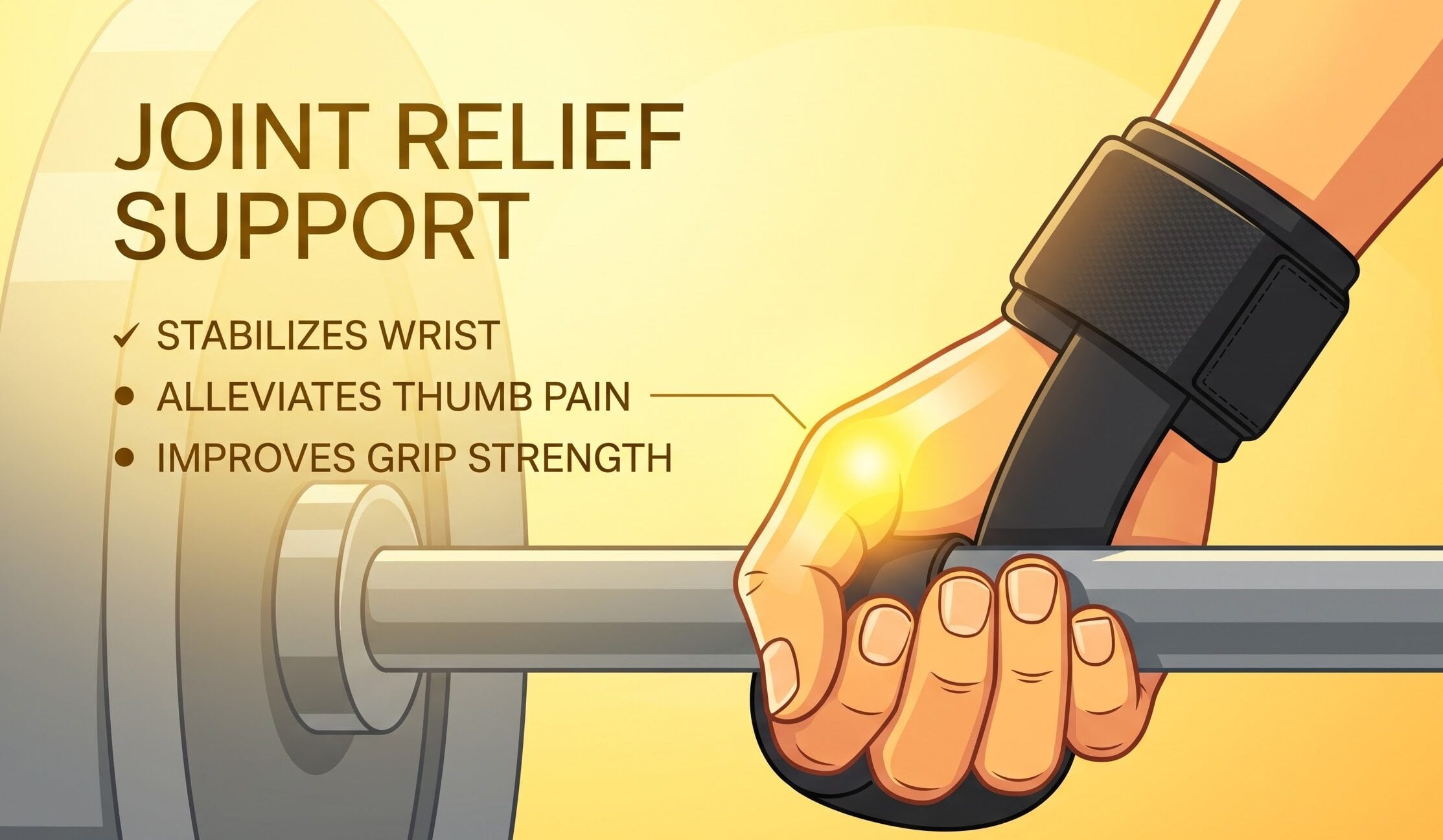
To eliminate pain and protect your joints during heavy sets, consider using wrist support hook grip gear or elastic thumb tape. Adding proper wrist stability keeps your force production optimal, while thumb protection reduces surface friction, allowing you to maintain a rock-solid mechanical lock without damaging your skin.[2]
Combining a hook grip with wrist support ( wrist wraps) addresses two completely different aspects of heavy lifting: grip security and joint stability.
How should a wrist support hook grip be like?
A wrist support hook grip should be worn with proper placement, tightness, material selection, and technique to provide maximum joint stability without compromising grip.
Placement: Cover the Joint, Not Just the Forearm
Correct Position: The wrap must sit directly over the wrist joint itself, covering where your hand meets your wrist, so it physically blocks the joint from bending backward or forward under load.
Rule of Thumb: Half of the wrap should sit below the wrist joint line (on the forearm) and half above it (on the base of the palm).
Tension and Tightness: Controlled Stiffness
For Heavy Pulls & Squats (Rigid Support): Pull the wrap tight before securing the Velcro. It should feel firm enough that you cannot bend your wrist backward, but not so tight that it immediately cuts off circulation or turns your hand blue.
Between Sets: Always loosen or unwrap them between heavy sets. Leaving max-tension wraps on for extended periods restricts blood flow and causes unnecessary hand fatigue
Material Selection Based on Movement
Stiff Heavy-Duty Wraps (Powerlifting): Thicker, cast-like elastic material with Velcro. Ideal for max deadlifts, heavy low-bar squats, and bench presses where maximum stiffness is needed.
Flexible Cotton / Ripstop Wraps (CrossFit & Olympic Lifting): Softer cloth wraps using a twist-to-tighten string design. These allow slight mobility for catching snatches and cleans in the rack position while offering adjustable support on the fly.
Which Is Right for You? Lifting Straps vs. Lifting Hooks.
When your forearms and hands fatigue before your back or legs do on heavy pulling exercises, standard grip support becomes essential. Both lifting straps and lifting hooks help bridge the gap when your hands give out during deadlifts, heavy rows, and shrugs, but they function in fundamentally different ways.
Understanding the Key Differences
- Lifting Straps: Consist of a durable fabric or leather material wrapped around your wrist and tightly wound around the barbell or dumbbell. They offer a custom, snug fit that enhances traction while still requiring your hands to actively hold the bar, preserving background grip and forearm engagement.
- Lifting Hooks: Feature a rigid metal or composite hook attached to a wrist wrap. The weight rests directly inside the hook rather than in your palm. This completely bypasses hand strain, making them useful for lifters managing hand or finger injuries, though they offer less tactile control over the bar.
Why Lifting Straps Are the Superior Choice
For the vast majority of lifters aiming to build long-term strength and muscle mass, lifting straps are the better overall option.
Balanced Grip Development: Eliminates grip strength limits while keeping your forearms engaged to continue building hold strength.
Superior Bar Control: Direct hand contact with the bar provides better feedback and dynamic control during heavy pulls.
Unmatched Versatility: Easily adapts to any bar size or shape, unlike rigid hooks that can slip or feel awkward on non-standard gear.
Natural Safety & Release: Releasing your fingers immediately frees the strap, allowing you to drop heavy weights safely.
Does Using Lifting Hooks or Wrist Wraps Weaken Your Grip?
Using lifting gear won’t directly make your forearms weaker, but depending entirely on mechanical assistance can cause your grip strength to lag behind the rest of your body.
Understanding how gear impacts your muscle activation helps you build maximum strength without creating a weak link in your forearms.[4]
What Really Happens to Your Forearms?
When you lift heavy weights bare-handed or with a traditional hook grip (pinching your thumb beneath your fingers), your forearm flexors work overtime to clamp down on the barbell.
Here is how gear changes that dynamic:
- Lifting Hooks & Straps: These tools transfer the weight directly from the bar to your wrists. Because the gear takes on the load, your flexor digitorum muscles don’t have to squeeze as hard, leading to reduced muscle activation in your forearms.
- Wrist Wraps: Unlike lifting hooks, supportive wrist wraps bind around the joint to stabilize the wrist during heavy pushes or pulls.Wrist support wraps do not significantly decrease or increase maximum grip strength or endurance, they simply stabilize the joint.[4]
The Smart Training Strategy
Warm Up Bare-Handed: Perform all your warm-up sets and lighter working sets without any straps, hooks, or wraps to train your natural grip strength under load.
Save Gear for Top Sets: Strap in only when your grip becomes the bottleneck on your heaviest sets of deadlifts, rows, or shrugs. This lets your target muscle groups reach complete fatigue.
Add Direct Grip Work: If you frequently use lifting hooks, train your forearms directly at the end of your workouts with exercises like farmer’s walks, plate pinches, and dead hangs.[4]
Lifting hooks won’t make your forearms shrink, but relying on them for every set prevents your grip from growing stronger. Train bare-handed as far as you can, then use your gear to push past limits on your heavy lifts!
FAQ
Is athletic thumb tape enough, or do I need a dedicated wrist support hook grip wrap?
Athletic tape only protects the outer skin layer from tears and blisters. A dedicated wrist support hook grip wrap provides dual protection: it shields the base of the thumb from friction while compressing the wrist joint to prevent carpal shearing and joint distraction under max-effort traction.[5]
How does proper wrist alignment in a wrist support hook grip setup protect the elbows and shoulders?
When wrist joints buckle or flex under heavy loads, it creates “force leaks” along the kinetic chain. Keeping the wrist in a neutral 180 line using a wrist support hook grip wrap ensures efficient force transfer from the floor through the arms, reducing compensatory strain on the elbows, biceps, and rotator cuffs.[6]
Can a soft wrist support hook grip wrap be used during official Olympic lifting or powerlifting competitions?
In most federations (such as the IWF and USAPL), wrist wraps of specified dimensions are legal, but direct palm-to-bar contact and raw finger placement must be maintained. A clean, low-profile wrist support hook grip wrap that stays behind the palm line provides legal joint stabilization while keeping your hook grip fully functional.[7]
References
- https://mammalstrength.co.uk/blogs/learn-blog/the-truth-about-hook-grip-and-why-it-hurts-like-hell?srsltid=AU7gw4WM-z6qv7WUNiSP88hXEOgl8O8-vyzxi0prNxMJyja_qrJTMdAB
- https://swegrip.se/en/blogg/hook-grip-varfor-det-gor-ont-och-hur-du-raddar-tummarna?srsltid=AU7gw4UegWN21mQrCZ69o7FTEEDqUPP3rYCm7htgg09to9jQZ0XkUQZA
- https://thebattlebunker.com/blogs/logbook/lifting-straps-vs-lifting-hooks?srsltid=AU7gw4VRhRdQds96saRkkvaoXtpTtSJ0Raz7sHMdZ5x0KAqzj7CMX3Wu
- https://pmc.ncbi.nlm.nih.gov/articles/PMC10502967/?utm_source=gemini
- https://www.nsca.com/?utm_source=
- https://www.google.com/search?q=https://journals.lww.com/nsca-jscr/&utm_source
- https://iwf.sport/?utm_source
Disclaimer: This content is for informational purposes only and does not substitute professional medical advice, diagnosis, or treatment. Always consult a physician or physical therapist for persistent pain.


