



“If moving hurts, why shouldn’t I just lock my lower back in place with a back support belt?”
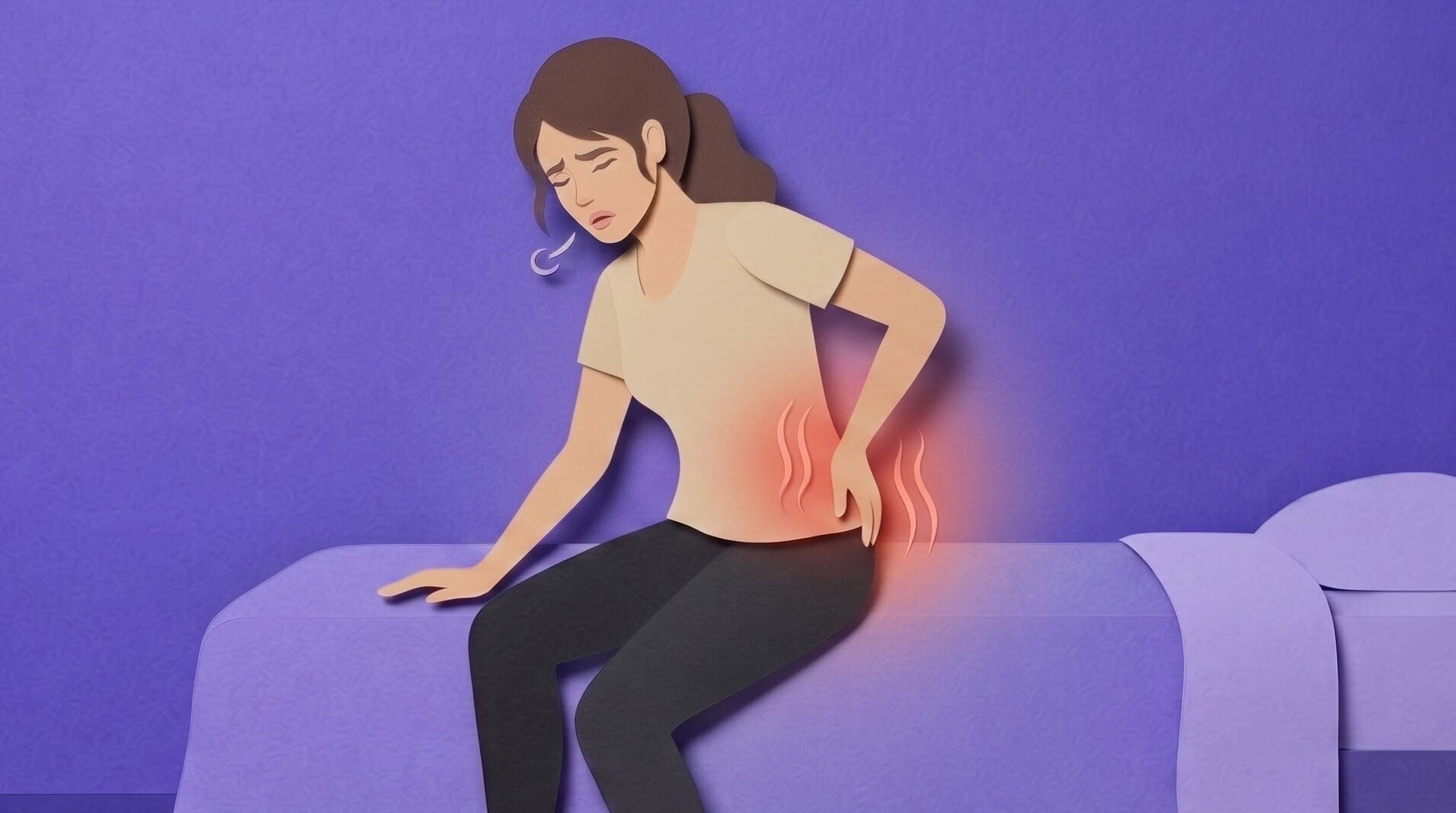
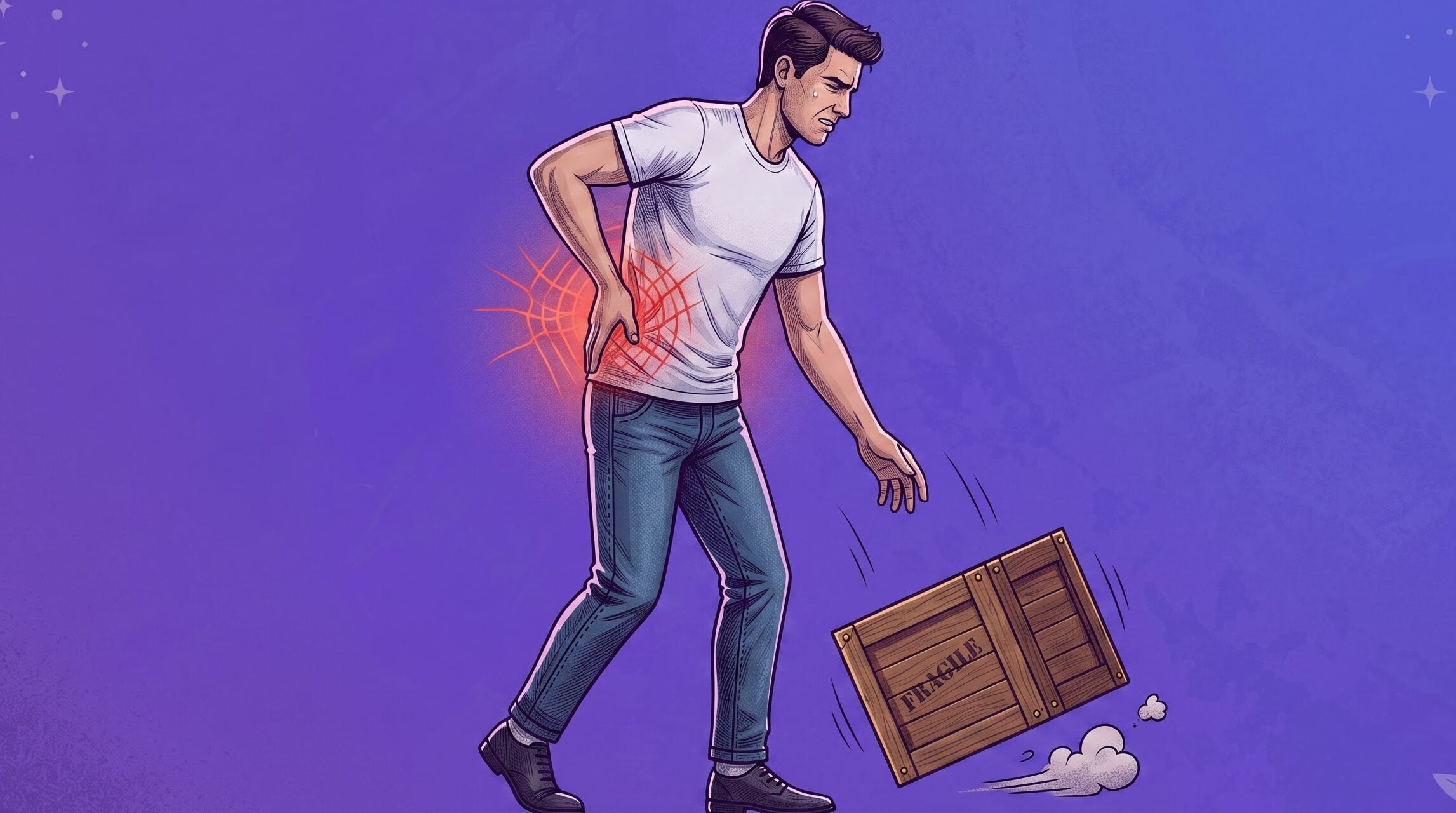
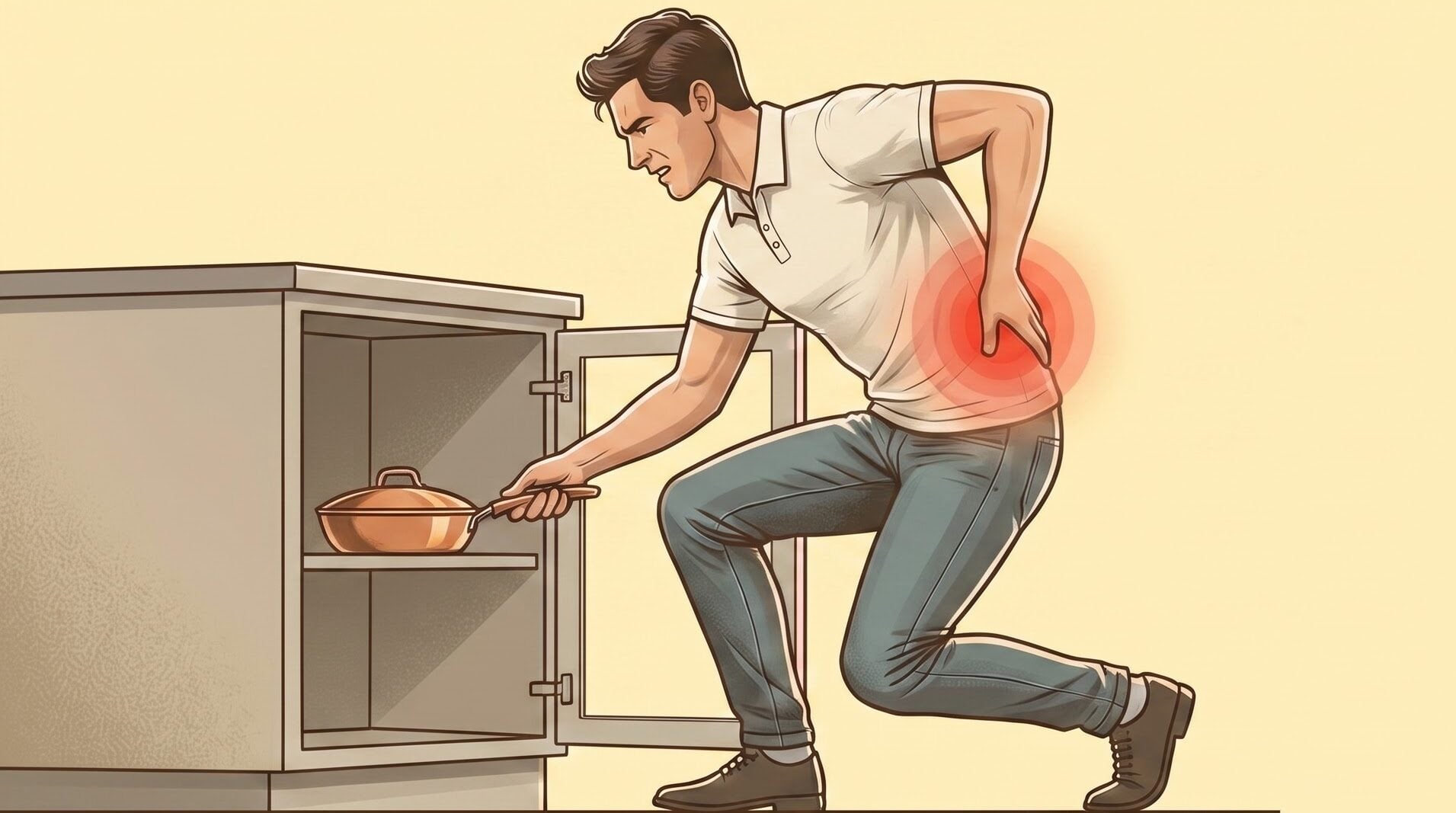
When your back flares up, even simple tasks can feel scary. Reaching into a low cabinet for a pan feels like a risky move. Pausing halfway through standing up from a chair, waiting to see if your back will catch, is exhausting. In those moments, your brain gives you a clear message: Stop moving completely.
It feels natural to want to lock your waist still. If you break an arm, a hard cast holds the bone still so it can heal. It seems logical that if your lower back feels weak, putting on a lumbar support belt or hard frame until the pain stops would be the safest choice.
For a long time, traditional back care agreed with that idea. Doctors often recommended strict bed rest or fitted patients with heavy, hard braces to stop the waist from moving.[1] The main idea was simple: Protect the back by locking it down.
However, research shows that your lower back does not heal like a broken arm.[2] The joints and soft pads (discs) in your spine need gentle movement to stay healthy. Light movement acts like an internal pump. It circulates fluid around your back, clears out irritation, and brings in fresh nutrients to help tissues repair.[3]
When you lock your back completely still, that natural pumping stops. Your joints get stiff, your muscles get tight, and moving feels even scarier.[2,4] This led to a big shift in modern back care:
- Restrictive Immobilization: Treats your spine like a broken bone, attempting to protect it by stopping all movement.
- Guided Movement: Treats your spine like a sensitive joint, protecting it by setting safe boundaries so you can keep moving while you heal.[2]
This shift is not about deciding which belt has thicker padding. It is about choosing how you recover. Healing is not about staying frozen in bed until the pain goes away. It is about guided movement, giving your back enough support so that daily activities feel safe again.
Is restricting all movement with a lumbar back support belt ever the right strategy?
To understand guided movement, one thing should be clear: hard, rigid braces are not inherently bad. They simply serve a very specific purpose.
If someone suffers a severe bone fracture in a car accident or undergoes major spine fusion surgery, their spine may need strict stabilization during early healing as guided by clinical protocols.[5]
In those cases, a specialist prescribes a heavy plastic-and-steel brace that acts as an external frame to stop waist movement.
However, most people with back pain are not dealing with broken bones. They are managing irritated discs, nerve sensitivity, or muscle spasms that flare up during daily tasks like bending down or sitting at a desk.[2]
Using a hard post-surgical brace for everyday back pain is like placing a squeaky door inside a block of concrete. The squeak stops, but only because the door can no longer function. When you want to walk, carry groceries, or play with your children, the goal is not to freeze your waist. The goal is to keep you moving comfortably without triggering pain.
Will wearing a lower back support make my core lazy, or can it actually help me move safer?
Almost everyone with back pain hears this warning: “Do not wear a support belt too much, or your stomach muscles will get weak and lazy.”
Is that true?
It can be true, but only if you lock your back completely still.[4] Think about wearing a hard arm cast for a month. When the cast comes off, the arm muscles look smaller because they did zero work for weeks.
When you wear a guided lumbar support belt, your stomach and back muscles stay active while you walk, stand, and bend.[6] The support simply takes away that sudden, sharp feeling of weakness when you lean forward.
Your muscles do not get weak from safe movement; they get weak when pain forces you to sit or lie down for days.[4] By giving you the confidence to stay active, guided support helps your core muscles stay engaged.[6]
How a Back Support Belt Guides Movement Without Locking the Spine?
How can a flexible belt protect your back if it does not hold you completely stiff? It works using two simple processes that happen inside your body: internal air support and sensory feedback.
1. Creating Internal Support
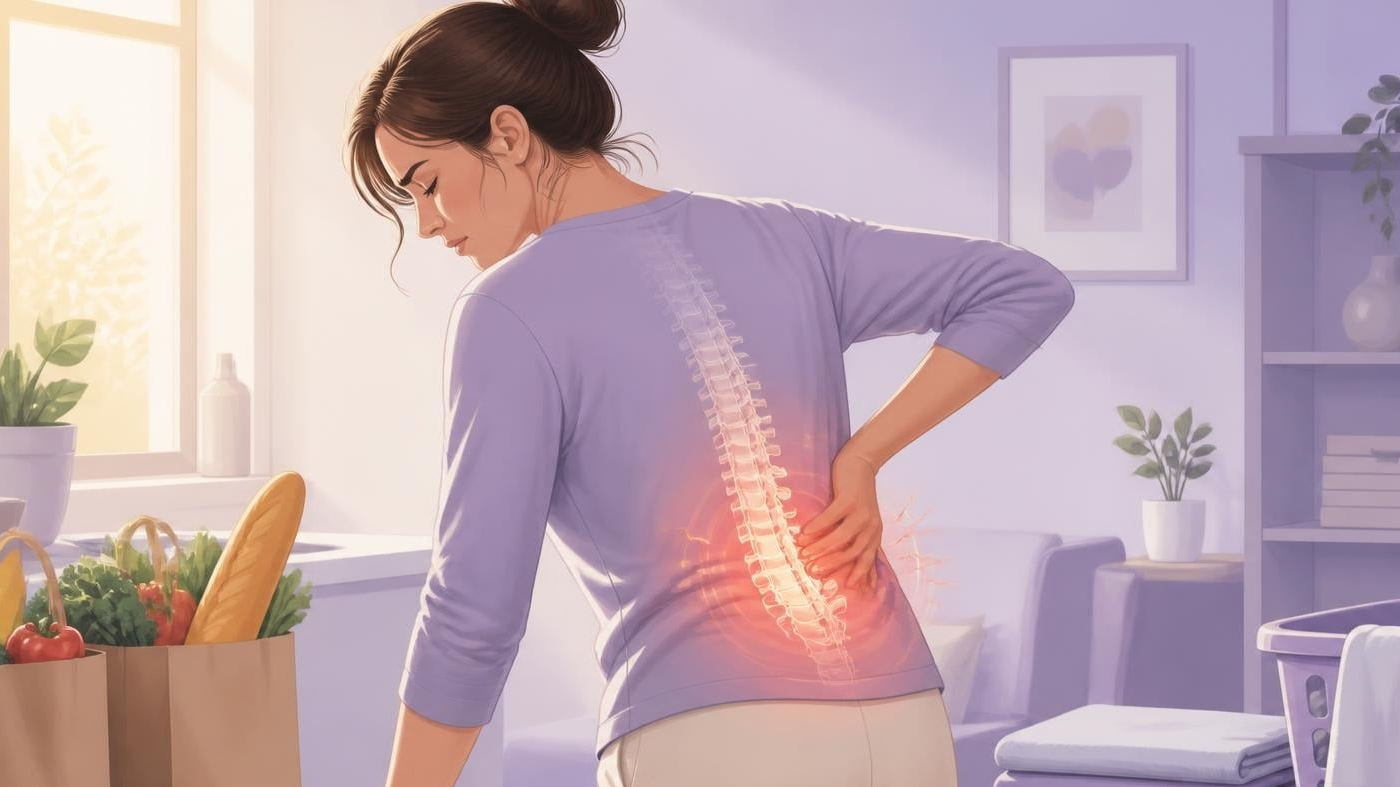
Think about what happens when you prepare to lift something heavy, like a full laundry basket. You naturally take a small breath and tighten your stomach. That action creates an internal pillar of pressure inside your belly, which pushes back against your lower spine and unloads weight from your joints and discs.[7]
When your back hurts, your stomach muscles often spasm or react too slowly.[4] That natural internal support breaks down, leaving your lower back to absorb the full weight every time you take a step.
A guided lumbar support belt wraps around your midsection to help reinforce this internal support mechanism, a process doctors refer to as increasing intra-abdominal pressure.[7] By gently compressing your midsection, external support can help stabilize the lumbar spine and reduce load during movement.[7]
2. Giving Your Brain Clear Signals
Your skin and muscles contain sensory receptors that constantly inform your brain about your body’s position, a sense known as proprioception.[8]
When you experience back pain, these proprioceptive signals can become altered or disrupted.[8] This disruption often causes you to feel clumsy or afraid to bend forward.
Guided support acts like a subtle physical boundary. As you lean forward, the snug belt gently presses against your skin, providing a clear sensory cue to your brain.[8] Before you bend too far into a position that might irritate a nerve, your brain receives the message, catches you, and helps you adjust your posture naturally.[8]
Why Betterhood Was Designed to Move With You, Not Restrict You
Understanding how the spine responds to support highlights why equipment design matters so much during recovery. Support systems should work alongside your natural movements, helping you stay active without feeling restricted.
Supporting Movement Instead of Blocking It
- Daily Challenge: Getting out of bed, bending down to lift groceries, or standing up after working at a desk often creates a sharp feeling of insecurity in the lower back.
- Traditional Design Limitation: Many conventional lumbar belts are built relatively thick and rigid because their main goal is to restrict movement as much as possible to keep the area safe.
- Recovery Principle: Research shows that spinal tissues heal best with controlled, low-stress movement.[2] Completely locking the waist can make joints feel stiff and muscles feel inactive over time.[4]
- Betterhood Engineering Approach: Betterhood uses a thinner construction paired with an 8-stabilizer system. Rather than restricting movement, these targeted stabilizers guide your lower back, offering dynamic stability during daily motions.
- Why This Design Matters: This approach lets the support move with your body naturally, helping you maintain a safe posture during normal activities while allowing your spine to stay active.
Managing Comfort for Daily Wear
- Daily Challenge: People dealing with back pain need reliable support throughout their active daily routines, whether sitting at a desk, doing household chores, or walking outdoors.
- Traditional Design Limitation: Many conventional belts use heavy, dense fabrics that trap heat and sweat, making them feel hot, bulky, and uncomfortable during extended use.
- Recovery Principle: A support system is only effective if worn comfortably when needed. Excessive heat and bulk lead to early removal, leaving the back unsupported during key daily activities.
- Betterhood Engineering Approach: Betterhood addresses all-day wearability through a slim profile and AeroMesh fabric that encourages continuous airflow to maintain a comfortable skin temperature.
- Why This Design Matters: High breathability and a low-profile fit allow the support to be worn comfortably under everyday clothing, keeping your back supported through long hours of daily activity without overheating.
Resource: Seeing Guided Movement Engineering in Practice
To see how these guided-movement principles, 8-stabilizer architecture, and AeroMesh materials are applied in a physical system, explore the engineering breakdown of the Betterhood LS Belt. Understanding how these components come together can help you evaluate what type of lumbar support aligns best with your personal recovery plan.
How to Use a Back Support Belt for Daily Routine Relief ?
Guided support is a tool to help you stay active, not something you need to wear every minute of the day. Here is a simple way to use it:
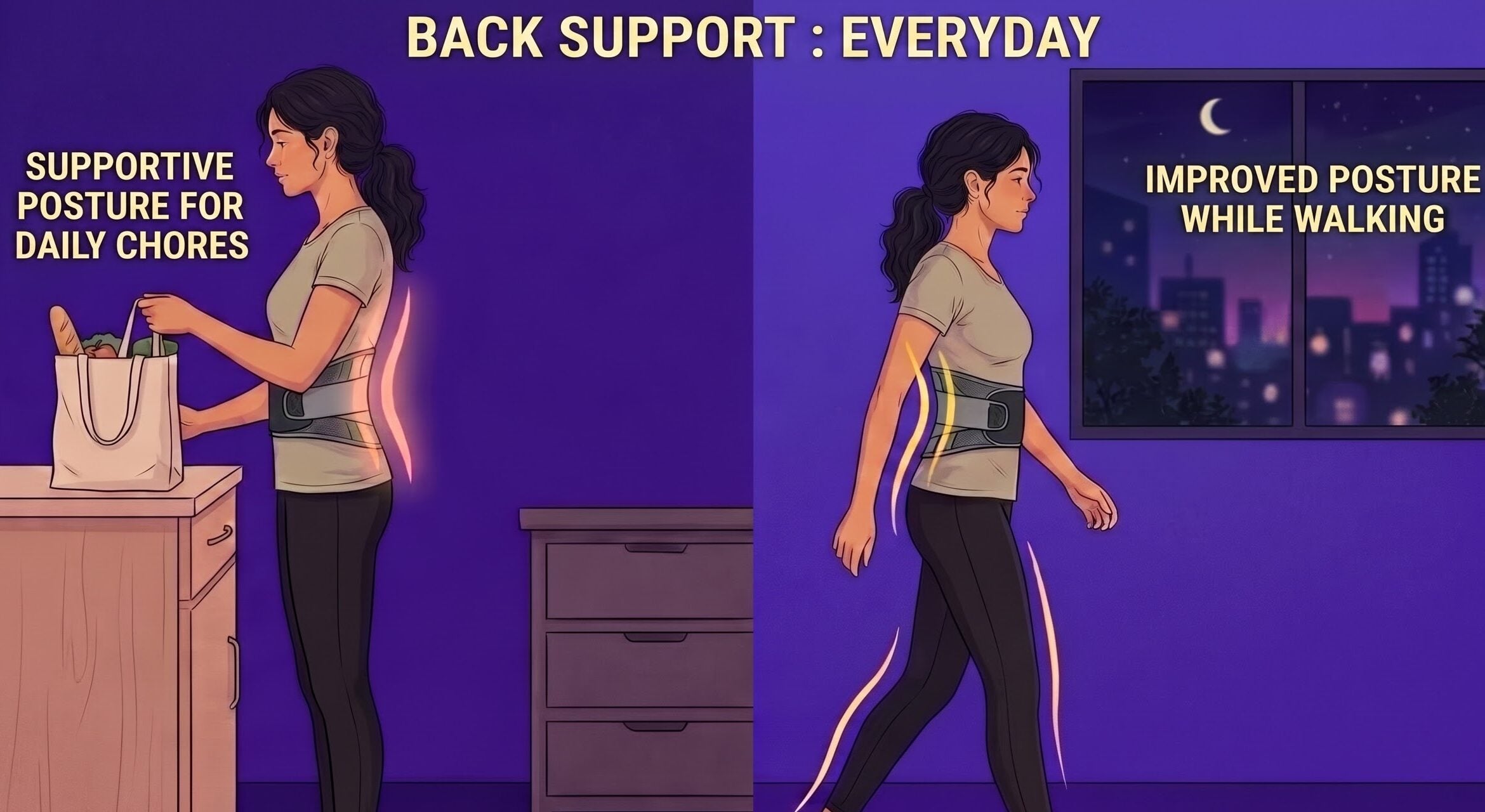
- Wear It When You Are Active: Put the support on during back-intensive tasks like carrying groceries, standing at the counter, walking, or working at a desk.[6]
- Take It Off When You Rest: Remove the belt when lying down or relaxing in a chair, as your back is not supporting weight during rest.
- Combine Support with Light Activity: Use the added stability of your support to maintain gentle daily walking and therapist-recommended exercises.[2]
Moving Forward: Recovery Is Motion
For a long time, people with back pain had two choices: stay completely still and wait, or risk pain by moving without any support.
Guided movement gives you a better choice. By offering gentle physical boundaries and lifting weight off your lower back, modern support helps you stay active safely.[6,7]
Recovery is not about waiting in bed until all pain is gone. It is about learning to move with confidence again, one day at a time.[2]
Frequently Asked Questions
Is a lumbar support belt the same thing as a post-surgical abdominal binder?
No, abdominal binders are flat elastic bands meant to compress abdominal tissues after surgery, whereas lumbar support belts feature contoured stabilizers designed to offload the spine during movement.[6]
How many hours a day should I wear a guided lumbar support belt?
You should wear guided support during active or stressful tasks for roughly 1 to 3 hours at a time, removing it when resting.[6]
Can I sleep while wearing my lumbar support belt?
No, sleeping in a back belt is generally not recommended because lying flat removes gravitational load from your spine, making external support unnecessary unless specifically directed by a doctor.
How do I know if I need a hard rigid brace instead of a guided movement support system?
Hard rigid braces are typically reserved for major structural injuries or immediate post-surgical healing, whereas flexible guided-movement systems are ideal for managing general lower back pain, muscle spasms, or irritated discs.[2,5,6]