




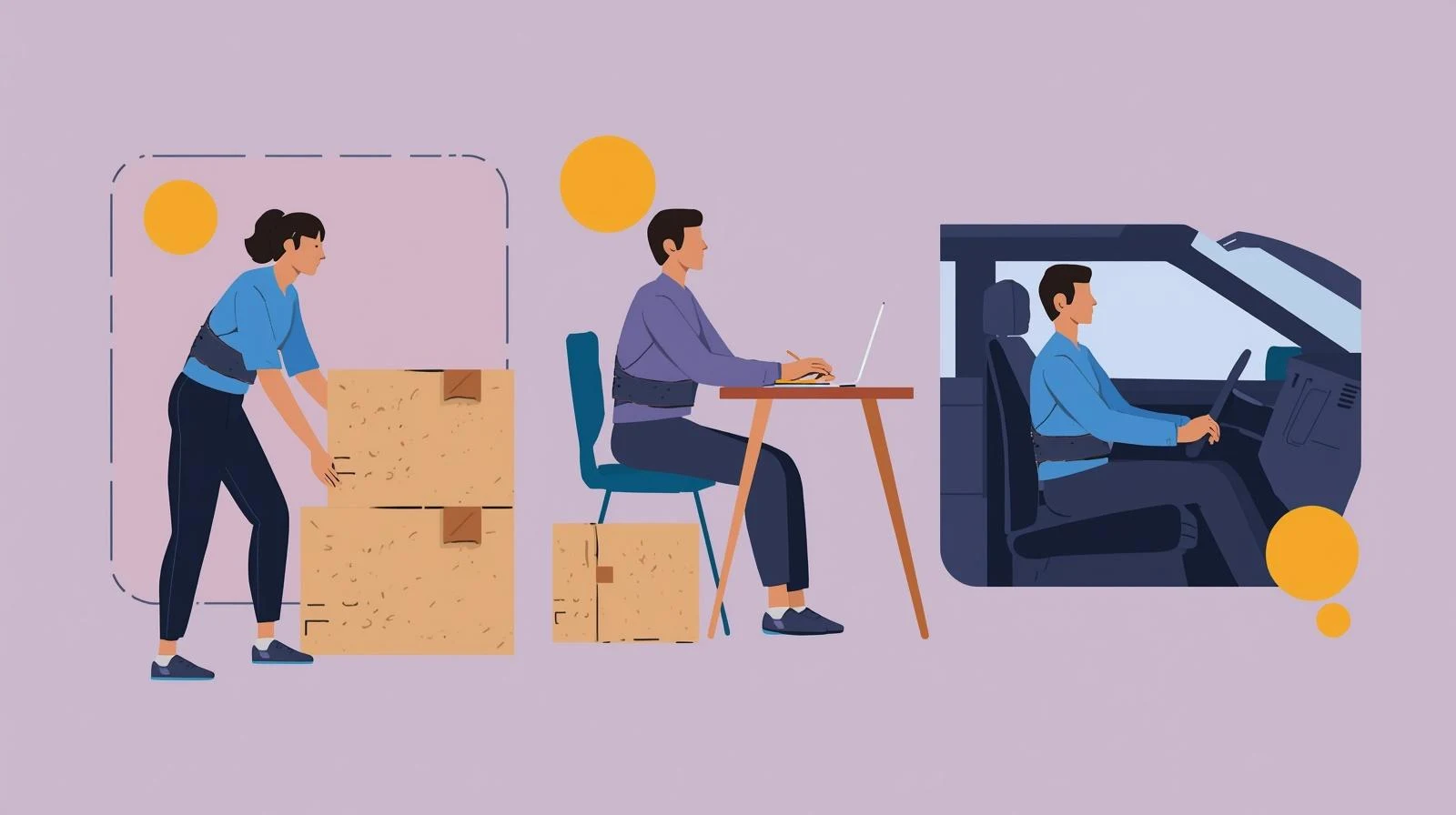
Lower back support for work is used generally by people who lift, sit or drive long hours. These daily activities can strain the lower back. Over time that can lead to discomfort, stiffness, or fatigued muscles. So, in order to increase comfort while working, many people go for lower back support.
Furthermore, back pain is not limited to heavy laborers. Office workers, drivers, students and homemakers might have lower back strain too. Sitting for long upper seasons, coming up behind, or driving too much can all add pressure to the lower back [1].
Also, you need to have a proper posture while you work. Using ergonomic seating and lumbar support can help prevent strain. A work lower back support may ensure that the spine remains more aligned while doing everyday activities [2].
Here’s how lower back support works in lifting, sitting and driving. It also addresses benefits, daily use and tips for comfort.
What does lower back support for work mean?
Lower back support for work is a belt that is worn around the lower waist and back. It offers mild compression and supports the lumbar region. The lumbar region bears a great deal of the body’s weight. So daily work is more likely to feel strain.
The majority of lower back supports are crafted from breathable and flexible materials. This, in turn, makes it suitable for long hours. In addition, adjustable straps allow individuals to customize the level of stability.
Here are the common uses of these supports:
- Lifting objects
- Sitting long hours
- Driving long distances
- Standing for work
- Household tasks
- Daily movement
There is no fight movement on the lower back support. It gives gentle support while keeping some flexibility. So it is right at home for daily work.
What Is Lower Back Strain?
Many everyday tasks consist of repetitive movements. In other words, prolonged periods of inactivity such as Sitting at the desk dumbfounded Picking / lifting things up Driving for long hours. Such activity may compress the lower spine.
Another common reason is poor posture. Poor posture in sitting (slouching) or lifting (incorrect bending) can result in increased back stress. Acute pain during this time can ultimately lead to discomfort or stiffness [3].
Moreover, staying stagnant in any one position for too long can decrease muscle flexibility. Which is why experts advise against sitting without moving at work. While at work, a lower back support may help to ensure comfort in these tasks [6].
Lower Back Support for Lifting
Lifting is a leading cause of lower back strain. Bending forward or lifting heavy objects improperly may strain the spine. So be sure your technique is correct.”
A low back support for work might assist during lifting by:
- Supporting the lumbar area
- Encouraging better posture
- Reducing sudden strain
- Improving stability
- Increasing comfort
But being supportive is not enough. You also need to be lifting properly and safely. And experts recommend keeping the object near, bending at the knees and avoiding twisting while lifting [6].
- Safe lifting tips
- Knees bend, back does not
- Keep object close to body
- Avoid twisting
- Lift slowly
- Ask for help if needed
These habits combined with lumbar support may reduce discomfort while lifting.
Lower Back Support for Sitting
Office work usually involves sitting for long hours. But if you sit without proper support, low back and neck curves can flatten out. This can add strain to the lower back.
A sturdy lumbar support for computer work promotes better posture. It cradles the curve in your lower back and prevents you from slumping. Sitting might even feel more comfortable as a result.
Also, ergonomically designed seating is suggested to diminish strain on the back. If the seat is of appropriate height, it helps distribute body weight at any location when supported lower back [2].
Sitting advice with lumbar support
- Sit upright
- Keep feet flat
- Avoid slouching
- Adjust chair height
- Take regular breaks
These simple steps might help ease the discomfort of desk work.
Lower Back Support for Driving
Driving for long stretches can make the lower back stiff. The body races in one place, and the muscles get tense. Road vibration may also add to the disquiet.
A work lumbar support for lower back can help the drivers and they are supported in the lumbar area. At best, it actually encourages better posture on long drives.
Driving comfort tips
- Adjust seat properly
- Sit back fully
- Use lumbar support
- Take breaks
- Avoid long drives without rest
The combination of these habits and support may lead to greater comfort.
Work Benefits of Lower Back Support
Provides Gentle Compression
Mild compression comes from lower back support. This could give the muscles a sense of support while moving.
Encourages Better Posture
It reminds users to sit and stand correctly as they support you. Proper posture helps minimize strain [1].
Useful for Daily Work
You can also use it whilst lifting, sitting, driving and standing.
Comfortable for Long Hours
The vast majority of supports are lightweight and breathable.
Allows Movement
It supports the back without limiting movement.
Easy to Wear
Easy to use with adjustable straps.
Helps During Repetitive Tasks
Repetition can put strain on the lower back. Support may improve comfort.
Who Should Use Lower Back Support for Work?
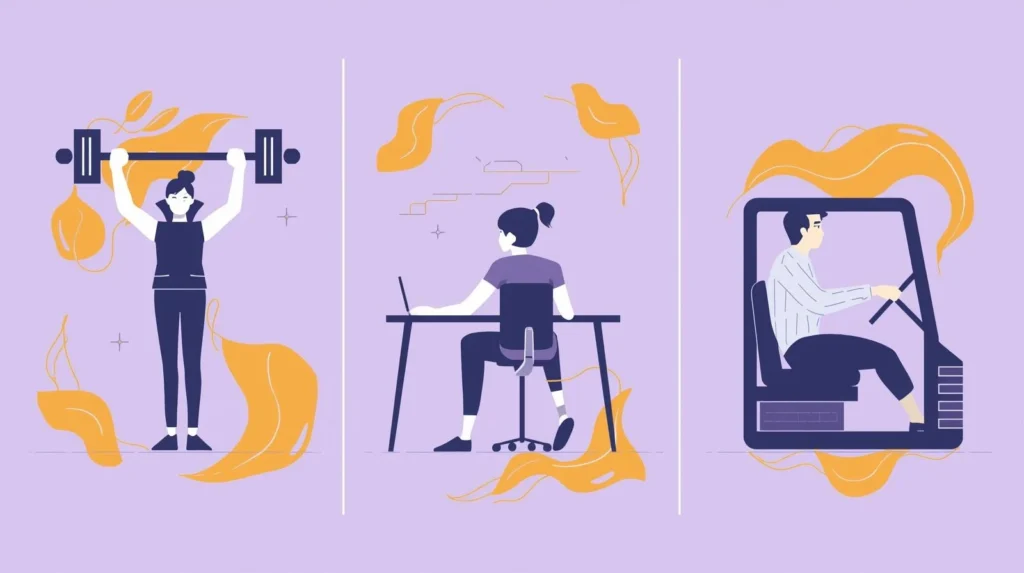
Low back support for work helps in:
- Office workers
- Drivers
- Warehouse staff
- Students
- Homemakers
- Delivery workers
- Retail staff
- People lifting items
- People sitting long hours
Some people rely on it to soothe them through mundane chores.
How to Use Lower Back Support at Work
Wearing the support is simple:
- Wrap around lower back
- Position over lumbar area
- Adjust straps
- Keep snug but comfortable
- Avoid overtightening
It should feel like support but allow movement.
How Tight Should It Be?
You want the support to be tight but not painful. It should not feel too tight. You can breathe and move normally.
Can You Wear It All Day?
Many people do use lower back support during work hours. Often done when seated, lifting things, or driving. But you should take it off while you sleep.
Lower Back Support or Back Brace?
A back support for the lower back is adjustable and flexible. A brace is more rigid and can limit motion. For everyday work many people want flexible support.
Daily Scenarios Where Lower Back Support Helps
- Office work
- Driving
- Lifting
- Standing long hours
- Household work
- Travel
- Light exercise
Lower back support for work is intended for these basic functions.
Conclusion
Low Back Support For WorkAdditional support tool, which is simple to use and easy. It assists when lifting, sitting and driving. Plus, it helps maintain good posture and adds to comfort.
It is lightweight, flexible and perfect for everyday use. When done with correct posture and movement, this may reduce strain while working [8]
A lower back support for work is a good investment if you sit, lift or drive for long periods of time and they will help make your daily routines more comfortable.
FAQs
Lower back support for work You can wear during your day-to-day activities. It’s meant for everyday use, sitting, hauling or driving. But remove it at bed for comfort.
Well yes lumbar support does help in preventing bad posture after spending long hours sitting. It provides support to the lower spine, which can reduce strain when working at a desk.
Well, a lot of people go for lower back support sitting in the car, making long-distance trips more comfortable and supportive.
Yes, it provides mild lifting support. It could also assist with maintaining good posture when carrying items.
It should feel tight and supportive but not overly so. You know, you should still be able to breathe and move freely.
References
- NHS. (n.d.). Back pain.
https://www.nhs.uk/conditions/back-pain/ - Cambridge University Hospitals NHS Foundation Trust. (n.d.). Seating and ergonomics.
https://www.cuh.nhs.uk/patient-information/seating-and-ergonomics/ - MedlinePlus. (2025). Low back pain – chronic.
https://medlineplus.gov/ency/article/003108.htm - Mersey Care NHS Foundation Trust. (n.d.). Spinal brace.
https://www.merseycare.nhs.uk - Bedfordshire Hospitals NHS Foundation Trust. (n.d.). Spinal corsets and abdominal supports.
https://www.bedfordshirehospitals.nhs.uk - MedlinePlus. (2024). Taking care of your back at home.
https://medlineplus.gov/ency/patientinstructions/000413.htm - MedlinePlus. (2025). Low back pain – acute.
https://medlineplus.gov/ency/article/007425.htm - NHS. (n.d.). Exercises for back pain.
https://www.nhs.uk/live-well/exercise/exercises-for-back-pain/


