



Sitting down to work, drive, or enjoy a meal should be an effortless, comfortable part of your day. But when tailbone pain makes every attempt to sit down trigger a sharp ache or persistent soreness at the base of your spine, even short periods in a chair can feel like a challenge.
This localized discomfort is known as ‘coccydynia’ or tailbone pain. While it can certainly interfere with your daily routine, tailbone pain is usually not a sign of a serious problem and often improves with conservative care [1]. If you have been wondering why sitting hurts so much, what might be happening around your spine, and how you can make your daily seating far more comfortable, understanding the mechanics of your tailbone is the best place to start.
What Is Coccydynia?
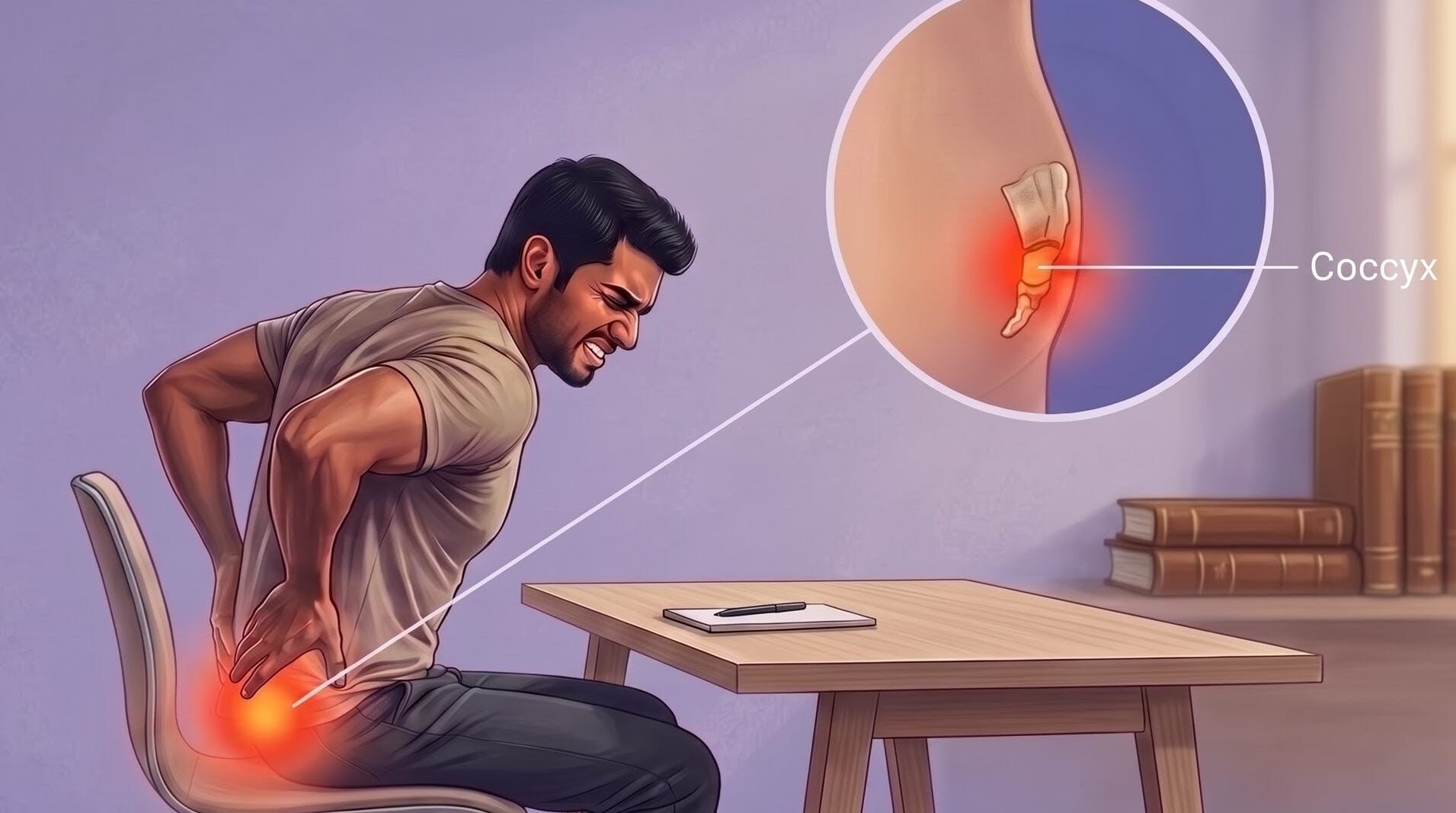
To understand why your tailbone hurts, it helps to look at where that pain originates. The word ‘coccydynia’ (pronounced kok-sih-DIN-ee-uh) refers to localized pain in or around the coccyx the small, triangular bone structure located at the very bottom of your spinal column, just above the buttocks [1].
While the coccyx is small, it serves important structural functions:
- Weight-Bearing Role: When you are standing, your coccyx stays relatively unburdened. However, when you sit down, it becomes part of the weight-bearing structure of the pelvis [3].
- Muscular Anchor: It serves as an attachment site for several pelvic floor muscles, tendons, and ligaments [3].
When inflammation, bruising, or strain affects the coccyx or its surrounding attachments, changes in seated posture can irritate local nerve endings and provoke noticeable discomfort [1].
Knowing where the pain comes from is one thing but what does coccydynia actually feel like in everyday life?
What Does Tailbone Pain Feel Like?
Tailbone pain tends to have a distinct clinical pattern that sets it apart from general lower back pain.
People with tailbone pain frequently report:
- Localized Pain: A distinct ache, deep tenderness, or sharp pain strictly localized at the base of the spine.
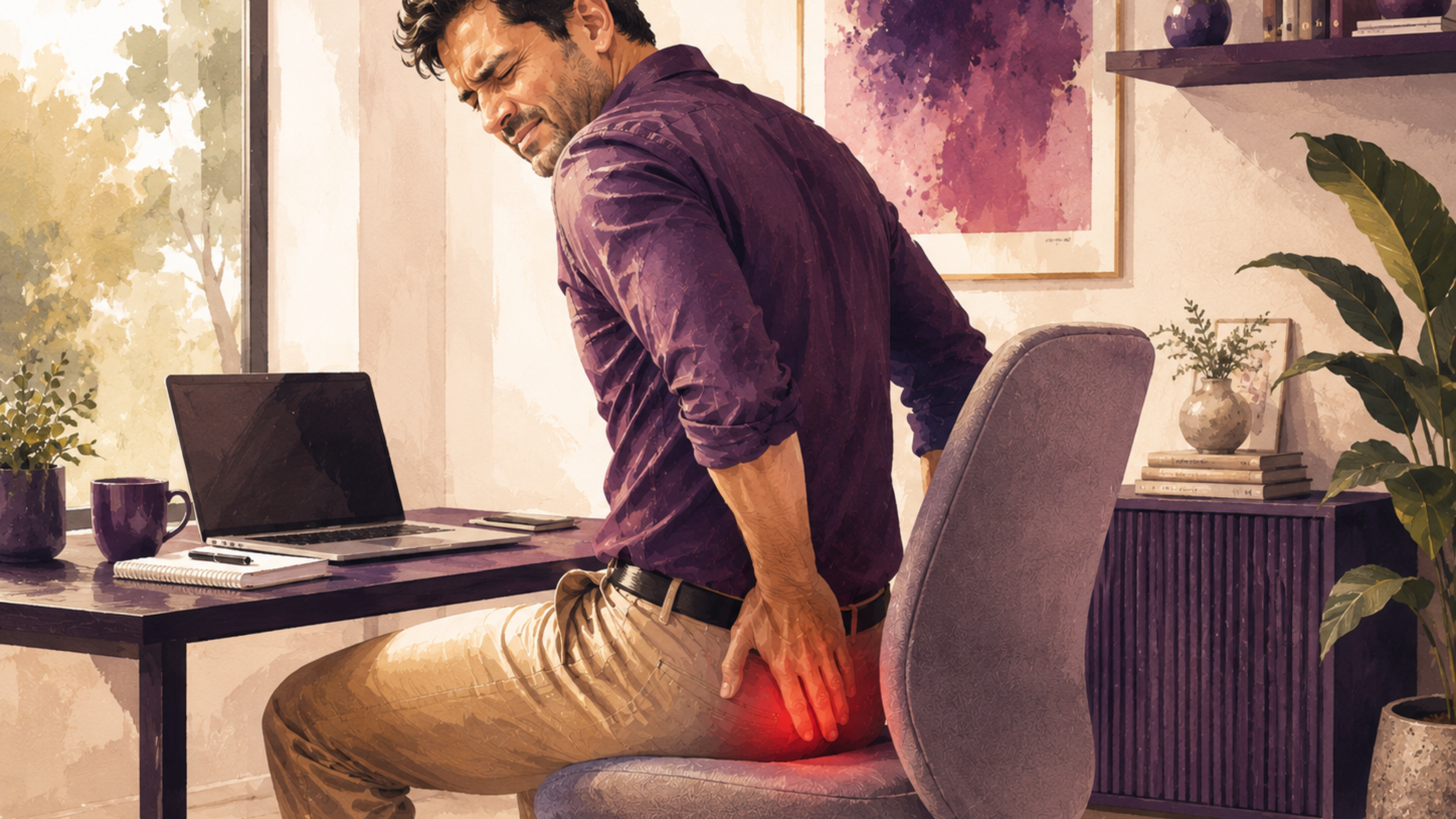
- Sitting Intolerance: Discomfort that intensifies when sitting, particularly on hard, unyielding, or unpadded surfaces.
- Reclining Sensitivity: Increased discomfort when leaning backward while seated, which shifts additional body weight toward the coccyx.
- Positional Transitions: A dull ache or sharp twinge when transitioning from a seated position to standing up.
- Pelvic Pressure: Discomfort during bowel movements or physical intimacy [1].
Recognizing these patterns naturally leads to an obvious question: if sitting brings on this discomfort so reliably, what caused your tailbone to become sensitive in the first place?
What Causes Tailbone Pain?
Tailbone discomfort can stem from a specific traumatic event or develop gradually over time as a result of ongoing physical stress.
Common Causes of tailbone Discomfort
- External Trauma: Slipping on ice, missing a step, or landing hard on your buttocks during a fall accounts for most documented cases of acute coccydynia. Direct impact can bruise, dislocate, or fracture the small segments of the coccyx [1, 3].
- Repetitive Strain: Activities that involve repetitive pressure or friction against the pelvis such as cycling or rowing can inflame surrounding joints and ligaments [1].
- Prolonged Sitting: Sustained sitting on hard or poorly supportive surfaces exerts continuous mechanical pressure on the tissues around the base of the spine [1].
- Pregnancy and Childbirth: Hormonal changes during late pregnancy cause pelvic ligaments to relax. During childbirth, the movement of the fetus through the birth canal can stretch or strain attached pelvic tissues [1, 3].
- Idiopathic Coccydynia: Sometimes, doctors cannot identify a clear cause, even after evaluating other potential factors. [3].
Some causes are obvious, such as a fall. But what if there was no clear injury at all and the pain seems to appear mainly when you sit down?
Why Does My Tailbone Hurt When Sitting but Not Standing?
The difference in symptoms between sitting and standing comes down to basic body mechanics and weight distribution [3].
When standing, your body weight travels downward through your hips, legs, and feet, leaving the tailbone largely unloaded. Bending your knees to sit shifts your upper body weight onto your pelvis, creating a weight-bearing tripod formed by your two “sit bones” (ischial tuberosities) and the coccyx [3].
- Standing Position: Body weight travels mainly through the hips, legs, and feet, leaving the tailbone relatively unloaded.
- Seated Position: Body weight shifts toward the pelvis and and presses down on the sit bones and tailbone, increasing direct loading on the coccyx.
If the tissues surrounding the coccyx are bruised or inflamed, that downward weight transfer creates direct mechanical pressure on sensitive local structures. Standing removes much of that seated loading, which may make the area feel more comfortable [1].
But simple surface pressure isn’t the only thing that can matter. What if the coccyx itself is moving more or less than it normally should?
Could the Coccyx Be Moving Differently? (Hypermobile vs. Hypomobile)
The joint connecting the coccyx to the sacrum (the sacrococcygeal joint) normally allows a small degree of movement when sitting or leaning. Deviations from this normal mobility can contribute to ongoing pain [5]:
- A Hypermobile Coccyx: Under seated pressure, the tailbone flexes inward or backward excessively, placing extra strain on attached pelvic ligaments and surrounding soft tissue [5].
- A Hypomobile Coccyx: Joint movement is restricted or absent. Because the joint does not yield slightly to accommodate body weight while seated, the bone creates focal pressure against adjacent soft tissues [5].
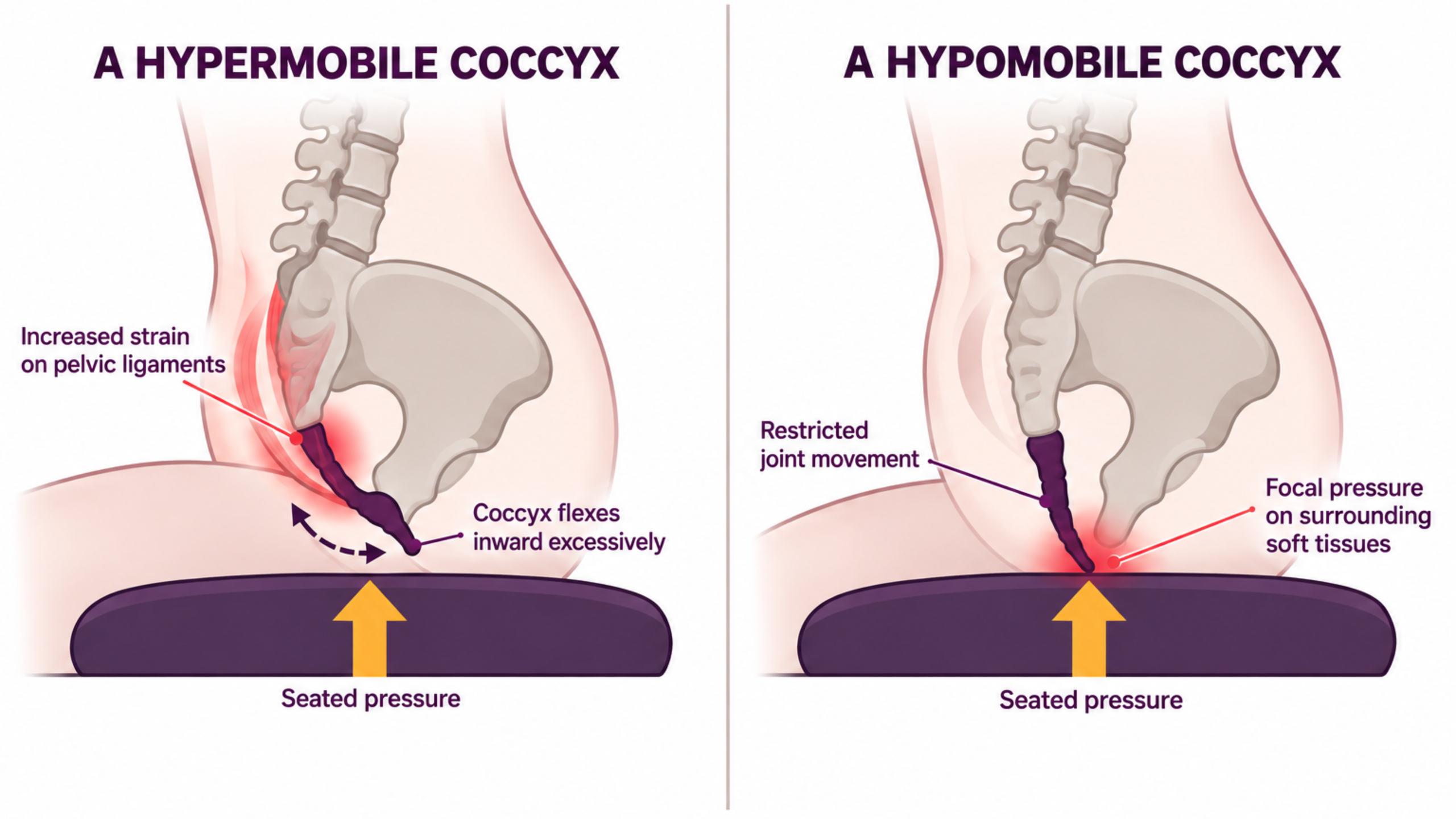
Note on Mobility: To assess abnormal coccygeal movement, clinicians may use dynamic imaging with seated and standing views. Joint mobility should never be self-diagnosed or forcefully tested at home [5].
That raises another practical question: how would a healthcare provider actually figure out whether your coccyx is moving differently or causing your pain?
How Is Tailbone Pain Diagnosed?
If tailbone pain lingers for more than a few weeks or interferes with daily function, a professional healthcare evaluation can clarify the cause and rule out other sources of spinal or pelvic pain.
A clinical evaluation typically includes:
- Medical History: Reviewing recent falls, activity patterns, pregnancy history, or prior injuries to identify potential triggers [1].
- Physical Examination: Assessing the lower spine and coccygeal region for tenderness, swelling, or structural instability [3].
- Targeted Imaging (When Indicated): Imaging is not always needed for mild, self-limiting pain. When symptoms persist or clinicians suspect a specific underlying problem, they may use X-rays, dynamic seated/standing views, CT, or MRI depending on what they need to evaluate [3, 5].
Once you and your healthcare provider evaluate the likely cause, the next question is usually much simpler: what can you actually do to ease the discomfort?
How Can Tailbone Pain Be Managed Conservatively?
Non-surgical conservative care is the primary approach for managing coccydynia. The main goals are to reduce aggravating pressure, manage symptoms, and gradually return to comfortable activity [2, 4].
Common conservative self-care strategies include:
- Modifying Sitting Habits: Taking regular breaks to stand or walk helps relieve continuous mechanical pressure on the tailbone [2].
- Postural Adjustments: Leaning slightly forward while seated shifts body weight toward the thighs and ischial tuberosities, reducing direct loading on the coccyx [1].
- Temperature Therapy: A cold or heat pack wrapped in a cloth may help ease tenderness. Warm compresses or baths can also help relax the muscles around the pelvis [2].
- Over-the-Counter Options: Over-the-counter pain relievers such as NSAIDs can help manage pain when you take them according to professional guidance. [2].
- Pelvic Floor Physical Therapy: Pelvic floor physical therapy may be helpful for some people, particularly when muscular pain or tension contributes to symptoms [4].
All of these strategies help, but there is still one practical reality to face: you still need to sit every day. So can the seat itself be modified to make that direct pressure easier to tolerate?
Can a Coccyx Cushion Help With Tailbone Pain?
Complete avoidance of sitting is rarely practical for work, travel, or daily meals. Finding ways to reduce pressure on the tailbone during essential seated tasks is often a helpful part of daily care.
Healthcare sources like the NHS recommend using a specialised coccyx cushion to help manage sitting discomfort [2]. Clinical literature also recognises cutout or wedge cushions as standard non-invasive tools within conservative management [4]. These cushions feature a cutout or recessed area at the rear, allowing the coccyx to rest over open space rather than pressing against a firm seating surface [2, 4].
The Betterhood Coccyx Memory Foam Cushion utilises this standard pressure-relief design approach [6]:
- U-Shaped Cutout: Built with a rear cutout channel designed to help minimise direct contact between the tailbone and the seat surface [6].
- Contoured Design: The cushion is shaped to follow the body’s contours and provide support across the seating area [6].
- Seating Versatility: Suitable for use on office chairs, car seats, and home seating [6].
Note: A seat cushion is a supportive sitting aid intended to reduce localised surface pressure; it is not a medical cure or medical treatment for underlying conditions. A medical professional should evaluate persistent pain [1].
But what if standard office sitting isn’t the only activity that seems to trigger your tailbone discomfort? For some people, the pain becomes particularly noticeable after specific recreation, such as horse riding.
What If Your Tailbone Pain Started After Horse Riding?
Because horse riding involves prolonged or repetitive seated loading on the pelvis, it is possible for the coccyx or surrounding tissues to become uncomfortable during or after a ride [1].
Post-Ride Recovery and Seating Support
If sitting remains uncomfortable after leaving the saddle, the same pressure-management strategies used for everyday sitting may also be useful [1, 2].
Driving home or sitting at a desk afterward can continue to put pressure on a sensitive area. A coccyx cushion such as Betterhood may provide supportive seating during these post-ride periods [2, 6]. Combining seating modifications with gentle mobility work and adequate rest between rides supports a practical recovery routine [2, 4].
Once the ride is over and you are resting, is there anything gentle you can do with movement to help ease surrounding tension?
What Exercises or Stretches Help With Tailbone Pain?
Gentle mobility or stretching may be included as part of conservative care, but the most appropriate exercises depend on the individual and the cause of the pain [4].
Safety Precaution: Stretches should be performed gently and stay within a pain-free range. If any exercise causes sharp or increasing tailbone pain, stop immediately and consult a healthcare provider [1, 2].
Some people may find gentle movements comfortable as part of an overall movement routine:
1. Single Knee-to-Chest Stretch
Gently stretches the lower back and gluteal region.
- Lie flat on your back on a comfortable surface with legs extended.
- Slowly draw one knee up toward your chest, holding it gently with your hands.
- Hold for 20–30 seconds while breathing normally.
- Lower the leg and repeat on the opposite side.
2. Child’s Pose
Promotes relaxation in the lower spine and pelvic region.
- Kneel on a soft surface, bringing your big toes together and keeping your knees comfortably apart.
- Ease your hips back toward your heels while extending your arms forward on the floor.
- Rest your forehead down and allow your spine to relax for 30–60 seconds.
3. Gentle Figure-Four Stretch
Helps relieve muscle tension in the gluteal and deep hip region.
- Lie on your back with both knees bent and feet flat on the floor.
- Cross your right ankle over your left knee.
- Reach behind your left thigh and gently draw it toward your chest until you feel a mild stretch in the right glute.
- Hold for 20 seconds, then switch sides.
Gentle movement can be part of conservative care, but self-management has its limits. When is tailbone pain a sign that it is time to get a formal medical opinion?
When Should You See a Healthcare Professional?
While many cases of mild tailbone pain resolve with conservative measures, certain symptoms warrant formal clinical evaluation [1, 2].
Seek medical advice if:
- The pain resulted from a sudden, severe fall or high-impact injury [1].
- Your pain is severe, worsening, or fails to improve after several weeks of self-care [2].
- You experience numbness, tingling, or weakness in your legs, groin, or lower back [1].
- You observe unexplained swelling, redness, warmth, or skin changes near the tailbone [2].
- Tailbone pain is accompanied by unexpected changes in bowel or bladder function [1, 2].
Even when your pain doesn’t show any of these warning signs, there are still a few common questions that often arise about what to expect next.
Frequently Asked Questions
What does coccydynia feel like, and what causes it?
Coccydynia presents as localized pain or tenderness at the base of the spine. Common triggers include direct falls, repetitive seated friction, prolonged sitting, childbirth, or general joint inflammation [1].
Why does my tailbone hurt when sitting but not standing?
Sitting shifts body weight directly onto the pelvic tripod, including the tailbone. Standing transfers weight down through the legs, removing mechanical load from the coccyx [3].
What is the difference between a hypermobile and hypomobile coccyx?
A hypermobile coccyx moves excessively under pressure when seated, straining attached ligaments. A hypomobile coccyx lacks normal joint motion, causing the rigid bone to press against adjacent soft tissue [5].
How long does coccydynia last?
Tailbone pain may improve within weeks, although some cases last longer. Persistent symptoms may require further evaluation and treatment [2, 4].
What exercises help relieve tailbone pain?
Gentle mobility exercises targeting the lower back, glutes, and pelvic region may help ease surrounding muscular tension, but exercises should be individualized and stopped if they aggravate symptoms [4].
Can a U-shaped coccyx cushion help while working at a desk?
Yes. A U-shaped seat cushion features a cutout channel designed to reduce direct contact pressure on the tailbone while sitting [2].
Why does my tailbone hurt after horse riding?
Horse riding involves prolonged or repetitive seated loading on the pelvis, which can make the coccyx or surrounding tissues uncomfortable [1].
Does coccydynia go away?
Many cases improve with time and conservative care, although some people develop persistent symptoms that need further evaluation [2, 4].
Is tailbone pain serious?
Tailbone pain is typically a localized, non-dangerous condition caused by bruising or ligament strain [1]. However, severe pain or symptoms following significant trauma should be evaluated by a healthcare professional [1, 2].
What is the most common cause of coccydynia?
External trauma, such as a direct fall onto the buttocks, is the most frequently documented cause of acute coccydynia [1, 3].
Moving Forward With Comfort
Tailbone pain can make sitting for work, driving, or relaxing uncomfortable, but understanding how weight shifts through the pelvis can make conservative management more practical [3].
Combining simple lifestyle adjustments such as taking regular standing breaks, practicing gentle stretching, and using a cutout seat cushion to reduce direct contact pressure may make sitting more comfortable while the area settles [2, 4]. If your symptoms are severe, persistent, or accompanied by red-flag signs, consult a medical professional for personalized guidance [1, 2].
References
- Cleveland Clinic. Coccydynia (Tailbone Pain). Available from: https://my.clevelandclinic.org/health/diseases/10436-coccydynia-tailbone-pain
- NHS. Tailbone (coccyx) pain. Available from: https://www.nhs.uk/conditions/tailbone-coccyx-pain/
- Bain HL, Mabrouk A, Foye P. Coccyx Pain. StatPearls [Internet]. Treasure Island (FL): StatPearls Publishing; updated August 9, 2025. Available from: https://www.ncbi.nlm.nih.gov/books/NBK563139/
- Andersen GO, Milosevic S, Jensen MM, et al. Coccydynia—The Efficacy of Available Treatment Options: A Systematic Review. Global Spine J. 2022;12(7):1611-1623. doi:10.1177/21925682211065389 https://pubmed.ncbi.nlm.nih.gov/34927468/
- Benditz A, Thoma R. Coccygodynia—Diagnosis and Treatment. Dtsch Arztebl Int. 2025;122(23):638-644. doi:10.3238/arztebl.m2025.0154 https://pubmed.ncbi.nlm.nih.gov/40991348/
- Betterhood. Coccyx Memory Foam Chair Cushion for Seat Ergonomic Design. Product Page. Available from: https://shop.betterhood.in/products/coccyx-memory-foam-chair-cushion-for-seat-ergonomic-design
Disclaimer: This content is for informational purposes only and does not substitute professional medical advice, diagnosis, or treatment. Always consult a physician or physical therapist for persistent joint pain.