





Have you ever seen a cobra lift its head so fluidly, arching its hood so confidently and yet graciously? It’s precisely what Bhujangasana (Bew-JUNG-aah-sa-na), or Cobra Pose; one of yoga’s most revered back-bending asanas is all about. The name is derived from the Sanskrit “bhujanga” (serpent) and “asana” (pose), and it closely resembles the cobra pose.
In classical Hatha Yoga Bhujangasana is considered as one of the important postures which stimulates the spinal column and open heart center. The ancient yogis claimed it awakened the body’s centres of vital energy, fostering not only physical invigoration but mental clarity too. Today, science supports many of these traditional claims, which means the Cobra Pose is a staple in a wellness regimen.
So whether you need some assistance with that nagging back pain, want to enhance your posture due to all those hours hunched over work, or just get a little more pep in your step throughout the day, Bhujangasana provides an easy and effective remedy. So let’s really unpack how a transformative pose like this can elevate your wellness journey.
How to Perform Bhujangasana Correctly?
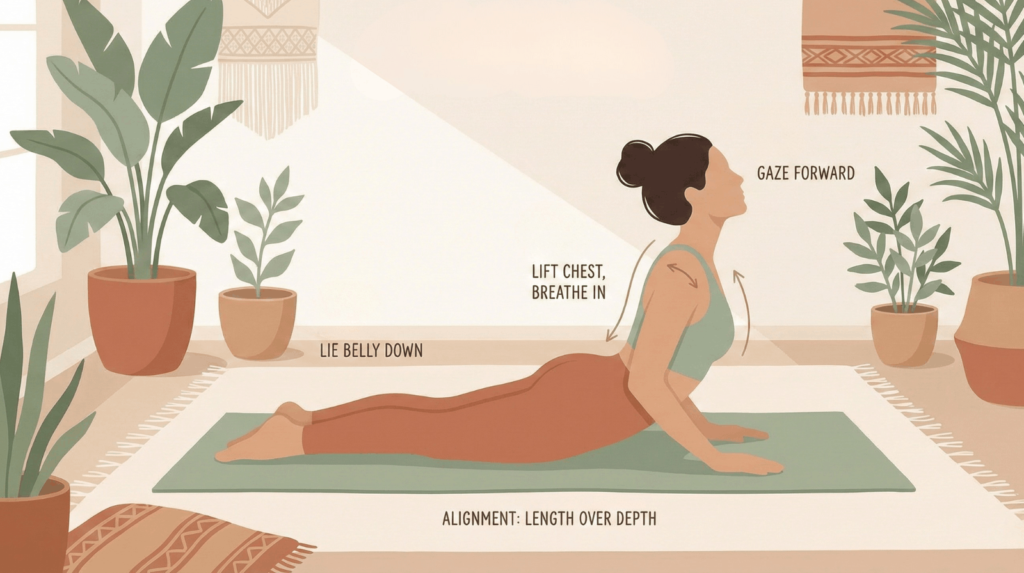
Getting the technique right makes all the difference between reaping benefits and risking strain. Here’s your guide to mastering Cobra Pose:
Step-by-Step Guide to Cobra Pose
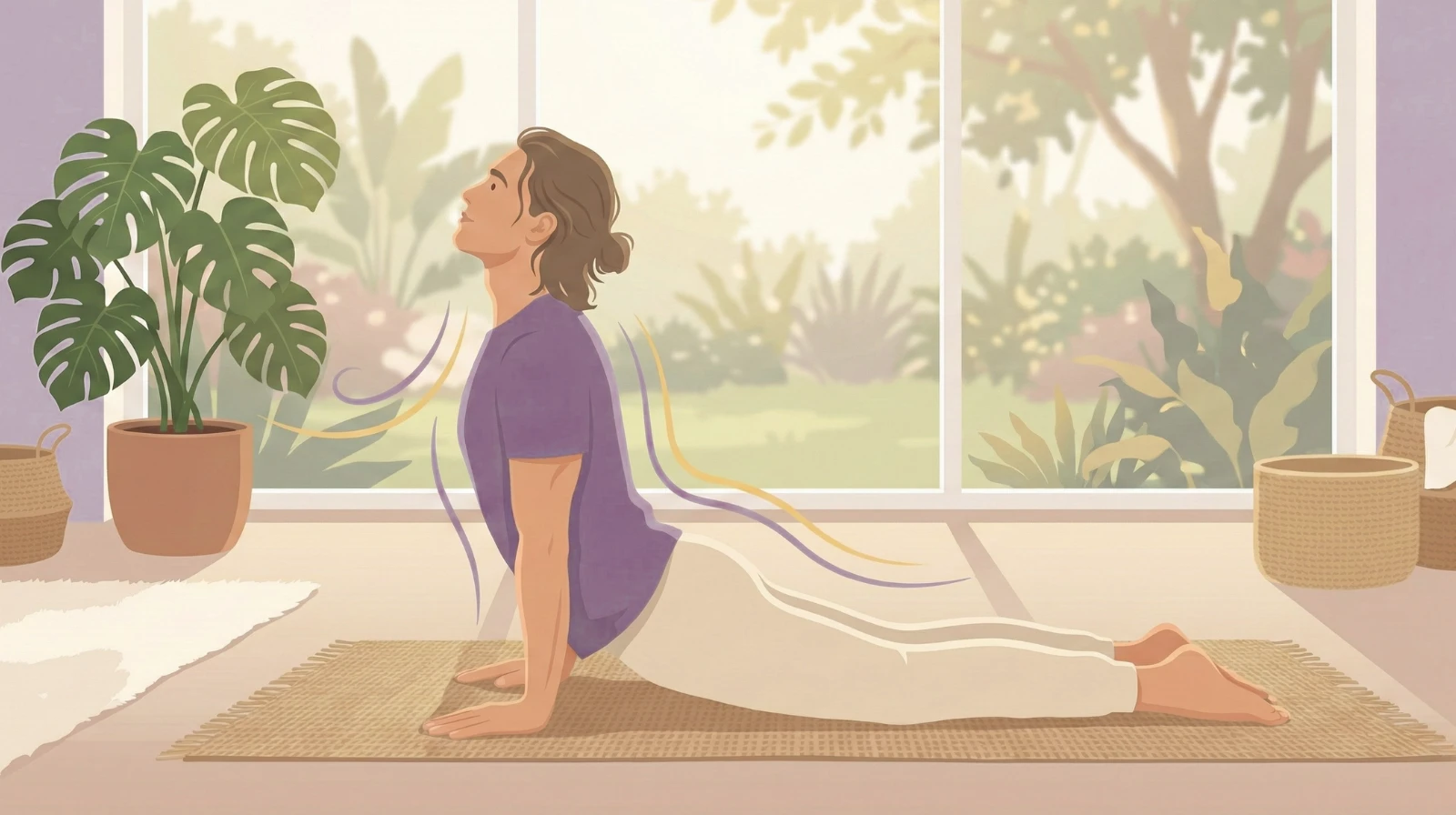
Step 1: Lie belly down on a yoga mat, arms by your side and legs extended about hip-width apart, tops of your feet resting flat on the floor. You can stand with your feet hip-width apart or together whichever feels better.
Step 2: Rest your palms flat on the mat, directly under your shoulders with elbows bent and touching the sides of your torso. Imagine laying some stable groundwork, there.
Step 3: Press the tops of your feet, thighs and pubis firmly into the floor. Using your leg muscles to guard your lower back and hips.
Step 4: As you inhale, start to straighten your arms, lifting your chest off the floor. Keep your elbows just a little bit bent, you’re not trying to reach that full-arm extension unless you’re doing an advanced form of the move.
Step 5: Roll your shoulders back and down, pulling them away from your ears. Lift through the top sternum, but do not push the front ribs forward, which only hardens the lower back.
Step 6: Do not look down; keep your head and eyes looking straight or slightly up. Your neck should feel like a continuation of your spine that seems to naturally extend out in front, not crunched.
Step 7: Relax for at least 15-30 seconds while taking long, deep breaths. To come out, let your body down onto the mat as you slowly exhale.
Breathing Technique in Bhujangasana
Linked with movement. Breathe in as you rise into the pose, and take long deep breaths while holding. Just see how it feels, that synchronized movement helps to oxygenate your muscles and relaxes your nervous system, a concept that’s evidenced time and time again in studies on yogic breathing and its effects on the autonomic nervous system.
Alignment Tips for Safe Cobra Pose
In the nose to knee down version keep your lower ribs on or near the floor. The backbend should travel evenly up your spine, not get stuck in your lower back. Prioritize “length” over “depth” for the curve.
Physical Benefits of Bhujangasana
Improves Spine Flexibility
Your spine is meant to move in a variety of ways, but if it’s not moving, or is agitated and out of alignment due to poor posture or injury, that can cause other parts of the body to be off kilter. Bhujangasana softly extends the spine, which pulls it out of the forward-caving position we most likely assume throughout the day. It has been reported that spinal flexibility among healthy individuals, and the range of motion of the spine during yogic bending poses improves with regular practice [2].
So when you do Cobra Pose on a regular basis, you’re allowing your spine to go back through its full range of motion, lubing up all the little joint surfaces and keeping the discs between vertebrae from getting stiff.
Reduces Lower and Upper Back Pain
If you’re one of the millions suffering from chronic back pain, Bhujangasana could be your new best friend. The pose strengthens the erector spinae muscles; those all-important supporting muscles running along your spine.
Yoga was shown to be effective for decreasing chronic low-back-pain scores and improving back function, in a systematic review published in the Annals of Internal Medicine [3]. Cobra Pose focuses on the back body, but it also ignites the front body, bringing balance to your spine.
It is also thought to stimulate blood flow to the spinal tissues, which may aid in healing and reducing inflammation.
Strengthens Shoulders, Arms, and Core
Don’t be deceived by the spotlight on your back. Bhujangasana is an upper-body workout in a pose. Strength of the deep abdominal muscles, strength and stability of the lower back are required to stabilize your spine in order for your arms, shoulders to help with bringing your leg off the ground along with maintaining its position overhead.
This integrated strengthening works to develop the functional fitness; read, carrying groceries and playing with your kids kind of strength too.
Enhances Posture and Body Alignment
In our smartphone-addicted society, “tech neck” and hunched shoulders have reached epidemic levels. Cobra is a direct antidote to these postural imbalances by pushing the chest forward and the upper back muscles backward, retraining your body into what it’s supposed to be doing.
Consistent practice builds muscle memory for better alignment, on and off the mat. Research has proven successes in yoga as an intervention for balance posturing control and body awareness, which are virtue of healthy alignment under normal daily conditions [4].
Internal Health Benefits
Improves Digestion and Stimulates Abdominal Organs
Here’s where things get interesting. You make sweet compression in your belly, then you let go. This stroking pressure is just like a massage for your digestive organs; the stomach, intestines, liver and kidneys.
In ancient yogic texts, Bhujangasana is said to stoke your digestive fire, or “agni,” which we now know as weight-melting metabolism. It may stimulate peristalsis (the wave-like muscle contractions in your digestive tract that move food along), and possibly lead to more effective digestion, although we might use different terms to talk about it these days.
The easy stretches in the abdomen also help reduce stress and work out well to get rid of discomfort in the digestive system, this can include constipation and bloating.
Improves Blood Circulation and Lung Capacity
Cobra’s pose directly opens your chest, enabling you to breathe in more life giving oxygen. You generally don’t realize that you take shallow breaths throughout the day, but most of us do.
It has been reported that exercises such as chest and breathing exercises using certain yoga postures can improve respiratory function and vital capacity [5]. Improved oxygenation equals more energy, clearer thinking and better cellular function throughout your body.
The position also encourages blood flow to the pelvic area and lower abdomen, which can benefit reproductive organs as well as urinary health.
Helps Balance Hormones and Mood
The link between physical poses and hormonal balance may sound like a stretch, but there is science to support it. Backbends such as Bhujangasana are thought to activate the adrenal glands, which sit on top of your kidneys and churn out hormones like cortisol and adrenaline.
And more generally, yoga has been found to have a beneficial effect on the hypothalamic-pituitary-adrenal (HPA) axis, which is the body’s central stress response system. In one study, published in the Journal of Clinical Psychology, researchers discovered that participants who practiced yoga regularly had managed their cortisol more effectively and felt happier [6].
The heart-opening sensation in Cobra Pose also has a mental health component that could free up stuck energy and feelings and help you feel open, positive, and uplifted.
Weight Loss and Fitness Advantages
Burns Calories and Tones Abdominal Region
Although it’s no replacement for cardio fitness, the Cobra Posture does help in burning a few more calories and increasing metabolism. What’s more, the muscles engaged to create the pose, especially in the core, will help your belly look trimmer and tighter.
The pose works your superficial abdominal muscles as well as the deeper transverse abdominis that serves as your body’s natural corset around your torso. That can overtime help you get a more toned look and better core stability.
Strengthens and Mobilizes the Upper Body
Unlike some other isolated exercises that only work one muscle, Bhujangasana strengthens and tones working muscles throughout the whole body at the same time. It’s the co-operation of shoulder, tricep, chest action and upper back activity imitating real-world movement patterns.
This all-around approach to strength is safer and more balanced in comparison to isolated exercises as a way of attacking fitness.
Benefits for Mental Health
Relieves Stress and Fatigue
There’s just something intrinsically uplifting about backbending, it literally opens your heart center and free you to stand taller and more confidently. Physiologically, the gentle spinal stimulation and increased oxygen flow can help to stimulate your parasympathetic nervous system and move you from “fight or flight” to “rest and digest.”
It can help bring the energy when you’re feeling tired or overwhelmed, without the jitters of caffeine. The active pursuit combined with the sound of breath following in and out also has a meditative aspect, which can help clear cobwebs in thoughts.
Enhances Focus and Emotional Balance
It’s not all about physical flexibility, it produces mental flexibility, as well. The focus that it takes to stay strong and centered in Bhujangasana your mind will instantly deter you from dwelling on past stresses or thinking about any future fears.
It is well-documented that yoga practice enhances attention, focus and emotion regulation. An analysis in Frontiers of Psychiatry revealed yoga treatments were effective at reducing the symptoms of depression and anxiety, as well as enhancing psychological well-being [7].
Precautions and Common Mistakes
People Who Should Avoid Bhujangasana
Cobra Pose is generally safe, but there are some instances when you should proceed with caution or avoid the pose:
- Pregnant women: This comes particularly after the first trimester, because lying on your stomach can become painful and may hurt the baby. Stick to prenatal-approved modifications.
- Recent Surgery in Abdomen: Have to wait until full recovery and a clearance from your Dr.
- Spleen and Women’s health issues-Anyone suffering from spleen or women’s disorders should contact a physio-therapist or experienced yoga therapist before performing back bends.
- Carpal tunnel syndrome: The pressure on your wrists may exacerbate symptoms; practice on your forearms if that feels better.
- Headache or migraine: The head being raised a little may exacerbate symptoms in an acute headache/migraine.
Incorrect Body Movements to Avoid
- The first mistake is that one crushes the neck by looking up too much. Your neck should remain in its natural curve, which is an extension of your spine.
- Trying to increase depth by locking elbows out. This frequently results in compression of the lower back. Maintain a micro-bend in your elbows.
- Allowing your shoulders to creep up toward your ears. Stays Pull them down and back actively, Always.
- Ignoring your legs. Keep your lower body active, legs strong and feet pressing into the mat.
- Holding your breath. Smooth, even breathing is critical, if you can’t breathe comfortably, it’s probably a sign that you’re pushing too hard.
Ideal Time and Duration for Kapalbhati
Morning Practice vs Evening Practice
Morning: A morning session of Bhujangasana can be an invigorating posture that awakes your spine and makes you feel energetic for the day. In the morning your body may feel stiffer so concentrate on gentle warming and not deep back bends. The energizing impact is why it
Evening: Practicing in the evening can help you work through tension that has built up throughout the day, particularly if you’ve been sitting for long periods. Your muscles are generally warmer and looser in the evening, which can make for a more intense and therapeutic practice. If backbends energize you, though, be mindful not to take a practice too late into the evening.
Ideal Duration and Repetitions for All Levels
Beginners: Perform 3-5 reps holding each for 10-15 seconds. Focus on form over duration.
Intermediate: Build up to 5-8 reps, 20-30 seconds holding time for each. Start experimenting with small changes in arm position or elevation.
Advanced: Hold 30-60 seconds do this for 3-5 Rounds For the advanced try to incorporate more difficult phases.
The bottom line: As with most yoga poses, quality takes precedence over quantity. Better to do three nice, mindfully aligned Cobra Poses than a sloppy ten.
Variations of Bhujangasana
Simple Cobra Pose for Beginners (Baby Cobra)
If the complete expression feels like too much, do a Baby Cobra: Keep your forearms on the floor with elbows bent to 90 degrees and lift only your upper chest. This model delivers many of the same benefits albeit less intense which is perfect for beginners or if you suffered from back sensitivity.
Another variation: Keep your hands a few inches from the floor. ‘This means you are lifting (taking) by using your back muscles, not arm strength and you’re building intrinsic support in the spine.’
Advanced Cobra Pose for Flexibility
Ready to level up? Try these variations:
King Cobra (Raja Bhujangasana): Use your hands to walk in as you reach a little deeper into the backbend. Only do this if you can keep a pain-free curve running evenly throughout your entire spine.
One-Legged Cobra: In Cobra Pose, bend one knee and bring the foot up toward the buttock, tightening into the quadriceps to increase stretch and stability demand on the balance and core.
Cobra Push-Ups: Flow between Cobra Pose and lowering all the way down, to strengthen and increase stamina.
Conclusion
Bhujangasana epitomizes yoga’s pledge to harmonize the body, mind, and soul through a single practice. From helping to straighten your spine and relieve back pain to aiding digestion and bringing the glow of contentment, it’s a deceptively simple pose that delivers multifaceted wellness benefits.
The beauty of Cobra Pose is its accessibility; whether you’re an absolute beginner or experienced devotee, there’s a variety that will meet you where you are and gently coax your body to grow. Begin where you are, practice faithfully and observe how this age-old posture ripples capacity throughout your whole being.
And remember, yoga is not about being perfect; it’s about progression and presence. So exactly as it is today, your Cobra Pose is perfect, and with regular practice it will become progressively more beautiful. So unroll your mat, breathe deeply and let Bhujangasana help you expand into life with force, elegance, and vigor; much like the serpent that inspired it.
Explore More Health & Wellness Solutions:
Want to stay informed about wellness and everyday health issues? Here are some insightful reads to guide you. Explore the links below for practical tips and solutions:
Struggling to Breathe? Here’s a Simple Postural Drainage Routine to do at Home
Acupressure Points in the Foot: Benefits, Chart & Pressure Techniques
How Can Knee Cap Support Help Prevent Injury and Reduce Pain While Running
Frequently Asked Questions
Beginners can hold Cobra Pose for 10–15 seconds and slowly increase to 30–60 seconds. Focus more on breathing and alignment than timing.
t’s best to avoid Bhujangasana after the first trimester. Instead, try gentle chest-opening stretches under professional guidance.
Yes. Start with Baby Cobra, hold briefly, and stop if you feel pain or strain. Gentle daily practice is safe for most beginners.
It won’t increase height beyond genetics, but it can improve posture. This helps children stand straighter and reach their natural height potential.
Be careful. It may help some people but worsen others. Always practice under a physiotherapist or yoga therapist’s guidance.
Practice on an empty stomach, ideally 2–3 hours after meals. Morning practice works best.
It may help open the chest and improve breathing. Avoid it during an asthma attack and follow your doctor’s advice.
Yes. You may feel less stiffness quickly, but visible posture improvements usually show in 2–4 weeks with regular practice.
References
- Jerath, R., Edry, J. W., Barnes, V. A., & Jerath, V. (2006). Physiology of long pranayamic breathing: Neural respiratory elements may provide a mechanism that explains how slow deep breathing shifts the autonomic nervous system. Medical Hypotheses, 67(3), 566-571. https://doi.org/10.1016/j.mehy.2006.02.042
- Grabara, M., & Szopa, J. (2015). Effects of hatha yoga exercises on spine flexibility in women over 50 years old. Journal of Physical Therapy Science, 27(2), 361-365. https://doi.org/10.1589/jpts.27.361
- Chou, R., Deyo, R., Friedly, J., Skelly, A., Hashimoto, R., Weimer, M., Fu, R., Dana, T., Kraegel, P., Griffin, J., Grusing, S., & Brodt, E. D. (2017). Nonpharmacologic therapies for low back pain: A systematic review for an American College of Physicians clinical practice guideline. Annals of Internal Medicine, 166(7), 493-505. https://doi.org/10.7326/M16-2459
- Polsgrove, M. J., Eggleston, B. M., & Lockyer, R. J. (2016). Impact of 10-weeks of yoga practice on flexibility and balance of college athletes. International Journal of Yoga, 9(1), 27-34. https://doi.org/10.4103/0973-6131.171710
- Santana, M. J., Maia, E. M., Jesus, E., Almeida, M., & Oliveira, L. (2013). Effects of yoga respiratory exercises on pulmonary function in children with asthma. Revista Paulista de Pediatria, 31(3), 367-373. https://doi.org/10.1590/S0103-05822013000300014
- Streeter, C. C., Gerbarg, P. L., Saper, R. B., Ciraulo, D. A., & Brown, R. P. (2012). Effects of yoga on the autonomic nervous system, gamma-aminobutyric-acid, and allostasis in epilepsy, depression, and post-traumatic stress disorder. Medical Hypotheses, 78(5), 571-579. https://doi.org/10.1016/j.mehy.2012.01.021
- Cramer, H., Lauche, R., Langhorst, J., & Dobos, G. (2013). Yoga for depression: A systematic review and meta-analysis. Depression and Anxiety, 30(11), 1068-1083. https://doi.org/10.1002/da.22166