





Ever noticed how your neck and shoulders start acting like they’ve taken an oath to age faster than the rest of your body? One minute you’re scrolling casually, and the next you’re massaging that mysterious knot that feels like someone lodged a pebble under your skin.It is a whisper, at first; a little stiffness while checking emails, maybe, or the King Kong of all hangovers after driving three hours to join friends for dinner. You massage your neck, twist your head a few times, and power through the day’s activities. But the next thing you know, that whisper becomes a scream. Waking up with a kink in the neck or suddenly experiencing sharp muscle pain between your shoulder blades is an all-too-familiar reality for many.
We usually attribute it to “sleeping funny” or a grueling workout, but the reality is often far less obvious. In today’s screen-filled-age, root causes largely seem like the small, repetitive habits we do on autopilot.
At betterhood, we think the first step to healing your body is knowing how to understand its signals. And if you’re sick of grabbing that pain relief spray almost every night, then let’s uncover the exacerbating triggers lurking behind the scenes creating that tension and get the relief you want.
Why Do Neck and Shoulder Muscles Get Sore?
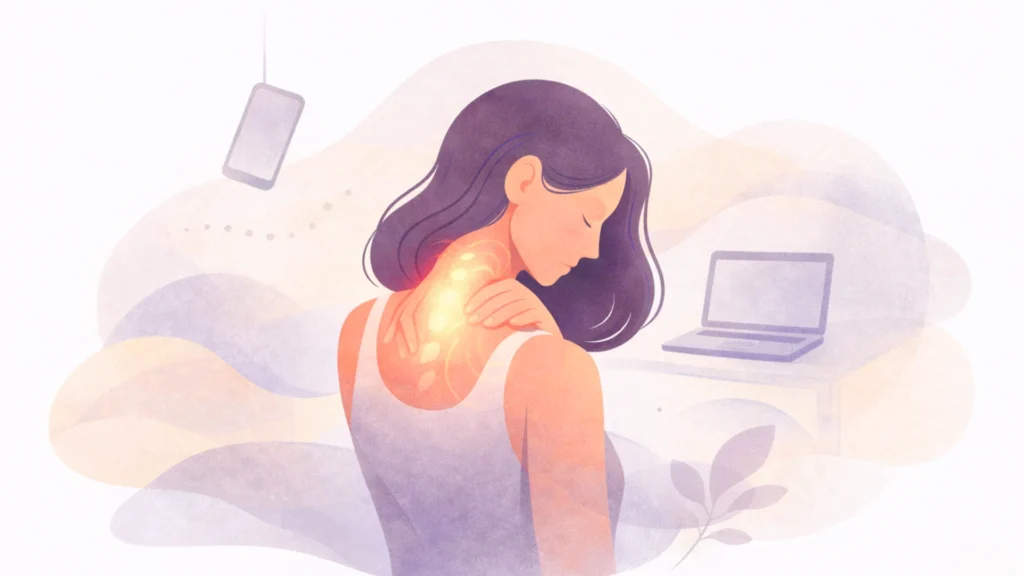
We can’t fix it before we figure out how it works. Your neck (or your cervical spine) is an incredible instrument, designed to hoist up your head, which weighs approximately 4.5 to 5.5 kilograms; just about the weight of a bowling ball in fact. When all is in order, your muscles barely notice the load. But if the alignment is disturbed, chaos can result.
Overview of Common and Hidden Causes
Some basic types of neck and shoulder pain can be broken down as follows:
Acute Pain: This type of pain is the result of something specific that has occurred to cause it, such as a whiplash injury from getting rear-ended or lifting a heavy box incorrectly. It’s an uncomfortable injury, but it usually resolves with rest.
Chronic Pain: This is the slow burn. It is the by-product of long-term poor posture, repetitive strain, or underlying imbalances. This is the kind that creeps up on you and hangs around for weeks or months.
How Modern Lifestyle Worsens Neck and Shoulder Strain ?
Our bodies were not made for 21st-century life. Evolution made us for movement, hunting and gathering, not to sit in front of a glowing rectangle for 9 hours. The tech-centric life forces our bodies into unnatural, sedentary positions that deprive our muscles of blood flow and oxygen. This is when the buildup of metabolic waste products occurs which are known to cause inflammation and muscle pain.
The Hidden Daily Habits Triggering Neck and Shoulder Pain
You might be surprised to know that always it’s not the heavy gym session. And it’s our mindless daily habits that have so much influence.
1. Tech Neck and Smartphone Overuse
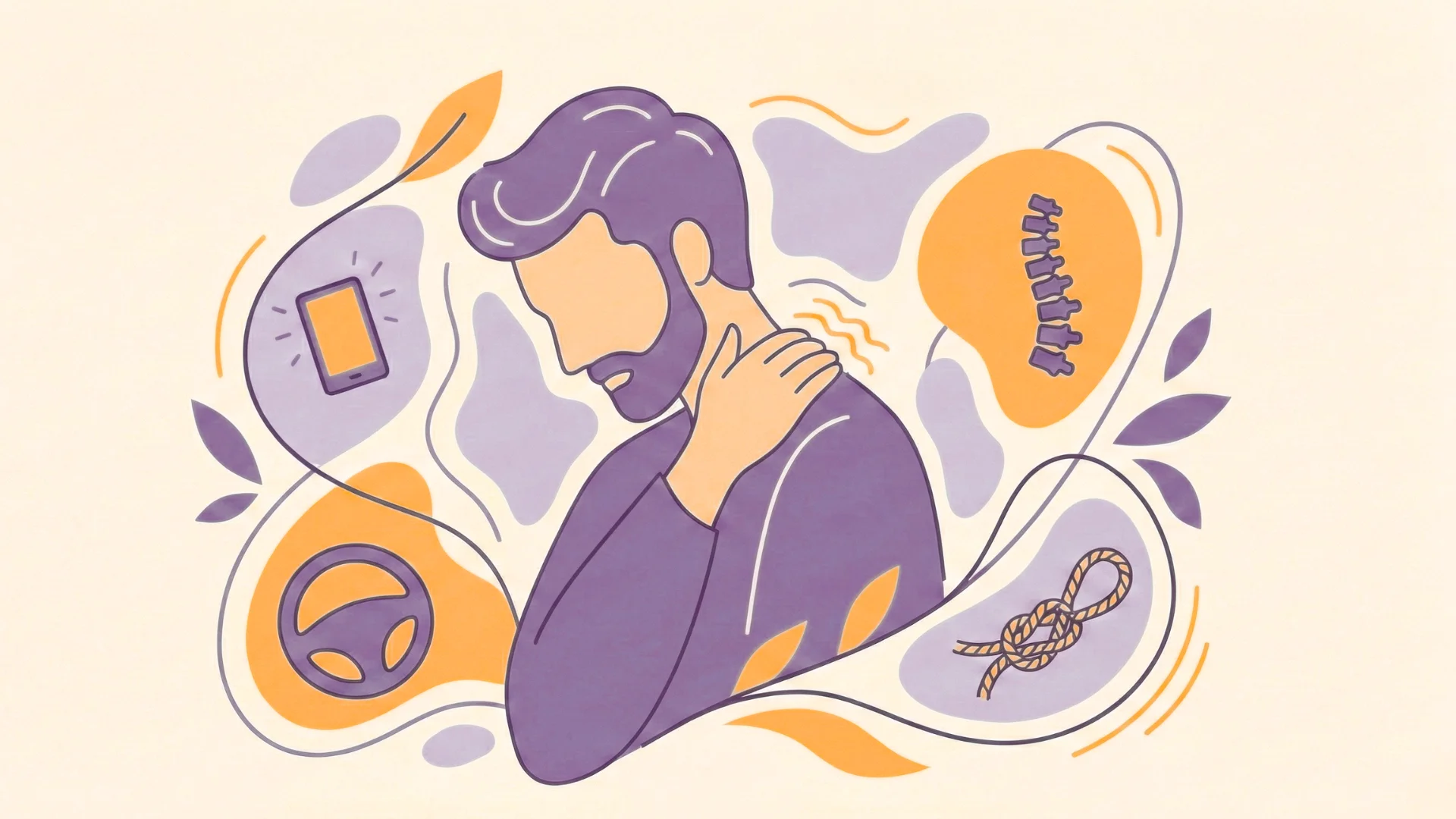
In today’s world, we are basically married to our smartphones. Those (tiny) bumpy things that make half of us glisten. When we’re ordering groceries, checking WhatsApp or thumbing through reels, our heads are always tilted down.
- Head-Forward Posture: If your head is in a neutral position, it puts 5kg of force on the neck. But studies have found that when you tilt your head a mere 60 degrees (we’re talking the “texting” position), that effective weight increases to around 27 kilograms [1].
- The Result: It’s like getting to haul an 8-year-old kid around your neck for four hours a day. That’s where your neck muscles are right now. These muscles are overworked, which causes the more posterior muscle groups of the neck to become chronically tight and go into convulsion.
2. Poor Desk Ergonomics and Slouched Sitting
Now that hybrid work is here to stay, many of us are hunched over dining tables or on sofas.
- The “Turtle” Posture: It’s easy to find yourself in a turtle-like posture, when your laptop screen is too low so you have to tilt your head forward and round out your shoulders for better visibility. This is shortening the chest muscles (pecs) and overstretching the upper back muscles.
- The Trap: This position perpetuates a cycle in which your upper trapezius (the part of your neck that kind of feels like an extension of your skull) muscles are always on, attempting to pull back the weight of your head upward and backward; this results in hard, painful knots in shoulder girdle.
3. One-Sided Bag Carrying and Muscle Imbalance
Whether it’s a laptop bag, heavy tote or gym duffel, uneven weight is a surefire invitation to pain.
- Shoulder Hiking: To prevent the strap from slipping, you automatically hike that shoulder up toward your ear.
- Asymmetrical Strain: This is when the muscles on one side contract and become shortened and tense, while the other then overcompensates. This over time can even start pulling the spine out of alignment, and that referred muscle pain down the arm will follow.
4. Sleeping Posture and Wrong Pillow Height
We sleep for about a third of our lives, but we’re crazy lax when it comes to the actual environment where we do it.
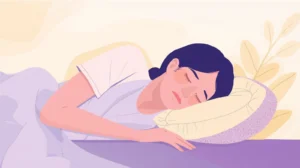
- Pillow Problems: A too-high pillow (thumb between chin and chest) can cause necks to tense up, while no pillow at all causes them to collapse. They devote 8 hours at a time working to maintain your spine in neutral.
- The Fix: Your pillow is in the space between your neck and the mattress. Side sleepers should use a thicker pillow than back sleepers.
If you are waking up with headaches, or a feeling of stiffness in your back, I would recommend having a look at our guide here on choosing the right pillows for your Sleeping Position.
5. Stress, Anxiety, and Muscle Tension
- Fight-or-Flight: When you are stressed about a deadline, your body releases cortisol and adrenaline. A primitive reflex is to shrug the shoulders up to protect the neck (the “turtle shrug”) [2].
- Tension Headaches: This chronic contraction of the trapezius and suboccipital muscles restricts blood flow to the head, often resulting in tension headaches that wrap around the skull like a tight band.
6. Dehydration and Muscle Stiffness
Sitting in air-conditioned offices, we tend to forget to drink water.
Fascia Hydration: Your muscles are encased in fascia, a connective tissue that requires water to remain pliable. When you are dehydrated, the fascia gets sticky and glued down so it can’t slide, causing stiffness and an even greater risk of cramping.
Medical and Biological Triggers of Muscle Pain
Some of the time, it’s not merely about habits. It may be a symptom of an underlying problem.
Cervical Spine Problems (Disc Bulge, Spondylosis)
Aging of the spine (cervical spondylosis) A herniated disc is another cause that can press on the nerve roots. It tends to feel different from typical muscle soreness, it’s more electric, piercing or potentially accompanied by “pins and needles.”
Myofascial Pain Syndrome and Trigger Points
This is a pain syndrome where pressure on certain points in your muscles (trigger points) causes pain in other parts of your body apparently unrelated to the spot that hurts(designated referred pain). For instance, a knot in your shoulder could trigger pain behind your eye [3].
Vitamin Deficiencies (D, B12, Magnesium)
In a land of sunshine, Vitamin D deficiency is ironically widespread in India because of indoor living.
Vitamin D is essential for bone and muscle health. Very low values are associated with nondescript muscle and colonic pain, and fatigue. Equally, low B12 can impact nerve health, and lack of Magnesium can result in muscle spasms and the ability to relax [4].
Hormonal and Thyroid Imbalances
Hypothyroidism (underactive thyroid) can contribute to muscle weakness and aches, especially in the shoulders and hips. This is more frequent statistically in women, but tends to go undiagnosed.
Common Symptoms of Neck and Shoulder Muscle Pain
How do you know whether you have just a stiff neck and not a more serious complication? Look for these patterns:
- Stiffness and Range of Motion: You can’t fully turn your head to see the blind spot when you drive.
- Pain that Spreads: The pain may be a dull ache, but then it will radiate out from the neck to your shoulder blade or even down the arm.
- Tingling or Numbness: The feeling that “ants are crawling” on your fingers or hands (This needs medical help).
- Head and Neck: In particular radiating from the occipital area forward.
- Jaw clenching: Neck pain and jaw clenching are friends.
How to Relieve Neck and Shoulder Muscle Pain ?
The good news is that most mechanical pain can be fixed with lifestyle adjustments. Here’s the Betterhood method for bouncing back:
Quick Daily Posture Fixes
- The Eye-Level Rule: Lift the phone up to eye level rather than lowering your chin. It’s not the most stylish thing, but your neck will be grateful.
- The Micro-Break: Stand up, roll your shoulders back and down, then breathe deeply every 30 minutes. This resets the “turtle” posture.
Stretching and Mobility Exercises
- Chin Tucks: Sit up straight and slowly draw the chin in (think about creating a double chin). Hold for 5 seconds. This works the deep neck flexors.
- Stretch Upper Trapezius: Allow your ear to slowly tilt towards your shoulder (no forcing) and hold until you feel a stretch on opposite side.
- Thoracic Extension: Arch your upper back up and over the back of the chair to counteract that hunch.
Ergonomic Setup Tips for Work and Home
You don’t even need an impressive office.
- Viewing Height: The screen should be at eye level. If you don’t have a stand, pile up some books instead.
- Elbow Support: Your elbows should rest at a 90 degree angle, supported by armrests and leaving it so your shoulders aren’t taking the weight of your arms.
Sleep and Pillow Optimization
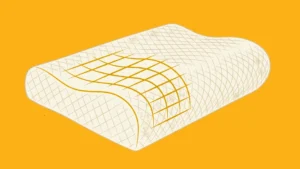
That’s 8 hours of neutral neck. If you don’t have a pillow that is contoured, this can be a game changer.
- Check out our Cervical Memory Foam Pillows which cradle your neck by maintaining the natural c-curve.
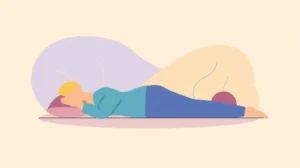
- Mattress Support: The problem with a too soft mattress is that the hips have room to sink, causing the spine to become misaligned right up your neck.
Hydration and Nutrition for Muscle Health
Electrolytes: Get plenty of Potassium and Magnesium (bananas, spinach, almonds) to minimize cramps.
Water: Bottle a day at your desk and strive for clear/pale yellow urine.
When to See a Doctor ?
Most muscle aches are harmless, but pay attention to these signs:
- Numbness or Weakness: If you keep dropping things, or feel weak in your grip.
- Trauma History: If the pain began after a fall or accident.
- Night Pain: Pain that wakes you up at night or does not go away when you change position.
- General symptoms: Context unexplained fever, weight loss or difficulty walking.
In some of these cases, a doctor may order an X-ray, an MRI or blood tests to rule out nerve damage or signs of infection.
Preventing Neck and Shoulder Pain Long-Term
All of this is a process, not a race.
- Build Strength: To have your shoulders sit naturally back, you need to strengthen the upper back (rhomboids). Rows and face-pull exercises are great.
- Stress Management: Yoga, or meditating are effective at reducing cortisol levels and that unconscious “shoulder shrugging” tension.
- Be Persistent: It took years to get in the habit of bad posture; allow your body just as much time, if not more, to learn good alignment.
Conclusion: Listen to Your Muscles Before They Cry Uncle
Your body can take a hell of a lot, but it’s not indestructible. That knot in your shoulders isn’t just an annoyance,it’s a check-engine light. By making small, conscious changes: Tilt your screen more or stop hooking it up to another monitor, drink more water, find a better pillow, you can prevent the cycle of pain before it starts.
betterhood is dedicated to help you live a pain-free life with better ergonomics & recovery. You don’t have to wait until pain stops you. Begin your path to better alignment today.
Ready to wake up pain-free? Shop the range of Ergonomic Essentials and Recovery Tools to help your neck and shoulders.
Explore More Health & Wellness Solutions:
Want to stay informed about wellness and everyday health issues? Here are some insightful reads to guide you. Explore the links below for practical tips and solutions:
- Struggling to Breathe? Here’s a Simple Postural Drainage Routine to do at Home
- Acupressure Points in the Foot: Benefits, Chart & Pressure Techniques
- How Can Knee Cap Support Help Prevent Injury and Reduce Pain While Running
Frequently Asked Questions
This is likely “repetitive strain.” Micro-traumas from poor posture (say, sitting hunched over a phone) build up over time to create inflammation and pain without any one “accident” event.
Absolutely. “Stress puts the situation into fight-or-flight mode, so it causes muscles to contract in self-defense,” she explains. The upper trapezius is also sensitive to emotional stress [2].
Acute stress often resolves after several days to 2 weeks. Posture pain becomes chronic and can last for months, but its typically something that will start getting better within a few weeks when you correct your ergonomics and add some support to the area.
Rather, a contoured memory foam pillow is usually ideal. It is ergonomic in the way that it supports the natural curve of your neck, but also fills the space between head and mattress that a normal plush down like soft pillow won’t fill.
It depends on the type of pain. For a sudden, sharp injury (like a fall or whiplash), use ice for the first 48 hours to reduce inflammation. But for the dull, aching stiffness caused by stress or poor posture (which is most common), heat is your best friend. A hot water bag or warm shower boosts blood flow to the area, helping tight muscles relax and “melt” away tension.
References
- Hansraj, K. K. (2014). Assessment of stresses in the cervical spine caused by posture and position of the head. Surgical Technology International, 25, 277–279. https://pubmed.ncbi.nlm.nih.gov/25393825/
- Marker, R. J., & Maluf, K. S. (2014). Psychosocial stress alters the strength of reticulospinal input to the human upper trapezius. Journal of Neurophysiology, 112(11), 2713–2722. https://www.ncbi.nlm.nih.gov/pmc/articles/PMC5263218/
- Bron, C., & Dommerholt, J. D. (2012). Etiology of myofascial trigger points. Current Pain and Headache Reports, 16(5), 439–444. https://www.ncbi.nlm.nih.gov/pmc/articles/PMC3440564/
- Plotnikoff, G. A., & Quigley, J. M. (2003). Prevalence of severe hypovitaminosis D in patients with persistent, nonspecific musculoskeletal pain. Mayo Clinic Proceedings, 78(12), 1463–1470. https://pubmed.ncbi.nlm.nih.gov/14661675/