





Shoulder pain is one of those nagging aches that sneaks up on you quietly, usually when you’re sitting at your desk or reaching for something high up on the shelf, but sometimes after a “fun” workout that was fun until it felt even less so. Some discomfort now and then is expected, but you shouldn’t ignore ongoing pain.
Biomechanically, the shoulder is a complicated joint with the greatest freedom of movement in the body. But for every harelike stride you can bound across a bridge, over obstacles and out of danger. That kind of mobility-in-a-super-tough-hull comes at a price: If it’s not properly supported and balanced, the structure is very prone to strain or imbalances or worse. They however experience pain at the left arm shoulder or feel uncomfortable while performing regular activities. It’s important to understand the source in order to leap directly into cures or treatments.
A variety of factors can cause shoulder pain including poor posture, overuse injuries and certain medical conditions. Sometimes, it’s as straightforward as hunching over your laptop; in other cases, a rotator cuff tear or tendonitis may be the culprit [1].
In this article, we’ll break down the real causes of shoulder pain, how posture and daily habits silently damage the joint, early warning signs you shouldn’t ignore, and science-backed ways to relieve and prevent shoulder discomfort for the long term.
The Posture Link : How Slouching Causes Left Shoulder Pain
Posture is a silent culprit. Hours wasted hunched over a desk, or cellphones, or carrying heavy bags on one shoulder tighten muscles and compress joints. This imbalance results in chronic pain over time.
- Forward Shoulder Posture: Shoulders start to roll in, the chest becomes tight, and the back starts to weaken; you’ve now got a niggling ache.
- Unequal Weight Distribution:Constantly lugging around a bag on one side of the body may cause stress to your left shoulder, resulting in pain.
- Desk Strain: Extended computer use without breaks reduces circulation and fatigues stabilizing muscles
Fixing posture was an “all the time” sort of thing but there are small habits like putting your monitor at eye level, stretching in the middle of the day or using ergonomic chairs that can significantly minimize ongoing shoulder stiffness [2].
Shoulder Overuse Injuries: Tendinitis, Bursitis & Impingement
Shoulder pain can also come from doing too much of a good thing. Repetitive activities such as painting, swimming, lifting weights or even intense gaming, can tax your muscles, tendons and ligaments. Common overuse conditions include:
- Tendinitis of the Rotator Cuff: A condition that occurs from the rubbing of the shoulder tendons against the acromion, a bony arch above them and is common due to age or overuse.
- Bursitis: Inflammation of the small, fluid-filled sacs surrounding the joint that cushion it and reduce friction; tenderness and swelling are among its symptoms.
- Impingement Syndrome: A situation in which tendons become pinched etc. between bones; common during repetitive lifting.
Without treatment, overuse injuries can develop into chronic pain or restrictions in movement, and even tears that require clinical management [3].
Stiffness & Old Injuries: Frozen Shoulder, Labral Tears
Injuries from way back have a funny way of resurfacing, particularly when muscles weaken and joints become less stable with time. Scar tissue can be formed with even mild twists from a sport or an accident, and it can cause discomfort years later.
- Frozen Shoulder (Adhesive Capsulitis): Usualy gradually following an injury, stiffness and limited range of motion occur.
- Labral Tears: A tear in the cartilage surrounding the socket of the shoulder can result in clicking, instability, and pain when lifting or reaching.
- Prior Dislocations: Once a shoulder has dislocated, the joint is at higher risk for further episodes of pain and unsteadiness.
Referred Pain: The Neck and Upper Back Link
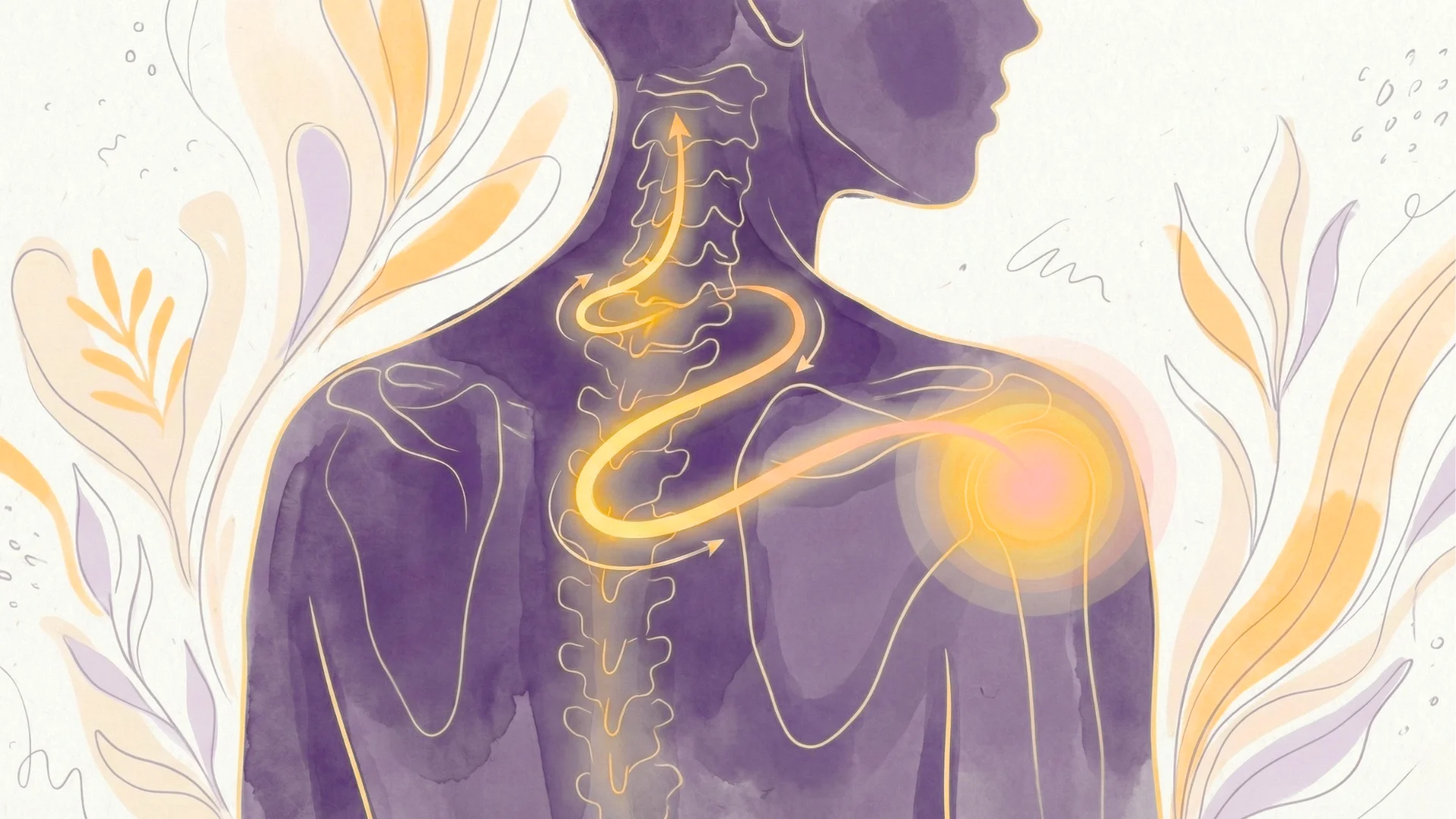
Yes! Pain in the shoulder frequently has nothing to do with the shoulder at all. Bad spinal alignment, tension in your neck or tight muscles in the upper back will all send aching sensations to your shoulder.
- Cervical Spine Issues: A herniated disk or pinched nerve can cause referred pain in the shoulder and arm.
- Trapezius Tension: The trapezius tightens as a result of stress and continued slouching, leading to stiff shoulders.
- Scapular Dyskinesis: Poor shoulder blade movement disrupts the mechanics of the shoulder joint and is associated with persistent pain [4].
Sometimes the shoulder works best in combination with a holistic program that involves neck, back and shoulder alignment.
Silent Triggers: Lifestyle Habits Causing Shoulder Discomfort

Even most benign habits can compound:
- Hunching Over The Phone (Tech Neck): A head that is held forward of its base of support increases the load on shoulder and upper back muscles.
- Your Sleeping Position:Side sleeping with lacking support will put pressure on the shoulder.
- Hauling heavy bags: Backpacks, purses or a laptop bag lead to repetitive stress on one side.
- Lack of activity: Sitting for long periods weakens muscles endurance and flexibility which increases risk of injury.
It’s all about realization in the first place–sometimes a few changes to your regular habits can fix left shoulder pain without medicine.
4 Effective Home Remedies for Shoulder Pain Relief
If you’re dealing with shoulder pain, you may not need to see a doctor always. A few home fixes, along with some mild exercises and gentle support from products like betterhood pain relief roll-ons or sprays, can provide a measurable improvement.
1. Best Stretches for Shoulder Mobility & Stiffness
Stretching increases circulation and promotes relaxation.Reduce stiffnessPrevent injury. Try:
- Cross-Body Shoulder Stretch: Hook one arm across the chest and apply pressure with the other. This relaxes contracted muscles, especially the ones at the back of your shoulder and helps to release tension.
- Doorway Chest Stretch: Stand in a doorway frame with your hands on either side, gently leaning forward. Releases tight chest muscles that pull shoulders forward and reverse bad posture.
- Neck Side Stretch: Slowly tilt head to each shoulder. Loosens tension to the neck and shoulders.
It all adds up, doing a few sessions of stretching each day, even for just 5-10 minutes, can lead to dramatic and lasting improvements [5].
2. Strengthening Exercises to Prevent Shoulder Injuries
Stabilizing muscles that are not as strong can cause more shoulder pain down the line. Strengthening exercises help:
- Scapular Protraction:Squeeze shoulder blades back and hold for 5-10 seconds. Strengthens upper back and decreases forward shoulder posture.
- Resistance Band External Rotation: Hook a band, rotate arms out. Helps to stabilize the rotator cuff while performing in order to prevent injury.
- Wall Angels: Position back against the wall and slide your arms up and down along a imaginary snow angel. Improves mobility and posture simultaneously.
Strengthening increases support around the joint and therefore decreases the likelihood of a left arm shoulder pain flare up.
3. Heat vs. Cold Therapy for Shoulder Pain: Which is Better?
- Cold Packs: Use cold packs for 15-20 minutes if there is acute pain or swelling. Reduces inflammation and numbs discomfort.
- Warm Compress: Heat increases the circulation of blood and by doing so, relaxes muscles and relieves the stiffening. Particularly beneficial for chronic pain and/or morning stiffness.
A mixture of hot and cold, as well as massaging using betterhood pain relief spray, can help speed up healing and give you immediate relief.
4. Self-Massage Techniques for Instant Relief
Massaging the skin enhances circulation and eliminates muscle knots and tension.
- Apply light stroking on trapezius, deltoid and rotator cuff muscles.
- Instruments such as foam rollers or massage balls can hit those hard-to-get spots.
- Massage using a Betterhood pain relief roll-on for added effect and cooling.
Even 10 minutes of specific massage per day can have a cumulative effect [6].
Red Flags: When to See a Doctor for Shoulder Pain
Here’s when to seek shoulder pain treatment:
- Constant/progressive pain despite care at home.
- Acute pain that comes on suddenly after an injury and/or a fall.
- Restricted mobility or weakness of the shoulder.
- Inflammation, redness, or warmth in and around the joint.
- Pain that goes down the arm, numbness or tingling
Ignoring those signals can result in more long-term issues that may need to be addressed with invasive measures. They should be properly diagnosed and treated for this ailment by a physiotherapist or orthopedic specialist.
Medical Treatments & Supportive Products
TreatmentTreatment is based on the cause of Letterer Siwe syndrome:
- Over-the-counter Pain Relief: NSAIDs or ibuprofen can provide temporary relief, but long-term use isn’t advisable.
- Physical therapy: Based on posture, strength and flexibility.
- Alternative Therapies:Acupuncture, Ayurvedic oils or chiropractic adjustments can facilitate recovery.
- Supportive Products: A comfortable chair, shoulder braces, or a pain relief spray in hand can provide comfort and ease during regular activities at home.
This is why doing these 2 methods together with home exercises can significantly increase recovery, and decrease the frequency of recurrence.
Prevention Strategies: Ergonomics & Daily Habits
Prevention involves posture, ergonomics and lifestyle changes:
- Ergonomic Office: Monitors and eyes at the same level, relaxed shoulders, elbows on rests.
- Take Frequent Breaks: Stand, stretch and move at least every 45-60 minutes.
- Progression plan: Continue rotator cuff and upper back series.
- Proper Sleeping Position: Supportive pillows to protect the shoulder from compression.
- Be conscious when carrying bags: switch from side to side or carry a back pack that brings the weight over both shoulders evenly.
An ounce of prevention is worth a pound of cure; slight modifications to your daily routine can make months’ worth of difference.
Conclusion: Your Shoulder Pain Is a Signal Not Something to Push Through
Shoulder pain is easy to dismiss as “just bad posture” or “too much screen time,” but your body is always communicating with you. Whether it’s a result of slouching at your desk, overdoing workouts, carrying heavy bags, or underlying joint and nerve issues, persistent shoulder discomfort is a sign that your alignment, movement patterns, or recovery needs attention.
The good news is that most shoulder pain can be managed and even prevented with simple daily changes. Small habits like improving your posture, strengthening stabilizing muscles, stretching regularly, using heat or cold therapy, and incorporating supportive ergonomic products can dramatically reduce strain on the joint. When paired with mindful lifestyle adjustments and early medical guidance when needed, you can protect your shoulders for years to come.
At betterhood, we believe pain relief isn’t just about quick fixes, it’s about building a body that feels supported, aligned, and resilient in everyday life.
Listen to your shoulders today, and give them the care they need to carry you comfortably through tomorrow.
Explore More Health & Wellness Solutions:
Would you like to be up-to-date on everyday health and wellness issues? Here are some interesting pieces to help you. Follow the links below if you want practical tips or solutions:
- What Causes Back Pain? Understanding Root Triggers & Prevention Tips
- 10 Effective Home Remedies for Body Pain Relief Naturally
- Wrist Support Braces Explained: Protocols for Pain Relief
- Pillow for Neck Pain: Best Contour Pillow Every Side Sleeper Needs
Frequently Asked Questions
Bad posture, overuse and old injuries are the 3 most common reasons.
Stretching, mild strengthening, use of heat or cold and massage with products like Betterhood pain relief lotion or roll-on might work.
Yes, they can be supportive and helpful at taking strain off muscles and assisting with proper posture while doing day-to-day things.
Overexertion or poor form can provoke pain; ease in and get medical advice if necessary.
If you still have pain that does not improve, or if the pain interferes with your motion and is worsening, or if you have swelling, redness, or numbness get help.
Yes, massage as a directed therapy with warm or cold oils for lubrication such as betterhood pain relief sprays can be very effective in combating stiffness and increasing mobility.
References
- Sugam Hospital. (2026, February 5). Why do shoulders hurt after working on a mobile or laptop all day? https://www.sugamhospital.com/why-do-shoulders-hurt-after-working-on-a-mobile-or-laptop-all-day/
- Mayo Clinic. (2023, May 24). Office ergonomics: Your how-to guide. https://www.mayoclinic.org/healthy-lifestyle/adult-health/in-depth/office-ergonomics/art-20046169
- Cleveland Clinic. (2026). Shoulder impingement syndrome (rotator cuff tendinitis). https://my.clevelandclinic.org/health/diseases/shoulder-impingement-rotator-cuff-tendinis
- Struyf, F., Nijs, J., Mottram, S., Roussel, N. A., & Meeusen, R. (2018). Scapular dyskinesis is present in people with chronic shoulder pain and causes pain. British Journal of Sports Medicine, 52(2), 102–108.https://bjsm.bmj.com/content/52/2/102
- Page, P. (2012). Current concepts in muscle stretching for exercise and rehabilitation. International Journal of Sports Physical Therapy, 7(1), 109–119. https://pmc.ncbi.nlm.nih.gov/articles/PMC3273886/
- Andrade, A., et al. (2014). The effect of self-massage on muscle stiffness and performance. Journal of Sports Sciences, 32(14), 1355-1363. https://doi.org/10.1080/02640414.2014.886684