






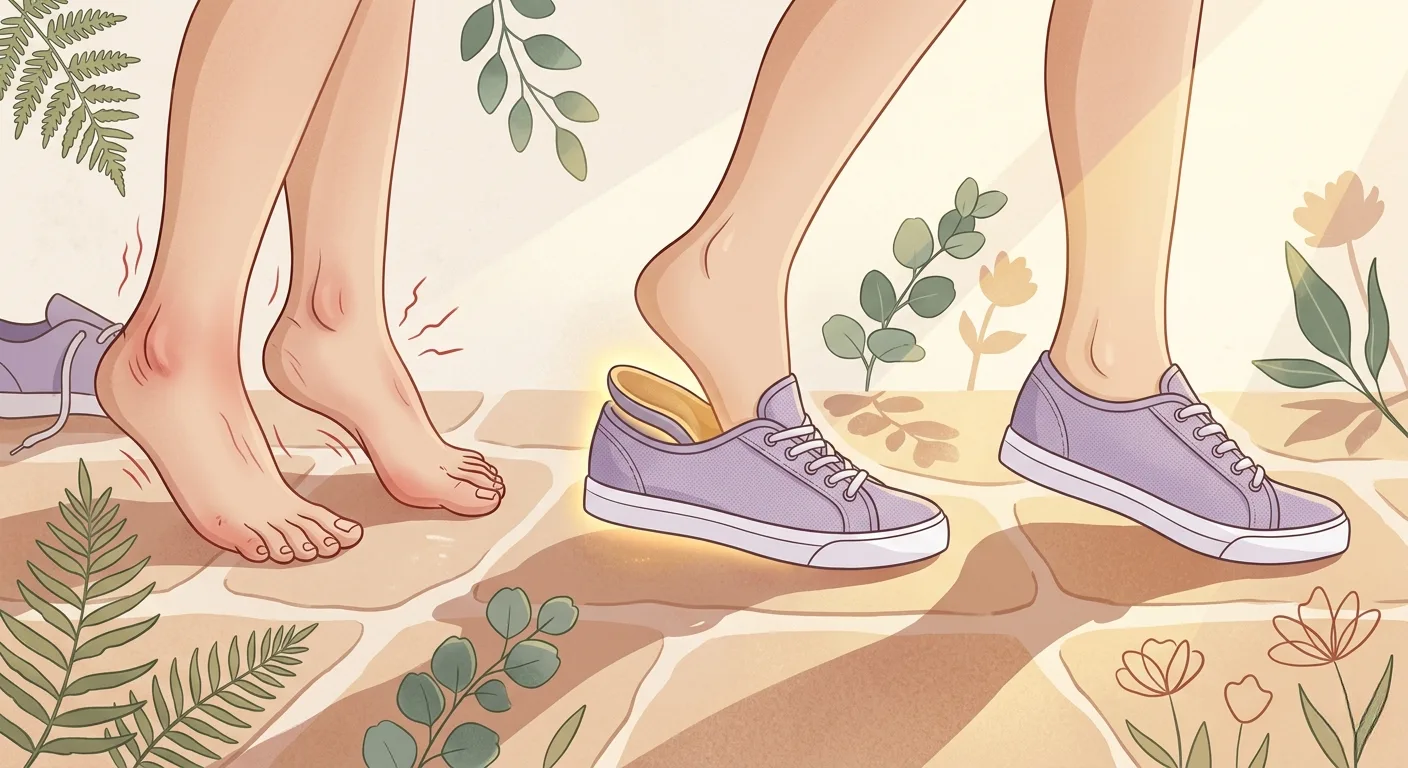
One reason foot pain can be frustrating is that it tends to come back. You might feel it after walking, standing, working or wearing the same shoes for too long. In many ways, the real problem does not lie with the shoe only. There’s not enough support inside the shoe. This is where foot pain relief insoles come in handy. [1]
So many change shoes and still feel the same pain. But shoes don’t always provide adequate arch support or pressure relief on their own. They can add cushioning and provide better support for the foot, spreading pressure more evenly. The use of orthotics is common in supporting and aligning the feet and ankles.[3]
So if your foot pain isn’t getting better, the missing component could be straightforward. You might require more robust support beneath your feet, not just surrounding them. This is why foot pain relief insoles tend to be the solution that people miss. [4]
The reason foot pain returns.
Foot pain will linger when the cause remains. For instance many conditions like plantar fasciitis cause heel pain when you first get up to walk (especially after resting or a long time on your feet). It is a common cause of heel pain. [1]
Furthermore, foot pain may be produced from prolonged standing, excessive walking, inadequate shoe padding or a foot shape as a whole that requires greater support. According to MedlinePlus, other contributing factors to foot pain can include being on your feet for long periods of time, insufficient cushioning and foot deformity. [2]
Plantar fasciitis can also occur when there are issues with your arch, particularly with an increase in activity or poorly arched shoe wear. Flat feet and high arches affect loading in an opposite manner. [5]
Which is why rest alone rarely solves the problem. The pain may continue to come back if your feet keep receiving the same pressure every day. [1]
The easy solution you might be overlooking
The answer is often simple insoles that relieve foot pain. These are also called insoles and instead of outside your shoes, they go inside your shoes. They can help support the arch, add cushioning and relieve pressure on sensitive areas. Orthotics are used to support the feet and ankles, and many people say they help foot function and comfort. [3]
Insoles matter because they operate where the pain originates: below the foot. A quality insole can give your shoes a little more support without investing in a new pair. That would make them an easy daily-use choice.” [3]
Insoles can also help if you walk a lot, stand at work or just spend hours on end on hard floors. “They can make day-to-day movement less problematic.” [2]
These insoles for foot pain relief what they do
Shoe insoles meant for foot pain relief контур to support the foot in a more even manner. They could distribute force across the heel, arch and forefoot rather than concentrating pressure on a specific location. Orthotics can help to align and support the feet and ankles, this support could improve the overall function of the foot. [3]
They might also help alleviate pain triggered by flat feet. Arch supports can help relieve symptoms associated with flat feet, though they don’t “cure” the condition, according to Mayo Clinic. [7]
Inserts can also aid with heel discomfort, as they absorb the shock of walking. In addition to giving you heel pain care, MedlinePlus recommends supportive shoes and shoe inserts. [6]
So, though insoles are rudimentary, they offer an aforementioned difference in the way your feet feel on a day-to-day basis.
Signs you need foot pain relief insoles
You might need foot pain relief insoles,
if you have:
- heel pain after rest
- arch soreness during the day
- tired feet by evening
- hardships in standing for long time
- pain after walking a lot
- Compression in flat or rigid footwear
- pain that keeps coming back [1][6]
These are common signs that your feet are working overtime with not enough support. So improving cushioning and arch support can address this. [3]
Why footwear alone is often not enough
Much footwear may look comfy, but it can still be unsupportive. Footwear that does not fit well, or shoes that do not have much cushioning, can cause foot pain, according to MedlinePlus. It also says lack of arch support can lead to plantar fasciitis. [2]
Plus, even good shoes do eventually wear out. Once that internal support crumbles, there may be pressure on the foot again. This is why foot pain relief insoles are used by many people to reinvigorate the inner support of their current pair of shoes. [3]
In other words, the shoe is only part of the solution. The support inside is equally as important.
How foot pain relief insoles works in daily life
These insoles can be helpful for many common activities. For example:
The more cushioning and less repeated impact the foot gets, the easier it walks. [6]
Standing is less tiring because pressure is distributed more evenly on the foot. According to MedlinePlus, extended time on your feet can contribute to foot pain, so relieving that burden may be beneficial. [2]
The foot is then supported throughout long hours, thus making working feel more comfortable. Orthotics are used frequently to enhance comfort and foot function. [4]
Traveling is easier because you are spending less time nursing sore heels or tired arches.[1]
This is one of the reasons why so many people see that insoles work when they are exercising, as well as just going about everyday life.
Orthotic heel and foot pain relief insoles
Heel pain is one of the top reasons that people look to support. Plantar fasciitis usually leads to heel pain and sole of the foot. It may feel worse in the morning or after rest. [1]
The treatment approach often includes supportive shoes and shoe inserts. According to Mayo Clinic, plantar fasciitis usually improves with conservative treatments, and MedlinePlus advises supportive shoes and inserts as part of heel pain care. [3]
So if a heel pain keeps returning, the best remedy could be as simple as going first for foot pain relief insoles. [3]
Fallen arches, high arcuate and additional assisting
The foot shape alters how pressure travels through the structure. Individuals with flat feet and high arches may require additional support because their footings don’t distribute pressure evenly. Arch troubles, a risk factor for plantar fasciitis.[5]
This is the main reason why orthotics are commonly used for these issues, they help to align and support the feet.[3]
That means insoles to relieve foot pain may be helpful if your arch is too low, too high or just not getting enough love from your shoes. [3]
How Betterhood insoles can help
If you’re in need of more support when inside your shoes, Betterhood insoles are a more practical everyday pick. If they provide arch support, cushioning, and pressure relief, it can make walking and standing feel easier. They can also make everyday footwear more comfortable, shoe-wise. In other words, Betterhood insoles may alleviate some of that achiness in your feet and help each step feel less strenuous. [3][8]
How to select the best insoles for foot pain relief
Things to look for when selecting foot pain relief insoles:
- arch support
- cushioning
- shock absorption
- a comfortable fit
- support for daily wear
- breathable material [3]
A good insole should be supportivenot too hard, not too mushy. The sock should also fit nicely in your shoes without causing them to feel too tight. [8]
In addition, it takes some time for people to adjust to a new insole. According to NHS guidance on foot orthoses, you may be able to wear them more as you get used to them. [8]
How long it takes to see a difference
Some people feel better quickly. Others need more time. It may take a few days for the foot to adapt to their new support. That is normal. Orthoses can need a gradual wearing-in period, according to NHS guidance. [8]
When you wear insoles that relieve foot pain on a regular basis, the support is built into your routine. It is that regular use that often contributes to the biggest difference. [3]
Basic Habits that make insoles more effective
Insoles are most effective when they are accompanied by good habits. Good shoes, ordinary movement and spending less time in worn footwear will all help. Both MedlinePlus and NHS suggest supportive shoes and conservative management for foot pain. [2][6]
You can also:
avoid worn-out shoes
stretch gently if recommended
use insoles consistently
to hear early pain cues [9]
These simple measures can make the insoles work better in your day-to-day life.
Final thoughts
If your foot pain is hard to shake, the trouble may be what’s underfoot. It’s often not enough to be cunning on the shoesMettle. Insoles that provide foot pain relief add a customized layer of arch support, cushion and pressure balance to the shoes you already wear.[2] [4]
They can assist with heel pain, flat feet, arch soreness and fatigued feet from long periods of standing or walking. They’re also easy to use, so they are a good first step for everyday comfort. [1] [7]
“A simple fix” for many people is not doing the same thing over again. Basically, it is just better support inside the shoe.
FAQs
Yes, they can relieve heel pressure and enhance support in the shoe. Good supportive shoes and inserts are often suggested for heel pain and plantar fasciitis.
Yes, flat feet present with symptoms that can be reduced by the use of arch supports. They don’t cure flat feet, but they usually make walking more comfortable.
Yes, a lot of people wear them every day. NHS guidance recommends orthoses be worn gradually, which is usual.
Not always, but they are a good option when shoes don’t have enough support. Insoles provide you with additional cushioning and arch support that your existing shoes lack.
Some people feel better in a matter of days; others take extra time. With more support, the feet might require a little time to adapt.
Yes, if they offer arch support and cushioning, they can help make day-to-day walking and standing feel more comfortable.” They are a pragmatic daily support choice.
References
- NHS. (n.d.). Plantar fasciitis.
https://www.nhs.uk/conditions/plantar-fasciitis/ - MedlinePlus. (n.d.). Foot pain: MedlinePlus Medical Encyclopedia.
https://medlineplus.gov/ency/article/003183.htm - Cleveland Clinic. (n.d.). Orthotics: Definition, Risks, Benefits, Types & Tips.
https://my.clevelandclinic.org/health/treatments/orthotics - Cleveland Clinic. (n.d.). Foot Pain.
https://my.clevelandclinic.org/health/symptoms/foot-pain - MedlinePlus. (n.d.). Plantar fasciitis: MedlinePlus Medical Encyclopedia.
https://medlineplus.gov/ency/article/007021.htm - MedlinePlus. (n.d.). Heel pain: MedlinePlus Medical Encyclopedia.
https://medlineplus.gov/ency/article/003181.htm - Mayo Clinic. (n.d.). Flatfeet – Diagnosis and treatment.
https://www.mayoclinic.org/diseases-conditions/flatfeet/diagnosis-treatment/drc-20372604 - Royal National Orthopaedic Hospital NHS Trust. (n.d.). Foot orthoses patient guide.
https://www.rnoh.nhs.uk/patients-and-visitors/patient-information-guides/foot-orthoses-patient-guide


