





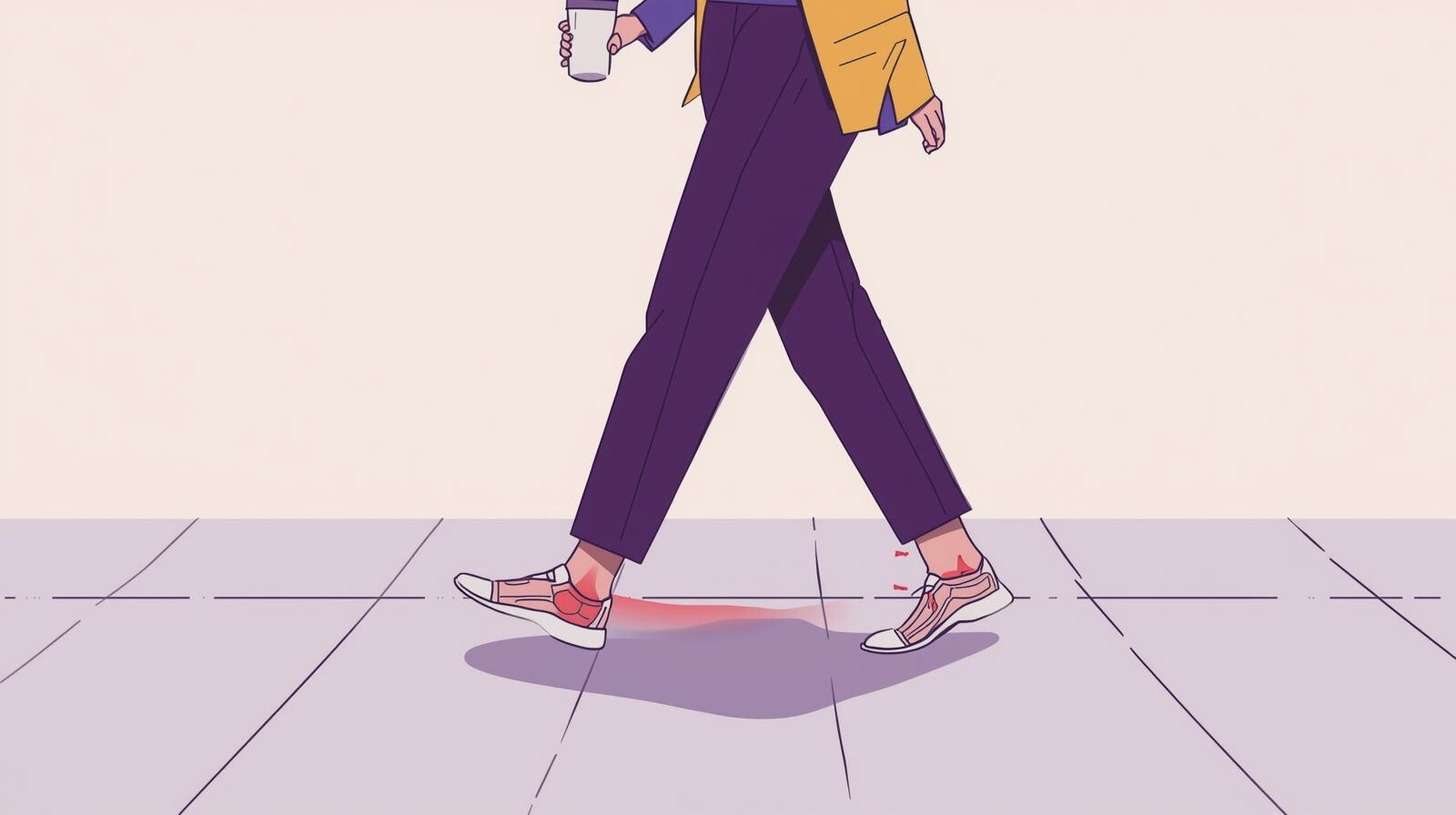
You are striding confidently down the street, coffee in hand, when suddenly your ankle decides to throw a tantrum. That sharp twinge on every step? It’s not just bad luck; it’s ankle pain on walking, courtesy of your foot’s sneaky mechanics and those innocent daily habits sabotaging your joints. Most people blame “wear and tear” or “getting old,” but the real culprits are hidden: how your foot rolls (or flops) during each step, paired with shoes that belong in a museum and sidewalks built by sadists.
Ankle pain on walking affects millions, from office walkers to weekend hikers, often starting subtly before escalating to “limp or quit” territory. Unlike sports sprains (which Betterhood covers brilliantly with braces), this is the chronic nagging from everyday pounding – 10,000 steps a day, adding up to joint abuse. The good news? Understanding the biomechanics means you can fix it without surgery or endless physio bills.
We’ll unpack foot anatomy, spot the faults, dodge bad habits, and arm you with fixes like insoles and drills. No jargon overload, just practical smarts to reclaim pain-free strides. Because life’s too short for hobbling to the fridge.
Foot Anatomy and Walking Mechanics
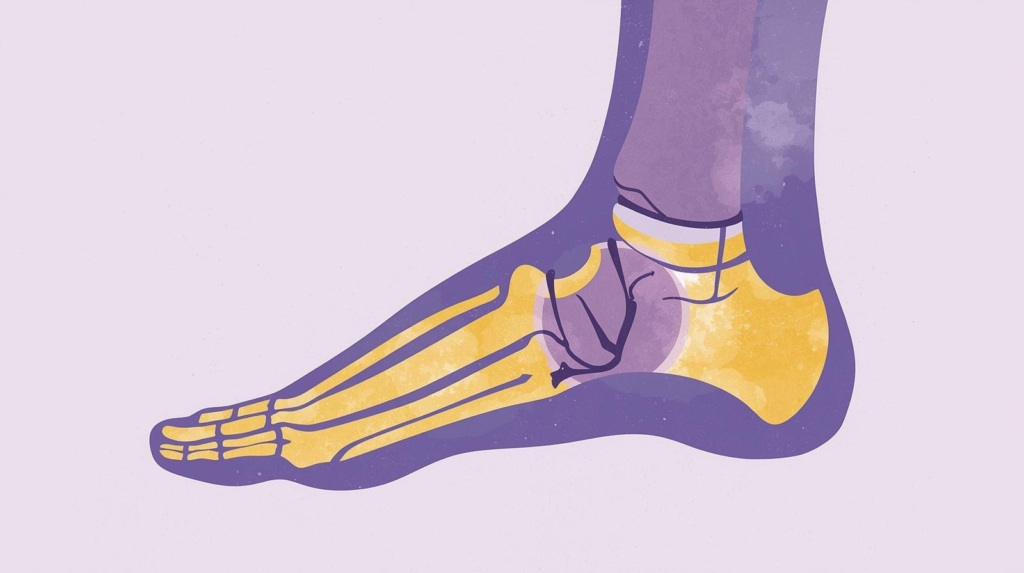
Your ankle isn’t a lone ranger; it’s the boss of a chaotic foot party where bones, ligaments, and muscles juggle impact forces like circus performers. Every step? A mini-explosion of physics.
How Does Your Ankle Absorb Impact Daily?
Ankles handle 3-5 times your body weight per step; imagine dropping a bowling ball on a teacup 10,000 times daily. The talus bone glides in the tibia-fibula mortise, cushioned by cartilage and ligaments, while the subtalar joint twists to adapt [1]. But if arches collapse or heels strike wrong, shockwaves ripple up, turning “walk” into “achy city.”
Humorously, evolution gave us feet for savannas, not concrete. Modern surfaces amplify impact, stressing ankle cartilage like a trampoline after too many kids.
The Gait Cycle’s Hidden Stress Points
Gait splits into stance (60%) and swing (40%). Heel strike loads the ankle laterally; midstance shifts weight forward; toe-off demands stability. Hidden killers:
- Excessive eversion: Ankle rolls in too far, pinching peroneal tendons.
- Poor push-off: Weak calves overload lateral ligaments.
- Heel whip: Side-to-side wobble from worn shoes fatigues ankle stabilizers.
Studies show altered gait doubles ankle stress, explaining why “just walking” hurts [2]. Fix the cycle, fix the pain.
Common Foot Faults Causing Ankle Pain
Feet aren’t created equal; some pronate like overeager puppies, others supinate like stiff Brits at tea.
Pronation vs Supination Breakdown
Overpronation: The Foot rolls inward excessively, flattening arches and yanking ankles medially. Result? Inside ankle pain on walking, as the tibialis posterior screams. Common in flat feet, it shortens stride, upping joint torque.
Supination: Opposite – the outer foot bears the load, rolling the ankle outward. High arches? You’re prone to feeling lateral pain like peroneal tendonitis. Runners hate it; walkers ignore hobbling.
Both warp the gait cycle, turning ankles into grumpy hinges [biomechanical gait studies].
Flat Feet and High Arches Impact
- Flat feet (pes planus): No arch shock absorption; ankles compensate, leading to posterior tibial tendon dysfunction. Pain hits mid-walk, worse uphill.
- High arches (pes cavus): Rigid feet slam heels, stressing lateral ankles. Walking feels “clunky”; pain builds distally.
One study linked arch height to 30% variance in ankle loading; flats overload medially, and highs laterally [3]. Laughable fix? Match your foot to life’s terrain, or pay with twinges.
Everyday Habits Wrecking Your Ankles
Blame isn’t all biomechanics; your routine is the accomplice.
Wrong Shoes for Walking Patterns
Flip-flops for errands? Heels for commuting? Amateur hour. Flexible soles let feet flop; zero-drop shoes ignore arches. Worn treads = slippery slopes for ankles.
Pro tip: Cushioned walkers with arch support cut pain 40% in trials.
Uneven Surfaces and Sidewalk Damage
City cracks, grass tufts, office carpet; uneven ground force micro-twists. Daily commuters on potholes? Ankle abuse. Habit hack: Scan paths like a hawk; vary routes to build resilience.
Your morning jog on tiles post-coffee? Instant overload. Habits compound faults, turning “normal” into a nightmare.
Early Warning Signs of Ankle Overload
Ignore these, and ankle pain on walking becomes chronic.
Pain Patterns During Different Walks
- Morning stiffness: 10-minute hobble fading? Ligament creep.
- Uphill stab: Lateral pain signals peroneals straining.
- Evening ache after desk-to-door: Cumulative pronation toll.
Track: Pain only pushing off? Achilles whispers. Constant throb? Cartilage alert.
Stiffness and Swelling Red Flags
Post-walk puffiness or “ankle armor” feeling? Inflammation brewing. Night swelling? Gravity’s revenge on poor veins. Red flags demand insoles stat; don’t wait for a sprain sequel.
Biomechanical Fixes for Pain-Free Walking
Science says tweak mechanics, not tough it out.
Custom Insoles and Arch Support
Generic drugstore pads? Meh. Custom orthotics realign gait, reducing ankle torque 25% per studies. Dual-gel insoles (Betterhood nod) cradle arches, easing pronation. Test: Wet footprint; fix your type.
Footwear Upgrades for Joint Protection
Seek stability shoes: Firm heel counters and medial posts for pronators. Rotate pairs; replace every 500km. Humor: Treat shoes like tires; bald ones crash ankles.
Strengthening and Mobility Drills
Weak ankles = pain magnets. Build resilience.
Ankle Stability Exercises at Home
- Single-leg balance: 30s/side, eyes closed for bonus.
- Alphabet toes: Trace ABCs with foot.
- Resistance band eversion: Strengthen peroneals.
Calf and Peroneal Muscle Workouts
- Eccentric heel drops: Slowly lower from step.
- Peroneal hikes: Side leg lifts with a band.
Do 3x/week; studies show 20% stability gains in 4 weeks [4].
Long-Term Prevention Strategies
Sustain gains.
Daily Gait Retraining Habits
Mirror check: Even hips? Retrain with metronome steps. Yoga for proprioception.
Weight Management for Ankle Relief
Every extra kg ups the load 4x. Drop 5% bodyweight? Pain halves. Walk mindfully; your ankles thank you.
Conclusion
Ankle pain on walking isn’t fate; it’s fixable via mastery of mechanics. Swap bad shoes, add insoles, drill stability, and watch joints rejoice. Stride strong, pain-free.
Any kind of pain is common as we age. Posture can often be the main culprit. So, always be mindful of your posture. Check here to know more:
Frequently Asked Questions:
Uneven turf amplifies pronation/supination, stressing stabilizers unprepared for wobbles.
Yes, orthotics realign gait, cutting stress 20-30% in studies; custom beats generic.
2-6 weeks with consistent insoles/drills; full gait shift in 3 months.
Worn shoes, uneven paths, and skipping warm-ups are cumulative gait killers.
Persistent for 4+ weeks, swelling, instability; podiatrist time.
References
- Cleveland Clinic (2022). Talus Bone: Anatomy, Function & Common Conditions. Retrieved from: https://my.clevelandclinic.org/health/body/23416-talus-bone [Viewed on 10 December 2025]
- Chapman, L. S., Fleury, C. A., Redmond, A. C., Richards, P., Hofstetter, C., Tapster, B., … & Siddle, H. J. (2023, August). Living with foot and ankle disorders in rheumatic and musculoskeletal diseases: A systematic review of qualitative studies to inform the work of the OMERACT Foot and Ankle Working Group. In Seminars in Arthritis and Rheumatism (Vol. 61, p. 152212). WB Saunders. https://doi.org/10.1016/j.semarthrit.2023.152212
- Zhao, X., Tsujimoto, T., Kim, B., & Tanaka, K. (2017). Association of arch height with ankle muscle strength and physical performance in adult men. Biology of sport, 34(2), 119-126. DOI: https://doi.org/10.5114/biolsport.2017.64585
- Reynolds, R. F., Smith, C. P., Yang, R., Griffin, R., Dunn, A., & McAllister, C. (2020). Effects of calf muscle conditioning upon ankle proprioception. PLoS One, 15(8), e0236731. https://doi.org/10.1371/journal.pone.0236731