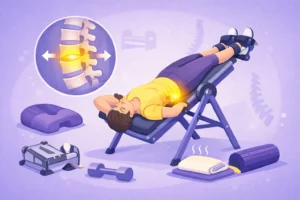






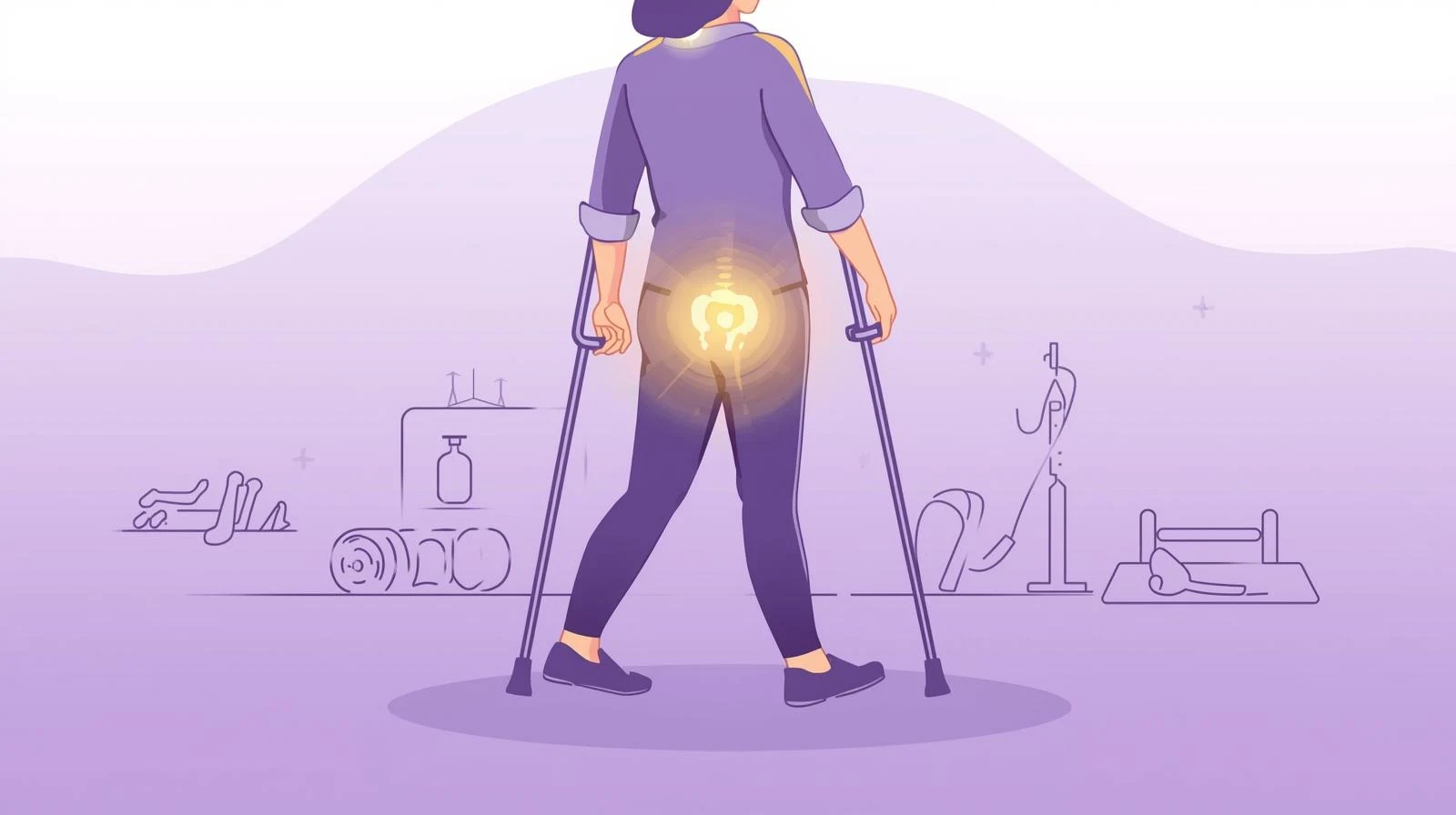
“A broken pelvis is a transformative injury. Because the pelvis acts as the “Grand Central Station” of human anatomy joining the spine to lower limbs and housing vital organs in its bowl shape, recovering from a fracture there is more complicated than for a regular limb. The pelvis is not one bone, but a complex ring of bones that comprises three parts: the ilium, ischium and pubis all held together with strong ligaments.
Whether the injury was caused by a high-impact trauma, such as from a car accident, or a fragility fracture stemming from osteoporosis in older adults, the aim of recovery is the same to restore structural stability and return to motion in life.deep dive at the stages of pelvic healing, why alignment is such a biological necessity, and the role of orthopedics to restore your stage and what specific moves create your foundation.
Part 1: The Anatomy and Mechanics of a Pelvic Fracture
More important than being able to recover well is knowing the mechanisms that received damage. The pelvis is the human body’s center of gravity. Every step and every time you sit down, forces are transmitted through your pelvic ring.
Stable vs. Unstable Fractures
The pelvis is biomechanically a stiff ring. If the circle is broken at only one location, the bones generally remain anchored. This is a Stable Fracture. But because it is a ring, a break in one part tends to lead to a break or displacement of another. If the bone pieces are no longer aligned, it is an Unstable Fracture. [1]
The Internal Impact
A pelvic injury is almost never isolated. Due to its central role, recovery frequently entails handling:
Nerve of Purization: The large external sciatic nerve and the obturator nerve pass through the pelvic openings. Here, damage causes leg weakness or drop foot. [ 3]
The Kinetic Chain A shattered pelvis destroys the bio-bridge between your back and legs. It is no wonder many pelvic patients develop secondary lower back pain during recovery.
Vascular Risks: The pelvis has an abundance of vascular supply. Healing demands good blood flow, but immobility fosters clots.
Part 2: The Biological Timeline of Healing
Bone healing is a physiological miracle that unfolds on a military-style timetable. You cannot hurry the knitting of bone, but there is much you can do to improve the conditions under which it will occur.
Phase One: The Protect Phase (Weeks 1 to 6)
In this window, your body is creating a soft callus. The priority is Bone Union.
Weight Bearing Restrictions: Non Weight Bearing (NWB) or Partial Weight-Bearing (PWB), as directed by your surgeon Straying from this will lead to surgical screws failing. [ 2]
Immobility’s Challenge: Glute and core muscles start to waste rapidly when in bed or chair-bound.
Phase 3: Initial Mobilization (Weeks 7 to 12)
When the X-ray shows hard callus (calcified bone), we begin addressing Range of Motion (ROM).
The aim is to wake up the hip joints.
Physiotherapy progresses from passive (the therapist moves you) to active (you move yourself). [ 4]
Phase 3: Piece Together a Functional Whole (Month 3 to 12)
This is the longest phase. You go from walking to living.
start to question your balance.
learn proprioceptive exercises that start unlocking your brain and teaching it how to trust your pelvis again. [ 5]
Part 3: Orthopedic Aids for Pelvic Healing
Recovery isn’t just about the workouts you do, it’s about the 23 hours a day that you’re not working out. Nurturing the pelvis and spine at this phase is essential.
Maintaining Spinal Alignment
How much time you spend sitting over the next few months when you have a pelvic fracture is going to make a really big, disproportionate difference. Standard chairs however require an inclination of the pelvis which places significant pressure on the healing site of a fracture.
An orthopedic solution, such as the betterhood PosturePro Backrest is essential. It preserves the lumbar curve, which in turn keeps the pelvis sufficiently “neutral,” minimizing shear force applied to the healing bone.
Foot Alignment and Gait Correction
Your gait will be asymmetrical as you move back into walking. You can limp to guard the painful side. This asymmetry continues up the body, resulting in the pelvis “twisting” with each step.
PosturePro Arch Support Insoles are what you stand on during your recovery. They ensure perfect symmetry in the upward “Ground Reaction Force” across the pelvic ring, by leveling the feet and avoiding loading them unevenly. [11]
Managing “Guarded” Muscles
When a bone is broken, the muscles surrounding it go into “guarding” mode and spasm to protect the area. This can be tremendously painful, and it can also literally yank the bones out of alignment.
Applying betterhood Pain Relief & Recovery Spray to the hips and lower back relaxes those secondary finger-like muscle spasms and creates a more comfortable physical therapy session.
Part 4: Essential Rehabilitation Exercises
Only do these AFTER you have been given clearance by your medical team.
The Ankle Pump (Vascular Health)
How: Flex your feet up and down like pressing a gas pedal.
Why: This is the “muscle pump” that helps prevent blood clots (DVT) while you are bedridden. [ 6]
Isometric Glute Sets
How: Tighten your buttocks together as tightly as you can, hold for 5 seconds and release.
Why: Restores gluteal strength without moving the joint of the pelvis. [7]
Supine Heel Slides
How: Lie on your back and slowly slide your heel toward your buttock and back.
Why : Slowly brings back hip flexion, which is the most limited range of motion following a pelvic break. [ 8]
Pelvic Tilts (Advanced Phase)
How: Lie on your back with your knees bent and gently flatten back to the floor, then arch slightly.
Why: Reconnects the core to the pelvis.
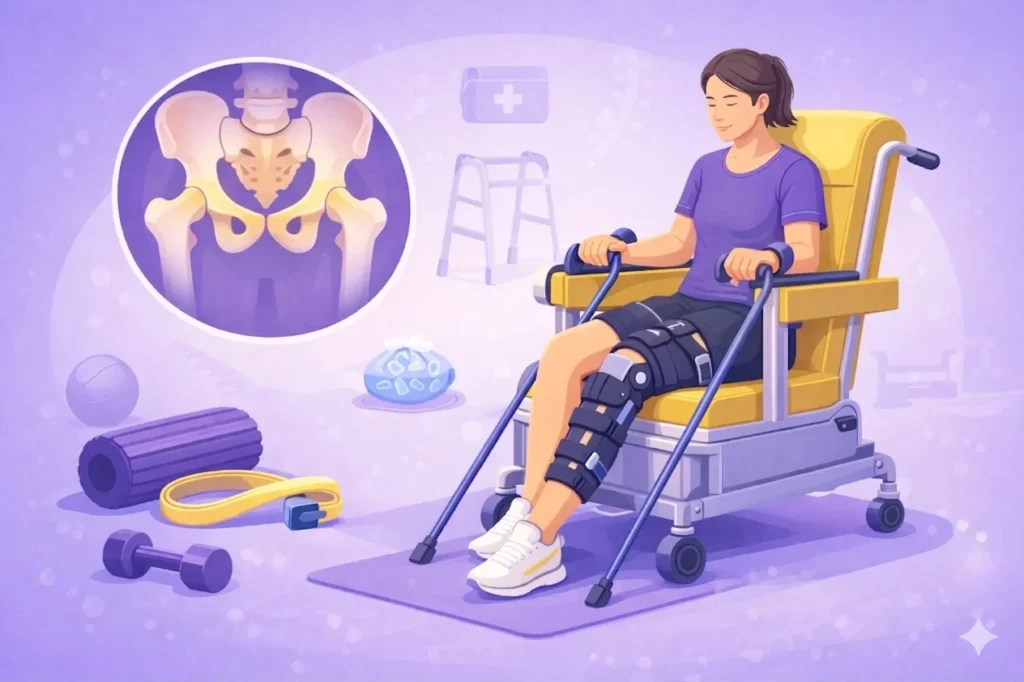
Part 5: Lifestyle and Nutrition to Regenerate Bone
Your body needs a surplus of certain nutrients to build bone. These are the “bricks and mortar” of your recovery.
The Bone Minerals: The new bone needs to be dense and strong. You require 1,200mg of Calcium, and at least 2,000 IU of Vitamin D3 a day. [12]
The Protein Scaffold: Bone is 50% protein by weight. More lean protein in the diet helps support this collagen matrix where minerals get deposited.
Hydration: Individuals on prolonged bed rest will frequently become constipated, which pelvic patients find to be especially distressing. So drink 3 liters of water a day to keep your bowel health and joints lubricated.
Part 6: Taking Care of the Mind
When it’s shattered, a pelvis can be a traumatic and isolating injury. The loss of autonomy is abrupt.
Small Wins: Relish that first time you can stand for 30 seconds or walk to the bathroom.
Ergonomics for Comfort: Using a better support tool like the betterhood Lumbar Cushion can be beneficial not only with pain, but it will also allow you to spend more time engaged in your world instead of being sequestered to bed.
Part 7: Red Flags When to Call the Doctor
Recovery is neither linear nor easy, but some symptoms prompt an urgent response:
Swollen Lower Leg: If only one calf is unusually swollen, red or hot to the touch, that may be a DVT. [9]
Breathlessness: May indicate a pulmonary embolism.
Incontinence: A sudden loss of control over your bladder or bowels may be a sign that the nerve is compressed.
Hardware Pain: A sharp, localized “clunking” sensation in the bone may indicate that a surgical screw has moved. [10]
Conclusion
A pelvic fracture tests your mettle. And added support from the medical world with appropriate orthopedic tools, arch supports for standing and walking, lumbar cushions when sitting and resting provides your body with an additional sense of stability needed to heal.”
Healing is a co-creation of your biology and your habits. Take care of your alignment, keep doing your movement practice and your “Grand Central Station” will be back up to full service.
Frequently Asked Questions
Most pelvic fractures spring back together in eight to 12 weeks, but full strength can take a year or more.
You are only allowed to walk when your surgeon tells you that the fracture is stable enough for weightbearing.
The muscles of your back compensate for this missing stability at the pelvic layer, resulting in a ‘roadblock’ that will be enforced on the muscle level as well.
Or surgery is typically only performed for “unstable” fractures in which the bones have moved, or where the pelvic ring opens up.
Yes, they help to stabilize your gait and make sure no uneven forces are being placed across the healing pelvic bone.
The nerve problems are common and most of them recover in 6–12 months because with time inflammation goes down and the bone heals.
Reference
- American Bone Health. (n.d.). Fracture Safety and Post-Injury Red Flags. https://americanbonehealth.org
- Arthritis Foundation. (n.d.). Gait and Spinal Health. https://www.arthritis.org
- Cleveland Clinic. (n.d.). Pelvic Nerves and Sciatica. https://my.clevelandclinic.org
- Harvard Health Publishing. (n.d.). DVT Prevention Strategies. https://www.health.harvard.edu
- Healthline. (n.d.). Isometric Exercises for Injury. https://www.healthline.com
- Journal of Bone and Joint Surgery. (n.d.). Long-Term Outcomes After Pelvic Fracture. https://www.jbjs.org
- Mayo Clinic. (n.d.). Pelvic Fracture Types. https://www.mayoclinic.org
- Medical News Today. (n.d.). Bone Regeneration Nutrition. https://www.medicalnewstoday.com
- National Institutes of Health / PubMed. (n.d.). Complications of Pelvic Fixation. https://pubmed.ncbi.nlm.nih.gov
- OrthoInfo – American Academy of Orthopaedic Surgeons. (n.d.). Recovery and Weight-Bearing After Pelvic Injury. https://orthoinfo.aaos.org
- Physiopedia. (n.d.). Rehabilitation Protocols After Pelvic Injury. https://www.physio-pedia.com
- WebMD. (n.d.). Hip and Pelvis Exercise Guide. https://www.webmd.com