





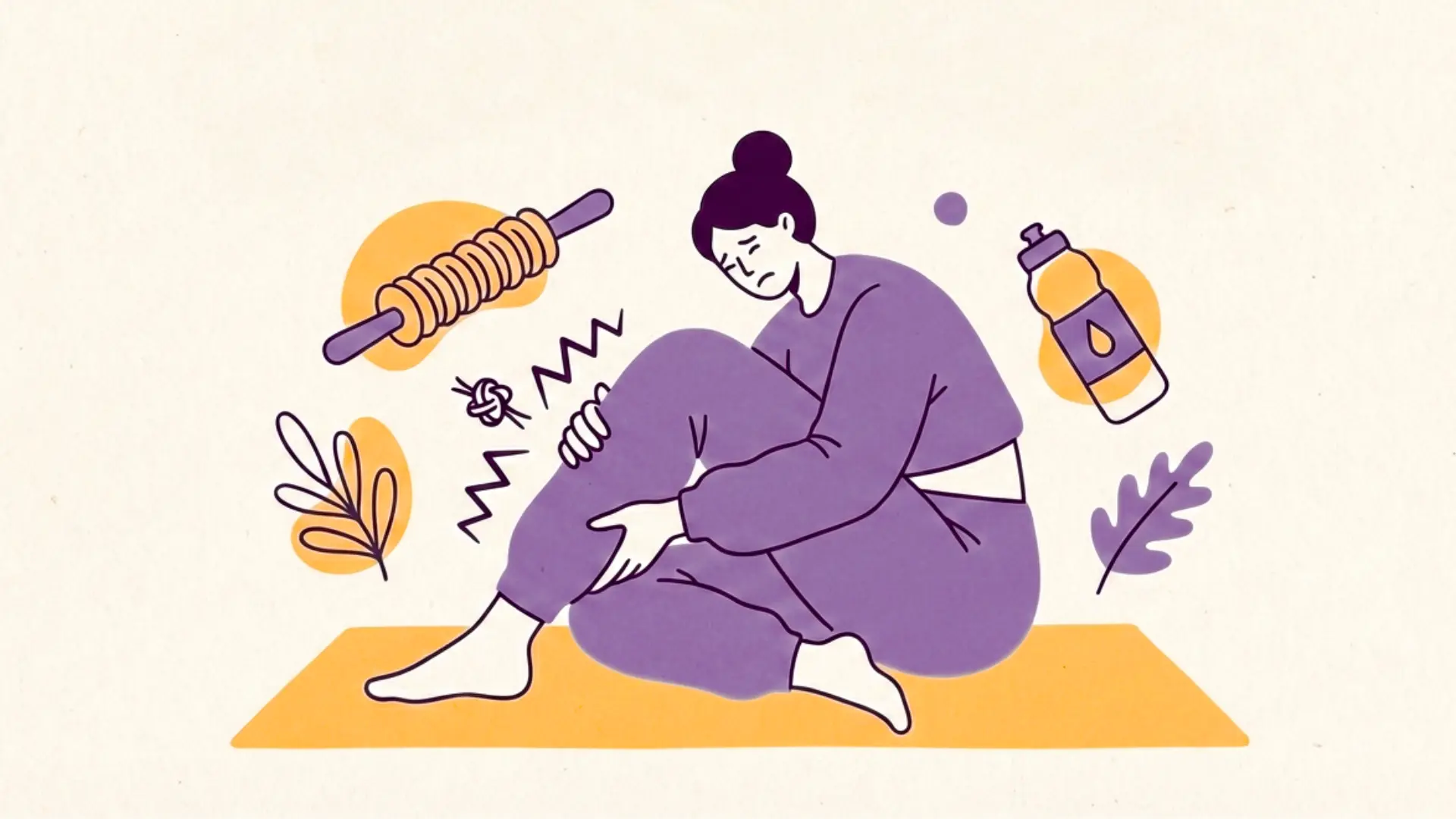
You crushed leg day yesterday and felt unstoppable; until this morning. Now you’re gripping the stair railing like your life depends on it, and every step is a reminder that those calf raises did exactly what they were supposed to. That stiff, burning calf muscle pain isn’t your body betraying you, it’s your muscles responding to serious work. They’re one of the hardest-working muscle groups in your body, constantly engaged whether you’re walking, standing, or climbing stairs. When leg day hits them hard, they respond with a vengeance.
The good news? You don’t have to limp through your week. This guide explains why post-leg-day calf soreness happens and shares proven, athlete-approved recovery strategies that actually speed up relief.
Understanding Post-Workout Calf Pain After Leg Day
The Science Behind Calf Muscle Soreness After Exercise
As you drive through squats, lunges or calf raises, your muscle fibers are performing micro-tears. Don’t freak out, this is entirely normal and crucial for muscle growth. This is known as delayed onset muscle soreness (DOMS).
Studies have shown that DOMS peaks 24 to 72 hours after exercise [1]. During that window, inflammation goes up, muscles swell a bit and your range of motion temporarily shrinks. The pain isn’t weakness, it’s your body being rebuilt stronger, even if it doesn’t seem like that when you’re just trying to make it from place to place.
Why Muscle Soreness Peaks 24-72 Hours After Exercise?
Your calves are unique overachievers. Unlike your quads or hamstrings, which essentially take a rest when you do, your calf muscles, including the gastrocnemius and soleus, are constantly doing work that pays off in the form of dynamic movement. Every step, every stair you climb, every weight shift, it’s your calves doing the work.
They also have lots of fast-twitch muscle fibers, which means explosive power but quick fatigue and slow recovery. Throw in naturally tight fascia (another name for connective tissue) and spending all day sitting down, which can create a lack of ankle mobility, and you’re left a perfect storm for killer post-workout calf tightness.
What are the Primary Causes Behind Calf Pain Post Leg Day?
Overloading Without Proper Warm-Up
It’s like stretching a frozen rubber band: You’re going to get snapback. Your muscles require blood flow and heat before confronting high loads.
Poor Form During Squats, Lunges, and Calf Raises
Push, instead of bounce, to maintain a strong foundation and coordinated movement throughout exercises such as squats or calf raises, letting your heels lift too soon in the squat or bouncing through calf raises places uneven strain on tendons of the calf muscles, increasing stiffness and risk of injury.
Weak Ankles and Limited Mobility
Restricted ankle dorsiflexion means your calves have to work their little socks off during leg exercises, leading to even more post-workout soreness and chronic tightness.
Dehydration and Electrolyte Imbalance
Your muscles are 75% water and depend on electrolytes such as sodium, potassium and magnesium. Even mild dehydration exacerbates muscle cramps and extends the length of time muscles are sore.
Skipping Post-Workout Stretching
So, yeah, skipping your cool-down may save you five minutes today but costs you days of pain tomorrow. Stretching after training helps to eliminate the waste products and keep the muscles flexible during recovery.
Wearing Wrong Training Shoes
Worn-out shoes or the absence of arch support make calves overcompensate to keep feet stable, resulting directly in more muscle fatigue.
Signs and Symptoms of Calf Muscle Pain
Normal Post-Leg-Day Symptoms
Anticipate tightness, mild to moderate deep aching, problems with stairs and stiffness that gets better with light motion. Your body’s process of repair and recovery is what causes these symptoms to set in 12-24 hours after exercise, and peak at about 48 hours.
Warning Signs of Calf Strain or Injury
The following red flags indicate that something’s not right and should see your doctor include: –
- Severe, stabbing pain that doesn’t get better with rest
- Swelling or bruising that you can detect with the eyes
- Pain when you’re just sitting or lying down
- The inability to stand on your toes or flatten your foot in extension of the pain [2].
These indicate a real strain, time to go to the doctor.
How Calf Pain Affects Daily Movement and Posture ?
Sharp, sudden pain in the calves isn’t just painful, it can impact how you move. When calves are hurting, you naturally change your gait, which may cause you to strike the ground harder on your heels or take smaller steps. This compensatory pattern becomes a chain reaction, putting stress on knees, hips and lower back.
Your body is interconnected. If one part falters, the others make up for it, at times to their own detriment. This makes good recovery and ergonomic support even more important. Whether it’s behind your desk, during a long drive or even recovery post running and sleeping, good posture for a calves recovery can help without creating any added stress on other areas of the body.
Best Recovery Methods for Post-Workout Muscle Soreness
Active Recovery Over Complete Rest
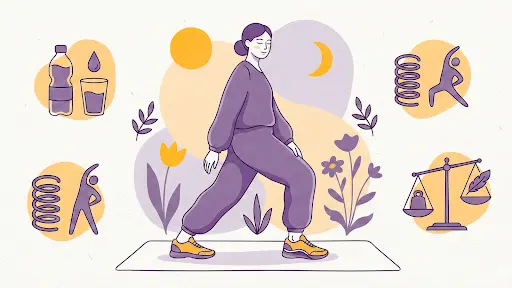
The answer is not lying on the couch all day. Activities like walking or cycling or ankle circles all facilitate that healing by boosting blood flow without causing stress. Increased blood flow brings oxygen and nutrients, as well as removes metabolic byproducts [3]. Strive for 15-20 minutes of light activity on rest days.
Heat vs Cold for Calf Muscles
Apply cold therapy (ice packs) following exercise and for the first 24-48 hours to help with inflammation. Cold helps to narrow blood vessels and reduce swelling. After two days, alternate with heat therapy (such as a warm bath or heating pads) to help relax tight muscles and improve blood flow. A lot of athletes alternate 10 minutes cold, 10 minutes heat for more complete relief.
Stretching Routine for Tight Calves
Gentle stretching is non-negotiable. There’s the standing calf stretch: hands on a wall, one foot step back, heel down against a wall, keep leg straight, hold for 30 seconds. Followed by a bent-knee stretch in the same position to reach further into the deeper soleus muscle. Do this 2-3 times a day while you recover.
Foam Rolling and Massage for Faster Relief
Foam rolling provides deep tissue massage.Put the roller under your calf and lift up slightly, then slowly roll from your ankle to just below your knee. When attend to tender spots, holding for 20-30 seconds. This myofascial release helps to lift restrictions in the fascia and increase circulation. Refocus out, across and away from the body to prevent rolling directly over the Achilles tendon–5-10 minutes per calf are more than enough time!
Compression Sleeves for Better Circulation
Athlete fashion is not the only use of compression garments. The literature suggests that the use of compression sleeves decrease muscle soreness and enhance recovery by increasing venous blood flow and decreasing oscillation within the muscles [4]. Put them on in your workout after, or wear to bed the first 24-48 hours after exercise.
Hydration + Electrolytes
Dehydration sabotages muscle recovery. Hydration is necessary for your muscles to flush out waste and deliver nutrients that aid in repair. In addition to water, restore the electrolytes; sodium, potassium and magnesium. Sea salt in water, bananas and sweet potatoes, magnesium supplements if you cramp a lot.
Anti-Inflammatory Foods for Muscle Healing
What you eat can hinder or help speed up your post-workout recovery process. Berries are filled with antioxidants that fight inflammation. Nuts bring healthy fats which help in cell repair. Fatty fish, such as salmon, deliver omega-3s with strong anti-inflammatory effects. Turmeric (with black pepper to aid absorption) alleviates muscle aches. So save the grilled salmon with sweet potatoes and blueberries for after your workout so your muscles can repair themselves faster.
Cooling Down After Leg Day
And don’t overlook the cool-down, your recovery starts here. After your final set, spend 5 to 10 minutes doing deep breathing, ankle circles and light leg swings. Cool down with static stretches of worked body parts (30-45 seconds each). This systematic process shifts your body from workout to rest-and-repair.
Sleep and Muscle Repair
Sleep is crucial, and if you’re not doing enough of it, you might as well abandon your workouts. Growth hormone, vital to muscle repair and protein synthesis is released during deep sleep [5]. Studies have also shown that not getting enough sleep can decrease muscle protein synthesis by up to 18%. Aim for 7-9 hours nightly. A good mattress and adjustable pillow position aren’t niceties, they are recovery tools that enable full muscle relaxation.
Posture and Ergonomics for Recovery
This is going to sound off topic but sitting with a poor posture for 8+ hours a day tightens up your hip flexors, limits ankle mobility and fucks with your lower body kinetic chain. This means calves are working a lot harder to just maintain balance during the course of the day. Sit on ergonomic support pillows after a long day. Good alignment removes unnecessary stress from leg muscles, giving them time to recharge rather than fight the wrong position all day.
Preventing Calf Muscle Pain in Future Leg Days
Warm up Exercises to Get Your Calves Ready
Before you pick up a weight have about 5-10 minutes of warm-up; dynamic, not static: Ankle circles both ways, stair calf raises slow and one leg at the time under control, light jumping jacks to circulate your blood better and walking lunges with torso twists. You’re working these movements to prepare your nervous system for the stress that lies ahead.
Strengthening Exercises for Long-Term Health
Strength train even your calves over time with single-leg calf raises to counteract imbalances, seated calf raises that are good for hitting the soleus muscle specifically, and tibialis anterior exercises (toe raises) that will beef up your lower legs front for balance. Include these 2-3 times per week on a day other than main leg day.
How Much Training Volume is Sensible?
More isn’t always better. If you always feel like your calves are going to give out at any moment, you’re over-reaching. Begin with 3-4 sets of calves in each leg workout, with a weight that allows you to get 12–15 reps under control. Add volume very slowly, no more than 10% per week is fine. Chronic pain that doesn’t go away is a sign you need more recovery, not more volume.
Shoes, Form, and Equipment Tips
Wear good training shoes that provide you with support at the arch and enough cushioning. Replace them every 300-500 miles. Never stop focusing on form; slow, tight movement will beat heavy sloppy weight every time. Try doing calf raises on a box for more range of motion!
Warning Signs You Shouldn’t Ignore
While most calf soreness is harmless exercise-induced muscle soreness (DOMS), some symptoms call for a doctor’s visit: severe swelling that isn’t better after 48 hours, sudden very localized pain during activity (possible tear), ongoing redness or warmth, palpable knot or gap in your muscle flesh, and painful swelling in just one leg (especially with warmth and tenderness), this might signal a blood clotting below the knee; get yourself to the ER right away. Failure is part of the vaccination process: When in doubt, get it checked out.
Conclusion
Calf muscle soreness after leg day is a fitness right of passage, but that doesn’t mean it has to sideline you or turn into something chronic. If you can learn what’s going on in your muscles, differentiate between normal DOMS and real injury, and apply evidence-based recovery methods effectively, it leads to less time being scrapped off the mat while earning more for yourself throughout the long-term.
Remember: recovery isn’t passive. It’s active work, not just in the sense of proper movement but also in terms of nutrition, hydration, sleep and even daily ergonomic choices. The way you treat your body in between workouts is everything and plays a part in how cold or not so cold, you feel. Stick to your recovery efforts, heed the cues from your own body and take it slow.
Now, lift yourself off the couch and do a couple of small figure 8s with your ankles, and approach recovery as seriously as you do leg day. Your future self will be grateful.
Explore More Health & Wellness Solutions:
Want to stay informed about wellness and everyday health issues? Here are some insightful reads to guide you. Explore the links below for practical tips and solutions.
- How to Prevent Knee Injuries: Proven Tips, and Lifestyle Strategies for Stronger Joints
- How Can Knee Cap Support Help Prevent Injury and Reduce Pain While Running
- 10 Effective Home Remedies for Body Pain Relief Naturally
Frequently Asked Questions:
Classic DOMS hits between 48-72 hours after a workout and is gone by day four or five. If soreness lasts for more than a week or gets worse instead of better, it’s possible that you have suffered an injury as opposed to just normal muscle soreness.
Light movement is fine however bigger calves will thank you for resting while soreness subsides. Work other muscle groups while calves recover, and low-intensity activity such as walking or cycling helps to accelerate recovery. It’s generally fine to exercise, match the intensity of your previous day’s workout and use sore muscles without doing exercises that specifically stress them.
Calves are constantly working throughout all the movements we do every day; walking, standing, balancing, so they’re fatigued before you even start a workout. They also are packed with a high concentration of fast-twitch muscle fibers, which are more susceptible to soreness, and many people have naturally tight calf muscles and limited ankle mobility that can increase discomfort.
Combine several: Compressions sleeves for circulation, a little gentle stretch/light walking for active recovery, heat at 48 hours, hydration/electrolytes and foam rolling for muscle tension relief. By combining these methods, it achieves the best performance.
Absolutely. Chronically tight calves can lead to Achilles tendinitis, plantar fasciitis, stress fractures and knee pain from potential compromised biomechanics, increased risk of muscle strains or tears. Keeping your calves flexible and stretching you then is a key element of injury prevention.
You should seek medical attention if you have sudden severe pain that pops, significant swelling that does not get better with rest, the site looks bruised or deformed, can’t put weight on it at all, one calf is warm/red/tender (could indicate a blood clot), or the pain does not improve and instead gets worse over a few day
References
[1] Cheung, K., Hume, P., & Maxwell, L. (2003). Delayed onset muscle soreness: Treatment strategies and performance factors. Sports Medicine, 33(2), 145-164. https://pubmed.ncbi.nlm.nih.gov/12617692/
[2] Green, B., & Pizzari, T. (2022). The assessment, management and prevention of calf muscle strain injuries: A qualitative study of the practices and perspectives of 20 expert sports clinicians. Physical Therapy in Sport, 53, 10-18. https://pmc.ncbi.nlm.nih.gov/articles/PMC8761182/
[3] Gatorade Sports Science Institute. (n.d.). Recovery techniques for athletes. Sports Science Exchange, 120. https://www.gssiweb.org/sports-science-exchange/article/sse-120-recovery-techniques-for-athlete
[4] Beliard, S., Chauveau, M., Moscatiello, T., Cros, F., Ecarnot, F., & Becker, F. (2015). Compression garments and exercise: No influence of pressure applied. Journal of Sports Science & Medicine, 14(1), 75-83.https://pmc.ncbi.nlm.nih.gov/articles/PMC3641539/
[5] Dattilo, M., Antunes, H. K., Medeiros, A., Mônico-Neto, M., Souza, H. S., Tufik, S., & de Mello, M. T. (2011). Sleep and muscle recovery: Endocrinological and molecular basis for a new hypothesis. Medical Hypotheses, 77(2), 220-222. https://pmc.ncbi.nlm.nih.gov/articles/PMC7785053/