





If you have that nagging pain on the top of your foot and it gets progressively worse when you walk, run or even flex your toes, chances are you may have extensor tendonitis. This little-discussed ailment strikes thousands of active Indians, whether it’s morning walkers in New Delhi’s parks or young professionals at the gym after hours at the desk.
Extensor tendonitis is inflammation of the tendons that run along the top of your foot and is typically caused by overuse, wearing shoes that don’t fit properly, or a rapid increase in physical activity. Foot and ankle complaints related to tendinopathy make up around 30% of lower limb overuse injuries in active adults [1]. Extensor tendonitis is not as common of a topic as something like plantar fasciitis or ankle sprains, but can be just as debilitating if overlooked!
The good news? Extensor Tendonitis Most extensor tendonitis is resolved within 4-6 weeks with the right education, treatment and prevention.
In this all-inclusive guide, we will cover every aspect of this condition you need to be aware of; from early warning signs to proven treatment protocols that do get results.
What is Extensor Tendonitis?
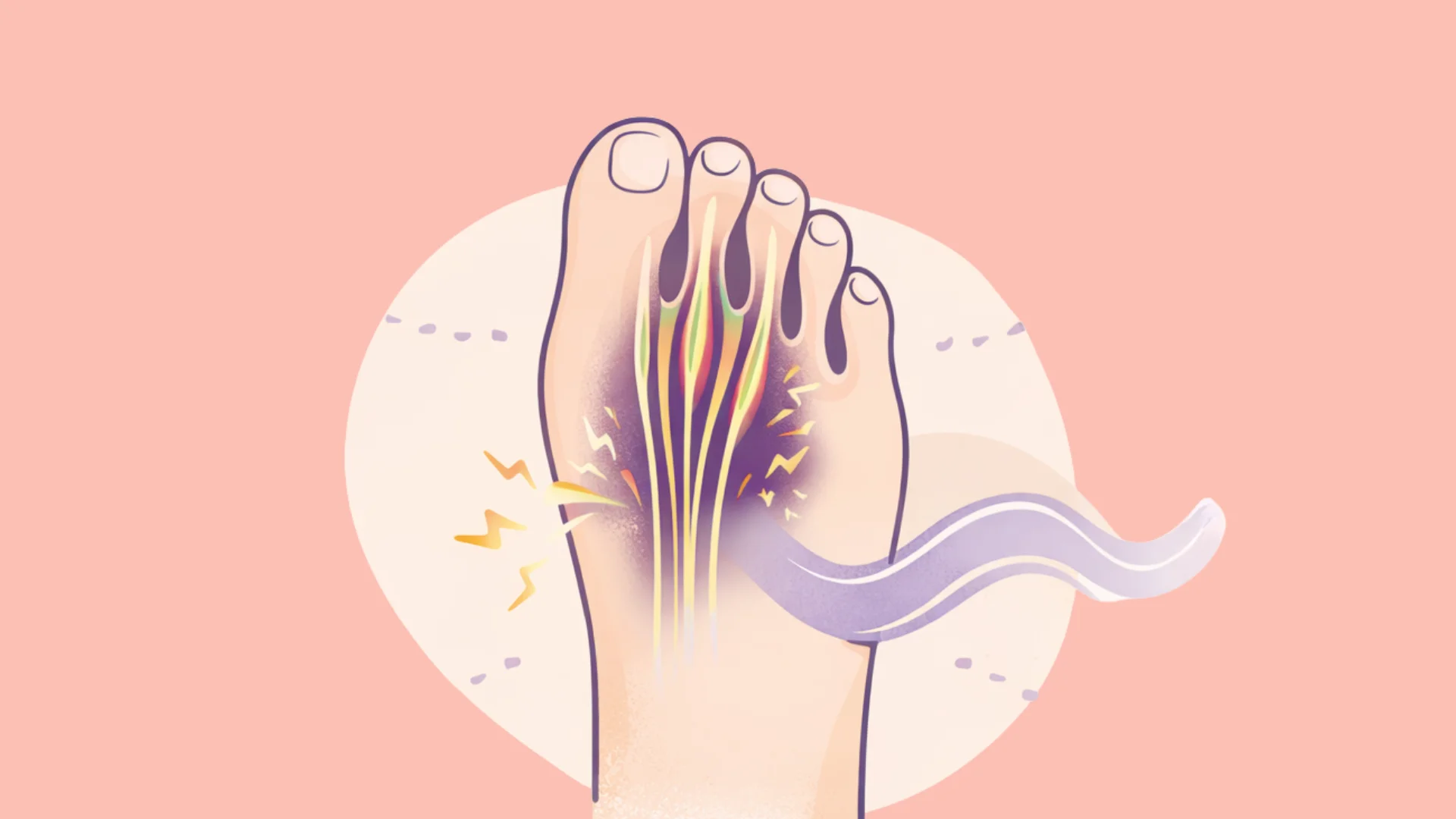
Extensor tendonitis causes inflammation of the extensor tendons which are made up of bands of tissue that stretch along the top of your foot and lead to helping you lift your toes and foot upward (this is known as dorsiflexion). These tendons link muscles in your lower leg to the bones of the toes and foot.
Anatomy Basics:
- Extensor Digitorum Longus: Extends the four smaller toes
- Extensor Hallucis Longus: Extends the big toe
- Tibialis Anterior: Helps lift the foot upward and inward
When those tendons are placed under repeated stress or sudden excess load, the tissue can be inflamed, painful and even develop micro-tear. This inflammation is what we refer to as extensor tendonitis [2].
One Key Difference from Other Foot Ailments: Another way to help diagnose this condition is to the fact that although other conditions such as plantar fasciitis causes heel and arch pain, and metatarsalgia causes ball of foot pain, extensor tendonitis specifically causes pain on top of the foot, making it relatively easy to identify once you know what you’re looking for.
Recognizing Extensor Tendonitis Symptoms
It is important that the symptoms of extensor tendonitis are treated early in order to prevent them from becoming a chronic condition. Here’s what to watch for:
Primary Symptoms:
1. Top of Foot Pain:
The most common symptom of extensor tendonitis is pain at the top (dorsal surface) of the foot, usually in the middle section or near your ankle. The pain may be:
- Orthopedic Sharp sensation when bending the foot or toes
- Dull and achy at rest
- Activity-induced exacerbation and rest-related amelioration
- It is worse in the morning, with rest.
2. Visible Swelling:
- Inflammation frequently results in clear swelling along the path of the tendons on the top side of your foot. You might notice a small bump or bulge of some sort [3].
- Pain to touch: the area of skin at the top of your foot (over the tendons) will be painful to press into. This is what separates extensor tendonitis from other foot pain sources.
3. Difficulty with Dorsiflexion:
- It is painful or hard to point your toes upward
- Going up hill or stairs makes it worse.
- Resisting force with the foot (as pressing against a wall) also produces pain.
4. Redness and Warmth:
In more serious cases, the area will be red and warm to touch as inflammation is present.
Pain Pattern:
- exacerbated by or during exercise and for a few hours afterwards
- Getting better slowly through the day with rest
- Worse still when the footwear is too tight
- May cause limping if severe
Signs and Symptoms: The symptoms of extensor tendonitis usually develop gradually over days or weeks, but can occur very abruptly after an acute injury or a sudden increase in activity. Many Indians begin developing symptoms after:
- Starting a new exercise program
- Increasing running distance or intensity
- Wearing new or ill-fitting shoes
- When sports after a long time off goes wrong
- Staying in illiterally supportive shoes for long hours
What are the Common Causes of Extensor Tendonitis?
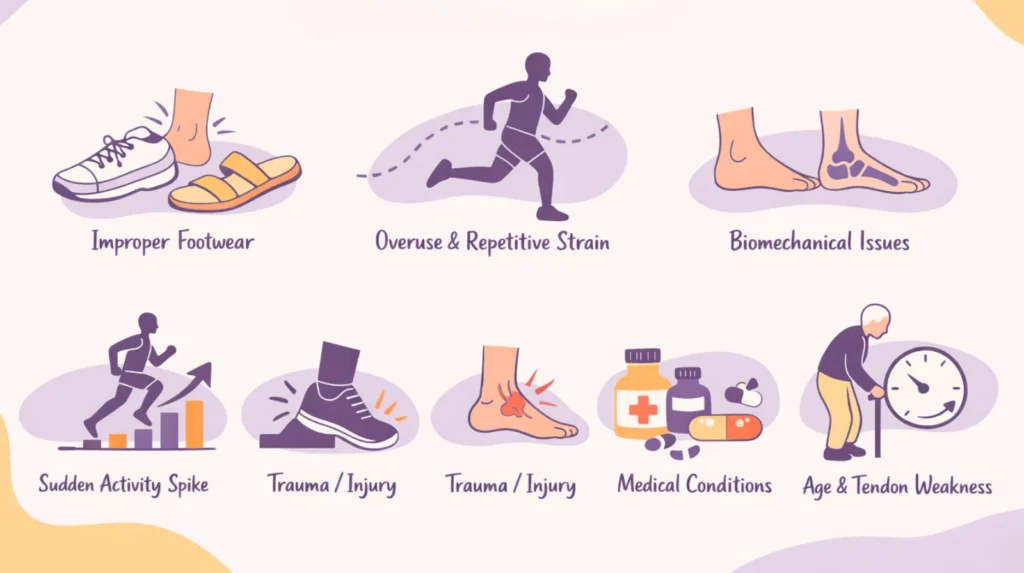
Knowing what causes extensor tendonitis helps you keep it from coming back after treatment. Here are the primary culprits:
1. Improper Footwear
It is the commonest cause of extensor tendonitis, especially in Indian scenario where most of the population uses flat chappals, tight formal shoes and old sports shoe is worn.
Problematic Footwear:
- Shoes with tight laces putting pressure on tendons
- Flat sandals without arch support
- High heels forcing unnatural foot positions
- Worn-out athletic shoes with collapsed support
- Shoes that are too small or narrow
The Cause: Tight laces or shoe tongues that push down straight onto the extensor tendons causing them to rub and compress with each step.The Mechanism: As above, repeated thousands of times a day, this irritation causes inflammation [4]. Not sure what kind of shoes to wear? Explore; how to find the right arch support insoles.
2. Overuse and Repetitive Strain
Extensor tendonitis is a typical overuse injury that occurs when the tendons are strained more than they can heal.
High-Risk Activities:
- Examples: Running (in particular, running with a sudden mileage increase)
- Dance, most especially ballet or dance types with a lot of toe pointing
- Soccer, with repetitive kicking motions
- Hiking uphill (requires excessive dorsiflexion)
- Prolonged stair climbing
- Jump rope or high-impact aerobics
The “Too Much, Too Soon” Syndrome: Adhering to the “10% rule” (ie, avoid increasing your volume or intensity by greater than 10% per week) can help prevent most cases of extensor tendonitis [5]. Unfortunately, a lot of eager (and arrogant) fitness newbies don’t follow this theory, and they wind up hurt.
3. Biomechanical Issues
Any structural deviation in the feet and lower legs may increase the risk for developing extensor tendonitis by disrupting normal distribution of stress.
Common Biomechanical Factors:
- Flat feet (pes planus): Collapsed arches force tendons to work harder
- High arches (pes cavus): Creates excessive tension on top-of-foot structures
- Overpronation: Inward rolling of foot during walking/running
- Tight calf muscles: Limits ankle mobility, stressing extensor tendons
- Leg length discrepancy: Creates compensatory movement patterns
If you have flat feet or another structural problem, you may want to try orthotic insoles to distribute pressure more evenly and take the strain off your tendons.
4. Sudden Increase in Physical Activity
Initiating a new exercise program with great enthusiasm, which is the typical New Year’s resolution scenario; it usually leads to extensor tendonitis when the body does not allow for enough adaptive time.
Examples:
- From couch to 5km per day running
- Attending high-impact dance lessons more than once a week
- Starting a sports event after months of no sport
- A lot of walking on holiday after a lazy couple of month
5. Direct Trauma or Injury
More rarely, extensor tendonitis is caused by direct impact on the top of the foot such as getting stepped on while playing sports, dropping something heavy on your foot or being kicked during martial arts.
6. Underlying Medical Conditions
Some Medical conditions can lead to a tender inflammation:
- Rheumatoid arthritis and other inflammatory states [6]
- Diabetes (inhibits healing and flexibility of tendons)
- Gout (uric acid crystals can irritate tendons)
- Obesity (adds mechanical stress on feet)
7. Age-Related Factors
Tendons become less elastic and receive a decreased blood supply naturally as people age, so they are inherently weaker and susceptible to injury. People above 40 years should be extra careful when they take up new activities or increase intensity of exercises.
Diagnosing Extensor Tendonitis
Self-Assessment: You can perform a simple self-test for extensor tendonitis:
- Sit with foot flat on floor
- Try to lift just your toes off the ground
- Press gently along the top of your foot
- Note if pain worsens with these movements
If you experience pain during this test along with other extensor tendonitis symptoms, the condition is likely.
Medical Diagnosis: A healthcare provider will:
- Review your symptoms and activity history
- Perform physical examination of the foot
- Test range of motion and strength
- Palpate tendons to identify pain points
Imaging Tests: Most cases don’t require imaging, but your doctor may order:
- X-rays: Rule out fractures or bone spurs
- Ultrasound: Visualize tendon inflammation or tears
- MRI: Detailed view of soft tissue damage (for severe or persistent cases)
Differential Diagnosis: Your doctor will rule out other conditions with similar symptoms:
- Stress fractures in metatarsal bones
- Ganglion cysts
- Nerve compression syndromes
- Gout or pseudogout
- Arthritis
Effective Treatment for Extensor Tendonitis
Extensor tendonitis is managed conservatively and escalating if necessary.
Phase 1: Acute Management (First 48-72 Hours)
RICE protocol: The basis of management for the early treatment of extensor tendonitis is the well-known RICE technique [7]:
Rest:
- Avoid activities that aggravate pain
- Reduce walking distance
- Rest from running, jumping or sport for a while
- That doesn’t mean being a campaign couch potato, gentle movement helps keep your circulation up.
Ice:
- Apply Ice 15-20 minutes every 2-3 hours
- Layer to avoid frostbite with a thin fabric barrier.
- Ice cures inflammation and numbs the pain.”
- Particularly effective immediately after activity
Compression:
- Apply compression wrap to minimize swelling.
- Do not wrap too tightly (wrap should be snug, but not tight enough to restrict circulation)
- Take it off if you are experiencing numbness, tingling or additional pain.
Elevation:
- Elevate your foot above the level of your heart when sitting or lying down.
- Assist the patient to elevate foot with pillows when supine or sitting
- Decrease in blood to area and reduce swelling
Step 2: Pain Relief and Inflammation Control
Non Prescription Medications: Painkillers,NSAIDs (also known as non-steroidal anti-inflammatory drugs) such as ibuprofen, or diclofenac can help with pain and inflammation [8]. Typical dosing:
- Ibuprofen 400mg three times per day with food
- Do not use with medical guidance more than 5-7 days only
- Paracetamol is painkilling but does not have any anti-inflammatory effects
Topicals: Diclofenac gel, or any anti-inflammatory gel directly on the painful site may alleviate discomfort in the area with fewer systemic effects.
Phase 3: Footwear Modifications
- Immediate Changes:
- Reduce tension on shoe laces to size which just stop short of constricting over painful area
- Wear broader shoes with a roomier toe box
- Wear well-cushioned, supportive footwear
- Stay away from flat chappals and unsupportive sandals
- Try wearing cushioned insoles to be more comfortable
- Special lacing patterns such as the following can also help to alleviate extensor tendon pressure:
- Skip lacing across sore spot, so there is a “window”
- Change from cross to parallel lacing
- Give heel-lock lacing a go for all-around better support
Phase 4: Continued Rehabilitation and Physical Therapy
Once you tame the acute pain (usually 5-7 days), however, physical therapy is essential to regain your normal strength and prevent a reoccurrence.
Gentle Stretching (Start Week 2):
Toe Flexion Stretch:
- Sit with affected leg extended
- Gently pull toes toward you
- Hold 20-30 seconds, lower slowly
- Perform 2-3 times daily
Calf Stretch:
- Stand near wall with hands on it
- Step afflicted foot behind, anchored heel to floor.
- Bend front knee; keep back leg straight
- Keep for 30 seconds, do three 10 repetitions
- Reactive extensor tendon stress is aggravated by tight calves
Ankle Circles:
- Turn ankle clockwise and counter courtwise to some extent
- 10 circles each way
- Improves mobility and circulation
Strengthening Exercises (Start Week 3-4):
Resistance Band Dorsiflexion:
- Sit with leg extended
- Place resistance band in a loop around ball of foot
- Pull toes toward you while pressing against the resistance of band
- 2 sets of 15 reps
- Strengthens extensor muscles without impact
Toe Raises:
- Sit with feet flat on floor
- Toes up, heels down
- Hold 5 seconds, lower slowly
- 3 sets of 10 reps
Towel Scrunches:
- Place small towel on floor
- Use toes to scrunch towel closer to you
- Strengthens foot intrinsic muscles
- 2 sets of 10 reps
Marble Pickup:
- Place 10-15 marbles on floor
- Grip with toes, let fall into bowl.
- Improves toe dexterity and strength
Phase 5: Step by Step Return to Activity
Progressive Loading (Week 4-6):
- Begin with brief walks (10-15 minutes).
- Increase duration by 10% weekly
- Observe for pain with activity and after the fact
- If you feel more pain to the area, decrease level of activity
Return to Running/Sports (Week 6-8):
- Begin with walk-jog intervals
- 5 minutes walking/ 1 minute jogging (repeat)
- Gradually increase jogging intervals
- Ensure pain-free before advancing
If conservative methods fail, try: More Serious Remedies
It would provide relief in the case of extensor tendonitis that doesn’t disappear through other remedies and with high level of concentration and dosage (a physician may insert corticosteroid injections directly into painful spots) [9]. Benefits include:
- Rapid reduction in inflammation
- Significant pain relief
- However, restricted usage to 2–3 injections annually
- Small risk of tendon weakening
Platelet-Rich Plasma (PRP) Therapy: A new treatment that is being used more frequently for tendon injuries, PRP includes injecting concentrated platelets, from your own blood, into the injured area to encourage healing [10].
Extracorporeal Shockwave Therapy (ESWT): Acoustic waves are used to initiate the replacement of chronic tissue and are thought to have analgesic properties.
Surgery: For extensor tendonitis, surgery is only indicated in very rare (unresponsive to all conservative measures for > 6 months) circumstances. Surgery typically involves:
- Removing inflamed tissue (debridement)
- Releasing tight structures compressing tendons
- Repairing torn tendon fibers
Prevention Strategies: Stop Extensor Tendonitis Before It Starts
1. Choose Proper Footwear:
- Replace running shoes every 400-500 km
- Ensure adequate toe box width
- Wear footwear with strong arch support
- Think about custom orthotics if you have biomechanical problems
Disclaimer Do not wear the same pair of shoes every day.
2. Follow the 10% Rule:
Do not increase exercise volume, intensity or duration by more than 10%-per-week. This allows the tendons to adapt gradually to the new demands.
3. Warm Up Properly:
- 5-10 minutes of dynamic warm-up to prepare for exercise
- Ankle Circles, Calf Raises, Toe Taps To be continued….
- Build-up intensity, don’t go full throttle from the get-go
4. Strengthen Supporting Structures:
Do calf-raise circuits for sitting and seated positions. Strong, balanced muscles help prevent tendons from being overworked.
5.Fix Biomechanical Problems:
If you have flat feet, high arches, or another structural issue it’s a good idea to see a podiatrist or physical therapist who can help you address these issues. Appropriate arch support matters a lot.
6. Pay Attention to Your Body:
Do not discount early warning signs of extensor tendonitis; slight pain or tenderness on the top of your foot. Deal with your problems not keep moving through the pain.
7. Maintain Flexibility:
- Daily stretch your calves, shins and feet ergative.
- Think about yoga or pilates for general flexibility
- When muscle is tight, it puts excessive tension on its tendon
8. Cross-Train:
Try not to stress your body with the same repetitive activity. Add running to swimming, cycling or strength training.
9. Keep a Healthy Weight:
Carrying extra pounds can add mechanical stress to your feet and ankles. For every kilogram of body mass, 3¿4kg force is generated at the foot while walking [11].
When to Seek Medical Attention ?
Contact a healthcare professional if you have:
- Walk/activities limited by Painkelly Severe and activity is completely outside the home.
- symptoms lasting more than 2 weeks, despite rest and home treatment
- Severe swelling, redness or warmth that could indicate an infection
- Unable to put weight on the injured foot
- Numbness, tingling or changes in toe coloring
- History of prior extensor tendonitis with relapse
- Symptoms affecting both feet simultaneously
Early help by a professional avoids the acute stade of extensor tendonitis to transform in a chronic one.
Living with Extensor Tendonitis: Practical Tips
At Work:
- Take regular breaks to move and stretch if desk-bound
- Avoid sitting with feet tucked under chair (compresses tendons)
- Keep a tennis ball under desk for foot rolling exercises
- Wear supportive footwear even in office environments
During Exercise:
- Modify workouts to reduce impact on extensor tendons
- Swap running for swimming or cycling temporarily
- Focus on upper body and core strength during recovery
- Use pain as your guide, some discomfort is okay, sharp pain is not
At Home:
- Elevate feet when watching TV or reading
- Perform gentle stretches before bed
- Ice after long days of standing or walking
Choose supportive house slippers over walking barefoot.
Managing Expectations: Complete healing of extensor tendonitis typically takes 4-8 weeks with proper treatment. Chronic cases may require 3-6 months. Patience and adherence to treatment protocols are essential, rushing back to activity risks re-injury and prolonged recovery.
Conclusion
Extensor tendonitis can be painful and limiting, but the good news is that it’s highly treatable, especially when caught early. Recognising symptoms like pain on the top of the foot, swelling, and stiffness allows you to take action before the condition becomes chronic.
Recovery works best with a balanced approach: adequate rest, pain management, proper footwear, targeted physiotherapy, and a gradual return to activity. Just as important is fixing the root cause, whether it’s tight shoes, poor biomechanics, or training errors, so the problem doesn’t come back.
Be patient with your body: Tendons heal slowly, and pushing too hard too soon can turn a short-term injury into a long-term issue. Start by reassessing your footwear and daily habits because small changes can make a big difference.
At Betterhood, we’re committed to supporting foot health with evidence-based guidance and wellness solutions designed to keep you moving comfortably. Because healthy feet don’t just support your body; they support your life.
Explore More Health & Wellness Solutions:
Want to stay informed about wellness and everyday health issues? Here are some insightful reads to guide you. Explore the links below for practical tips and solutions.
- Foot Pain at Work: Causes and Smart Protection Tips
- How Can Knee Cap Support Help Prevent Injury and Reduce Pain While Running
- 10 Effective Home Remedies for Body Pain Relief Naturally
Frequently Asked Questions:
It depends on severity. When cases are mild, swimming or cycling may be permissible low-impact activities. Cases of moderate to severe severity necessitate avoidance of provoking activities. Instead, listen to your body: If pain intensifies during or after training, you need more recovery.
Both cause pain on the top of the foot, but a stress fracture tends to elicit more localized sharp pain that gets worse with weight-bearing activity. Extensor tendonitis is pain that’s generally more diffuse around the tendon, although it may get better with some motion following initial stiffness. There is no noninvasive diagnosis except imaging.
Milder cases may settle with some time off from running, however without dealing with the causative factors such as footwear, biomechanics or training error, you can guarantee its coming back. Correct treatment speeds recovery and avoids long-term problems.
Yes! I could end my post right here with the advice to wear properly fitting running shoes, change them often enough depending solely on mileage or time, increase your training progression gradually, don’t forget rest days, exercise supporting muscles like hip abductors and rotators and correct any biomechanical misfortune.
No, surgery is rare. More than 90% of patients can be managed conservatively with rest, physical therapy, changes in footwear and anti-inflammatory modalities. Surgery is considered only for the most severe, recalcitrant cases that do not respond to 6mo+ of appropriate conservative measures.
References
[1] Menz, H. B., et al. (2018). Foot problems and functional limitation in older adults. Journal of Foot and Ankle Research, 11(1), 38. https://jfootankleres.biomedcentral.com/
[2] American Academy of Orthopaedic Surgeons. (2023). Foot and Ankle Tendinitis. https://orthoinfo.aaos.org/en/diseases–conditions/foot-and-ankle-tendinitis/
[3] Healthline. (2023). Extensor Tendonitis: Symptoms, Causes, and Treatment. https://www.healthline.com/health/extensor-tendonitis
[4] Cleveland Clinic. (2023). Extensor Tendonitis. https://my.clevelandclinic.org/health/diseases/extensor-tendonitis
[5] American College of Sports Medicine. (2019). ACSM’s Guidelines for Exercise Testing and Prescription, 10th Edition.https://search.worldcat.org/title/ACSM’s-guidelines-for-exercise-testing-and-prescription/oclc/958942491
[6] National Institute of Arthritis and Musculoskeletal and Skin Diseases. (2023). Tendinitis and Bursitis. https://www.niams.nih.gov/health-topics/tendinitis-and-bursitis
[7] Mayo Clinic. (2023). Tendinitis – Diagnosis and treatment. https://www.mayoclinic.org/diseases-conditions/tendinitis/diagnosis-treatment/drc-20378243
[8] American Family Physician. (2020). Tendinopathy: Diagnosis and Management. https://www.aafp.org/pubs/afp/issues/2020/0801/p147.html
[9] Khan, K. M., & Scott, A. (2009). Mechanotherapy: how physical therapists’ prescription of exercise promotes tissue repair. British Journal of Sports Medicine, https://pmc.ncbi.nlm.nih.gov/articles/PMC2662433/
[10] Andia, I., & Maffulli, N. (2013). Platelet-rich plasma for managing pain and inflammation in osteoarthritis. Nature Reviews Rheumatology, https://www.nature.com/articles/nrrheum.2013.141
[11] Messier, S. P., et al. (2005). Weight loss reduces knee-joint loads in overweight and obese older adults with knee osteoarthritis. Arthritis & Rheumatism https://onlinelibrary.wiley.com/doi/abs/10.1002/art.21139
[12] Journal of Orthopaedic & Sports Physical Therapy. (2022). Extensor Tendon Injuries in Athletes: A Comprehensive Review. https://www.jospt.org/