If you spend long hours at a desk, stretches for desk work can provide a simple way to break up stiffness. A WFH shift on a dining or plastic chair, a long commute through Bengaluru or Mumbai traffic, or hours switching between a laptop and phone can leave your neck, shoulders, hips, and lower back feeling tight.
You do not need a long workout to break up that stiffness. These stretches for desk work provide a short movement break that can help you stay aware of your posture while adding movement to your workday. This guide covers a simple 5-minute routine, ergonomic adjustments, and practical ways to build movement breaks into your day [1].
Key Takeaways
- These stretches for desk work require little or no equipment.
- The routine targets common areas of stiffness, including the neck, shoulders, back, wrists, and hamstrings.
- Move slowly, breathe normally, and avoid forcing any stretch into pain.
- Short movement breaks can complement the main routine.
- Consistency matters more than choosing a specific time of day.
You can also check related articles:
- Sit-to-Stand Test: The Five-Second Longevity Predictor
- The Posture Tax: How Every Hour of Stillness Steals a Year of Movement
Why Stretches for Desk Work Matter?
Health Risks of Prolonged Sitting
However, sitting for extended periods can negatively impact multiple body systems:
- Musculoskeletal System:
- As a result, prolonged sitting weakens core and glute muscles, leading to lower back strain.
- In addition, it can cause tight hip flexors, hamstrings, and shoulder muscles.
- Over time, it can also contribute to slouching and forward head posture.
- Circulatory System:
- Additionally, reduced blood flow in the lower limbs may cause stiffness, swelling, or varicose veins.
- Furthermore, prolonged inactivity increases the risk of cardiovascular complications over time.
- Metabolic Health:
- Sedentary behaviour is linked to insulin resistance, obesity, and metabolic syndrome.
- Therefore, brief activity breaks and stretching can mitigate some of these risks.
- Mental Health:
- Moreover, physical inactivity can increase stress, fatigue, and lack of focus.
- In addition, stretching stimulates blood flow to the brain, improving mental clarity and alertness.
Common Issues for Desk Workers
- For example, neck pain can develop when forward head posture from screen use strains cervical muscles.
- Similarly, rounded shoulders can create shoulder tension, while prolonged sitting may contribute to lower back discomfort.
- Meanwhile, continuous typing and mouse use can contribute to wrist and hand strain.
Therefore, stretching counteracts these issues by lengthening shortened muscles, activating postural muscles, and improving joint mobility.
If you are experiencing recurring stiffness during your work hours, take an initial pain assessment to understand your cervical strain levels before beginning these stretches.
How These Stretches for Desk Work Help?
- Increases Circulation:
- First, stretching moves muscles and joints, improving blood flow.
- As a result, better circulation reduces fatigue and promotes oxygen delivery to tissues.
- Enhances Flexibility and Mobility:
- Additionally, regular stretching maintains the range of motion in the spine, shoulders, and hips.
- Similarly, stretching improves posture by counteracting tightness from prolonged sitting.
- Reduces Stress and Tension:
- Furthermore, stretching triggers relaxation in tense muscles.
- As a result, it combines physical and mental breaks for a more focused workday.
- Boosts Energy and Productivity:
- Meanwhile, a 5-minute stretch routine in the midday can alleviate lethargy and enhance concentration.
- Finally, it supports long-term musculoskeletal health and resilience.
Preparing for Stretches for Desk Work
What You Need
- Chair: Stable, comfortable office chair with a flat seat.
- Small Space: Enough room to stand or move arms freely.
- Breathable Clothing: Allows unrestricted movement and avoids overheating.
If needed, use a desk or table for support during certain stretches.
When to Stretch
- In the morning, stretching activates muscles and improves posture before sitting for extended periods.
- At midday, stretching breaks prolonged sitting, reduces stiffness, and increases alertness.
- After work, stretching relieves tension accumulated during the day and prevents muscle soreness.
Therefore, consistency is more important than timing; choose a routine that fits your schedule.
Tips for Consistency and Habit Formation
- Set Reminders: Use phone alarms, calendar notifications, or apps.
- Pair With Routine: Integrate stretching with coffee breaks or after completing tasks.
- Track Progress: Note improvements in flexibility, posture, or reduced discomfort.
- Keep it Short: A 5-minute routine is easy to commit to daily.
- Stay Mindful: Focus on breath and muscle engagement during each stretch [2].
What are the 5-Minute Desk Stretching Routine (No Equipment)?
For this reason, the quick routine is designed to relieve tension, improve posture, and promote circulation without leaving your workspace.
Neck Rolls & Shoulder Shrugs
Duration: 60 seconds
Instructions:
- Sit tall with your feet flat on the floor.
- Next, slowly roll your shoulders in a circular motion: first up, back, and down, then reverse. Repeat 5–6 times.
- For neck rolls, gently tilt your head toward your right shoulder, roll slowly forward to the left shoulder, and back. Keep movements controlled.
Benefits:
- Relieves tension from prolonged screen use.
- Reduces stiffness in the cervical spine and shoulder muscles.
- Encourages blood flow to the upper back and neck.
Tips:
- Avoid rapid or jerky movements to prevent strain.
- Keep your spine upright, engaging your core slightly.
Seated Spinal Twist
Duration: 45–60 seconds per side
Instructions:
- Sit tall with your feet flat on the floor.
- Place your right hand on the back of the chair and your left hand on your right knee.
- Then, gently twist your torso to the right, keeping your hips facing forward.
- Afterward, hold for 15–20 seconds, then switch to the other hand.
Benefits:
- Improves thoracic spine mobility.
- Reduces stiffness in the mid-back and lower back.
- Encourages proper spinal alignment and posture awareness.
Tips:
- Keep shoulders relaxed and avoid over-twisting.
- Breathe deeply during the twist to maximise oxygenation.
Wrist & Finger Stretch
Duration: 30–45 seconds per hand
Instructions:
- Extend your right arm in front of you with your palm facing up.
- Use your left hand to gently pull fingers downward, stretching the wrist and forearm.
- Hold for 15–20 seconds, then switch to the other hand.
- Make gentle fists and rotate wrists clockwise and anticlockwise.
Benefits:
- Relieves strain from typing and mouse use.
- Reduces risk of carpal tunnel syndrome and tendonitis.
- Improves dexterity and circulation in the hands and wrists.
Tips:
- Stretch slowly and avoid forcing your wrist into discomfort.
- Combine with small finger flexion and extension movements for better circulation.
Seated Hamstring Stretch
Duration: 45–60 seconds per leg
Instructions:
- Sit at the edge of your chair, extending your right leg forward with the heel on the floor.
- Keep your back straight and hinge slightly forward from the hips until you feel a stretch along the back of your thigh.
- Then, hold for 20–30 seconds before switching legs.
Benefits:
- Counteracts shortened hamstrings caused by prolonged sitting.
- Relieves lower back tension by reducing posterior pelvic tilt.
- Improves flexibility in the legs, hips, and lower back.
Tips:
- Avoid rounding your back; focus on hinging at the hips.
- Keep toes pointed upward to increase hamstring engagement.
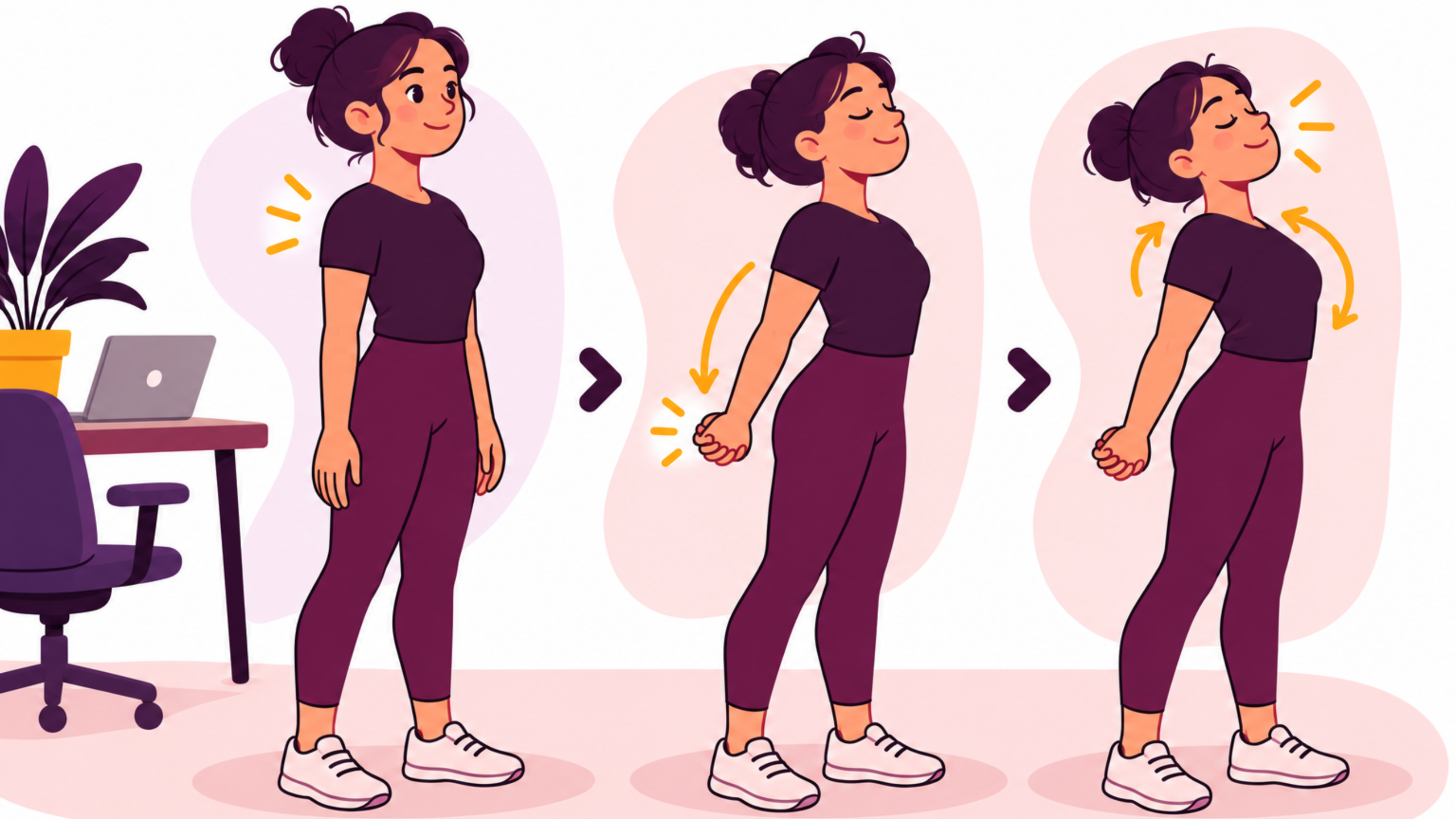
Standing Chest Opener
Duration: 45–60 seconds
Instructions:
- Stand up and interlace your fingers behind your back.
- Straighten your arms and gently lift your hands away from your body.
- Open your chest by drawing your shoulder blades together and slightly arching your upper back.
- Finally, hold for 20–30 seconds while breathing deeply.
Benefits:
- Corrects forward shoulder posture from hunching at desks.
- Stretches chest, shoulders, and upper back.
- Promotes deeper breathing and improves posture awareness.
Tips:
- Avoid overextending the lower back; focus on chest opening.
- If your hands do not reach, clasp forearms instead for a gentler stretch.
Desk Ergonomics for Stretches for Desk Work
However, stretching alone provides relief, while combining it with ergonomic adjustments and mindful movement maximises its effectiveness. [3].
Adjust Your Monitor and Chair Height
Monitor Height:
- First, position the top of the monitor at or slightly below eye level.
- Additionally, maintain a distance of 20–30 inches from your eyes to reduce eye and neck strain.
Chair Height:
- Meanwhile, your feet should rest flat on the floor or on a footrest.
- Knees should form roughly a 90-degree angle to reduce hip and lower back pressure.
- Finally, ensure your hips are slightly higher than your knees to maintain natural lumbar curvature.
Benefits:
- Encourages proper spinal alignment.
- Reduces forward head posture and upper back tension.
Use lumbar support or a posture cushion.
In addition, adding lumbar support helps maintain the natural inward curve of the lower back:
- Additionally, it supports the lumbar spine, reducing slouching and lower back pain.
- A posture cushion, such as Betterhood’s PosturePro Car Seat Cushion, can also be used for prolonged sitting at home or in vehicles.
- Combine with the 5-minute stretch routine for maximal comfort.
Tip: Ensure the cushion is positioned just above the belt line, aligned with the small of your back.
Hydration and Micro-Movement Reminders
- Moreover, keep a water bottle at your desk and drink regularly; hydration supports circulation and joint health.
- Additionally, set reminders every 30–45 minutes to stand, stretch, or walk.
- Likewise, small movements, like leg lifts, shoulder rolls, or standing while on calls, prevent stiffness and enhance posture.
Stretching Consistency = Long-Term Benefits
However, daily stretching may take only 5 minutes, and consistency is key for lasting results:
- Over time, it can improve spinal flexibility and mobility.
- In addition, it can counteract age-related stiffness and muscle shortening.
- Furthermore, it supports long-term musculoskeletal health and may reduce the risk of chronic pain.
- Enhances mental clarity and productivity, as tension is alleviated [4].
Tip: Pair stretches with walking, standing desks, or active breaks to reinforce posture.
Integrating Stretching Into Daily Habits
- Morning Activation:
- First, perform stretches after waking or before starting work to prepare your muscles.
- Midday Reset:
- Next, stretch after 2–3 hours of sitting to relieve accumulated tension.
- End-of-Day Relaxation:
- Finally, stretch after work to release stress and restore flexibility.
- Combine With Breathing:
- Meanwhile, deep, mindful breaths during stretches support relaxation.
- Meanwhile, deep, mindful breaths during stretches support relaxation.
Micro-Movements to Maintain Posture
- Leg Extensions: For example, lift one leg at a time while seated to engage your core and legs.
- Shoulder Blade Squeezes: Similarly, pull your shoulder blades together briefly while seated to strengthen postural muscles.
- Neck Tilt Awareness: Check and adjust forward head posture periodically.
- Seated Marching: Lift knees alternately for 30–60 seconds to improve circulation.
Benefit: In addition, these small movements throughout the day reinforce good posture and reduce stiffness, complementing the main 5-minute routine.
What are the Long-Term Benefits of Stretches for Desk Work?
- Muscle Strength and Balance:For example, even short daily stretches maintain flexibility and postural muscles.
- Reduced Risk of Chronic Pain: In addition, consistent stretching reduces the likelihood of developing neck, shoulder, and lower back issues.
- Improved Productivity: As a result, less discomfort can support better focus and efficiency.
- Mental Well-Being: Moreover, stretching triggers relaxation, reduces tension, and improves mood.
Evidence: Studies show that even brief stretching breaks improve circulation, reduce musculoskeletal complaints, and enhance overall workplace wellness [2].
Conclusion
A 5-minute daily stretching routine is a simple yet powerful tool for desk workers to counteract the negative effects of prolonged sitting. When performed consistently, it:
- Relieves neck, shoulder, and lower back tension.
- Improves posture and spinal alignment.
- Enhances circulation, flexibility, and mental alertness
- Complements ergonomic adjustments and micro-movements throughout the day.
Therefore, integrating this routine into a daily schedule, combined with proper workstation setup, hydration, and movement breaks, supports long-term physical health and workplace productivity.
Check out the related article here: https://betterhood.in/learn/what-causes-back-pain/
Frequently Asked Questions:
At first, stretching at your desk can feel awkward or confusing. The following FAQs address common concerns and provide practical guidance to help desk workers perform stretches safely and effectively.
1. How Often Should I Do Desk Stretches During the Day?
- Ideally, perform the 5-minute routine once or twice daily.
- Additionally, incorporate micro-stretches or movement breaks every 30–60 minutes to prevent stiffness.
- Short bursts of activity, like standing, shoulder rolls, or leg extensions, complement the main routine.
Tip: Setting a calendar reminder or alarm can help establish consistency.
2. What Is the Ideal Posture for Desk Work?
- Sit with hips slightly higher than knees.
- Feet flat on the floor or supported by a footrest.
- Keep lower back supported with a lumbar cushion.
- Elbows close to the body, forming roughly a 90-degree angle.
- Monitor top at eye level, about 20–30 inches from eyes.
Benefit: Maintaining proper posture reduces strain on the neck, shoulders, and lower back, enhancing the effectiveness of stretching.
3. How Can I Stretch at My Desk Without Looking Awkward?
- Choose discreet stretches such as wrist extensions, finger stretches, seated spinal twists, and neck rolls.
- Stand or move to a private corner for stretches like chest openers or hamstring stretches.
- Encourage a workplace culture where brief stretches are normalized.
Tip:Additionally, combining stretching with micro-breaks or water refill trips makes movement natural and non-disruptive.
4. How Does Stretching Improve Posture and Productivity?
- Stretching lengthens tight muscles, particularly in the neck, shoulders, chest, and hamstrings.
- Activates postural muscles, helping maintain proper spinal alignment.
- Improves circulation, reducing fatigue and increasing focus.
- Relieves accumulated tension, allowing employees to work with better energy and concentration.
Evidence: Regular desk stretching is associated with decreased musculoskeletal discomfort and improved mental alertness (Cagnie et al., 2007; Thorp et al., 2011).
5. What Should I Do If a Stretch Feels Painful?
- Stretching should cause mild tension, not sharp pain.
- Stop immediately if pain occurs and adjust the position.
- Consider consulting a physical therapist or physician if pain persists.
- Modify stretches using props (e.g., rolled-up towel for lumbar support) or reduce range of motion.
- Take an initial pain assessment.
Tip:If pain occurs, stop immediately and adjust the position.
References:
- American College of Sports Medicine. (2018). ACSM’s guidelines for exercise testing and prescription (10th ed.). Wolters Kluwer. https://www.ncbi.nlm.nih.gov/nlmcatalog/101692713
- Cagnie, B., Danneels, L., Van Tiggelen, D., De Loose, V., & Cambier, D. (2007). Individual and work related risk factors for neck pain among office workers: A cross-sectional study. European Spine Journal, 16(5), 679–686. https://pubmed.ncbi.nlm.nih.gov/17160393/
- Robertson, M., Amick, B., DeRango, K., et al. (2013). The effects of an office ergonomics intervention on musculoskeletal discomfort and productivity. Journal of Occupational Rehabilitation, 23(1), 1–14. https://www.semanticscholar.org/paper/Effect-of-Office-Ergonomics-Intervention-on-Amick-Robertson/2e310470bed4a0b59913c8aba73e5b8072e5f79b
- Thorp, A., Owen, N., Neuhaus, M., & Dunstan, D. (2011). Sedentary behaviors and subsequent health outcomes in adults: A systematic review of longitudinal studies, 1996–2011. American Journal of Preventive Medicine, 41(2), 207–215. https://doi.org/10.1016/j.amepre.2011.05.004
Medical Disclaimer:
The information in this article is for general educational purposes only and is not a substitute for professional medical advice, diagnosis, or treatment. Perform the stretches gently and stop if you experience pain or unusual symptoms. If you have an existing condition, recent injury, or persistent pain, consult a qualified healthcare professional or physiotherapist before continuing.