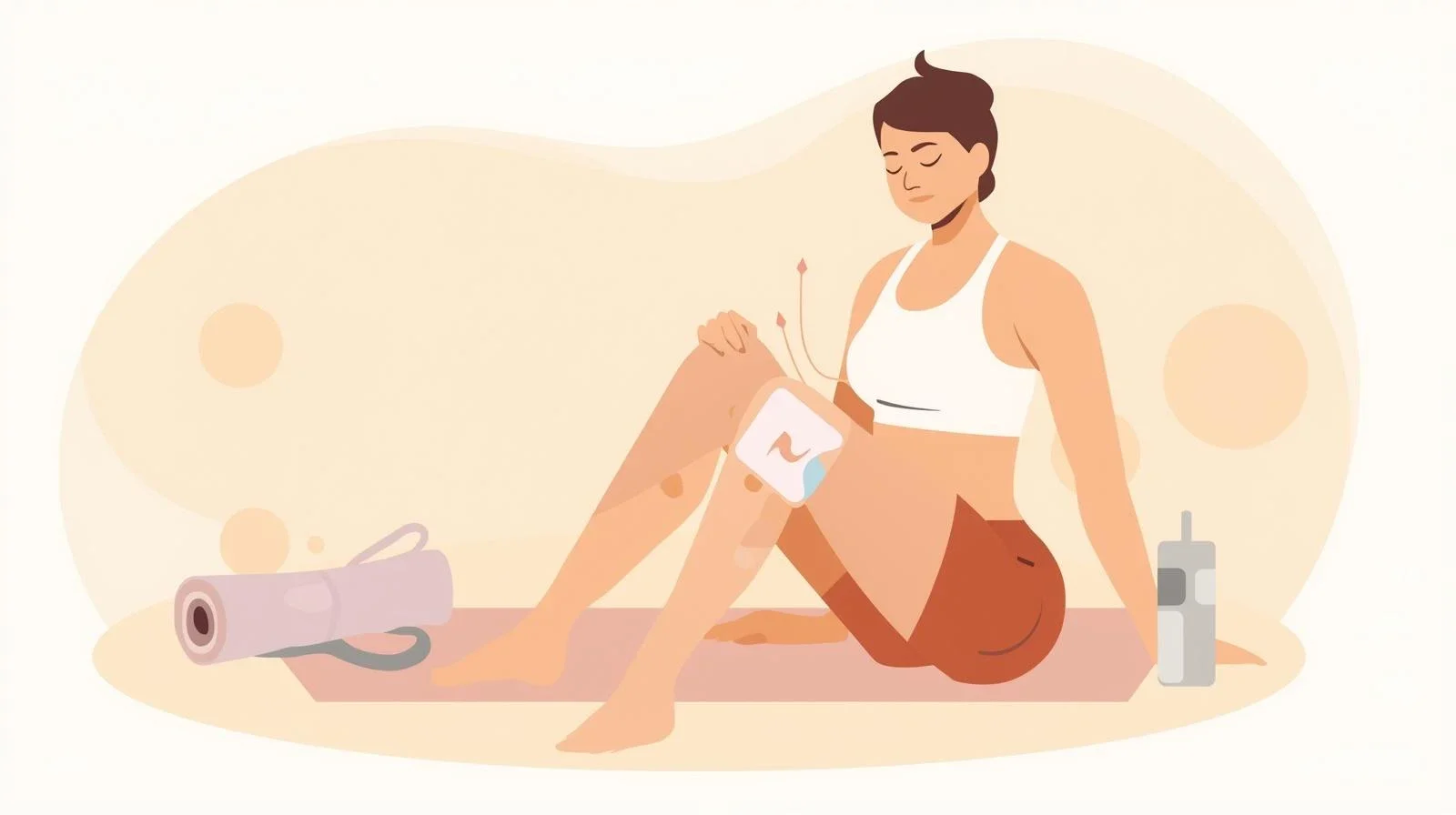




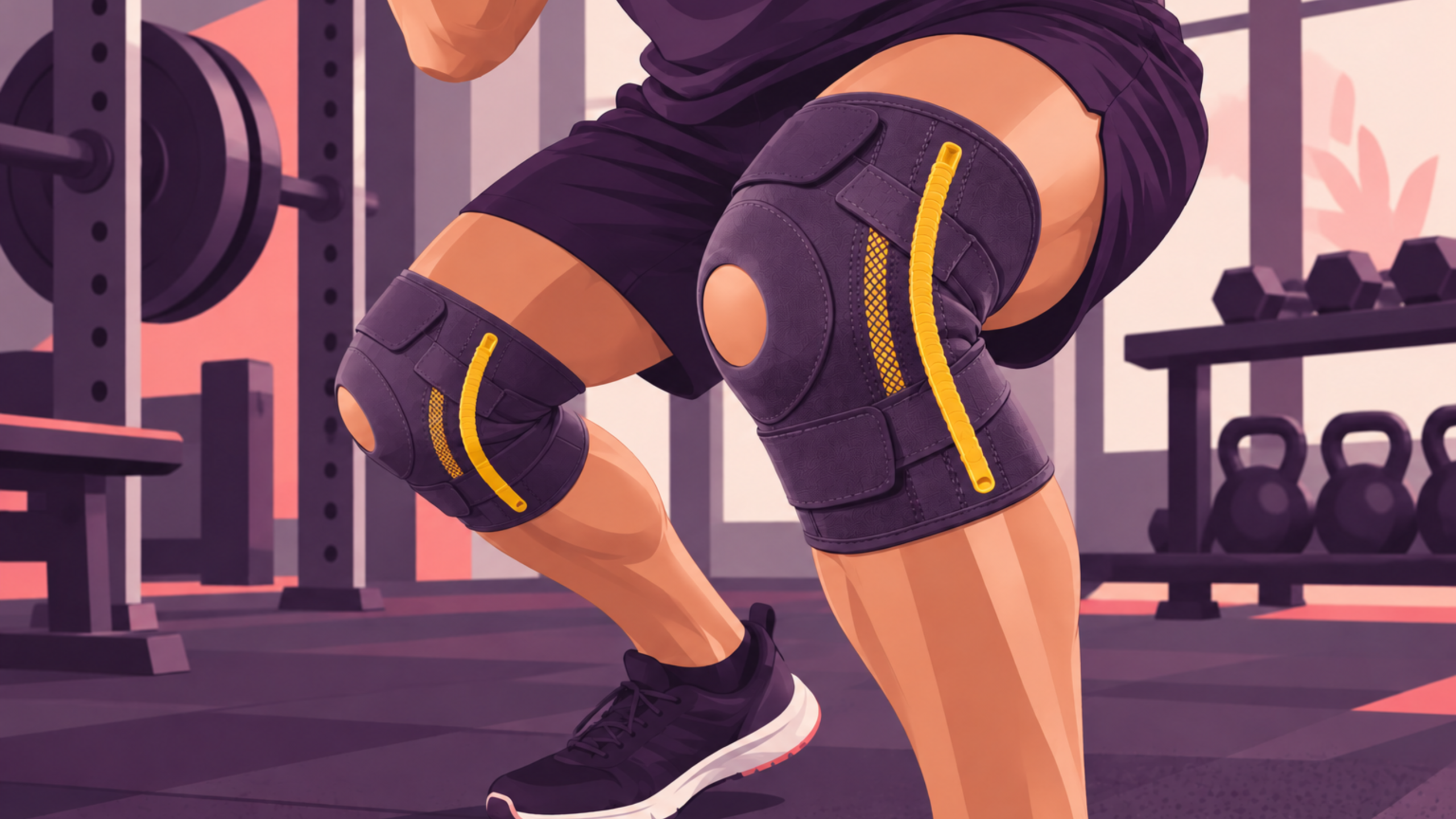
Finding a reliable knee cap for men usually comes down to one common frustration: keeping it in place when you actually start moving. Whether you are dropping into a heavy set of squats, heading out for a morning run, or moving through a gym workout, a knee support that constantly rolls down, pinches, or slips completely ruins its value.
When shopping for knee support, the challenge is rarely a lack of compression options. Instead, you need a sleeve that matches the actual shape of your legs. Most basic knee caps look like straight tubes. However, your leg is not a straight cylinder. Instead, it tapers significantly from your thigh down to your calf.
For this reason, choosing the right knee support involves more than picking a size based on your height or weight. Ultimately, understanding how your leg shape, your measurements, and your physical movements affect overall fit can help you select a garment that stays in place [1, 7].
What Makes a Knee Cap for Men Fit Properly?
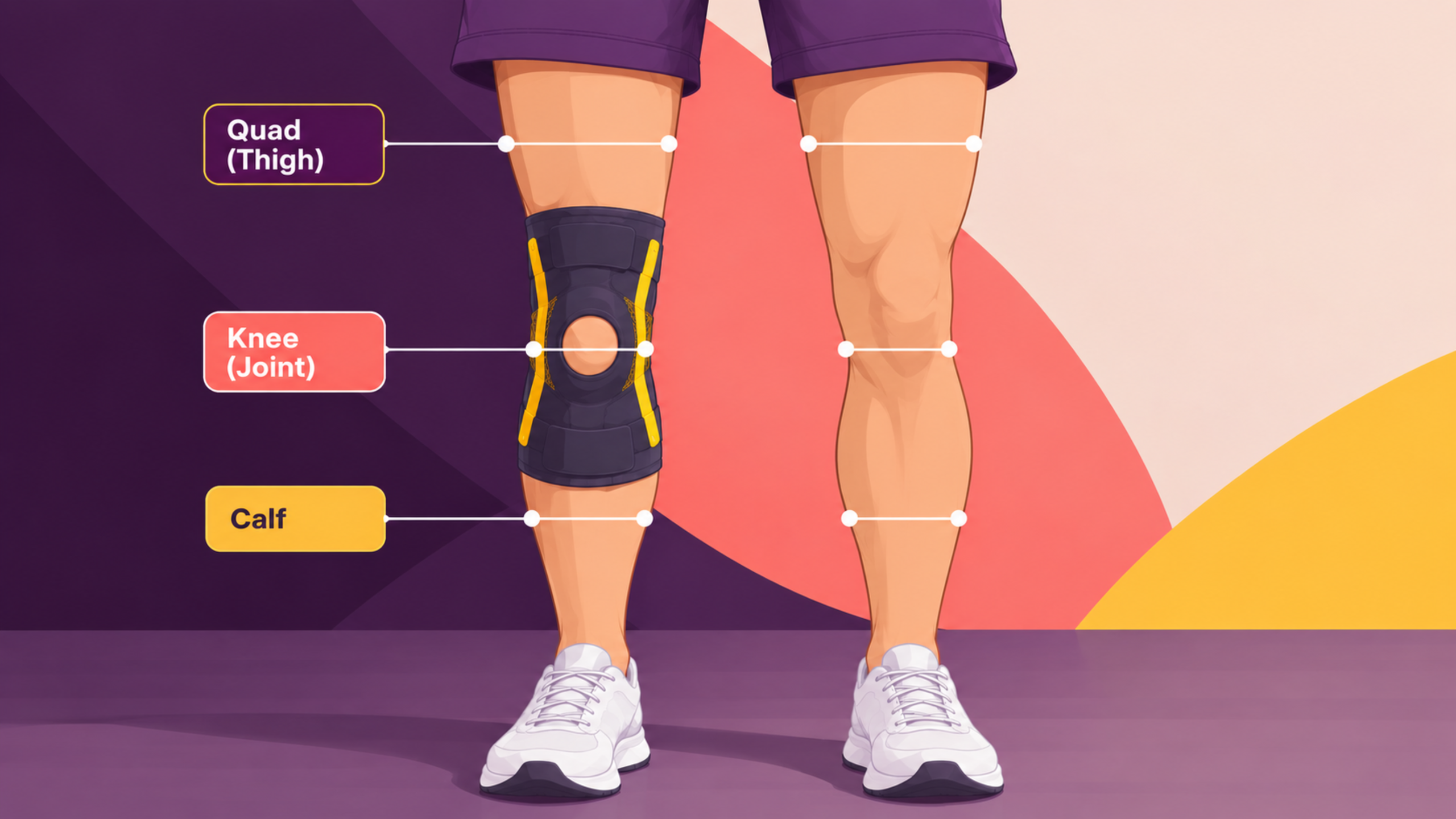
A knee cap for men fits properly when it matches three key points on your leg:
- Thigh Circumference: Measure a few inches above your kneecap, where your quad muscle broadens.
- Knee Joint Circumference: Measure directly around the centre of your kneecap.
- Calf Circumference: Measure around the upper part of your calf muscle just below the joint.
Quality knee sleeves provide compression, retain joint warmth, and enhance proprioception by providing tactile feedback to the skin [8].
Furthermore, research demonstrates that the precise positioning of a compression garment around the knee directly affects knee joint position sense acuity. If the sleeve’s shape fails to account for your natural leg taper or sits improperly, the tension across the material becomes uneven, and sensory awareness can be compromised [7].
For example, if the top band is too tight for your lower thigh, it stretches past its elastic limit. As a result, the material may roll down as soon as you bend your leg. On the other hand, if the top band is too loose; gravity and movement can quickly pull it down toward your ankle. Therefore, obtaining a secure fit requires finding a balance across all three measurement points.
Why Does Knee Support for Men Slip or Roll Down?
Sleeve slippage remains one of the most annoying problems during a workout. Considering how sleeve construction interacts with leg geometry helps explain why shifting happens [7].
Here are common practical reasons your knee sleeve might slide:
- Buying based only on centre-knee measurement: Standard sizing charts often look only at the centre of the joint. If you have larger thighs or developed quads, the upper opening experiences higher tension, which can cause the top edge to roll over [7].
- Straight-cut tube designs: Straight sleeves lack an anatomical taper, making them less suited to grip a naturally tapered leg securely [7].
- Fabric bunching: Extra fabric behind your knee can gather when you flex your joint, forcing adjacent material out of alignment [7].
- Sweat buildup: As you sweat, smooth synthetic fabrics lose friction against the skin, making the sleeve more likely to shift [8].
- Initial misplacement: If a sleeve is not pulled high enough on the thigh before exercise, routine movement can pull it downward [7].
How to Choose a Knee Cap for Men for Different Leg Shapes
If you regularly lift weights or play sports, your leg shape can make finding the right knee cap for men somewhat challenging.
When you have developed quadriceps and a distinct quad-to-calf ratio, standard straight-cut sleeves may struggle to maintain position. Looking for features tailored to a tapered profile can improve wearability:
- Anatomical panelling or 4-way stretch knits: Sleeves crafted with natural curves better accommodate the circumference difference between your thigh and calf compared to flat sleeves [7].
- Flexible top and bottom edges: A hem design that adapts to dynamic muscle contractions can reduce digging or folding over at the borders [7, 8].
- Longer overall sleeve length: A longer sleeve covers more surface area above and below the joint, giving it more surface contact on your leg [7].
Fit issues stem primarily from individual leg proportions and muscle development. Consequently, individuals with tapered legs encounter these exact same sizing considerations regardless of their athletic level [7].
Knee Support for Squats: What Should You Look For?
Selecting knee support for squats and heavy gym sessions means choosing a sleeve that accommodates deep knee flexion under heavy loads. When you lower into a squat or leg press, your knee joint moves through a broad range of motion.
Here is what to evaluate for strength training:
- Flexion comfort: Quality support provides smooth tension over your kneecap without gathering into restrictive, thick folds behind your joint.
- Subjective stability: Structural elements or fitted compression can increase perceived joint stability during exercise. Neoprene knee sleeves have been shown to increase barbell squat 1RM performance without altering overall power or endurance measures, with lifters often reporting improved subjective stability during strength movements despite minimal observed biomechanical kinematic changes [3, 4].
- Consistent compression: Even pressure offers tactile feedback and joint position awareness throughout every repetition [1].
Note: While knee sleeves offer warmth and tactile feedback during heavy training, current research does not show that they prevent structural injuries or replace proper exercise form [2].
Knee Support for Running and Sports: What Matters?
Running, basketball, and field sports place different demands on your joints compared to static weightlifting. A heavy, non-breathable sleeve may feel hot or restrictive during continuous cardio movement.
When evaluating knee support for running or dynamic sports, consider these features:
- Breathable fabrics: Lightweight, moisture-wicking knits pull sweat away from your skin, helping preserve friction and keep you comfortable.
- Full range of motion: High-impact movement requires unhindered joint extension. Your sleeve should offer light support while permitting a natural stride. Broad research on lower-limb compression garments during high-intensity exercise shows variable performance and physiological effects across different activities [5].
- Slim profile: Sleeker, elasticated materials fit easily under athletic clothing and minimise snagging during lateral movements.
Knee Support for Men: Sleeve vs. Patellar Band
You will often see both full knee sleeves and targeted knee support bands while shopping. Choosing between them depends entirely on your specific support preference and location of discomfort.
Full Knee Sleeve
- Coverage: Covers the entire joint, extending a few inches above and below your kneecap.
- Main Purpose: Encloses the joint to provide warmth, light compression, and enhanced joint position awareness [1].
- Best For: Weightlifting, general gym workouts, squats, and cold-weather training [3, 4].
Knee Support Band (Patellar Strap)
- Coverage: A narrow strap secured directly below your kneecap over the patellar tendon.
- Main Purpose: Applies direct, localised pressure to the tendon below the knee to manage tension without covering your entire leg. Clinical trials demonstrate that patellar straps can offer short-term pain relief during activity for individuals with conditions like patellar tendinopathy [6].
- Best For: Focused discomfort directly under the kneecap caused by repetitive running, jumping, or court sports for those experiencing patellar tendon pain [6].
What Features Should You Check Before Buying a Knee Cap for Men?
Before purchasing a knee cap for men, compare these practical specifications against your training routines:
- Fabric Construction: 4-way stretch, 3D-knit synthetic fabrics provide a balance of flexible compression, durability, and breathability for long workouts.
- Side Stabilisers: Flexible spring stabilisers embedded along the sides offer additional structural framing around the joint without locking your natural movement.
- Patella Gel Pad or Support Ring: A contoured ring built around the kneecap helps cushion external impact and keep the sleeve centred over the joint.
- Anti-Slip Features: Look for inner silicone grips or anatomical shaping designed to maintain sleeve positioning on the leg [7].
- Flat Seams: Smooth, flatlock stitching prevents friction and skin irritation behind the knee during repetitive bending.
How to Measure for the Right Fit
Sizing methods differ across manufacturers. Therefore, you should avoid guessing your size based on your pants size or height alone.
- Stand up straight: Extend your leg slightly so your knee stays relaxed rather than locked out.
- Measure the centre: Wrap a flexible tape measure around the middle of your kneecap.
- Measure upper and lower points: Check if the manufacturer requests additional measurements, such as a few inches above your kneecap (thigh) and below (calf).
- Check the brand’s chart: Always follow the exact chart for the product you intend to buy. Review the manufacturer’s sizing guidance if your measurements place you between sizes.
Betterhood Knee Sleeve With Stabilisers: A Practical Option
If you are looking for a knee cap for men that combines an anatomical shape with side reinforcement, the Betterhood Knee Sleeve with Stabilisers for Joint Support addresses many common fit and shifting challenges.
This product offers a practical design for anyone seeking knee support during gym sessions, running, or general activity.
Here is how its core features align with your training needs:
- Flexible Side Stabilisers: Integrated spring stabilisers provide structural reinforcement around the joint while allowing your knee to flex naturally.
- Patella Support Ring: A contoured padding ring cushions your kneecap, helping cushion external impact and maintain sleeve centring during dynamic movement.
- 4-Way Stretch Knit: Lightweight, moisture-wicking material allows flexible movement and air ventilation to minimise sweat buildup.
- Anti-Slip Construction: Built with internal grip elements and an anatomical taper to assist in holding the sleeve positioned on your thigh and calf.
Whether you are looking for compression during squats or support for daily cardio, this option provides a balanced mix of steady compression and movement-friendly flexibility.
Signs Your Knee Support Is the Wrong Size
Wearing an incorrectly fitted knee sleeve can lead to discomfort, slipping, or restricted movement. Here is how you can assess your fit:
Signs It Is Too Tight
- Numbness, tingling, or coldness in your lower leg or feet
- Deep, painful indentations or red marks on your skin
- Difficulty fully bending or straightening your leg
- Severe pinching behind the knee joint
Signs It Is Too Loose
- The top edge constantly rolls down during exercise
- Fabric bulges or gaps away from the skin along the sides
- You have to pull the sleeve up repeatedly during a workout
- You feel no supportive compression or tactile feedback
If you experience sharp pain, persistent joint swelling, or lingering physical issues, consult a physical therapist or medical professional for a comprehensive evaluation.
Frequently Asked Questions
What size knee cap for men should I buy?
Measure your knee joint circumference (and thigh/calf if requested) with a flexible tape measure. Compare your exact measurements against the specific brand’s sizing chart.
Should a knee sleeve feel super tight?
It should feel snug and supportive. However, it must never feel tight enough to cut off circulation, cause numbness, or severely limit your natural range of motion.
Why does my knee sleeve keep rolling down?
This issue commonly occurs when the upper opening is too small for your thigh circumference, the sleeve lacks an anatomical taper, or sizing was based solely on a centre-knee measurement [7].
Can I wear a knee cap while squatting?
Yes. A well-fitted sleeve provides warmth and improves overall joint position sense [1]. Additionally, research shows that neoprene sleeves can enhance barbell squat 1RM performance [4] and improve subjective feeling of joint stability during strength movements [3].
Is a knee support useful for running?
A knee sleeve can provide warmth and light compression during running [1]. Lower-limb compression garments used in high-intensity exercise show variable performance effects across broader research [5]. For running, choose a lightweight, breathable knit rather than a thick strength-lifting sleeve.
How do I measure my leg for a knee sleeve?
Measure around the centre of your kneecap while keeping your leg slightly relaxed. Be sure to check whether the brand requests additional thigh and calf measurements.
What is the difference between a knee cap and a knee support band?
A full knee cap covers the entire joint to provide warmth, compression, and overall joint position sense [1]. Conversely, a knee support band is a small strap that applies targeted pressure to the patellar tendon directly below the kneecap to help manage localised tendon pain, particularly for individuals with patellar tendinopathy [6].
Final Thoughts:
Finding the right knee support for men comes down to fit and leg shape rather than simple sizing. Straight-tube sleeves often roll down because human legs naturally taper from thigh to calf. A proper fit relies on three measurements: upper thigh, knee joint, and upper calf.
Choose features based on your activity: neoprene sleeves provide joint warmth and stability for squats, lightweight breathable knits suit running, and patellar bands target localised tendon pain. To prevent slipping, opt for anatomical 4-way stretch knits, silicone grips, and side stabilisers while avoiding garments that cut off circulation or pinch.
References
- Birmingham TB, Kramer JF, Inglis JT, Mooney CA, Murray LJ, Fowler PJ, Kirkley S. Effect of a neoprene sleeve on knee joint position sense during sitting open kinetic chain and supine closed kinetic chain tests. Am J Sports Med. 1998;26(4):562–566. DOI: https://doi.org/10.1177/03635465980260041601
- Mohd Sharif NA, Goh SL, Usman J, Wan Kamarul Zaman WS. Biomechanical and functional efficacy of knee sleeves: A literature review. Phys Ther Sport. 2017;28:44–52. DOI: https://doi.org/10.1016/j.ptsp.2017.05.001
- Maynart FR, Mazuquin B, Costa HS, Santos TRT, Brant AC, Rodrigues NLM, Trede R. Are 7 MM neoprene knee sleeves capable of modifying the knee kinematics and kinetics during box jump and front squat exercises in healthy CrossFit practitioners? An exploratory cross-sectional study. J Bodyw Mov Ther. 2024;40:1027–1033. DOI: https://doi.org/10.1016/j.jbmt.2024.07.032
- Machek SB, Cardaci TD, Wilburn DT, Cholewinski MC, Latt SL, Harris DR, Willoughby DS. Neoprene knee sleeves of varying tightness augment barbell squat one-repetition maximum performance without improving other indices of muscular strength, power, or endurance. J Strength Cond Res. 2021;35(Suppl 1):S6–S15. DOI: https://doi.org/10.1519/JSC.0000000000003869
- da Silva CA, Helal L, Pacheco da Silva R, Belli KC, Umpierre D, Stein R. Association of lower limb compression garments during high-intensity exercise with performance and physiological responses: A systematic review and meta-analysis. Sports Med. 2018;48(8):1859–1873. DOI: https://doi.org/10.1007/s40279-018-0927-z
- de Vries A, Zwerver J, Diercks R, Tak I, van Berkel S, van Cingel R, van den Worp H, van den Akker-Scheek I. Effect of patellar strap and sports tape on pain in patellar tendinopathy: A randomised controlled trial. Scand J Med Sci Sports. 2016;26(10):1217–1224. DOI: https://doi.org/10.1111/sms.12556
- Zhang LY, Négyesi J, Okuyama T, Tanaka M, Hortobágyi T, Nagatomi R. Position of compression garment around the knee affects healthy adults’ knee joint position sense acuity. Human Movement Science. 2019;67:102519. DOI: https://doi.org/10.1016/j.humov.2019.102519
- Ghai S, Nilson F, Gustavsson J, Ghai I. Influence of compression garments on proprioception: A systematic review and meta-analysis. Ann N Y Acad Sci. 2024;1536(1):60–81. DOI: https://doi.org/10.1111/nyas.15144