



Looking for the right knee support for running can mean the difference between maintaining your training schedule and taking an unexpected break. For distance runners, the knee joint acts as both a marvel of structural engineering and a primary point of mechanical strain. Whether you are building up mileage for your first half-marathon, working through peak marathon training, or managing a persistent ache around your kneecap, knee discomfort can quickly disrupt your consistency.
When knee pain strikes, many runners naturally turn to external gear and ask a common question: Can a knee support for running help me keep training, and how do I choose the right model without restricting my stride?
To answer this question accurately, we must look past quick fixes and look at how endurance sports affect your body. External gear plays a specific role, because its practical value depends entirely on how it interacts with repetitive impact, muscle fatigue, and individual movement patterns.
Why Distance Running Demands Extra Knee Support and Stability
Distance running is defined by repetitive, single-leg loading. Unlike contact sports that involve sudden sideways cuts or high jumps, long-distance running subjects your lower body to tens of thousands of predictable, vertical impacts during every single workout [1].
Repetitive Loading and Cumulative Force
Every time you run, your knees deal with repeated loading. Over a 10-kilometre run, those forces are repeated thousands of times on each leg.
Here’s what happens:
- Every foot strike adds another load: your foot, ankle, calf, and knee work together to handle the forces created when your foot hits the ground.
- The running surface can affect how forces travel: asphalt, concrete, and other surfaces can change how impact forces are transmitted through your leg. However, the relationship between running surface and joint load is complex [2].
- Your knee takes part of this repeated load: As forces move up through your foot, ankle, and calf, they contribute to the contact forces experienced at the patellofemoral joint—the area where your kneecap meets your thigh bone [1,3].
- Fatigue can change how your knee moves: During a long run, your quad and hip muscles may become tired. As this happens, your joint mechanics can subtly change, which may increase pressure on certain areas of the knee [4].
Think of It Like Tapping the Same Spot
Imagine gently tapping the same spot on a piece of drywall with a small rubber mallet.
- One tap: Nothing much happens.
- A few taps: The material still appears fine.
- Thousands of taps: Repeated force in the same area can eventually create a dent.
Distance running works in a similar way. Patellofemoral irritation is not typically caused by one sudden blow. Instead, it can develop when manageable forces are repeated around the same joint area without enough recovery time [3].
The Impact of Endurance Fatigue
Your muscles act as the knee’s main active stabilisers. During early miles, smooth contractions from your quadriceps (front thigh muscles), hamstrings (back thigh muscles), and gluteal muscles (hip and buttock muscles) help keep the knee stable. However, as fatigue sets in during long runs, subtle biomechanical changes may occur across your lower body chain [4]:
- Decreased Quadriceps Responsiveness: Tired quads may absorb braking forces less effectively as your foot hits the ground.
- Gluteal Fatigue: Tired hip muscles can allow the thigh to roll inward slightly. In some runners, this causes the knee to drift inward (a movement pattern known as dynamic valgus) [4].
- Altered Stride Mechanics: Fatigue can cause overstriding, which increases braking forces on your leading leg.
These changes caused by fatigue may place more stress on the tissues and cartilage that support the knee, particularly the joint between the underside of the kneecap and the thigh bone [3,4].
Patellofemoral Stress & Runner’s Knee: What Is Happening Under the Kneecap?
Patellofemoral pain is a common cause of front-of-knee pain in runners and is widely referred to as ‘runner’s knee’ [3].
Understanding Patellofemoral Mechanics
The patella (kneecap) sits inside the main quadriceps tendon and rests within a smooth groove on the femur (thigh bone) called the trochlear groove. As your knee bends and straightens during your stride, the patella glides along this groove.
With healthy movement, contact pressure spreads evenly across the back of the kneecap. However, if altered movement patterns, muscle imbalances, or fatigue cause the patella to press unevenly against the sides of the groove, higher localised contact pressure can develop [3].
Recognising Common Runner’s Knee Symptoms
Patellofemoral pain commonly develops gradually rather than following a single traumatic event [3].
Pay close attention to how your joint feels during and after activity:
- A dull, aching sensation: Typically felt behind, around, or directly under the kneecap [3].
- Post-activity stiffness: A noticeable ache when sitting with bent knees for long periods (often called the “movie-theatre sign”) or when walking down stairs [3].
- In-run discomfort: Pain that starts as a mild ache a few miles into a run, gets worse as you tire, and often lingers after you finish.
Can You Keep Running with Knee Pain and Support Sleeves?
Feeling patellofemoral discomfort does not automatically mean you must stop running entirely. Using supportive gear like knee support sleeves can help maintain movement, but complete rest can backfire because it causes your muscles and joints to lose strength. However, pushing through severe pain can turn a manageable issue into a long-term setback. [3, 5].
The Pain-Monitoring Framework
A helpful guideline for managing training volume with mild knee discomfort is a practical 24-hour pain-monitoring approach:
- Acceptable Zone (Pain level ≤ 3/10 during run): A mild ache that stays low, does not force you to alter your gait or limp, and settles back toward baseline within 24 hours. Some runners may be able to continue at a modified training volume under these conditions [3, 5].
- Warning Zone (Pain level ≥ 4/10 or altered stride): Pain that progressively worsens, causes you to limp, or remains elevated the next morning suggests that the current training load may be too high. In that situation, reduce or modify the training load [3, 5].
Practical Training Adjustments
If you are preparing for an event like a half-marathon or marathon and feel early signs of runner’s knee, consider these three temporary adjustments:
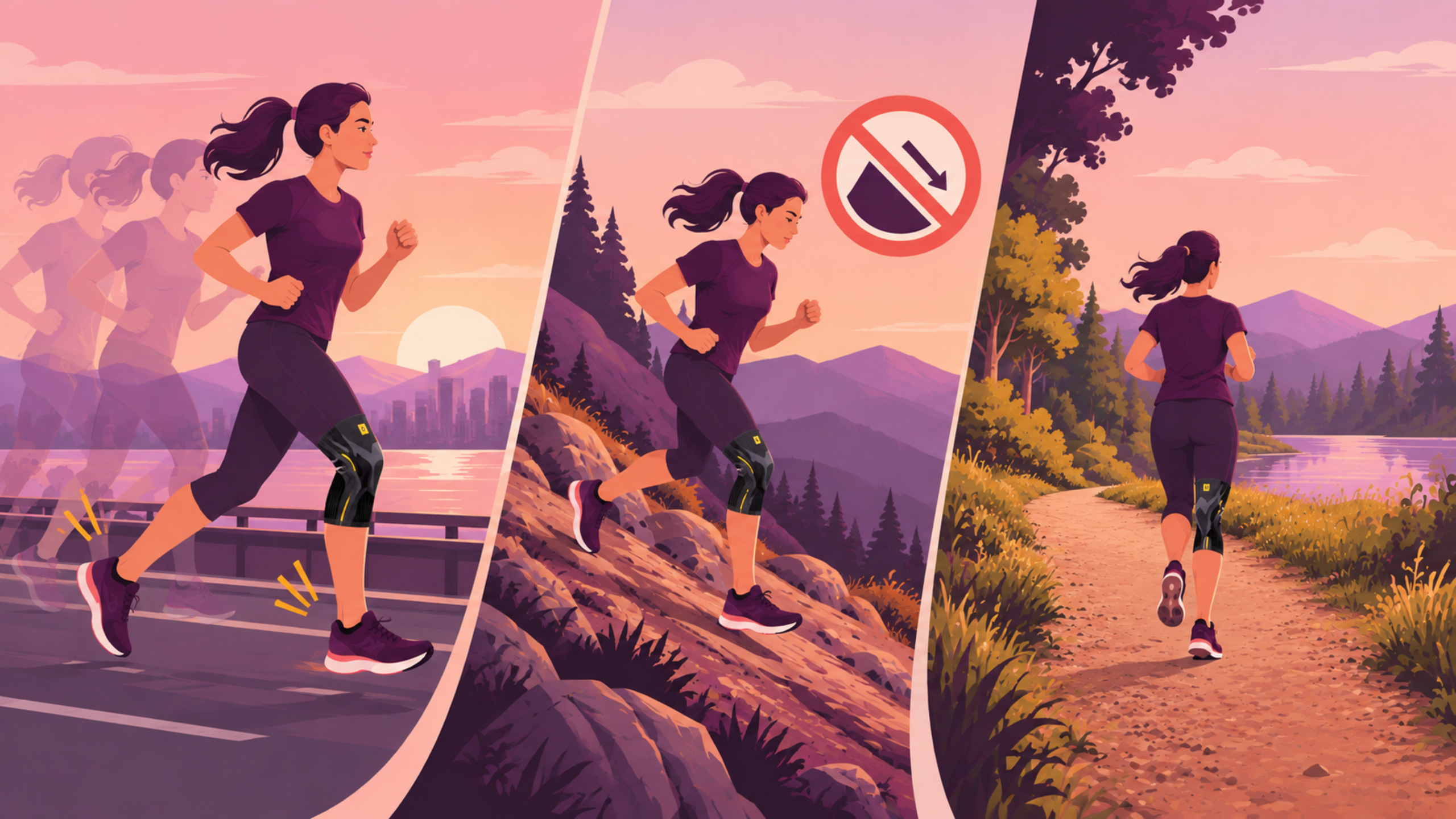
- Increase Cadence: Increasing your step count slightly (by about 5–7%) can reduce peak knee bending and joint loading forces without slowing down your overall running pace [6].
- Limit Downhill Running: Running downhill can increase quadriceps braking demands and patellofemoral joint stress, so temporarily reducing downhill segments may help manage symptoms [1, 3].
- Choose Softer Surfaces: If pavement aggravates symptoms, temporarily varying your running surface may be worth trying while keeping training load manageable [2].
The Role and Limitations of Using a Knee Support for Running
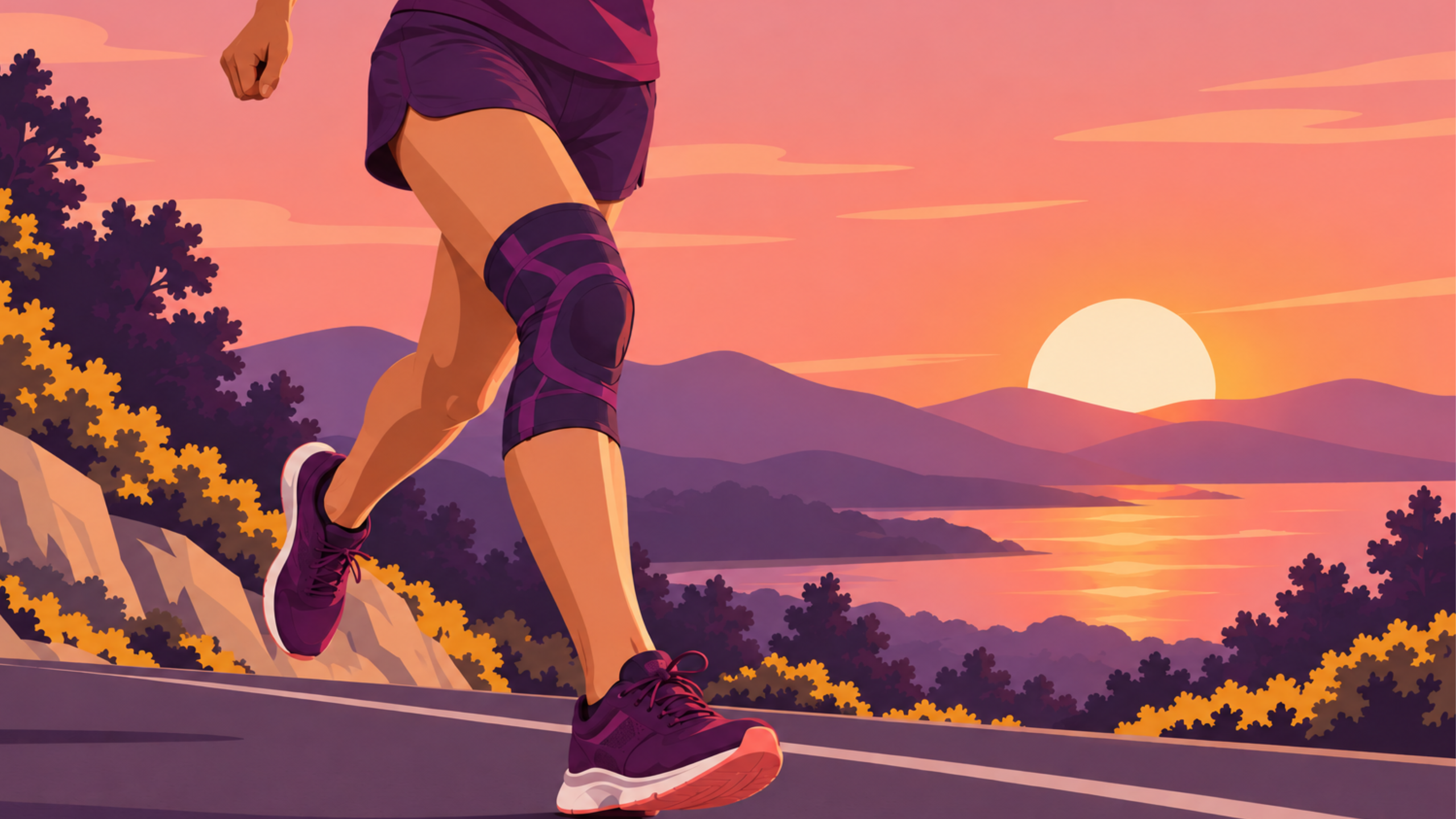
When knee discomfort appears mid-training block, reaching for a knee support for running or a compression sleeve is a common choice. Although external support offers real mental and physical comfort, you should understand what external gear can reasonably offer and what it cannot do.
What a Knee Support CAN Do:
- Provide Sensory Feedback: Light, continuous pressure on the skin can provide sensory feedback to mechanoreceptors (nerve endings that feel pressure), which may influence awareness of joint position and movement during activity [7].
- Provide Localised Warmth: The material and compression can help retain warmth around the knee, which some runners may find comfortable during the early stages of a run.
- Improve Movement Comfort: By providing gentle sensory feedback, a sleeve may make minor discomfort feel more manageable during movement [7].
What a Knee Support CANNOT Do:
- Fix Biomechanics or Patellar Tracking: External elastic fabric does not exert sufficient physical force to override skeletal alignment or force a kneecap into a specific path [7].
- Absorb Ground Impact: A fabric sleeve is not designed to provide the same impact-management function as footwear, running-surface characteristics, or muscular control.
- Cure Underdeveloped Muscles: A sleeve cannot replace strong quadriceps, glutes, or calf muscles. It acts as a supportive aid alongside your body, not a replacement for muscle strength [3, 5].
Practical Example: Exploring Design Features in Running Supports
To understand how these biomechanical concepts apply to real-world gear, look at how specific support features address the demands of distance running. Options like the knee compression sleeve for running by Betterhood offer a practical example of how lateral support and flexible movement can be integrated into an everyday support sleeve.
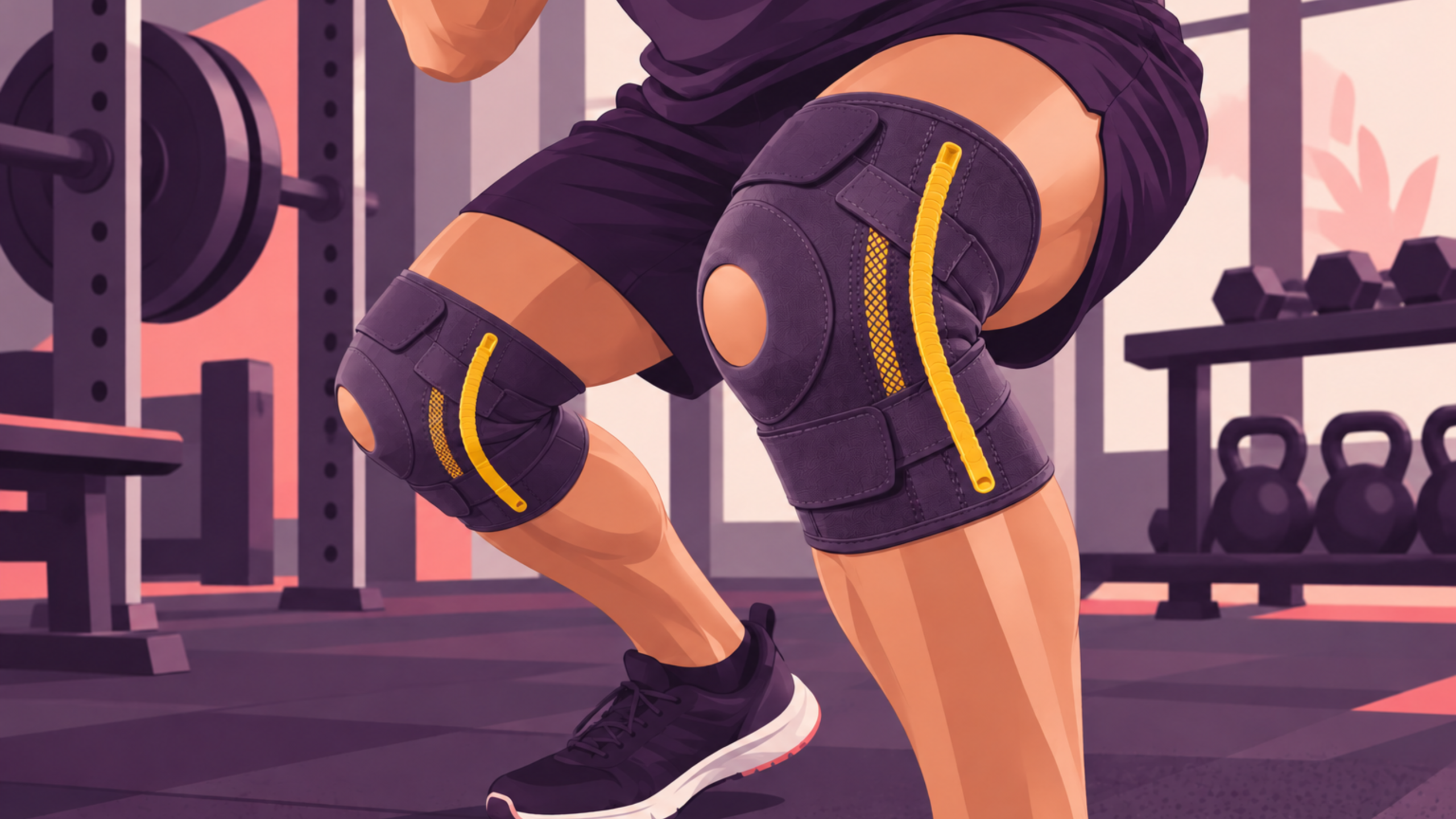
- Integrated Side Stabilisers: Dual side stabilisers provide additional lateral (sideways) support around the joint. For a runner, this offers subtle structural guidance during repeated single-leg landings while avoiding the hinged construction used in rigid braces.
- 4-Way Stretch Elastic Fabric: Flexible 4-way stretch material conforms snugly to the joint. It allows your knee to bend naturally during your stride while helping to minimise fabric bunching behind the knee.
- Targeted Patella Support: Contoured support around the kneecap provides localised compression around the patellar area during repeated bending.
- Moisture-Wicking & Anti-Slip Design: Sweat-wicking fabric manages heat and moisture over long distances, while internal anti-slip silicone grippers keep the sleeve in place on your thigh as you move.
A sleeve with side stabilisers and anatomical shaping can improve movement comfort and sensory feedback during training [7].
However, it remains a supportive tool. It works best alongside managed training loads and targeted strength work, rather than as a replacement for muscle conditioning [3, 5].
How to Choose the Best Knee Support for Running
If a lightweight knee support for running fits your current training needs, picking the right model means balancing comfort, flexibility, and proper fit. Distance running involves continuous bending and straightening. Gear designed for heavy weightlifting or post-surgical protection may not offer the flexibility and comfort needed for a long run.
| Feature | High-Stability Rigid Brace | Running-Oriented Sleeve Characteristics |
| Primary Material | Heavy neoprene, metal hinges, plastic stays | Breathable 3D-knit synthetic blend |
| Flexibility | Restricted range of motion | Accommodates natural knee flexion |
| Weight & Bulk | Heavy, structured, high-bulk | Lightweight, low-profile profile |
| Best Used For | Post-surgical rehab, severe ligament instability | Endurance running, mild aches, proprioception |
Key Features of an Effective Running Knee Sleeve
- Flexibility and Range of Motion: Your knee flexes significantly during every swing phase of your stride. An effective knee support for running must allow natural knee flexion without pinching behind the joint or bunching at the crease. Rigid hinges or stiff plastic stays are usually unnecessary unless a doctor specifically recommends them.
- Breathability and Moisture Management: Running generates significant heat and sweat. Supports made of heavy, non-breathable materials trap moisture, which can cause chafing, skin irritation, and sliding. Look for 3D-knit synthetic blends or perforated performance fabrics that pull sweat away from your skin.
- Weight and Bulk: A lightweight knee support sleeve should feel like a comfortable addition to your kit. Excessively heavy or bulky braces may feel less comfortable over long distances and can make support harder to tolerate during running.
- Compression Profile and Fit: The sleeve should feel snug and secure without causing numbness, tingling, excessive pressure, or discomfort. Look for:
- Anatomical Contouring: A tapered shape that fits the wider thigh and narrower upper calf.
- Non-Slip Silicone Grippers: Internal silicone bands at the top cuff help prevent the sleeve from sliding down during long runs.
Long-Term Management: Addressing the Root Causes
While wearing a knee support for running provides helpful comfort during training, managing runner’s knee long-term requires addressing the physical factors behind patellofemoral load. External support works best when integrated into a broader strategy focused on muscle strength and training habits [3, 5].
Core Rehabilitation Focus Areas
To build long-term joint resilience, focus your strength training on three essential pillars:
- Quadriceps Strengthening: Quadriceps strengthening can improve the knee’s capacity to tolerate running loads and is commonly included in rehabilitation for patellofemoral pain. Focus on exercises that build quad capacity through functional movements, such as step-downs, Spanish squats, and split squats [5, 7].
- Hip Stabiliser Capacity: Strengthening the gluteus medius and deep hip rotators helps manage excessive inward thigh rolling when your foot hits the ground, which supports better patellofemoral tracking [5, 7].
- Gradual Mileage Progression: Avoid sudden jumps in weekly volume or rapid spikes in intense hill running. Instead, give your joints and muscles time to adapt to higher demands [3, 5].
Frequently Asked Questions
Does runner’s knee ever fully go away?
Many runners improve when training load is appropriately managed and rehabilitation includes targeted strengthening [3, 5].
How long does it take for patellofemoral pain to heal?
Recovery time varies between individuals. Mild cases may improve over several weeks with appropriate load management and exercise, while persistent symptoms can take longer and may require professional assessment [3, 5].
What is the biggest mistake that makes runner’s knee worse?
Extended rest can reduce training capacity, making a sudden return to high mileage harder to tolerate [3, 5].
Can I run a marathon with runner’s knee?
Some runners may be able to continue training with modified loads when symptoms remain mild, the running pattern is unchanged, and symptoms settle after activity. If pain causes limping or progressively worsens, reduce the training load and consider professional assessment [3, 5].
Summary: Choosing the Right Knee Brace and Support
Managing knee comfort during distance running comes down to understanding biomechanics and using gear thoughtfully:
- Understand the Load: Distance running subjects the patellofemoral joint to thousands of repetitive impact cycles [1]. Fatigue can alter joint mechanics and contact pressures [4].
- Recognise the Role of Gear: A knee compression sleeve for running may provide sensory feedback, warmth, and additional comfort during movement . However, it does not structurally realign skeletal anatomy, absorb primary impact, or resolve muscle weakness [3,7].
- Choose for Performance: When selecting a knee support for running, prioritize lightweight materials, high breathability, anatomical fit, and functional flexibility over rigid immobilization.
- Fix the Foundation: Pair external comfort tools with quad strengthening, hip stabilization, and sensible mileage progression to build resilient knees for miles to come [3, 7].
References
- Novacheck TF. The biomechanics of running. Gait Posture. 1998;7(1):77-95. Available from: https://pubmed.ncbi.nlm.nih.gov/10200378/
- Tessutti V, Trombini-Souza F, Ribeiro AP, Nunes AL, Sacco IC. In-shoe plantar pressure distribution during running on natural grass and asphalt in recreational runners. J Sci Med Sport. 2010;13(1):151-155. Available from: https://pubmed.ncbi.nlm.nih.gov/19853506/
- Crossley KM, Stefanik JJ, Selfe J, Collins NJ, Davis IS, Powers CM, et al. 2016 Patellofemoral pain consensus statement from the 4th International Patellofemoral Pain Research Retreat, Manchester. Part 1: Terminology, definitions, clinical examination, natural history, patellofemoral osteoarthritis and patient-reported outcome measures. Br J Sports Med. 2016;50(14):839-843. Available from: https://www.ncbi.nlm.nih.gov/pmc/articles/PMC4975818/
- Dierks TA, Davis I, Hamill J. The effects of fatigue on lower extremity kinematics, kinetics, and joint coupling in runners with patellofemoral pain syndrome. Clin Biomech (Bristol, Avon). 2008;23(9):1160-1168. Available from: https://pubmed.ncbi.nlm.nih.gov/18678440/
- Willy RW, Hoglund LT, Barton CJ, Bolgla LA, Scalzitti DA, Morrison KE, et al. Patellofemoral Pain: Clinical Practice Guidelines Linked to the International Classification of Functioning, Disability and Health From the Academy of Orthopaedic Physical Therapy of the American Physical Therapy Association. J Orthop Sports Phys Ther. 2019;49(9):CPG1-CPG95. Available from: https://www.ncbi.nlm.nih.gov/pmc/articles/PMC7370882/
- Heiderscheit BC, Chumanov ES, Michalski MP, Wille CM, Ryan MB. Effects of step rate manipulation on joint mechanics during running. Med Sci Sports Exerc. 2011;43(2):296-302. Available from: https://www.ncbi.nlm.nih.gov/pmc/articles/PMC3022980/
- Khowalled IA, Thatcher R. The Effects of Knee Sleeves on Proprioception, Balance, and Knee Biomechanics in Active Individuals: A Systematic Review. J Sport Rehabil. 2021;30(8):1214-1223. Available from: https://pubmed.ncbi.nlm.nih.gov/33984814/