






If you have ever put on a pain relief patch after a long day of sitting or driving, or just being a bipedal mammal with questionable posture, you must have thought at least once:
“Does this thing really work… or is the cold feeling just fooling my brain?”
I was thinking the same way.
A few years ago I did a heroic one-trip carry with all my grocery bags and the next day I woke up with my shoulder feeling like it had aged 47 years overnight. A friend advised me to “just try a patch.” I wasn’t convinced. However, I could not lift my hand much because of the shoulder pain, so I just tried it.
It really made me feel good, albeit not a miracle or an instant one, but enough to be able to get through the day without pretending that my right arm didn’t exist.
This made me curious about the topical pain relief patch mechanism that made it work this way.
If you are also wondering, this article is here to answer your questions.
And please, don’t get it wrong-this is not a medical lecture. It’s more like a friend who, after hearing too many research papers, is ready to explain.
What Are Topical Pain Relief Patches?
Before we delve into the scientific explanation, I want to make it clear: I am referring to the topical patches only, not the transdermal prescription patches that inject drugs into your bloodstream.
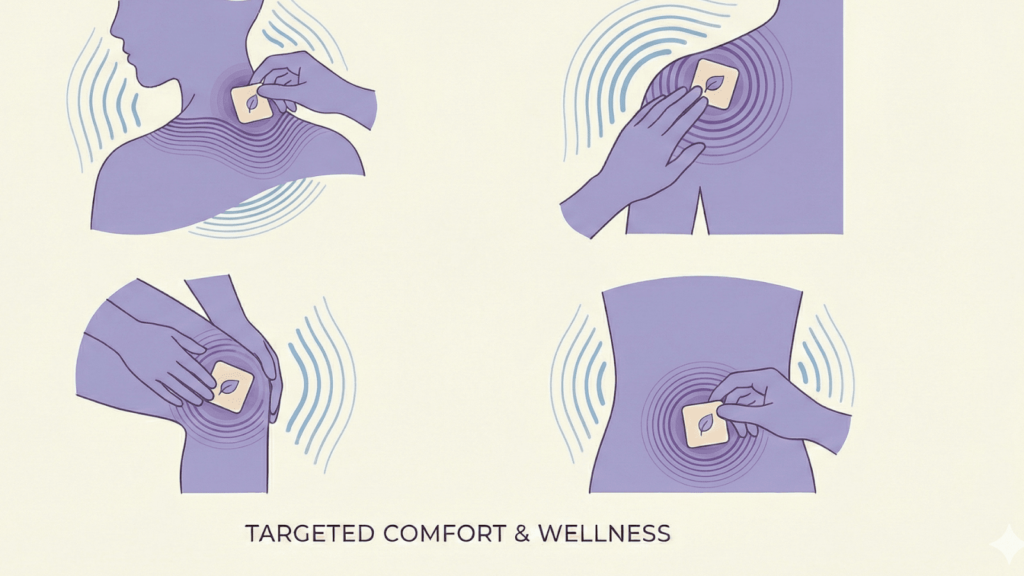
Topical patches are those that most of us can easily purchase: the cool, hot or medicated ones that you apply on your neck, lower back or knees.
These are the products that contain one or more of the following compounds: menthol, methyl salicylate, capsaicin, lidocaine, camphor or herbal extracts – all of which are targeted at providing relief for the surface and the deeper tissues, not for the whole body.
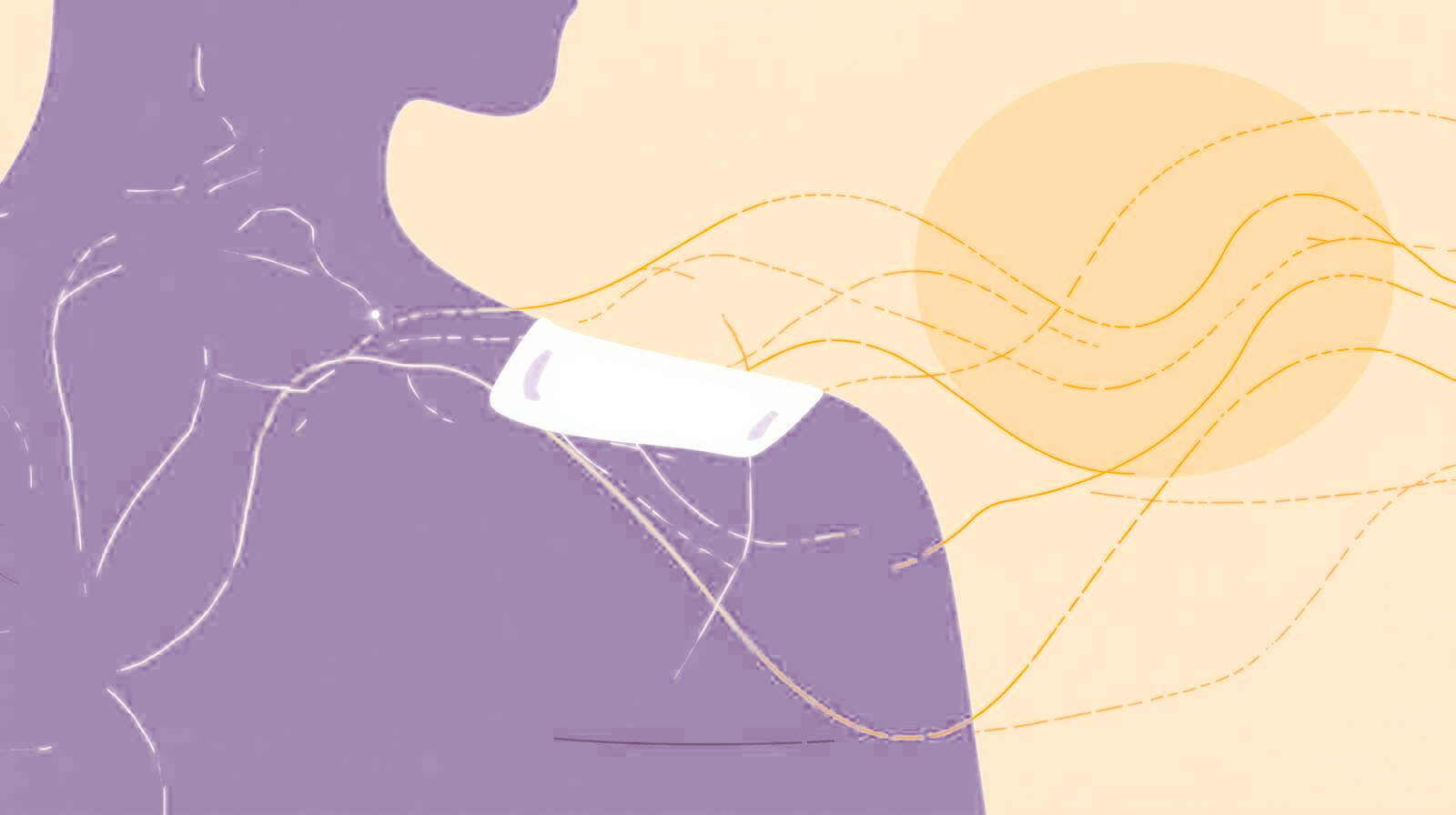
The main idea of research is that these patches bring the releasing substances through the skin into the local tissue, thus, they help in modulating the pain signal in that area. [1]
But are they effective? And how? Let’s investigate.
Do Topical Pain Relief Patches Really Work?
Briefly:
Research findings on the effectiveness of topical pain relief patches are confounded by the factors that pain has different causes, a patch can be of different types and a user can use it correctly or incorrectly. Thus a patch can help sometimes, sometimes moderately and sometimes not at all.
Long version:
Several studies support the use of topical analgesic patches to ease pain intensity, especially that of localized musculoskeletal pain, nerve irritation or muscle strain [2]. While some studies have found comfort, range of motion, and general functioning improvement when patch application is regular and of short duration [3]. On a note, they are not your magical stickers and will not give you a new spine. But, they are capable of taking the edge off everyday pain which is something that I personally have found unexpectedly helpful.
How Do Topical Pain Relief Patches Work on the Skin?
This is the point where I turned into a full detective.
Local patches mainly achieve their effects through two mechanisms:
1. Do Cooling or Heating Patches Actually Reduce Pain?
Indeed, though perhaps not quite as one might imagine.
For example, menthol patches create a cool feeling because the menthol activates TRPM8 receptors, which call the same receptors that detect cold [4]. This cooling feeling fights off pain signals, which means that the brain receives more input from the cold than from the pain.
In essence, it is like trying to distract a toddler with a lollipop.
Heat patches do their job similarly by activation of warmth receptors such as TRPV1. They facilitate local blood flow and help in muscle relaxation [5].
According to my personal experience, cold patches work great for days when you have a stiff neck while heat patches are better for use with tight muscles in the lower back.
2. What About Medicinal Patches: Do They Penetrate Deep Into the Tissue?
Up to a point.
Medicinal topical patches may have one or more of the following ingredients:
- Lidocaine (numbing)
- Methyl salicylate (NSAID-like)
- Capsaicin (desensitizes pain fibers)
Research indicates that a local neuropathic pain condition may be relieved by application of topical lidocaine patches through reduced activity of sodium channels in peripheral nerves [6].
Furthermore, on a gradual basis, capsaicin patches alleviate the symptom of pain by lessening the activation of nerve fibers that carry pain [7].
Most of these components are bound to remain close to the injection site, which is positive as the risk of systemic side effects is lower as compared to oral painkillers.
Lately, I have found that lidocaine patches are great if I have shoulder pain during long work sessions on the laptop but what about capsaicin patches? Well, as far as their effectiveness is concerned let’s just say: they’re “spicy”.
Why Would Someone Choose A Pain Patch Instead Of A Tablet?
When I first put on a pain patch, I was questioning its effectiveness. My assumption was that pain relief would always be done by swallowing something and waiting for the relief to take effect while hoping that the medicine wouldn’t upset my stomach. However, after using patches for some time and doing quite a bit of late-night Googling alongside trying to understand research papers, I came to a point where I could not deny that patches do have their own set of benefits. A few of these are supported by science, while others are just from the experience of living in a body that occasionally seems to be in protest. Below are the major reasons why pain patches usually appear to be the cleverer and more convenient option:
1. They act directly on the pain area
This is the part that won me over at the very beginning. When tablets are taken, active ingredients go through the digestive system, and are later carried through the blood to the place where the pain is. On the other hand, a topical patch is the one that delivers the drug exactly to the place where it is needed [8]. It’s as if you were sending a highly skilled specialist instead of a general task force. In my situation, when I was suffering from neck pain after a long laptop session, a patch not only worked faster but also gave me the feeling that the pain was more targeted than if I had taken a pill.
2. They help avoid stomach or liver issues
In case you have ever taken oral NSAIDs for more than two days, you probably are aware that they may cause stomach irritation or the digestive system to become upset. Long-term or frequent use of NSAIDs can not only thin the stomach lining but also cause liver problems according to research [3]. Topical patches are not a problem in this regard as they are local and do not cause these systemic issues. To tell you the truth, I considered it a great relief, both my mind and body, that the last thing I would expect while I am treating my back would be some sort of stomach problem.
3. They don’t make you sleepy
Drowsiness is one of the scary side effects that can happen to you if you take some oral painkillers. Since a patch does not affect the brain activity, you can be fully awake and carry on with your day. I have been wearing patches during my work calls, long drives, and deep-focus sessions, and I have never felt like my eyes were fighting against me.
4. They stay on for several hours
One of the reasons people don’t realize is how long the work of the patch lasts. Most of the time, patches are worn for anywhere from 4 to 12 hours, which makes them good for long office days, weekend chores, or travel. There is no need for dose reminders or carrying pills with you.
5. They don’t interfere with daily life
Perhaps this is the part that I like the most. Patches are very discreet. Patches have been with me through work, flights, gym, and yes, even weddings (under my clothes, not as a fashion statement). They are silent workers that enable you to go on with your life.
To cut a long story short, pain patches are not a complete substitute for tablets, but they are immensely useful for everyday aches, localised pain, and hectic schedules. Sometimes, the simplest solutions are the ones that really work.
Can Topical Pain Patches Help With Everyday Aches?
It’s the top question worth a million dollars and, truthfully, it was the one I most wanted to be answered when I first started my patch experiments. Scientific jargon and ingredient lists didn’t matter to me. I only wanted to know, “Is this thing going to help me live a normal day without grumbling every time I bend, twist or just exist?”
After reading dense scientific literature, testing various patches, and dealing with a body that sometimes feels like it’s made of ancient rusty gears, this is the conclusion I’ve come to:
Topical pain patches do appear to be effective in the case of everyday, non-catastrophic pain, which includes:
- Mild to moderate muscle soreness
- Overuse aches (typing marathons, long drives, endless phone scrolling – you know the usual)
- Tech-neck from spending too much time looking down
- Lower back fatigue after standing or sitting too long
- Localized joint discomfort
- Post-workout DOMS
- That random shoulder pain you get from sleeping in a question-mark position
I can only think of one trip that stands out in my memory: a 6-hour long drive after a night of giving my pillow a kind of “acrobatic” twist. Even before we left the driveway, my shoulder was screaming. I put on a patch without much hope. Not even 10 minutes later, it really felt like my personal assistant was gently rubbing my shoulder, only here I wasn’t paying anyone – just sitting back and enjoying the ride.
Does this, however, entail that a pain patch will be able to fix something as serious as a slipped disc? Negatively, emphatically no. We are talking about small daily inconveniences here, not medical miracles.
If you’re wondering, though, whether these patches under the sun will be of any good in the everyday real aches that, fraught with us, constantly rear their heads, then the answer has turned out to be in the affirmative: They are incredibly handy and efficient. Picture them as a faithful, mobile synth who’ll keep your rhythm flowing, won’t give you lip, won’t need charging and will never knock at your door for Wi-Fi.
How Long Do Pain Relief Patches Take to Work?
This issue is of great importance because none of us is up to the task of physically waiting for the patch to work “like buffering in real life” while doing nothing but sitting there.
According to the information gathered by science and research:
- Cooling or warming patches: their relief is usually felt within 5 -15 minutes
- Lidocaine patches: probably need 30 to 60 minutes in order to take effect
- Capsaicin patches: impact can be accessed after several days of continuous application
- NSAID-based patches: get relief in 1 to 2 hours most of the time
On the other hand, from my personal experience I can say that menthol-based patches are probably good performers who also pressure themselves to win. In fact, it looks as if they are finished almost before I have even started my pain monologue – almost like they hear me whining and immediately jump into action.
Is There Any Real Science Backing the Effectiveness of Topical Pain Patches?
In fact, yes! And even more than I initially expected when I first looked into it.
Several important findings:
- Topical analgesic patches can reduce musculoskeletal pain intensity with fewer systemic side effects [2].
- Lidocaine topical patches have shown significant reduction of localized neuropathic pain in multiple studies [6].
- Research on menthol reveals that it has definite analgesic effects due to TRPM8 activation [4].
- Topical NSAID patches have been associated with improved function and reduced pain severity compared to no treatment [3].
Though they are not miracle cures, science backs them as viable aids for localized pain and muscle tension.
Are Topical Pain Patches Safe to Use?
Most of the time, yes – if utilized properly.
Studies point out that topical patches bear fewer systemic risks than oral analgesics [3]. The most frequently reported side effect is local skin irritation.
As for me, I cannot recall any problem that I had with a patch except for that one time when I put it on immediately after a hot shower – my skin felt like it was sunbathing at a heat festival.
Can Topical Pain Patches Be Part of a Daily Wellness Routine?
In my view: sure, provided you see them as a helper, not a healer.
I combine them with:
- Stretches
- Posture breaks
- Mobility exercises
- Ergonomic adjustments
And in times when my back acts as if it’s making a heavy and formal complaint, I take out a patch in the similar way that some people would take out comfort food.
Final Thoughts: Are Topical Pain Relief Patches Worth Trying?
On my honest terms, after years of my own personal usage and research papers deep dives, here is what I think:
Topical patches are excellent for:
- Everyday aches
- Mild to moderate muscle stiffness
- Temporary relief
- Situations when you want to avoid taking pills
- Workdays or travel discomfort
They are not designed for:
- Severe injuries
- Chronic conditions without medical guidance
- Structural problems
- Helping you to fix your bad posture
Just like many other smart, holistic pain management routines, those little wonders can be surprisingly potent if used rightly.
If there was a category for supporting actors among pain relief tools, pain patches would definitely be nominated.
If this article was answer to answer your questions, I do suggest you some similar reads:
1. Recovery Patches for Knee Pain: Relief & Faster Recovery
2. Recovery Patches for Pain Relief & Muscle Recovery
3. How Can Pain Relief Patches Help You Manage Muscle?
References
1. Prausnitz MR, Langer R. “Transdermal drug delivery.” Nature Biotechnology, 2008.https://pmc.ncbi.nlm.nih.gov/articles/PMC7520099/
2. Mason L, et al. “Topical NSAIDs for chronic musculoskeletal pain.” Best Practice & Research Clinical Rheumatology, 2007.https://www.sciencedirect.com/science/article/pii/S0885392407000036
3. Sohail R, et al. “Effectiveness of topical analgesic patches on pain and function.” Journal of Pain Research, 2020.https://pmc.ncbi.nlm.nih.gov/articles/PMC7326193/
4. Patel T, et al. “Menthol-induced analgesia via TRPM8.” Journal of Neuroscience, 2011.https://www.jneurosci.org/content/31/5/1721
5. Nadler SF, et al. “The physiologic basis and clinical applications of heat therapy.” Archives of Physical Medicine and Rehabilitation, 2004.https://pubmed.ncbi.nlm.nih.gov/15031855/
6. Khaliq W, Alam S, Puri N. “Lidocaine patch for neuropathic pain.” Journal of Pain Research, 2022.https://pmc.ncbi.nlm.nih.gov/articles/PMC9824981/
7. Anand P, et al. “Capsaicin receptor and pain modulation.” Lancet, 1998.https://pubmed.ncbi.nlm.nih.gov/9643745/
8. Prausnitz MR, Langer R. “Transdermal drug delivery: mechanisms.” Nature Biotechnology, 2008.https://pmc.ncbi.nlm.nih.gov/articles/PMC12513045/


