






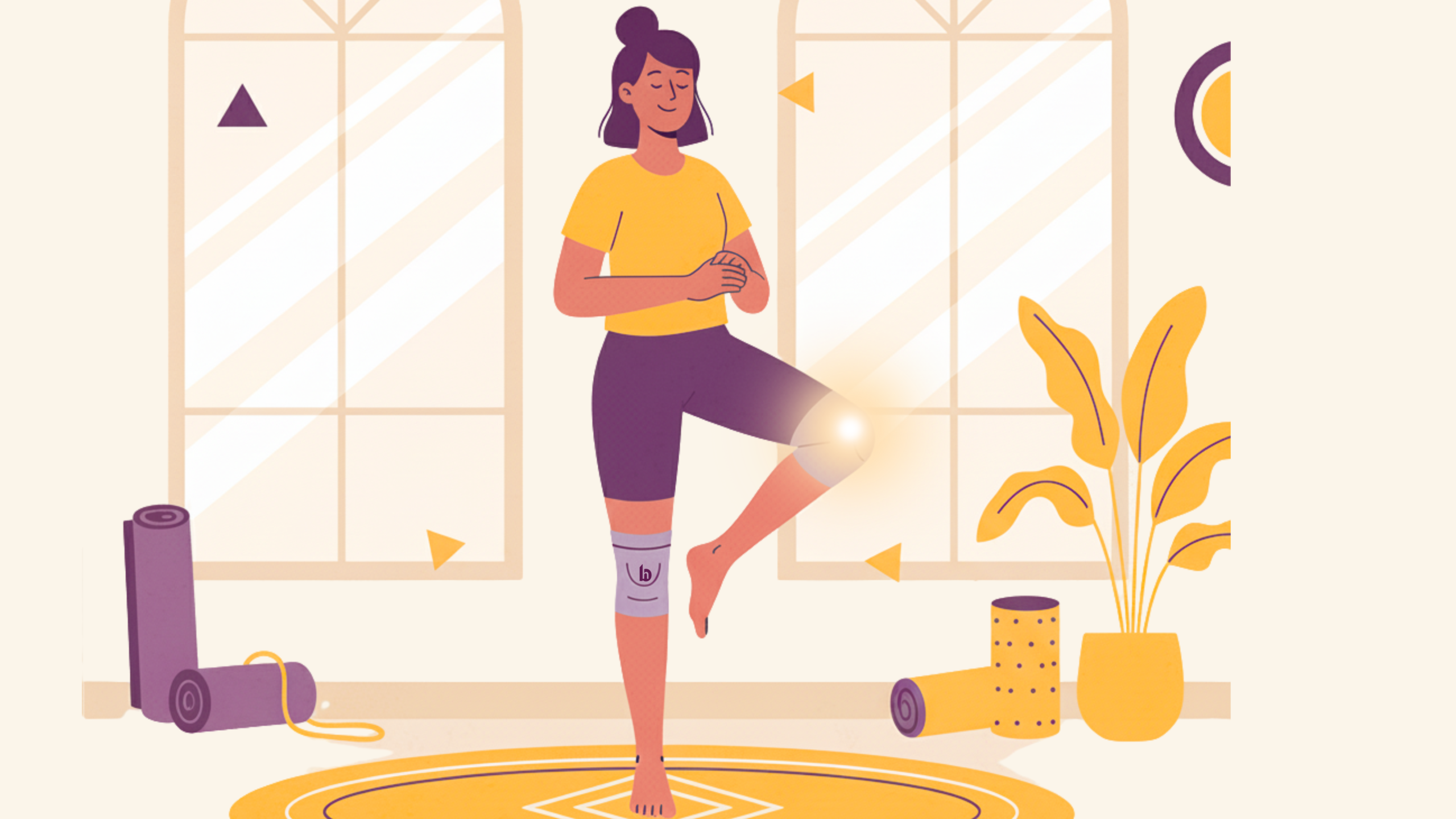
Imagine this: You wake up, stretch, and suddenly your knees creak like an old wooden door opening for the first time in years. You descend the stairs with caution, as if each step is a mini-adventure requiring strategy. If this sounds familiar, you’re not alone. Many of us treat our knees like negotiable business partners. “I’ll move them later,” we say until the invoices (aches, stiffness, pain) arrive.
In today’s world, where many of us sit long hours, lean on devices, and favor short walks over long strides, our knees silently bear the load of inactivity and poor posture. Little wonder they begin to feel stiff, fragile, or downright unreliable.
The good news is: It doesn’t have to stay that way. Movement can be medicine, not punishment and the right knee pain exercises can transform not just your joints, but your confidence too.
In this article, we’ll guide you through how consistent practice, the right kind of movements, and a bit of patience can turn stiffness into strength, restore mobility and rebuild your trust in your own body. Get ready: your knees are about to get a second wind.
The Real Reasons Behind Knee Pain
Modern Life and the Sedentary Trap:
Let’s face it, our daily routines aren’t exactly kind to our knees. Between consistent sitting at desks, endless scrolling, and those “just one more episode” nights, our bodies spend more time parked than moving. The result? Tight hips, sleepy glutes, and knees forced to do all the heavy lifting. Poor posture, repeated sitting, and neglecting mobility can leave your knees feeling like they’re stuck in first gear.
When you sit too much, the hip flexors tighten, the glutes stop pulling their weight, and the knees pick up extra load simply to keep you upright. What was once a freely moving joint becomes a stiff hinge, waiting for a rescue mission
The Science Behind Stiffness
Here’s what’s really going on: your knees have their own built-in “oil” called synovial fluid. It keeps everything smooth, nourished, and pain-free but only when you move. Think of it as your joint’s personal lubricant that needs a little circulation to stay effective [1].The less you move, the less this fluid flows, and that’s when stiffness sneaks in. Imagine a door hinge you haven’t opened in months; same story, just with more anatomy involved.
When Pain Isn’t Just Pain
A little post-workout soreness? Totally fine. But when stiffness shows up just from walking to the fridge or climbing stairs, it’s time to pay attention. Persistent knee pain can signal early joint degeneration, muscle imbalance, or even the first signs of osteoarthritis. The good news? Research shows that consistent, gentle movement helps reduce pain and strengthen your knees over time. [2] In short, your knees aren’t mad at you; they just want to be included in your daily plans again.
Knee Pain Exercises: The Natural Medicine Your Joints Have Been Waiting For
(Integrates: “knee strengthening exercises for pain relief” and “how to improve knee flexibility and strength”)
Movement as Therapy (and not punishment)
Many people think the answer to knee pain is rest. But wise movement, not avoidance, is what actually promotes healing. Gentle, targeted knee pain exercises help rebuild tissue health, improve joint mechanics, and renew stability. Resting too much may reduce swelling short-term, but it often causes stiffness, muscle atrophy, and slower recovery in the long run.
Science-Backed Benefits of Consistent Movement
Here’s what the research says:
- A systematic review found that exercise is “probably” able to improve pain and physical function in people with knee osteoarthritis. [3]
- A network meta-analysis found that various exercise types, such as aerobic, resistance, and yoga, all showed benefit in knee osteoarthritis in terms of pain, stiffness and function. [4]
- Movement improves blood flow, enhances joint lubrication, strengthens surrounding muscles, and reduces internal load on the knee [5].
In plain talk: the more you move (in the right way), the better your knees can cope.
The Confidence Connection
It’s not just your joints that get stronger; your mindset does too. When your knees stop dictating what you can and cannot do, you regain freedom: climbing stairs without hesitation, picking up pace on walks, maybe even breaking into a spontaneous dance move (yes, dancing counts!). Regaining movement means reclaiming confidence. One day you’re avoiding stairs; the next you’re taking them two at a time. That’s not just physical progress; it’s psychological empowerment.
7 Best Knee Pain Exercises to Rebuild Mobility and Strength
1. Quad Sets
Benefit: Builds foundational strength in your quadriceps, which stabilize the knee.
How-to: Sit or lie down with your leg straight. Tighten the quad (front thigh) by pressing the knee and patella into the surface. Hold for 5-10 seconds, relax. Repeat 10-15 times per leg.
Tip: If your knees creak, don’t panic; that’s the sound of progress.
2. Straight Leg Raises
Benefit: Strengthens the thigh muscles without bending the knee, great if you’re recovering or cautious.
How-to: Lie flat, one leg bent for support, the other straight. Lift the straight leg to about 30 cm height, hold for 2 seconds, and slowly lower. 10-12 reps.
Tip: Focus on control. Quality over quantity.
3. Wall Sits
Benefit: Builds endurance and joint stability.
How-to: Stand back against a wall, feet shoulder-width apart, and slide down into a gentle “half-squat” (knees ≈ 90° or less if needed). Hold for 20-30 seconds, and slide back up. Repeat 3-5 times.
Tip: Use a light cushion under your back if your lower back protests.
4. Hamstring Curls
Benefit: Activates the posterior chain (back of thigh), important for knee balance.
How-to: Stand holding a chair for support. Bend one knee, bringing the heel toward the glute. Hold briefly, lower. 10-12 reps each leg.
Tip: Move slowly; avoid swinging.
5. Calf Raises
Benefit: Strengthens lower-leg support that contributes to knee stability.
How-to: Stand near a wall/chair for support. Raise up onto the balls of your feet, hold 1-2 seconds, and lower slowly. 12-15 reps.
Tip: Try this during TV commercials or while brushing your teeth.
6. Step-Ups
Benefit: Functional movement mimics real life (stairs, curbs) and rebuilds mobility.
How-to: Use a stable step (≈15-20 cm). Place one foot up, push through the heel to lift your body, and step down gently. 8-10 reps each leg.
Tip: Think “I’m preparing for stair-domination” instead of rehab.
7. Glute Bridges
Benefit: Strengthens hips and glutes, reducing load on knees.
How-to: Lie on back, knees bent, feet flat. Lift hips until body forms a straight line from shoulders to knees. Hold 2 seconds, lower. 10-12 reps.
Tip: Clench glutes at the top as if you’re holding a cookie between them.
Mini Note: During any of these moves, supportive gear like a snug knee sleeve or light brace can help you feel stable and confident,, like giving your knees a gentle hug of support while you build up strength.
Mobility Workouts for Stiff Knees: Your Gentle Path to Freedom
Why Mobility Matters More Than You Think?
You might flex and touch your toes (flexibility) but still struggle to squat without wincing. That’s where mobility comes in ability to use your joints through full functional ranges under control. Mobility is what gives your knees freedom, not just slack in your hamstrings.
Mobility enables better joint fluid dynamics, better alignment, and less strain. The synovial joint structure relies on movement to maintain healthy lubrication and nourishment. [6]
Daily Mobility Flow (5-Minute Routine)
Here’s a simple routine you can weave into your day even while waiting for your next cup of coffee:
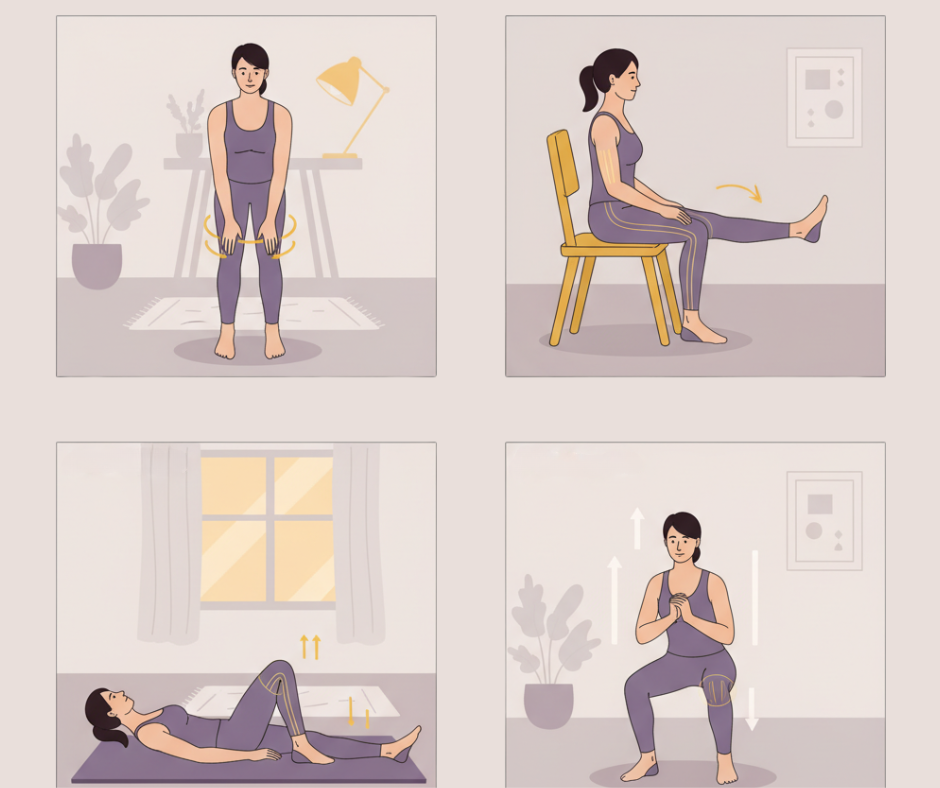
- Knee Circles: Sit or stand, place hands on knees, make slow circles 10 each direction.
- Seated Knee Extensions: Sit, extend one leg until straight, flex foot, hold 2 seconds, lower. 10 reps each leg.
- Heel Slides: Lie on your back, knees bent. Slide heel away until leg almost straight, slide back. 10 reps each leg.
- Mini Squats: Feet shoulder-width, sink into gentle squat (knees behind toes), hold 2 seconds, rise. 8-10 reps.
Bonus Tip:
Pair this mobility flow with your coffee ritual – “stretch while your chai brews, multitasking at its healthiest.” Because you don’t need a gym; you just need a few minutes and a willingness to move.
Rehabilitation and Recovery: Building Knee Strength the Smart Way
Don’t Rush the Healing – Respect the Process
If your knee has had an injury, surgery, or persistent pain, it’s tempting to push hard. But real recovery happens when guided, progressive movement replaces passive rest. The difference between recovery (returning to baseline) and rehabilitation (improving beyond baseline) matters. Studies show home-based exercise interventions can be effective [7].Even if you can’t get to a clinic, consistent home-based routines deliver results.
The Role of Physical Therapy and Guided Routines
When should you see a physiotherapist? If pain stops you from moving, if your knee buckles, or if you’ve had surgical intervention. A professional can guide safe progression and correct movement patterns, and tailor a physical therapy routine for knee pain. The best interventions combine strength, stability, and neuromuscular control. [8]
Tools That Help (Foam Rollers, Resistance Bands, Cushions)
Recovery doesn’t mean luxury. It means smart support. Using a foam roller loosens tight muscles, resistance bands add controlled challenge, and an ergonomic support cushion under your seat can help reduce knee-straining posture. A light knee brace or compression sleeve gives your knees added reassurance; think of it as a subtle ally in your journey, not a crutch.
How to Improve Knee Flexibility and Strength at Home ?
Everyday Moves That Strengthen Knees Without a Gym
Your home is your gym minus the judgmental mirrors. Simple moves make a big difference:
- Sit-to-stands: From a chair, stand up without using hands if possible, and sit back down slowly. 10-15 reps.
- Stair climbs: Use a flight of stairs or a step; step up and down 5-10 times, focusing on control.
- Bedtime stretch: Before sleep, lie on your back, bring your knee toward your chest, and hold for 20 seconds on each leg.
These everyday routines accumulate into meaningful strength and flexibility.
Nutrition, Hydration, and Recovery Tips
Your knees are biological as much as mechanical. Good movement matters but so does good fuel. Hydration keeps the synovial fluid fluid; anti-inflammatory foods reduce internal stress on joints. Think omega-3-rich fish, turmeric-spiced dishes, and leafy greens.
“Your knees crave nutrients as much as Netflix craves new shows.”
Sleep matters too; recovery happens when your body is resting and repairing.
Rebuilding Confidence and Strength with Regular Knee Pain Exercises
The Mind-Body Connection
When you move without fear, your body and brain collaborate. Small wins like “I climbed that flight of stairs without wincing” or “I bent down to tie my shoes” build big confidence. Movement begets trust in your knees, and trust begets freedom. Studies show exercise reduces fear-avoidance behaviors and improves self-efficacy in knee conditions. [9]
From Fear to Freedom
Many people fear re-injury, assume pain is inevitable, or subconsciously avoid movement. Controlled, consistent knee pain exercises replace fear with control. Each confident step forward is a vote for freedom. The narrative shifts: you aren’t “fragile”; you’re capable.
Real-Life Success Mini Story
Riya, 34, once avoided stairs, felt guilty during family hikes, and felt her body was betraying her. She began a simple program of knee pain exercises: gentle mobility in the mornings, strength moves on alternate days, and a supportive brace (just for reassurance). After three months she was back on weekend hikes, laughing with her friends, and stepping down curbs without a second thought. Her knees weren’t perfect but they were strong. Her confidence? Off the charts.
Final Thoughts
Here’s the wrap-up: Stiff knees are not your fate. They’re signals. They’re gentle (or sometimes loud) requests for movement, attention, and rebuilding. The investment you make through consistent knee pain exercises, mobility work, proper strength, habit, and mindset pays back in movement, freedom, and confidence.
Your knees don’t need magic. They need movement. They don’t need sympathy. They need consistency. Start small, stay regular, “hug” them with a smart sleeve or proprioceptive brace if you like, and build your path from stiffness to strength.
Let this be your moment. Stand up. Move. Feel the difference. Your knees and your life will thank you.
Explore More Health & Wellness Solutions
Want to stay informed about wellness and everyday health issues? Here are some insightful reads to guide you. Explore the links below for practical tips and solutions:
- Effective Knee Pain Relief Exercises: Strengthen, Stretch & Recover Naturally
- Swollen Knee Treatment at Home: Remedies, Relief, and Prevention Tips
- Effective Neck Pain Relief Exercises: Step-by-Step Protocol for Lasting Comfort
Frequently Asked Questions:
1. How often should I do knee pain exercises?
Start with 3–5 times a week. Consistency matters more than intensity, your knees prefer routine over random bursts of effort.
2. Can I do these exercises if I have arthritis or past injuries?
Yes, but keep them gentle and low-impact. If pain or swelling increases, take a break and check in with a physiotherapist.
3. What’s the difference between flexibility and strengthening exercises?
Flexibility improves range of motion, while strengthening builds support around the joint. You need both for healthy, happy knees.
4. Do I need any special equipment?
Not really; most moves use bodyweight. Supportive gear like sleeves or braces can help stabilize and protect your knees.
5. Can exercises really replace medication?
They’re not instant magic, but regular movement reduces pain and inflammation naturally, helping you rely less on meds over time.
References
- Synovium & Synovial Fluid – Physiopedia. Link: https://www.physio-pedia.com/Synovium_%26_Synovial_Fluid
- Exercise Therapy for Knee Osteoarthritis: A Systematic Review and Network Meta-analysis. PMC. 2023. Link: https://pmc.ncbi.nlm.nih.gov/articles/PMC10280533/
- Lawford BJ, Hall M, Hinman RS, Van der Esch M, (2024), Is exercise an effective therapy to treat knee osteoarthritis? https://www.cochraneexercise-effective-therapy-treat-knee-osteoarthritis
- Effects of exercise on knee osteoarthritis: A systematic review. Wiley. 2021. Link: https://pubmed.ncbi.nlm.nih.gov/33666347/
- Benefits of Exercise for the Treatment and Management of Osteoarthritis. Rheumatology Advisor. 2023. Link: https://www.rheumatologyadvisor.com/features/benefits-exercise-treatment-management-oa/
- Matt Quinn (2024), Structures of a Synovial Joint, https://teachmeanatomy.info/the-basics/joints-basic/synovial-joint/?
- Home-based exercise interventions on pain and physical function in knee osteoarthritis. J Orthop Surg Res. 2023. Link: https://josr-online.biomedcentral.com/articles/10.1186/s13018-023-04004-z
- Effects of exercise on knee osteoarthritis: A systematic review. Wiley. 2021. Link: https://pubmed.ncbi.nlm.nih.gov/33666347/
- Benefits of Exercise for the Treatment and Management of Osteoarthritis. Rheumatology Advisor. 2023. Link: https://www.rheumatologyadvisor.com/features/benefits-exercise-treatment-management-oa/
- Supervised vs home-based exercise for knee OA: J Clin Med. 2023. Link: https://www.mdpi.com/2077-0383/14/2/52
- Improving and Increasing Synovial Fluid. VeryWellHealth. 2019. Link: https://www.verywellhealth.com/how-to-increase-synovial-fluid-5114374
- Anatomy, Joints – StatPearls. NCBI Bookshelf. Link: https://www.ncbi.nlm.nih.gov/books/NBK507893/