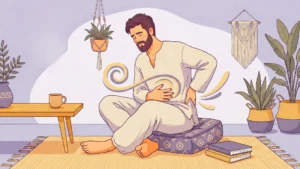






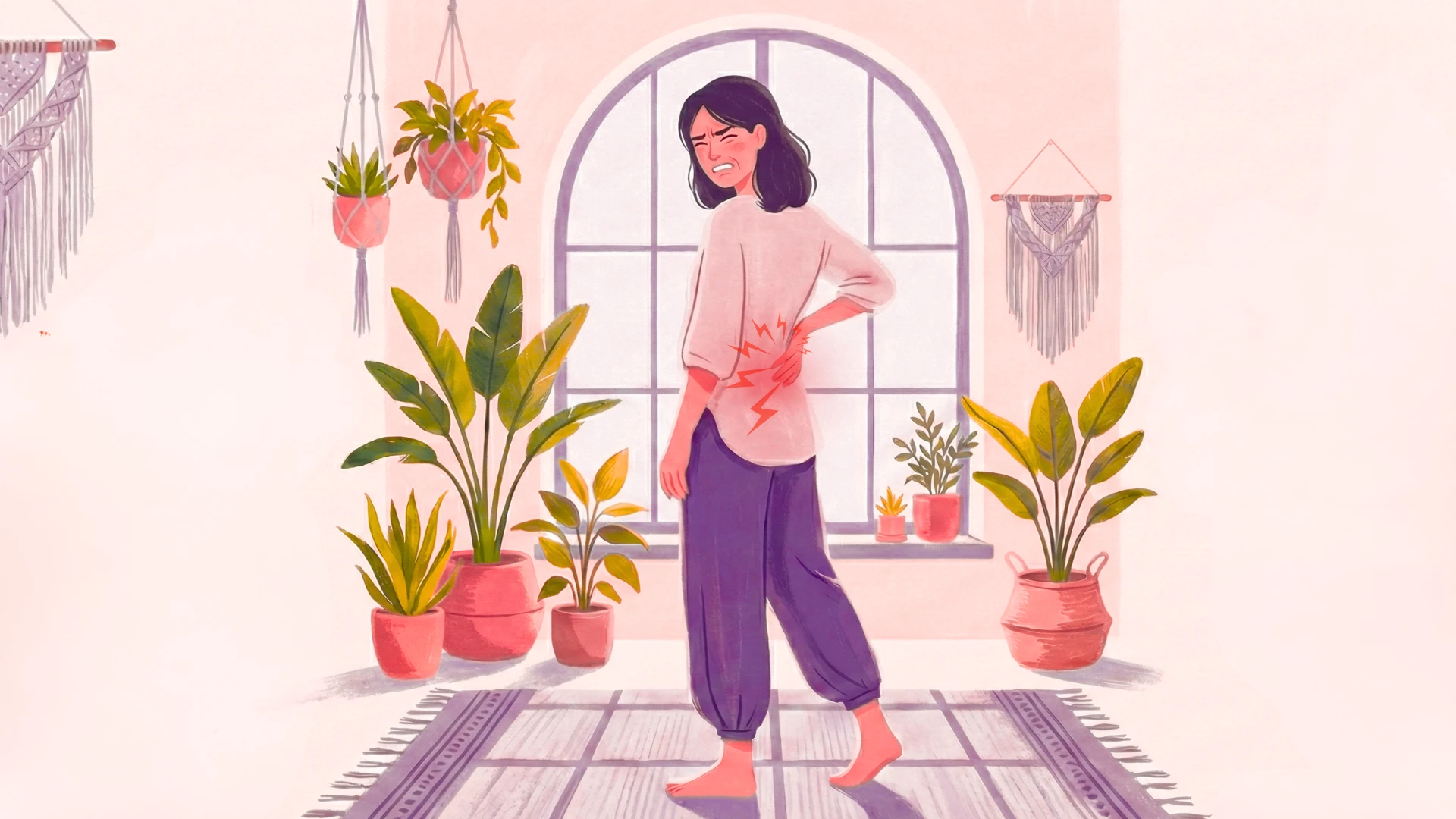
When you stand, your spine has to support more of your body weight than when you are sitting or moving. When any one of these is strained or out of balance, it can cause pain as more force is put on your spinal structures; muscles, discs, joints and ligaments. Static weight bearing load the lumbar spine more than cyclic movement or seated with good support, and long static position will exhaust stabilizing muscles causing pain over time. [1]
As you stand, the forces on your spine for spinal compression increase, and the work is magnified to those intervertebral discs that provide basic cushioning for an entire vertebra [2]. Simultaneously, muscles that help support your lower back need to be engaged for maintaining an upright position. When those muscles tire; either from poor endurance or bad posture, they can’t support the spine as well, and pain can develop.
1. Poor Standing Posture
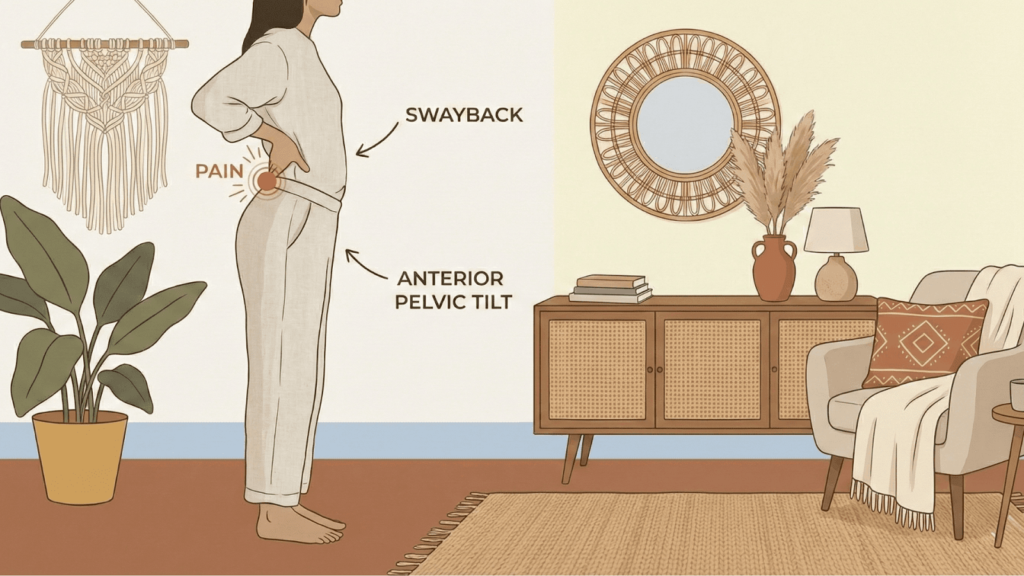
Swayback and Anterior Pelvic Tilt
Posture is one of the most frequent reasons why standing hurts. A swayback posture known as a pronounced curve of the lower back (lumbar lordosis) shifts the weight backward on your spine, overloading muscles and joints [3]. An anterior pelvic tilt (pelvis tipping forward) accentuates this curve, putting undue tension on both the lumbar spine and its supporting muscles. Over time, this leads to chronic low back pain while upright.
Treatment
The process of correcting posture starts with minor cues:
- Stand with feet hip-width apart
- Bend your knees and keep them soft without being locked
- Just bring your pelvis under a little, take any arch out of your lower back..
- Picture a straight line from your ears, through your shoulders, hips and all the way down to your ankles.
The more you develop the muscles of your core and glutes, the easier it is to hold that position. A physical therapist or posture program that is all about engaging your back muscles, along with your glutes and hamstrings (aka the posterior chain) can be super helpful.
2. Muscle Fatigue and Weak Core
What Happens
Your muscles that surround your spine (deep stabilizers) and core muscles (abdominals, obliques) work to distribute load evenly as you stand or move. Weak or undeveloped muscles in the back and abdomen can cause lumbar instability. Your body depends on those passive structures to keep you up instead of relying on dynamic muscle support [4]. Walking upright in this unbalanced state is uncomfortable because tired muscles lose their power of stability.
Treatment
- Concentrate on core toning exercise like:
- Bird-dog
- Dead bug
- Planks (modified if needed)
These drills teach your core to hold your spine in a neutral zone, without being too lax or tense. Glute bridges, and hip hinge movements can also prevent the overuse of lower-back muscles by sharing out more of the effort to your stronger muscle groups. Regular micro-breaks during the day just 30 to 60 seconds of gentle movement to reset muscle fatigue.
3. Prolonged Standing Without Movement
Why It Hurts
Long periods of standing stationary are anti-blood circulation, and create constant tension on the same muscle areas. The absence of micro-movement doesn’t give joints and muscles a chance to reset or redistribute pressure; instead, fatigue sets in, followed by pain. Studies show that people who stand relatively still with few shifts in weight or changes in posture, are at greater risk of low back pain.[5]
Treatment
- Try simple strategies while standing:
- Weight-shift: transfer weight from one foot to the other
- Variation in foot placement: make a slight offset of the legs or turn the toes out to side
- Quick mobility resets: every 10-15 minutes rock back on to your heels and gently bend the knees, roll the shoulders, or draw a slow hip circle.
These tiny shifts, but taken together they help circulation, mitigate static muscle loading and make standing way less challenging.
4. Lumbar Disc Stress
How It Happens
The discs that lie between your spinal vertebrae are shock absorbers. Standing for long periods, particularly with bad posture, exerts amplified compressive force on these discs. According to a radiographic examination more lumbar lordosis and compression is increased during pain development in standing [2].The discs can become irritated and painful; sitting or bending forward may help alleviate pain as the discs do not have to experience as much gravitational pressure.[6]
Treatment
- Temporarily avoid prolonged standing
- Switch between sitting and standing every 20-30 minutes
- Consult a physiotherapist for safe strengthening and flexibility programs
- Watching for red flags such as numbness, severe pain or loss of bladder control
- Facet Joint Irritation
5. Facet Joint Irritation
Facet joints connect the vertebrae and provide direction to spine movement. When they get angry, which is frequently with extension or too much lordosis, they can cause a localized pain that increases while standing and during extension. When you lean forward or sit, these symptoms will often improve a bit, as this off loads the joints.[7]
Treatment
- Avoid prolonged lumbar extension
- Some light forward bending (mobility work for spinal flexion)
- Anti-inflammatory strategies (heat, light activity)
- Re-education of posture to minimize dependency on the lumbar extensors
6. Tight Hip Flexors and Hamstrings
Connection with the Spine
Tight hip flexors and hamstrings alter the positioning of the pelvis, which can cause it to rotate forward into an anterior tilt, accentuating the lumbar curve and bringing a greater load to bear on the lower back. This discrepancy is most prevalent for those with a sedentary job [8]. When you get up after sitting for a while, your lumbar spine is more susceptible to stress and pain due to stiff and unsupported hip muscles.
Treatment
Long-term stretching and strength balance exercises are necessary:
- Hip flexor stretches
- Hamstring stretches
- Glute activation drills
These help to align the pelvis and alleviate the compensated strain on the lower back.
7. Foot and Ankle Misalignment
The Ground-Up Effect
Your standing posture starts with the foot. Flat feet, overpronation, or lack of supportive footwear can change the way in which weight is carried across the body, thereby adding extra pressure to the ankles, knees and hips as well as the lower back. And in this domino effect, the spine is forced to compensate for instability below and pain can develop higher up.
Treatment
- Supportive shoes with proper arch support is a must.
- If suggested by a specialist, consider corrective insoles;Balance to help ankle and foot intrinsic muscles strengthening
- A stable foot circumvents a tilted pelvis and crooked back when standing.
8. Spinal Degeneration or Age-Related Changes
What Happens Over Time
Over the years, spinal discs dry out and lose shock-absorbing capabilities. The spine’s natural flexibility also becomes limited, and joint surfaces may wear out (degeneration). These structural adaptations render the lower back more vulnerable to static load, particularly when standing for long periods.[7]
Treatment
- Focus on low-impact strengthening (walking, barre or light Pilates)
- Maintain a neutral standing and moving posture
- Employ postural support aids (lumbar support cushions)
- No physical therapy being long-term spine care with purposeful activity.
How to Relieve Lower Back Pain When Standing?
Immediate Relief Tips
When pain strikes:
- Position changes: have a seat; take a walk to relieve pressure
- Ice for inflammation, heat to relax muscles
- These will relieve acute pain and give you temporary relief from muscle tensing.
Long-Term Prevention
The most satisfying is when you can do both at once: perfect + easyResults!
- Strength exercises: working the core, glutes, hips and back muscles
- Ergonomic stance habits: standing and sitting in turns; proper shoes; demand for micro-moves.
- Walking; including daily steps, is one of the best low-impact ways to help protect your spine and lower your risk for chronic pain. One study found that walking more was associated with a roughly 23 percent lower risk of chronic back pain.
When to Consult a Doctor?
Consult a healthcare provider if:
- Pain that continues for longer than 2–3 weeks
- There is pain radiating down the legs, or numbness.
- You have pain at night or unexplained weakness
These can indicate nerve or structural issues underlying more than just postural status.
How Betterhood Supports a Pain-Free Spine ?
betterhood is a lifestyle-based solution designed to minimize the everyday physical strain that unknowingly exacerbates your lower back pain. Ergonomically designed back support cushions, posture correcting seat solutions, and spinal alignment pillows can also be utilized to ensure that neutral posture is maintained throughout long periods of standing, sitting or recovering.
By providing that extra support at the points in your spine where you need it most, betterhood products help to minimize muscle fatigue and improve load distribution, so your own body can more effectively do what it does best i.e, heal itself naturally and without encouraging short-term pain relief.
Conclusion
Lower back pain while standing up is common but it’s neither normal nor inevitable. Even minor alterations to posture, muscle power, movement patterns or footwear can lead to a massive reduction in painful symptoms and improvement in your life. Knowing the cause gives you control, even if you don’t have a solution.
Explore More Health & Wellness Solutions:
Would you like to be up-to-date on everyday health and wellness issues? Here are some interesting pieces to help you. Follow the links below if you want practical tips or solutions:
- What Causes Back Pain? Understanding Root Triggers & Prevention Tips
- 10 Effective Home Remedies for Body Pain Relief Naturally
- Wrist Support Braces Explained: Protocols for Pain Relief
- Pillow for Neck Pain: Best Contour Pillow Every Side Sleeper Needs
Frequently Asked Questions
Spine load and muscular activation increase when you stand for a long time; if your muscles are weak or imbalanced, or pulled too tight, then pain is likely. ¹
Yes. aligning your spine and pelvis reduces the pressure on your joints and discs, along with easing tension and pain. ²
There’s no hard time limit, but most people start to feel pain after they’ve been standing without a break for about 30-60 minutes. Static postures cause postural muscles to become tired, which in turn reduces circulation. Frequent changes of position, weight bearing and change in posture play a large part in decreasing the risk of discomfort. ⁶
Absolutely. Badly cushioned or unsupportive shoes throw off foot position that reverberates upward to the knees, hips and spine. Especially while standing for long, choose shoes with good arch and shock support to lower the spinal strain. ⁷
Yes. If your glute muscles are weak or lazy, your lower back will be forced to work while you stand, creating an excess strain on lumbar joints and muscles. Strong glutes stabilise the pelvis which prevents strain and/or standing back pain. ⁹
References
- Hwang, J. H., Lee, Y. T., Park, D. S., & Kwon, T. K. (2018). Association of low back load with low back pain during static standing. Human Movement Science, 61, 173-181. https://pmc.ncbi.nlm.nih.gov/articles/PMC6298701/
- Nachemson, A. L. (1981). Disc pressure measurements. Spine, 6(1), 93-97. https://pmc.ncbi.nlm.nih.gov/articles/PMC8950176/
- Lowenstein, J. (2024). How to correct anterior pelvic tilt & lumbar lordosis. Jason Lowenstein MD. https://jasonlowensteinmd.com/how-to-correct-anterior-pelvic-tilt-lumbar-lordosis/
- Lederman, E. (2010). The myth of core stability. Journal of Bodywork and Movement Therapies, 14(1), 84-98. https://pmc.ncbi.nlm.nih.gov/articles/PMC6614774/
- Waters, T. R., & Dick, R. B. (2015). Evidence of health risks associated with prolonged standing at work and intervention effectiveness. Rehabilitation Nursing, 40(3), 148-165. https://pmc.ncbi.nlm.nih.gov/articles/PMC4591921/
- Wilke, H. J., Neef, P., Caimi, M., Hoogland, T., & Claes, L. E. (1999). New in vivo measurements of pressures in the intervertebral disc in daily life. Spine, 24(8), 755-762. https://pmc.ncbi.nlm.nih.gov/articles/PMC8950176/
- Physiopedia. (2024). Lumbar facet syndrome. https://www.physio-pedia.com/Lumbar_Facet_Syndrome
- Peeler, J., & Anderson, J. E. (2015). Influence of hamstring tightness in pelvic, lumbar and trunk range of motion in low back pain and asymptomatic volunteers during forward bending. Asian Spine Journal, 9(4), 535-540. https://pmc.ncbi.nlm.nih.gov/articles/PMC4522442/
- Natvik, R. N., Fredriksen, P. M., Mamen, A., & Wisnes, A. (2025). Volume and intensity of walking and risk of chronic low back pain: A population-based cohort study. JAMA Network Open, 8(6), e2521654. https://pmc.ncbi.nlm.nih.gov/articles/PMC12166487/