





Neck pain is one of the aches that can silently steal your happiness.
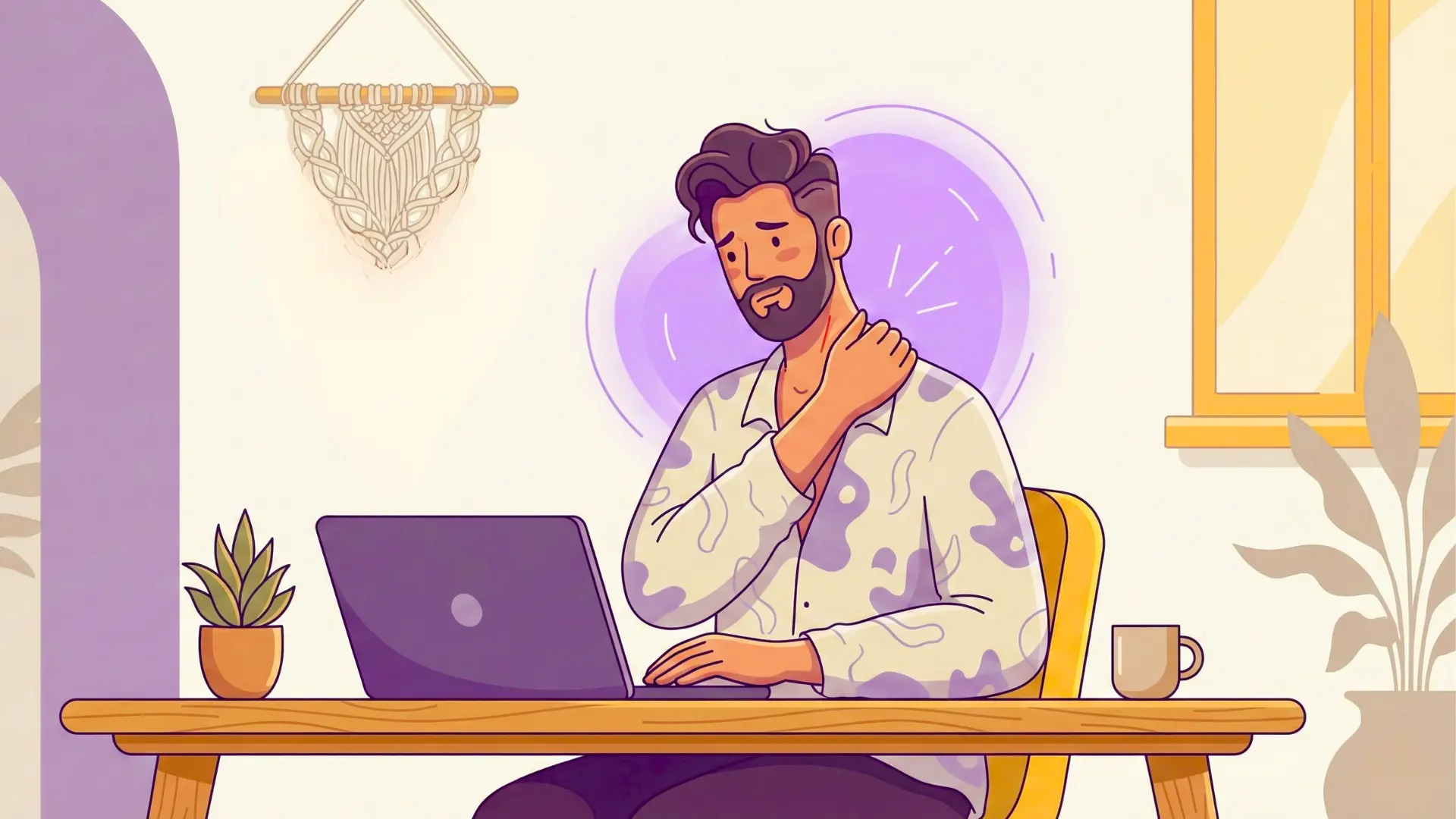
Perhaps you wake up creaky after late-night scrolls through whatsApp chat and reels. Perhaps it sneaks up after hours of hunching over your laptop at work. Or perhaps it’s the daily grind of traveling around Bangalore or Mumbai. Every red light is an opportunity for your head to slip forward and your shoulders to inch up without you realizing.
In most Indian homes, the standard advice is to “adjust” or “sleep it off,” even when there’s a return of pesky pain. The fact is, neck pain isn’t always something you can massage away or push through. Untreated, it can impact your sleep, concentration, mood and quality of life in general.
In this guide, we’ll break down what neck pain really is, why it happens, how to relieve it safely at home, and how to prevent it long-term without sounding like a medical lecture.
Let’s start at the foundation.
Understanding Neck Pain: What It Really Is ?
Your neck is more than just a flimsy stack of muscles supporting your head. It’s a complex, highly mobile structure that cradles your skull while protecting important nerves and blood vessels, all while enabling movement in most directions.
Structure The neck is composed of seven cervical vertebrae (C1-C7) discs and associated muscles, ligaments, and nerves. This structure gives you flexibility but can also make the neck susceptible to injury, particularly through poor posture, repetitive motion and lack of support.
Neck Pain basically refers to the discomfort, niggle or pain felt anywhere from the base of the skull to the shoulders and upper back [1]. Because bones and soft tissue, closely linked to nerves, call the shots here, neck pain can seem more complicated than just muscle soreness. It can disrupt movement, posture, sleep and also produce headaches or arm symptoms.
Although neck pain doesn’t always indicate something serious, it can easily turn chronic if the causes are not addressed.
Common Causes of Neck Pain
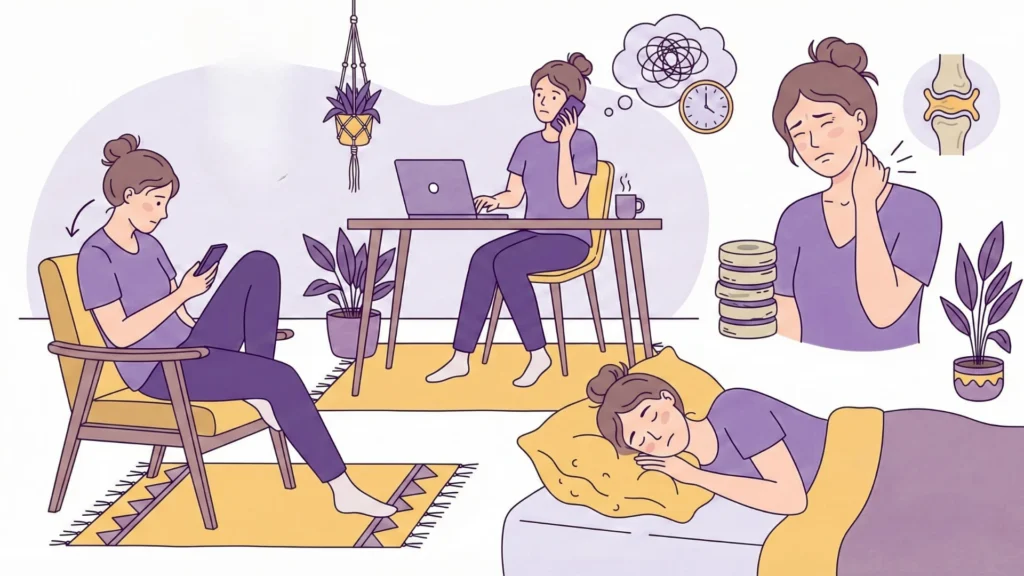
Neck pain is seldom a solo culprit. For most people, it is the consequence of habits that accumulate over a very long time.
1. Poor Posture & Forward Head Position
Looking down at phones or laptops shifts your head forward from its natural position. Even small angles increase the load on your cervical spine, forcing neck muscles to work harder just to keep your head upright.
2. Muscle Strain from Repetitive Movements
Long drives, extended typing, or holding a phone between your shoulder and ear repeatedly strain neck muscles and ligaments.
3. Degeneration of the Cervical Spine
With age, discs and joints in the neck can dry out or wear down, leading to stiffness, pain, and sometimes radiating symptoms into the shoulders or arms [2].
4. Sleep Posture and Pillow Choice
An unsupportive pillow or awkward sleeping angle can keep your neck in strain for hours every night, preventing proper recovery [3].
5. Stress and Emotional Tension
Stress often shows up physically as tight shoulders and a stiff neck, especially in people juggling deadlines, family responsibilities, and long commutes.
Because these factors overlap differently for everyone, neck pain can feel dull, sharp, stiff, or radiating.
Modern Causes of Neck Pain
Tech Neck and Screen-Related Cervical Pain
In contemporary India, neck pain has a new enemy: screens.
Whether it’s:
- Scrolling WhatsApp
- Using laptops on tables that are meant for eating
- Watching reels in bed
FHP increases the forces that work on your neck substantially. The load to the cervical spinal column is reported to increase up to approximately 22 kg at a head inclination of 45° [5].
This leads to:
- Forward head posture
- Muscle fatigue
- Disc compression
- Reduced neck mobility
The real issue isn’t just screen time, it’s the way that so many children are sitting without breaks and for hours on end.
Medical Causes of Neck Pain
Osteoarthritis and Degenerative Neck Pain
For the majority of adults over 40, neck pain doesn’t suddenly show up one morning and then disappear the next. Instead, it’s a gradual process as years of poor posture, a sedentary lifestyle or work habits take their toll. Cervical osteoarthritis is one of the most frequent medical culprits behind chronic neck pain, especially for people who’ve spent decades commuting, sitting at desks or performing physically repetitive jobs.
Cartilage, which acts as a cushion between the small joints in your neck, breaks down over time with cervical osteoarthritis. and as this lubricating layer diminishes, the movement of joint becomes more and more jerky blocking stiffness inflammation nagging pain. Many describe a certain “rustiness” in the neck most apparent when waking up or remaining still for extended periods of time [7].
Degenerative neck pain is tricky because it tends to come and go. Some days seem tolerable, and then others surge for no perceivable cause. Symptoms can be exacerbated by changes in the weather, lack of sleep, long drives or even stress.
While you can’t turn back the clock on osteoarthritis, that doesn’t mean you are helpless. Studies have shown that with consistent, gentle traction and posture correction along with good physical therapy exercises or activities, pain levels can be greatly reduced, mobility can improve and further degeneration can slow. Lots of rest, on the other hand, usually makes stiffness worse rather than better.The aim isn’t to “fix” the joint but to support it, keep it moving and lessen undue strain on surrounding muscles and nerves.
Symptoms of Neck Pain You Shouldn’t Ignore
Neck pain is not neck pain across the board. Common symptoms include:
- Aching or stiff neck or upper shoulders
- Sudden or shooting pain radiating to the shoulder or arm
- Diminished head turning or tilting
- Headache from the back of neck
- Pins-and-needles or numbness in the arm or hand.
When you feel stiff every morning and tight, or can’t move your neck after a heavy day of screen time, it might actually be more than just “soreness.”
Different Types of Neck Pain
Muscle-Related Neck Pain
This is the most typical type of neck pain, and it’s the type which nearly everyone experiences at least once. It’s often described as stiffness, soreness or a tight “knot” along the neck and shoulders. You might be more aware of it after you’ve spent long hours at a desk, clung to your phone, driven or woken up after sleeping in an odd position.
Pain of muscular origin typically gets aggravated by prolonged postures, while improving with motion, heating pads, mild stretching and attention to correct posture.
Nerve-Related Neck Pain
It’s a different feeling entirely than muscle soreness if the pain is from your nerve. It is often sharp, searing or electrical and may wander from the neck to the shoulder, arm or even fingers. Tingling, numbness or weakness down the arm sometimes are felt.
This kind of pain is associated with nerve impingement by disc bulges, inflammation, or sustained poor posture. Movements such as turning the head or looking down can exacerbate symptoms, and relief may be found only by decreasing nerve irritation, rather than stretching muscles.
Facet Joint Pain
Facet joints are tiny stabilizing joints located between and behind adjacent vertebrae that help your neck bend, twist, and rotate smoothly. When these joints are inflamed; in response to overuse, arthritis or bad posture then the pain typically is sharp and focused on one side of the neck.
It’s often worse when you tilt your head backward, look up or turn your neck to one side. Facet joint pain, unlike muscle pain, is not something that will be easily resolved with simple stretching.
Cervicogenic Headache
In fact, this sort of headache originates in the neck, not the head. It typically starts at the back of the head and spreads to the front around your temples or behind one (or both) eyes. It is often aggravated by movement of the neck, sitting for extended periods or poor posture over time.
They are often associated with dysfunction in the neck joints due to tight muscles or irritation of the nervous structures and present as a continuous, one-sided pressure rather than a pulsating migraine [4].
Neck Pain Relief That Starts at Night
How Sleep Quality Directly Impacts Neck Pain ?
Neck pain doesn’t necessarily start at your desk, it’s quite likely that it starts while you’re asleep.
Most people think that sleep 7-8 hours is enough for recovery. But sleep quality, not just sleep duration,plays a huge role when it comes to neck pain.
When sleep is interrupted or the neck is unsupported, cervical muscles remain partially contracted for hours. This impairs the recovery process and contributes to morning stiffness and discomfort [1]. Nightly strain leads to chronic pain, headaches and limited range of motion over time.
This is further compounded in Indian homes by:
- Old or sagging mattresses
- High or overly flat pillows
- Sleeping on sofas and floor mattresses while traveling
- Late-night screen use before bed
Bad sleep also ramps up pain sensitivity, so neck pain feels worse even when there’s no extra physical strain [2].
Quality sleep isn’t an optional lifestyle luxury if the relief you seek is for the long term, it’s essential.
Sleep, Pillows & Neck Pain
Why Does Your Pillow Matters More Than You Think?
A pillow is more than a comfort, it’s a support tool.
One of the most frequent reasons for neck pain in India is using a pillow that warps its shape forward, pushing the head further or allowing the neck to crumple backward.
An effective pillow should:
- Support the natural inward curve of the neck (cervical lordosis)
- Head is in line with the spine
- Restricting the overstretch duration of a muscle 6-8 .
Pillows that are too high, too soft or uneven can result in overloading neck muscles and compressing cervical joints which causes morning stiffness, tight shoulders, headaches and arm pain [3].
For side sleepers, the pillow must support the area from your shoulder up towards your ear. For back sleepers, it is supposed to gently cup the neck without jacking your head up.
That’s also why pillows developed specifically for neck pain, particularly contoured or cervical models, tend to outperform regular fluffy pillows.
Best Pillows for Neck Pain: A Comparative Guide
Below is a detailed comparison of popular options to help you identify which support system aligns with your specific needs.
Feature Comparison Table
| Brand / Pillow | Best For | Neck Support | Alignment Feature | Material Profile | Ideal Sleep Positions |
| Betterhood Cervical Support Pillow | Targeted neck posture & recovery | High: Ergonomic contour designed for natural cervical curve | Keeps head, neck & spine aligned all night | Contoured memory foam with reinforced neck channel | Back & side sleepers |
| Wakefit Orthopaedic Memory Foam | Good general support & pressure relief | Medium-High | Consistent loft for neutral positioning | High-density memory foam | Back & side sleepers |
| Dr. Ortho Cervical Pillow | Therapeutic design for chronic stiffness | Medium | Ergonomic shape to maintain cervical curve | Choice of Latex or Memory Foam | Back sleepers |
| Sleep Company SmartGRID | Adaptive comfort & breathability | Medium | Responsive grid structure adapts to movement | Patented SmartGRID foam | Back & side sleepers |
| SleepyCat Aroma Therapy | Relaxation with memory foam comfort | Medium | Traditional memory foam support | Aroma-infused memory foam | Back sleepers |
Doctor-Recommended Pillow Features for Neck Pain
The doctors and the physiotherapists shouldn’t suggest pillows by brand, they explain the best way forward is to focus on design principles.
A neck-friendly pillow should:
- Maintain neutral spinal alignment
- Adapt to different sleep positions
- Reduce pressure points
- Give that balanced support, so you won’t wake up sinking in the mattress fireplace pit [4]
Orthopedic cervical pillows & memory foam are frequently recommended since they help to distribute the pressure evenly and also restrict the abrupt neck movements which occur during sleep.
For individuals who have chronic neck discomfort, frequent stiffness or cervical spondylosis, these attributes can make a difference to morning mobility.
How to Choose the Right Pillow for Neck Pain ?
When selecting a pillow, focus on these key elements:
Cervical support: A design that maintains your neck’s natural curve
Spinal alignment: Keeps head and spine in a neutral line
Material quality: Durable foam or contour shapes that don’t flatten overnight
Sleep style match: Back, side, or combination sleeping preferences
A pillow for neck pain isn’t just about softness, it’s about support and alignment. Even small improvements in how your neck rests overnight can lead to better mornings, less stiffness, and fewer tension headaches.
How to Relieve Neck Pain at Home ?
Simple Recovery Habits That Add Up
Neck pain rarely disappears because of one big fix, it eases when you start doing a few small things consistently. The kind that don’t need fancy equipment, appointments, or a complete lifestyle overhaul. These simple, at-home recovery habits help calm irritated tissues, reduce daily strain, and give your neck the breathing space it needs to heal. When done regularly, they add up to noticeable relief over time especially for mild to moderate discomfort.
Heat and Cold Therapy
Cold both reduces inflammation post-strain and helps alleviate pain, an effect easily replicated with a bag of frozen peas, while heat enhances circulation and can be a good way to help soothe sore muscles (especially when after pilates) [5].
Gentle Stretching & Mobility
When performed slowly and often, neck tilts, shoulder rolls and chin tucks can relieve stiffness.
Posture Resets
Elevating the monitor, utilizing a headset and supporting the lower back can minimize neck burden [6].
Sleep Adjustments
Sleeping on your back or side with adequate neck support will take the overnight strain away [7].
Best Exercises for Neck Pain Relief & Prevention
This series is created to gently mobilize stiff joints, to strengthen weak muscles and combat daily neck stress without extreme stretching. Schedule it once a day, preferably after work or before bed.
1.Warm-Up (Circulation First)
Shoulder Rolls- 1 minute
Roll your shoulders gently back for 30 seconds, then forward for 30 seconds.
Why it works: Releases the upper trapezius and improves blood flow to muscles in the neck.
Deep Breathing Reset- (1 minute)
Sit tall. Breathe in for four from your nose, breathe out six.
Why it works: Eases muscle guarding from stress and shallow breathing.
2. Mobility (Restore Movement)
Neck Rotations- (1 minute)
- 1 sec. respectively and off to the left side.
- Repeat 5–6 times each side.
- Focus: Smooth, pain-free movement only.
Side Bends- (1 minute)
- Tip your ear toward your shoulder (without elevating the shoulder).
- 5sec hold 5x each side.
- Focus: Side of neck stretches, not shoulder.
Chin Tucks (2 minutes)
- Daintily scoot your chin directly back as though trying to achieve double chin.
- Hold for 5 seconds, relax. Repeat 8–10 times.
Why it works: Engages deep neck stabilisers weakened by screen time.
3. Solidity & Strength (Protect the Neck)
Scapular Squeezes- (1.5 minutes)
- Draw shoulder blades back and down.
- Five seconds, 10 times.
Why it works: Strong upper-back muscles mean less overload on the neck.
Static Neck Holds – (1.5 minutes)
- Cover your head with the palm of your hand. Press softly and don’t move your head.
- Hold 5 seconds. Repeat on both sides.
Why it works: Strengthens your neck without working the joints.
4. Relax (Alert Signal)
Neck Drop Release- (1 minute)
- Lower your chin to your chest and let the weight of the head build against the back of your neck.
- No pulling. Just breathe.
Why it works: It safely releases end-of-day tension.
Do’s & Don’ts for Neck Exercises (Very Important)
DO’s
- Move slowly and with control
- Stop if pain increases or goes down the arm
- Breathe normally, never hold your breath
- Do not stretch movements beyond your abilities.
- Be consistent rather than intense
DON’Ts
- Avoid jerk or force your neck into stretches
- Avoid full circles with your neck (can strain joints)
- No exercising through numbness or tingling (or dizziness)
- Resist being overly aggressive with stretching first thing in the morning
- And, don’t leave posture at the door outside of your practice
Routine Adaptation for Desk Workers
Best Time:
Once in the evening+2 mini posture breaks throughout the day at work
Extra Focus:
- Chin tucks
- Scapular squeezes
- and 60-Minute Shoulder Rolls at work
Bonus Tip:
Set a reminder every hour to:
- Sit tall
- Bring screen to eye level
- Relax shoulders
This helps to prevent tech neck, cumulative strain.
Routine Adaptation for Older Adults
Best Time:
Morning or early evening with warm joints
Modifications:
- Less time in the holds (3-4 seconds vs 5).
- Reduced volume (6-8 reps instead of 10)
Some extra standing support if you are unbalanced.Documents Add some standing support If You’re off-balance.
Extra Focus:
- Gentle mobility
- Breathing
- Scapular stability
Avoid:
- Long isometric holds
- Fast movements
- Exercising immediately after waking up
How This Routine Works Best
Research has demonstrated that neck exercises in concert with the provision of appropriate sleep support such as a cervical [neck] pillow to maintain neutral alignment, provide more favorable long-term results compared to only exercise or support alone [8].
Consider this routine a matter of daily upkeep, not as a remedy. More often than not, 10 minutes a day will keep stiffness from souring into neck pain that becomes chronic.
The Reason Your Neck Pain Keeps Coming Back
Muscular Imbalance and Cervical Strain
Few things are as frustrating as waking up with neck pain whether the crick is due to a bad nights sleep, your pillow, or just the way you blunder out of bed. The true villain in many cases is not injury or disease, but muscular imbalances.
Contemporary lifestyles shape the body into natural groves or lines:
Tightness in chest muscles + Weakness of upper-back muscles → Forward head posture
Sluggish deep neck flexors + overworked superficial muscles → Chronic tension in the neck.
When some muscles are tight all day long (whether through hunching, using a phone or stress) and others go unused, the neck is pushed into inefficient positions. Over time, this imbalance forces the muscles to work that much harder just to keep your head up which results in fatigue, tension and chronic discomfort [8].
And so neck pain often feels better temporarily after rest, or a hot pack, only to have the pain return once you try to do something again. The fundamental movement pattern is the same.
There are three components to addressing muscular imbalance:
- Strengthening weak muscles (deep neck flexors, upper back, scapular stabilisers)
- Releasing tight muscles (chest, upper traps, suboccipitals)
- Improving posture awareness throughout the day, not just during exercise
When all of these features cooperate with each other, the neck does not have to “fight gravity” throughout the course of a day. Frequency of pain episodes is reduced, recovery is quicker and your everyday feels easier and lighter rather than a chore.
Nagging neck pain isn’t a symptom of weakness, it’s frequently the result of poor balance, not too much force.
When to Seek Professional Help ?
Seek medical advice if you have:
- Pain that persists for a few weeks or longer
- Weakness or numbness in the arm or hand.
- Pain after injury
- Positional headaches with relation to neck movement
- Night pain that wakes you up.
Conclusion: Building a Pain-Free Neck Routine
Neck pain doesn’t have to be permanent.
Lasting relief starts with understanding how your posture, sleep setup, and daily movement affect your neck. Small shifts such as adjusting your workstation, moving regularly, and strengthening supportive muscles, compound faster than you expect.
Supportive sleep tools can also make a difference. Ergonomically designed pillows, like those from betterhood, help maintain natural neck alignment at night, reducing unnecessary strain while your body recovers.
Be patient with your body. Chronic neck pain builds over time, and it eases the same way through consistency and mindful care. And when self-care isn’t enough, professional guidance can help you reset the cycle.
Your neck carries your head all day, every day.
Care for it intentionally and it will reward you with better sleep, less tension, and effortless movement.
Explore More Health & Wellness Solutions:
Would you like to be up-to-date on everyday health and wellness issues? Here are some interesting pieces to help you. Follow the links below if you want practical tips or solutions:
- What Causes Back Pain? Understanding Root Triggers & Prevention Tips
- 10 Effective Home Remedies for Body Pain Relief Naturally
- Wrist Support Braces Explained: Protocols for Pain Relief
Frequently Asked Questions
Use a warm compress for 15–20 minutes to relax tight muscles. Do gentle stretches like chin tucks and side bends. Also, adjust your screen to eye level for better posture.
Use heat ( a warm compress) to soothe tight muscles for 15-20 minutes, do light stretching (chin tucks and side bends), and if you have the ability, set up your work environment ergonomically with screens at eye level.
Yes. A poor pillow keeps your neck in unnatural positions for hours, leading to stiffness, headaches, and long-term joint strain.
Tilting your head forward increases neck load from about 5 kg to over 20 kg. This strains muscles, weakens neck stabilisers and compresses cervical joints.
Back and side sleeping are best with proper pillow support. The pillow should keep your neck aligned with your spine. Avoid stomach sleeping if possible.
See a doctor if pain lasts over 2–3 weeks, worsens, or comes with weakness, numbness, severe headaches, fever, or night pain.
References
- Cleveland Clinic. (2022, December 9). Neck pain: 6 common causes and treatments. https://my.clevelandclinic.org/health/symptoms/21179-neck-pain
- Cohen, S. P. (2025). Cervical degenerative disc disease. In StatPearls. National Library of Medicine.https://www.ncbi.nlm.nih.gov/books/NBK560772/
- Gordon, S. J., & Grimmer-Somers, K. A. (2017). Effect of sleep posture on neck muscle activity. Journal of Pain Research, 10, 1551-1556. https://pmc.ncbi.nlm.nih.gov/articles/PMC5468189/
- Biondi, D. M. (2005). Cervicogenic headache: A review of diagnostic and treatment strategies. Journal of the American Osteopathic Association, 105(4 Suppl 2), 16S-22S. https://www.ncbi.nlm.nih.gov/books/NBK507862/
- Neupane, S., Ali, U., & Mathew, A. (2017). Text neck syndrome – systematic review. Imperial Journal of Interdisciplinary Research, 3(7), 141-148. (Note: The 22 kg load at 45 degrees reference: https://pmc.ncbi.nlm.nih.gov/articles/PMC8733818/)
- Gerr, F., Marcus, M., Ensor, C., Kleinbaum, D., Cohen, S., Edwards, A., Gentry, E., Ortiz, D. J., & Monteilh, C. (2002). A prospective study of computer users: I. Study design and incidence of musculoskeletal symptoms and disorders. American Journal of Industrial Medicine, 41(4), 221-235. https://pmc.ncbi.nlm.nih.gov/articles/PMC7805092/
- Peng, B., Yang, L., Li, Y., Liu, T., & Liu, Y. (2021). Cervical proprioception impairment in neck pain-pathophysiology, clinical evaluation, and management: A narrative review. Pain and Therapy, 10(1), 143-164. https://pmc.ncbi.nlm.nih.gov/articles/PMC6803181/
- Ylinen, J., Takala, E. P., Nykänen, M., Häkkinen, A., Mälkiä, E., Pohjolainen, T., Karppi, S. L., Kautiainen, H., & Airaksinen, O. (2007). Effect of therapeutic exercise and sleeping neck support on patients with chronic neck pain: A randomized clinical trial. The Journal of Rheumatology, 34(1), 151-158. https://www.jrheum.org/content/34/1/151